Lhasa Apso Care: Daily Routine & Expert Tips
Daily brushing is non-negotiable for Lhasa Apso care. Miss even one day and mats form fast against the skin. Their double coat and flat face also mean daily eye wipes and measured meals are necessary. This guide covers the daily flow, grooming options, feeding guidelines, and warning signs — all tailored to this breed.

Daily Care Flow
Start each morning with a quick face wipe, then brush for 5 minutes. Lhasas thrive on routine, so keep meal and potty times consistent.
1. Face wipe – Use a soft, damp cloth to clean tear stains around the eyes and the nose wrinkle. Dry thoroughly. If you see redness or crusty discharge, note it for your vet.
2. Quick morning brush – Use a slicker brush through the topcoat, then a pin brush to lift the undercoat. Don’t rush.
Branch: If you feel a mat, do not pull. Apply a detangling spray like Chris Christensen Ice on Ice and let it sit 2 minutes. Gently work the mat loose with your fingers. If it’s tight against the skin, stop — pulling can hurt. Schedule a professional groom instead.
3. Measured meal – Lhasas gain weight easily. Use a kitchen scale. Active adults: ½–¾ cup high-quality kibble per day, split into two meals. Seniors or couch potatoes: ⅓–½ cup. Adjust so you can feel ribs without seeing them. For mental stimulation, try a puzzle feeder like the Outward Hound Fun Feeder.
4. Midday break – A 15-minute walk or indoor fetch. Two short breaks if you’re home. Lhasas also enjoy a quick training session of 5 minutes to burn mental energy.
5. Evening full brush – Line-brush section by section from skin outward. Spend 10–15 minutes. Check behind ears, armpits, groin, and tail — these are mat hotspots.
6. Last potty and teeth – Brush with enzymatic toothpaste at least 3 times per week. Use a finger brush if your dog resists the toothbrush.
Verification step: After brushing, run a metal comb through each section. The teeth should glide without catching. A zipping sound means you missed a mat.
Likely Friction Points
- Mats in armpits and groin – Form in 2 days if you skip. Keep a mat splitter handy, like the Andis Mat Comb.
- Tear stains – Common in Lhasas. Daily wipes help. Some owners see improvement with filtered water and a low-mineral diet.
- Skipping breakfast – One skipped meal is fine. Two skipped meals or lethargy? Call your vet.
When to Stop DIY and Escalate
Call your vet if you notice: sudden loss of appetite, vomiting or diarrhea that doesn’t stop within 12 hours, limping that lasts more than 24 hours, or any breathing difficulty. Breathing changes need fast attention. Lhasas are brachycephalic, meaning heavy panting, gagging, or collapse requires immediate care.
Grooming: Full Coat vs. Short Clip
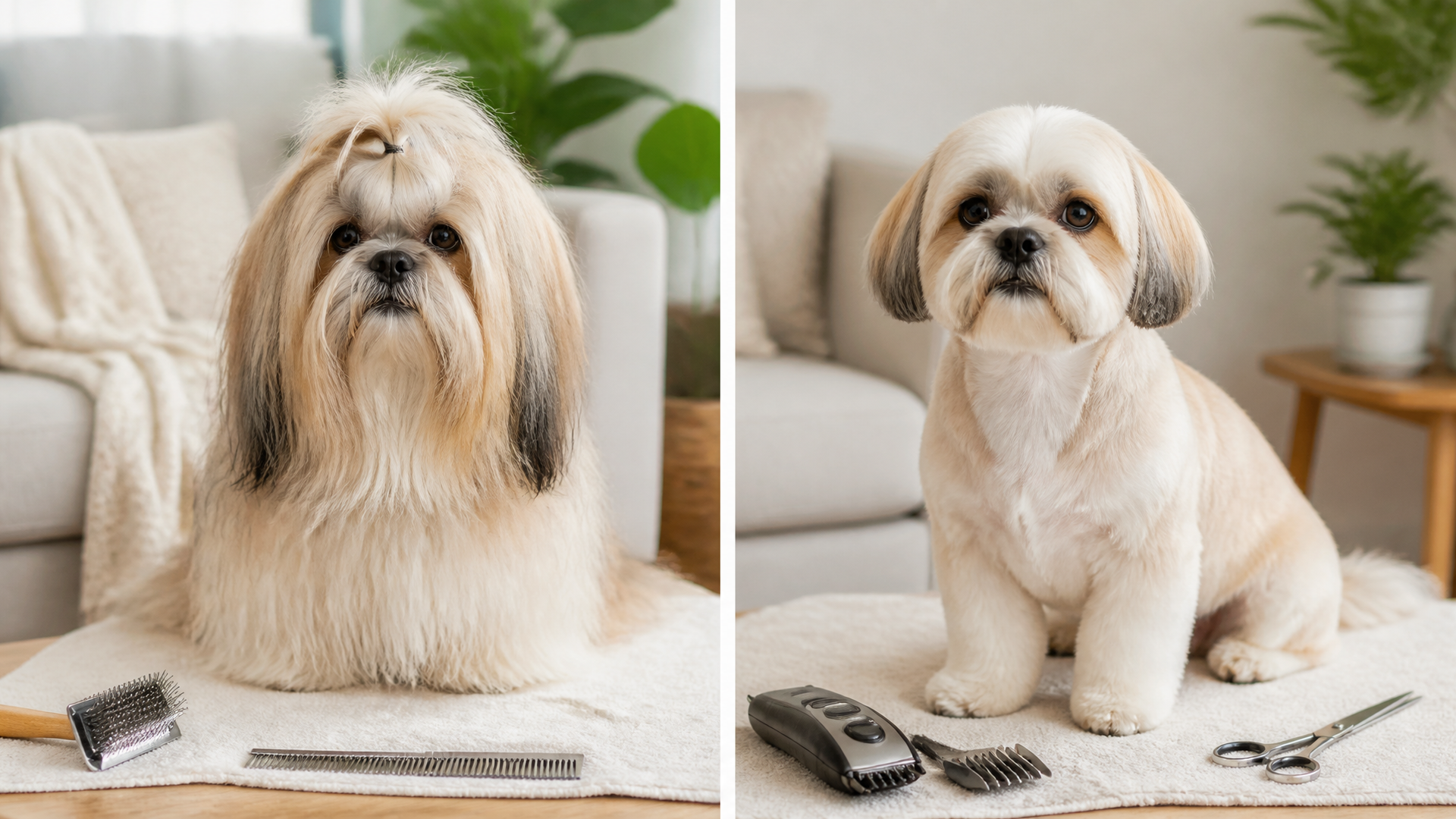
Your Lhasa’s double coat needs either daily line-brushing for a full coat or every-other-day brushing for a short clip. Choose based on your schedule.
Option A: Full Floor-Length Coat
- Daily brushing mandatory.
- Bath every 3–4 weeks with a moisturizing shampoo such as Earthbath Oatmeal & Aloe. Blow-dry on low while line-brushing.
- Professional groom every 6–8 weeks for trim, sanitary clip, and nail grind.
- Monthly nail trim if pavement doesn’t file them down.
Option B: Short “Puppy Cut”
- Brush every other day — the undercoat still mats.
- Bath every 4–6 weeks.
- Professional groom every 8 weeks.
- Weekly ear checks with a vet-approved solution.
Decision criterion: If you work over 50 hours per week or travel often, go with Option B. You’ll still need consistent brushing, but the shorter coat cuts daily grooming time by half.
Product Quick Card
| Item | Purpose | Example |
|---|---|---|
| Slicker brush | Remove tangles | Hertzko Self-Cleaning Slicker Brush |
| Pin brush | Reach undercoat | Chris Christensen Oval Pin Brush |
| Detangling spray | Prevent breakage | Chris Christensen Ice on Ice |
| Mat splitter | Cut out mats | Andis Mat Comb |
| Dog-safe shampoo | Gentle on skin | Earthbath Oatmeal & Aloe |
| Nail grinder | Smooth without splitting | Dremel 7300-PT |
(As an Amazon Associate, we earn from qualifying purchases.)
Quick Reference Checklist
Use these checks daily or weekly to stay on track.
- [ ] Coat fully brushed — no mats when metal comb glides through.
- [ ] Face wrinkles cleaned and dried — no redness, crust, or odor.
- [ ] Eyes checked — tear stains wiped; no squinting or cloudiness.
- [ ] Nails short — no clicking on hard floors; quick visible or ask groomer.
- [ ] Teeth brushed (≥3x per week) — gums pink, not red; no bad breath.
- [ ] Fresh water changed twice daily.
- [ ] Measured meals — no free-feeding; treats under 10% of daily calories.
- [ ] Ears checked — no dark wax or smell; cleaned weekly with vet solution.
- [ ] Exercise total 30 minutes (two short walks or play sessions).
- [ ] Weight check — ribs easily felt; no sudden gain or loss. Weigh monthly.
Feeding: What and How Much
Lhasas love food and will beg. Stick to a schedule and measure portions.
| Life Stage | Daily Food (split into 2 meals) | Meals per Day |
|---|---|---|
| Puppy (2–6 mo) | ⅓–½ cup puppy kibble | 3 |
| Active adult (1–8 yr) | ½–¾ cup | 2 |
| Low-activity adult | ⅓–½ cup | 2 |
| Senior (8+) | ⅓–½ cup senior formula | 2 |
Start here, then adjust based on body condition. A healthy Lhasa has a visible waist and ribs you can feel with light pressure. If ribs are hidden under fat, cut back by 10% and reduce treats. Use low-calorie training treats like Zuke’s Mini Naturals to keep rewards under 10% of daily calories.
Foods to Keep Away
Small body size means even a grape can be dangerous. Never feed: grapes, raisins, onions, garlic, chocolate, xylitol (in sugar-free gum and some peanut butters), alcohol, macadamia nuts, or any product containing artificial sweeteners. If your dog eats something suspect, call Pet Poison Helpline (855-764-7661) or your vet immediately.
When to Call the Vet
Lhasas are prone to back issues (IVDD) and respiratory problems. Call your vet for:
- Hind leg weakness or dragging – limit movement and go in.
- Noisy breathing, gagging, collapse – keep calm and cool.
- Excessive scratching or hair loss – could be allergies; vet can test.
- Lumps, bumps, blood in urine – bladder stones are more common in Lhasas.
Frequently Asked Questions
How often should I bathe my Lhasa Apso?
Every 3–4 weeks for a full coat, 4–6 weeks for a short clip. Bathing more often strips natural oils.
Can I skip daily brushing if I use a mat splitter?
No. Mat splitters cut tangles but leave partial mats that irritate skin. Daily brushing prevents mats from forming.
Is a Lhasa Apso a good apartment dog?
Yes, they’re active indoors and don’t need a yard. But they bark — early training and window coverings help.
What’s the best way to clean tear stains?
Wipe daily with a warm, damp cloth. Some owners find filtered water and a low-mineral diet reduce staining. Avoid hydrogen peroxide or harsh wipes.
Save This Guide – Lhasa Apso care is daily, not weekly. Focus on brushing, face cleaning, and measured meals. Using the checklist above will help maintain consistent care and keep your Lhasa healthy and happy.