Birman Grooming: Complete Guide for Birman Owners
Birmans have a single-layer coat with no undercoat, which means they mat far less than other long-haired breeds. A weekly brushing, monthly nail trim, and occasional bath are all most Birmans need to stay looking their best. The counter-intuitive truth? Over-grooming is actually a bigger risk than under-grooming for this breed — too much brushing can strip the coat’s natural silkiness and cause skin irritation.

Why Less Is More for Birman Coats
Most long-haired cats (Persians, Maine Coons) have a dense double coat that mats quickly without daily attention. Birmans are the exception. Their single-layer coat is closer to a Silkie’s than a Persian’s — smooth, fine, and surprisingly low-maintenance.
This single-coat structure means two things for your grooming routine. First, you don’t need to brush daily. Second, you need to be gentle — aggressive brushing can break the fine hairs and ruin that signature silky texture. A soft slicker brush or stainless steel comb used once a week is plenty for most Birmans.
The downside of no undercoat? Birmans feel temperature changes more than double-coated breeds. They’re indoor-only cats and benefit from warm, draft-free spaces after a bath or during winter months.
What You’ll Need
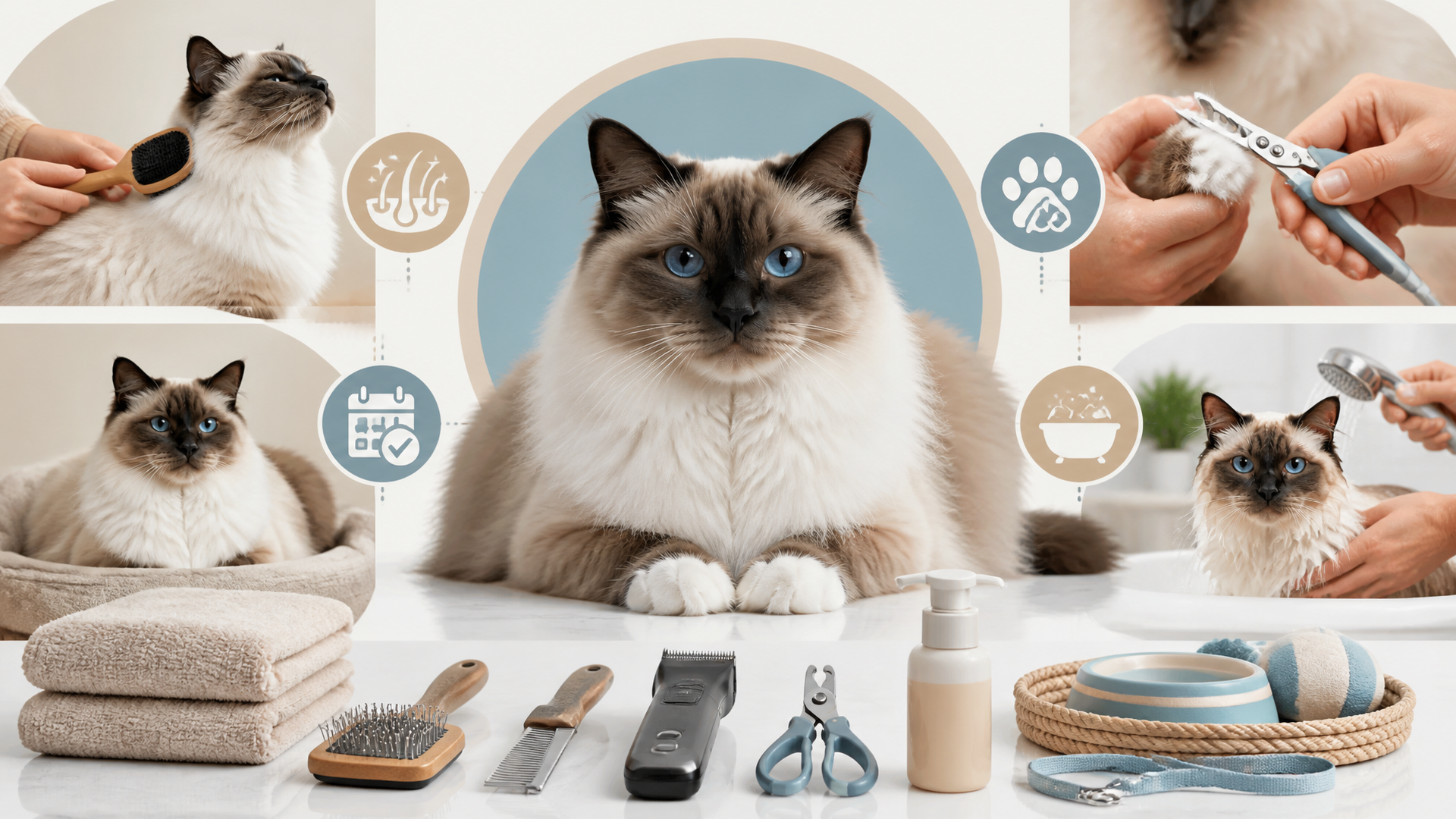
Keep your Birman’s grooming kit simple. These five tools cover everything:
| Tool | Purpose | Recommended Type |
|---|---|---|
| Slicker brush | Weekly coat detangling | Soft pin, not metal-tipped |
| Stainless steel comb | Face and tail touch-ups | Wide-tooth, rounded tips |
| Nail clippers | Monthly trims | Guillotine or scissor-style for small claws |
| Ear cleaner | As-needed ear checks | Vet-recommended, alcohol-free |
| Cat-safe shampoo | Baths every 4–8 weeks | Tearless, fragrance-free |
Disclosure: Some product links in this guide may be affiliate links. We only recommend tools we’d use on our own cats.
Skip the de-shedding tools (Furminator-style rakes) — they’re designed for undercoat removal and can irritate your Birman’s single coat. A simple pin brush or soft slicker does the job without damage.
Weekly Grooming Made Simple
Step 1: Set the Scene
Choose a time when your Birman is relaxed — after a meal or play session works best. Place a non-slip mat on a table or your lap. Keep treats nearby for positive reinforcement.
Mid-session checkpoint: Watch for tail flicks or flattened ears. If your cat seems tense, stop and try later. Forcing a session creates bad associations that take weeks to undo.
Step 2: Brush with the Slicker
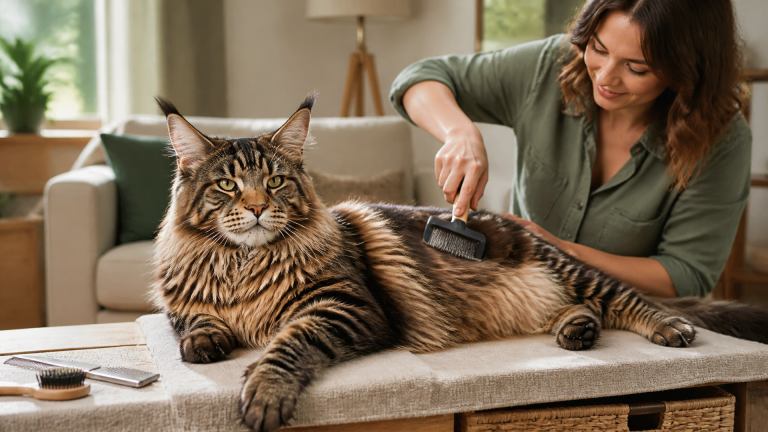
Brush in the direction of hair growth using light, short strokes. Focus on areas where light tangles can form: behind the ears, under the chin, and on the belly. A full-body pass should take 3–5 minutes — any longer and you risk over-brushing.
Verification step: After brushing, run your hand over the coat. It should feel silky and smooth, not greasy or rough. If the coat feels sticky or has visible dander, skip brushing next week and add a bath to your plan. If it feels dull or fluffy, you brushed too long — stop there and don’t brush again until next week.
Step 3: Comb the Face and Tail
Use the stainless steel comb on the face (avoiding eyes) and the plume tail. Birmans sometimes get small knots at the tail tip. Work through them gently with your fingers before using the comb — never yank or pull.
Step 4: Do a Quick Health Scan
Run your hands over your cat’s body and check for:
- Small mats behind the ears or under the legs
- Dirt or debris in the coat
- Skin bumps, flakes, or redness
- Changes in coat texture (sudden greasiness or bald patches)
Fail-safe check: If you find a mat you can’t work out with your fingers and comb, stop. Do not grab scissors. This is the point to call a professional groomer if necessary.
Step 5: End on a High Note
Reward with a treat and praise every single time. Your Birman will learn that grooming equals good things, making future sessions easier and faster.
Weekly Health Check
Use this five-item check during your grooming session. Each is a simple pass/fail that tells you whether to take action:
| Check | Pass | Fail – What to Do |
|---|---|---|
| Coat texture | Silky and smooth | Dull or greasy — try a bath or check their diet for omega-3s |
| Skin condition | Pink and clean | Red, flaky, or bumpy — schedule a vet visit |
| Ear cleanliness | Pink with minimal wax | Dark discharge or odor — likely ear infection, see vet |
| Nail length | No clicking on hard floors | Audible clicking — trim nails this week |
| Eye area | Bright, no discharge | Tear staining or crust — wipe daily; if it persists, ask the vet |
One fail means take action that week. Two or more fails in a row means a vet visit is overdue.
Common Grooming Speed Bumps
Over-Brushing (the most common mistake)
The telltale sign is a coat that looks dull or slightly “fluffy” instead of sleek and silky. Birmans produce less natural oil than double-coated breeds, and brushing removes those oils. Solution: brush once a week maximum. If the coat looks dull, skip brushing for two weeks and add a high-quality omega-3 supplement to their diet.
Matting Behind the Ears
Despite their low-matting coat, Birmans can develop small tangles behind the ears and under the chin. These spots get friction from sleeping positions and collar wear.
Likely cause: These areas are harder to reach without upsetting the cat, so they get skipped during quick sessions.
Fix: Work through small mats with your fingers first, then gently comb. Never cut mats with scissors near your cat’s skin — one slip can lead to a trip to the emergency vet.
Bathing Resistance
Most Birmans tolerate baths better than the average cat, but some strongly object. Signs your cat is truly stressed: heavy panting, trembling, or frantic escape attempts.
If bathing becomes a struggle, drop the frequency to every 12 weeks or switch to waterless cat shampoo — many Birmans stay clean enough with just brushing. A white or cream Birman may need a bath every 6–8 weeks to keep staining at bay, but even then, try a cat-safe wipe first.
Escalation signal: If your cat trembles or pants during the bath itself, stop immediately. Rinse fully, dry them in a warm room, and skip baths for three months. Try waterless shampoo next time instead.
When to Call a Pro
You can handle 90% of Birman grooming at home. Call in a professional for these situations:
- Severe matting that you can’t safely comb out (especially close to the skin)
- Sanitary trims if your cat resists rear-end grooming
- You’re unsure about nail trimming — one bad clip that draws blood can create lifelong fear
When to call the vet instead of a groomer:
- You find a lump, bump, or skin lesion during grooming
- Your cat’s coat changes texture noticeably (sudden greasiness or bald patches)
- Excessive scratching or hair loss appears
- Ear discharge or strong odor
A vet check rules out underlying issues before you adjust grooming products or frequency. If the vet gives the all-clear, you can return to your regular routine.
Save This Guide
Key takeaway: Birmans need less grooming than most long-haired cats — one brush session per week, one nail trim per month, and a bath every 1–2 months. The secret is gentle, minimal handling that preserves their single coat’s natural silkiness. Save this routine so you always have the right tools and steps ready for your next grooming session.