Corgi Puppy And Growling
Corgi puppies growl. A lot. And that’s usually fine—herding breeds are wired to be vocal, and growling is part of how they communicate. But you need to know whether that low rumble means “this is fun” or “back off.” The counter-intuitive truth: many owners mistake a happy puppy’s growl for aggression, then punish the growl and accidentally teach the puppy not to warn before biting. That’s dangerous. Here’s exactly how to tell the difference and what to do next.

Applicability boundary: This guide is for corgi puppies between 8 weeks and 6 months old. Puppies under 8 weeks may growl from separation stress and need extra comfort. After 6 months, growling can shift into adolescent boundary-testing, requiring firmer but still positive redirection.
Is It Play, Warning, or Pain? The 4-Second Body-Language Check
Corgis were bred to drive cattle by nipping and barking. That herding instinct makes them naturally mouthy and vocal. Growling can mean several things—read the whole dog, not just the sound.
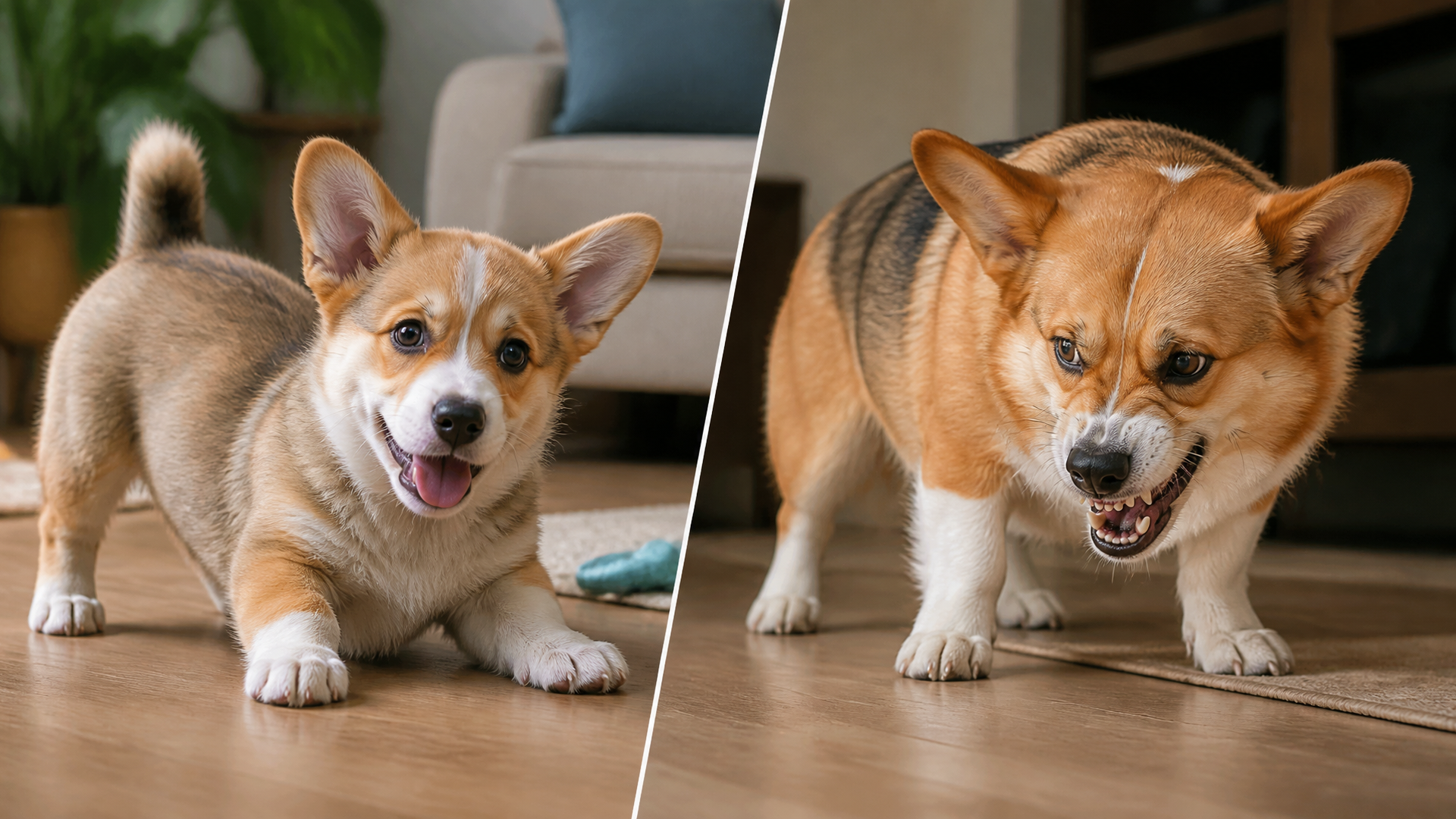
| Type of Growl | What It Looks Like | What It Means |
|---|---|---|
| Play growl | Loose body, play bow, wagging tail | Happy, excited, wants to keep playing |
| Warning growl | Stiff posture, hard stare, ears back | Scared, uncomfortable, needs space |
| Resource guarding growl | Head lowered over food or toy, freezing | “This is mine—don’t take it” |
| Pain growl | Sudden onset, often when touched | Injury or discomfort |
Practical implication: If the growl is playful, redirect to a toy and continue bonding. If it’s a warning, stop the interaction immediately and give space. Your next action depends entirely on reading body language, not the sound alone.
Operator Flow: 4-Step Response for Any Corgi Puppy Growl
This flow gets you from growl to resolution in a few minutes. Use it every time.
Step 1: Freeze and Assess (First Checkpoint)
Stop moving. Do not yank your hand away or scold. Check the puppy’s body language (loose or stiff?), the trigger (toy, food, handling, movement?), and the environment (loud noises, new people?). Try initiating a play bow yourself. If the puppy bows back with a loose, wagging tail, it’s play. If she stiffens or moves away, it’s a warning.
Friction point: If the puppy freezes or shows whale eye (white of the eye visible), that’s a warning—skip to Step 3a. If she’s wiggly and play-bowing, continue to Step 2.
Step 2: Play Growl → Redirect
Clap once to break focus. Offer a tug toy or start a training game. If overtired (common after 10–15 minutes of play), end playtime with a chew and enforce a nap break.
Success check: Puppy stops growling and engages with the new item or settles for nap. If she resumes growling at you after redirection, she may be overstimulated—go straight to nap.
Step 3a: Warning or Resource-Guarding Growl → Remove Trigger
Do not reach for the object. Toss a high-value treat (like a piece of chicken) away from the resource. Once the puppy moves to eat it, calmly pick up the item.
Escalation signal: If the puppy ignores the treat and stiffens further, back away slowly. Do not corner her. Call a certified positive-reinforcement trainer if this happens more than twice.
Step 3b: Pain Growl → Stop Handling
Immediately stop touching her. Note the exact spot that triggered the growl.
Escalation signal: If growling occurs every time you touch that area, or if it’s accompanied by limping, yelping, or hiding, schedule a vet exam. Corgis are prone to hip dysplasia and intervertebral disc disease.
Step 4: Teach Bite Inhibition
If growling accompanies mouthing during play, yelp like a puppy and pause for 10 seconds. Resume only when she’s calm. Repeat consistently.
Success check: Over two weeks, the puppy should mouth less and growl less during play.
The Trade-Off: Why Letting Some Growls Slide Is Smart
A common mismatch: owners mistake the low growl during tug-of-war for aggression. In reality, many corgis are vocal players—they growl with excitement, not threat. The trade-off is that if you punish all growling, you teach your puppy to suppress the warning signal entirely. Then next time she feels threatened, she may bite without growling first.
What to do instead: For play growls with loose body language (play bow, wagging tail, wiggly body), let them happen. Only step in if the mouthing gets rough. For warning growls with stiff posture, always respect the signal and back off.
Common Corgi-Specific Growling Triggers
Corgis have a few unique triggers non-herding owners often miss:
- Movement: Your puppy may growl at running children, bicycles, or vacuum cleaners. That’s the herding instinct. Redirect to a toy immediately.
- Nipping at heels: Often starts as play but turns into growling when frustrated. Teach “leave it” early.
- Resource guarding: Corgis can be intense about food. Hand-feed some meals and trade for treats during toy play to build trust.
- Overstimulation: Corgi puppies have short burst energy. After 10–15 minutes of play, they may growl more as they get overtired. Enforce nap breaks every 2 hours (puppies need 18–20 hours of sleep).
Expert Tips for Managing Corgi Puppy Growling
Tip 1: Never punish the growl
When your puppy growls, calmly identify the trigger and remove it. Reward her with a treat for quiet behavior afterward.
Common mistake: Saying “no” or tapping her nose teaches her to skip the growl and go straight to biting. You want the warning to stay—it’s your earliest signal to act.
Tip 2: Use treats to change the emotional response
If she growls when you approach her food bowl, stand at a distance and toss high-value treats. Gradually move closer over days.
Common mistake: Moving too fast. If she freezes while you’re near, back up and progress slower. A balanced diet like Purina ONE Plus Healthy Puppy Formula supports overall health, which can reduce unnecessary growling from discomfort.
When to escalate: If the growling at food or toys persists after two weeks of counterconditioning, consult a trainer who specializes in resource guarding.
Tip 3: Socialize with structured, calm interactions
Invite one calm adult dog to meet your corgi puppy on neutral ground. Let them sniff and move away. No forced greetings.
Common mistake: Overwhelming the puppy with too many people or dogs at once. Corgis can become “guardy” if they feel crowded.
When to Worry: Signs That Need a Vet Visit
- Growling that appears suddenly in a normally happy puppy.
- Growling when you touch a specific area (ear, back, paw).
- Growling accompanied by limping, yelping, or hiding.
- A puppy who growls at every family member but not strangers (possible pain trigger).
- Growling that escalates despite consistent training for 3+ weeks.
If you see any of these, get a vet exam before assuming it’s behavioral. Corgis are stoic; growling can be their only sign of pain.
Quick Reference: Corgi Puppy Growling Checklist
Do:
- Freeze and assess body language (loose vs stiff)
- Verify by play-bowing yourself
- Remove trigger for warning or guarding growls
- Redirect play growls to an appropriate toy
- Teach bite inhibition naturally with yelp-and-pause
- Use treats to build positive associations
- Enforce nap breaks every 2 hours
Don’t:
- Punish or scold the growl (you’ll remove the warning)
- Yank your hand away suddenly (can startle and escalate)
- Force handling or “show dominance”
- Ignore sudden changes in growling behavior
- Skip nap breaks – overtired puppies growl more
- Mistake a play growl for aggression
Corgi puppies growl to communicate, not to be aggressive. Learning the difference between play and warning keeps your bond strong and your home safe. The operator flow and checklist above will help you understand exactly what your puppy is telling you the next time she rumbles.
This article contains affiliate links. As an Amazon Associate, we earn from qualifying purchases.