Shih Tzu Red Eye
Your Shih Tzu’s red eye needs your attention now. Because of their shallow eye sockets and large, prominent eyes, redness can mean anything from a stray hair scraping the cornea to emergency glaucoma. Some conditions worsen in hours. This guide gives you a fast decision system: what to check, what to do, and when to rush to the vet.

The One Failure Mode Shih Tzu Owners Miss — and How to Catch It Early
The most dangerous red-eye scenario for a Shih Tzu is a corneal ulcer that starts as a tiny scratch. You notice your dog squinting just a little or rubbing the eye against the sofa. You see mild redness and think “probably allergies.” By the next morning, the ulcer can deepen, the cornea can turn cloudy, and you’re looking at a veterinary emergency that threatens the eye itself.
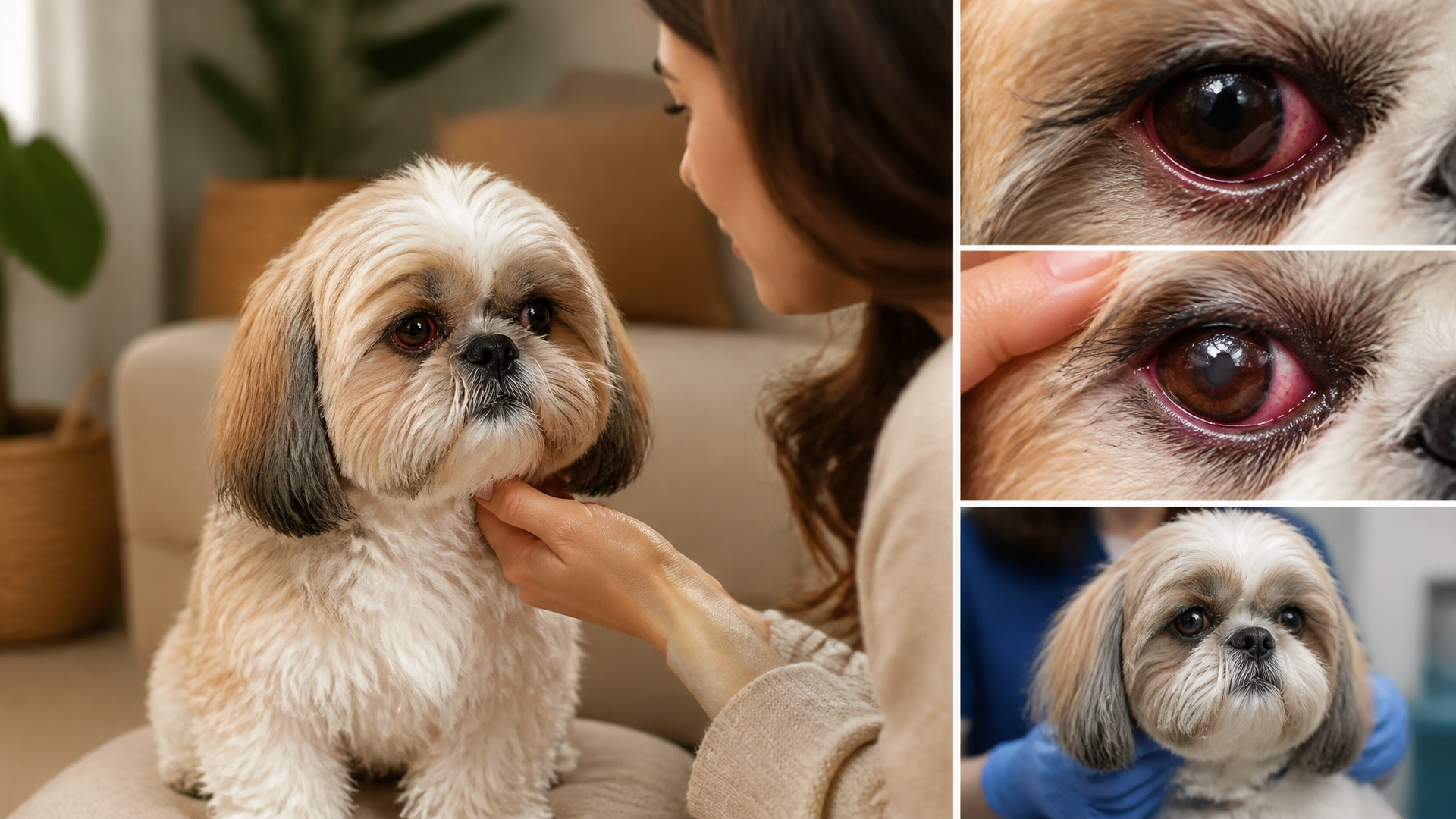
Early detection trick: Every day, gently lift your Shih Tzu’s upper eyelid with one finger and examine the cornea’s surface under good light. Use a phone flashlight (not too close). A healthy cornea is perfectly clear and shiny. If you see a dull spot, a small crater, or a faint gray haze — that’s not normal. That’s your signal to get to the vet within hours, not days.
What’s Causing the Redness? A Quick Comparison
Different causes need different responses. This table helps you sort immediate emergencies from issues you can manage with a vet visit.
| Cause | Key Signs | Urgency |
|---|---|---|
| Corneal ulcer | Squinting, pawing, cloudy or dull spot on cornea | Vet today — can perforate in 24 hours |
| Glaucoma | Cloudy blueish cornea, dilated pupil, painful | Emergency vet same day — risk of blindness |
| Dry eye (KCS) | Thick yellowish discharge, redness, no squinting | Vet within 1–2 days; chronic management needed |
| Hair/eyelash irritation | Mild redness, clear tears, no squinting | Usually safe to rinse and trim; vet if persistent |
| Allergies/conjunctivitis | Redness, clear or mild discharge, no pain | Vet within 2–3 days if not improving |
| Cherry eye | Red lump in inner corner of eye | Vet within a week; surgical correction likely |
Why breed matters: Shih Tzus have a genetic predisposition to both dry eye (keratoconjunctivitis sicca) and corneal ulcers because their eyelids often don’t close fully (lagophthalmos) — the cornea stays exposed and dries out faster. That means a simple irritation can quickly become a full-blown ulcer if not caught early.
If your Shih Tzu is squinting or the cornea looks anything other than clear and shiny, treat it as an emergency until proven otherwise.
Red Eye Decision Aid: Act Now or Monitor?
Run through this checklist. A single “yes” means you need to act.
- Is your Shih Tzu squinting or keeping the eye partially closed? → Vet visit today (possible ulcer or glaucoma)
- Is the cornea cloudy, hazy, or bluish? → Emergency vet now
- Is your Shih Tzu pawing or rubbing the eye? → Vet visit today (pain is present)
- Is there thick yellow or green discharge? → Vet within 24 hours (infection or dry eye)
- Is the redness mild with no other symptoms? → Rinse and monitor for 24 hours; if redness remains, see the vet
Decision implication: The answer from this checklist tells you whether to grab your keys now or schedule an appointment tomorrow. If you’re unsure, err on the side of “act.” Delaying a corneal ulcer or glaucoma by even 12 hours can mean the difference between eye drops and eye removal.
3 Expert Tips for Managing Red Eye at Home
These steps help between vet visits and prevent future episodes. They do not replace professional care.
Tip 1: Use a sterile saline rinse correctly.
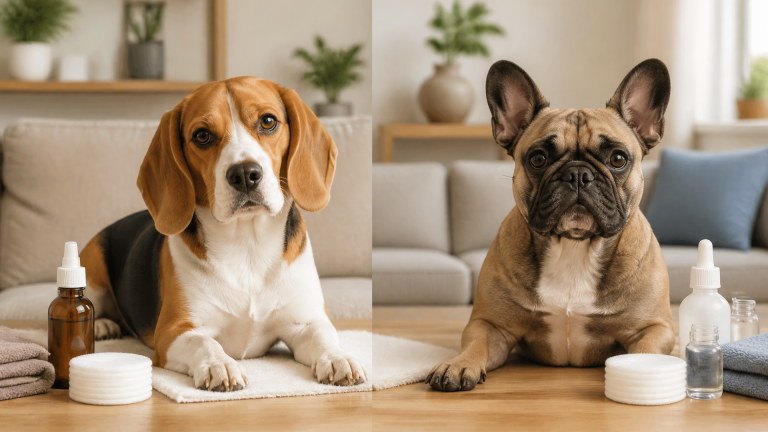
Grab a bottle of sterile saline eye wash (human contact lens saline — not multipurpose solution with cleaning agents). Soak a clean cotton ball and wipe from the inner corner outward. Use a fresh ball for each eye. Common mistake: using tap water or homemade salt water — both can introduce bacteria or irritate the eye further. Store saline at room temp; cold drops make your dog flinch.
Tip 2: Keep that face hair short — but not too short.
Trim the hair around your Shih Tzu’s eyes to about ¼ inch using round-tip safety scissors. Hairs that graze the cornea cause micro-scratches that can turn into ulcers. Common mistake: trimming wet hair. Wet hair shrinks when dry, leaving the area too short and exposing the eye. Always trim dry hair in good light, and use a comb to lift hairs away from the eye before cutting.
Tip 3: Prevent moisture buildup from tear stains.
Tear stains attract yeast and bacteria that make the eye area red and irritated. Wipe with a vet-approved tear stain wipe once a week. Common mistake: using hydrogen peroxide, vinegar, or human makeup remover — all can damage the cornea. Stick to products labeled for dogs’ eyes. If you need a deeper clean, ask your vet for a safe enzymatic wipe.
Tip 4: Add a humidifier in dry climates (bonus tip).
Shih Tzus with dry eye or lagophthalmos benefit from extra humidity — especially during winter or in air-conditioned homes. A small room humidifier near their sleeping area can reduce corneal drying and subsequent redness. Common mistake: assuming the humidifier replaces needed eye drops. It helps, but it’s not a substitute for prescription lubricants if your dog has diagnosed dry eye.
How to Tell If It’s an Emergency (and What to Do)
Some signs mean you skip the regular vet and go straight to an emergency clinic:
- Eye looks bigger than the other or bulging forward
- Cornea turns white, blue, or gray
- Your Shih Tzu cries out or flinches when you approach the eye
- You see a dark spot or crater on the cornea
- A foreign object is stuck on the eye surface
Shih Tzus can develop proptosis — the eye pops forward out of the socket — from even minor head trauma or rough play. If that happens, cover the eye with a clean damp cloth and get to the emergency vet immediately. Do not try to push the eye back in.
What to do on the way to the vet: Keep your Shih Tzu calm. Do not apply any drops or ointments unless the vet instructs you. If the eye is painful, your dog may be reluctant to open it — wrap them gently in a towel to prevent rubbing during the car ride.
FAQ: Shih Tzu Red Eye
Can I use human red-eye drops like Visine?
No. They constrict blood vessels and mask symptoms, which delays treatment for the real problem. Stick to sterile saline or dog-specific lubricating drops recommended by your vet.
Is tear staining the same as red eye?
No. Tear staining is the reddish-brown fur under the eye — it’s cosmetic. Red eye means the white part of the eyeball itself is bloodshot. Tear staining doesn’t cause vision loss, but the moisture can lead to skin irritation and secondary redness.
How often should I check my Shih Tzu’s eyes?
Daily. Because Shih Tzus often can’t close their eyes fully, the cornea dries out faster. A quick glance morning and evening — plus a thorough check once a week using the flashlight trick — catches problems early.
Can food allergies cause red eye?
Rarely as the only symptom. If food allergies trigger red eye, you’ll usually also see itchy skin, ear infections, or foot licking. Environmental allergies (pollen, dust, mold) are more common culprits for eye irritation in this breed. Your vet can help differentiate with a trial or allergy test.
Save This Guide — Red eye in a Shih Tzu is never normal. Bookmark this page so you can run through the decision checklist in seconds when you see that redness. The difference between a simple irritation and permanent vision loss is often just a few hours. A quick, informed check can make all the difference.
This article contains affiliate links. We may earn a small commission if you purchase through them, at no extra cost to you.