Are There Diff Sizes of Sphynx Cats
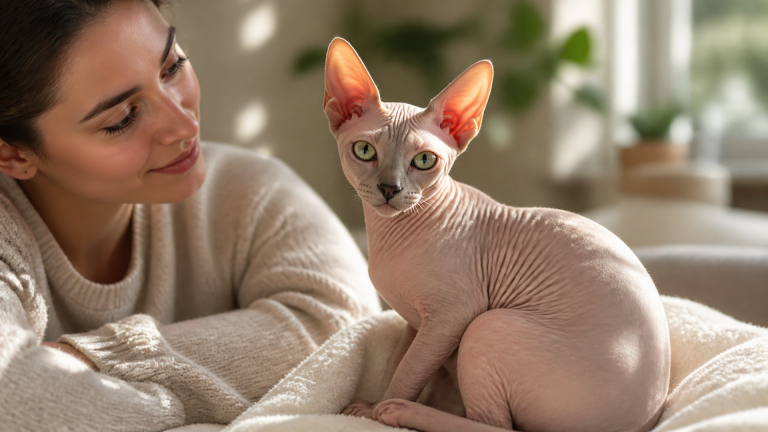
Yes, Sphynx cats come in different sizes. While they’re a medium-sized breed overall, individual cats can range from under 6 lbs to over 12 lbs. Males are typically larger than females. Body shape also varies — some Sphynx are compact and cobby, others lean and athletic. Size matters when choosing food portions, carriers, and even cat sweaters.

Average Sphynx Cat Size by Gender
| Gender | Typical Adult Weight | Typical Height (shoulder) |
|---|---|---|
| Male | 8–12 lbs | 9–11 inches |
| Female | 6–9 lbs | 8–10 inches |
These are averages. Genetics, diet, and spay/neuter timing can shift a cat to the edges of that range. A 13‑lb male isn’t necessarily overweight — he may just be a big-framed cat from a large-bloodline breeder.
What Determines a Sphynx’s Final Size?
Gender is the single strongest predictor. Males are almost always heavier and taller. Beyond that:
- Breeding line: Some Sphynx lines are bred for a cobby, muscular frame (think bulldog), while others are bred for a leaner, elegant look. A male from a cobby line can easily reach 12–13 lbs, while a female from an elegant line may top out at 7 lbs.
- Diet and growth phase: Kittens grow rapidly until about 9–12 months, then fill out slowly until 2–3 years. A kitten fed too many carbs may get fat, not big.
- Neuter/spay timing: Early alteration (before 6 months) can sometimes lead to slightly smaller adult size because growth plates close later when sex hormones are present.
Key decision criterion: If you want a Sphynx on the smaller side (under 8 lbs), look for a female from a line known for smaller frames. If you prefer a larger, more solid cat (10+ lbs), choose a male from a cobby line. Always ask the breeder for the adult weight and body type of both parents.
How to Estimate Your Kitten’s Adult Size
You can get a rough idea around 6 months old. Take the kitten’s current weight and double it. That’s a fair prediction of adult size for most Sphynx. For example, a 4‑lb male at 6 months will likely mature to 8 lbs. A 5‑lb female may reach 10 lbs — but that’s less common. Use this formula as a guide, not a guarantee. The best estimate still comes from the parents’ adult stats.
Sphynx Body Types: Cobby vs. Elegant
Not every Sphynx has the same silhouette. Knowing the two main body types helps you choose the right gear and manage expectations:
- Cobby (stocky): Thick neck, broad chest, short back, and muscular hindquarters. These cats weigh more and need wider carriers and roomier sweaters. They often feel heavier than they look.
- Elegant (sleek): Longer body, narrower chest, thinner tail, and a more refined head. Light-boned females in this type can look small even at a healthy weight. They fit better in standard cat gear.
Ask your breeder which body type the parents have. That tells you more about final size than a single weight number.
How to Verify Fit for Clothes and Carriers
Before buying a sweater or carrier, measure your cat’s chest girth (just behind the front legs) and length from neck to base of tail. For carriers, ensure the internal width is at least 12 inches for a large male. Compare these numbers to the product specs — don’t rely on weight ranges alone.
A large male Sphynx often needs a carrier designed for small dogs (like a Chihuahua). Brands such as Pet Gear and Sleepypod offer models with extra shoulder room. For clothes, look for items that list chest and neck measurements separately. Many Sphynx sweaters from Etsy sellers allow custom sizing — measure your cat and message the shop before ordering. (As an Amazon Associate, we earn from qualifying purchases.)
Realistic Trade-Offs With Sizing
A “one size fits most” cat sweater often doesn’t work for a large Sphynx male. The armholes may be too tight, or the sweater may ride up over the shoulders. On the other end, an extra-small sweater for a small female may still be too loose around the neck because Sphynx have slimmer necks than furry cats. Always check chest and neck measurements — not just the listed weight range — to avoid a poor fit.
The same goes for harnesses. Many Sphynx can wiggle out of a standard cat harness. Look for a martingale-style or escape-proof harness designed for small dogs. Measure the chest girth and the narrowest part of the neck before buying.
Expert Tips for Managing Sphynx Size
Use a baby scale to track weight monthly
Actionable step: Weigh your Sphynx at the same time each month on a digital baby scale (accuracy to 0.1 lb). Record it in a phone note or app. The Greater Goods baby scale is a reliable choice.
Common mistake to avoid: Guessing by feel alone. Sphynx body fat is harder to judge without a coat, and a distended belly from gas can look like weight gain.
Feed a high-protein, moderate-fat diet — not free-feeding
Actionable step: Measure food exactly per the calorie guide on your cat food bag (typically 20–30 calories per pound of body weight for maintenance). Split into 2 meals a day. A 10‑lb male needs about 250–300 calories daily from a quality wet food like Royal Canin Sphynx or Hill’s Science Diet.
Common mistake to avoid: Free-feeding kibble. Sphynx have a fast metabolism, but they can easily overeat if food is always available, leading to obesity that looks like “big boned.”
Learn to feel ribs, not just see them
Actionable step: Run your hand along your cat’s ribcage. You should feel ribs with a thin layer of fat — like feeling the back of your hand. No rib palpation? Your cat is overweight. Ribs too prominent? Underweight.
Common mistake to avoid: Comparing to another Sphynx at a cat show. Show cats may be intentionally heavier or leaner depending on the judge’s preference — not what’s healthiest for your pet.
Size-Related Health: What to Watch For
Because Sphynx have no coat, every bump and weight change is visible — but that can also lead to misinterpretation.
Quick checklist for healthy Sphynx size:
- [ ] Weight is stable (±0.5 lb) for at least 3 months after age 2
- [ ] Ribs can be easily felt but not seen
- [ ] Waist visible when viewed from above (hourglass shape)
- [ ] No potbelly (can indicate worms or poor diet)
- [ ] Growth curve matches breed averages (use the table above)
If your Sphynx is significantly outside the weight range and has a poor appetite, lethargy, or abnormal stool, see a vet — size alone is rarely a problem unless other symptoms are present. A sudden weight drop of 0.5 lb or more in a month warrants a vet visit, especially in a cat over 5 years old.
When Size Signals a Vet Visit
Normal Sphynx weight gain is slow and steady until year two. Rapid weight gain (1+ lb in a month) often means overfeeding or an underlying issue like thyroid problems. Rapid weight loss can signal hyperthyroidism, kidney disease, or intestinal parasites. Track monthly weights so you can spot unusual changes early.
Frequently Asked Questions
Are male Sphynx cats always bigger than females?
Yes, in most cases. Males typically weigh 8–12 lbs, while females run 6–9 lbs. Exceptions exist, but a male under 7 lbs or a female over 12 lbs is unusual.
Can I tell my Sphynx kitten’s adult size by paw size?
Not reliably. Big paws don’t guarantee a big cat. The parent weight and body type are far better predictors.
Do Sphynx cats continue growing after 1 year?
Yes. Most Sphynx reach their full height by 9–12 months, but they fill out in muscle and fat until about 2–3 years. Weight can increase 1–2 lbs during that filling-out phase.
Should I worry if my Sphynx is 5 lbs as an adult?
If the cat is a female from a small-boned line and eats well, has energy, and feels healthy, 5 lbs can be normal. Any cat under 5 lbs should be checked by a vet to rule out illness or poor nutrition.
Save This Guide
Sphynx cats vary in size from 6 to 13 lbs, with males routinely larger. When choosing a kitten, ask the breeder about the parents’ adult weight and body type — that’s your best prediction. Use the weight chart and monthly tracking to keep your Sphynx at a healthy size, and always judge weight by feel, not just looks. Measure chest and neck girth before buying clothes or carriers, and choose products designed for your cat’s body type (cobby vs. elegant). With consistent monitoring and proper nutrition, you’ll keep your Sphynx in the sweet spot for its frame.