How to Tell if a Bichon Has Cushings Disease
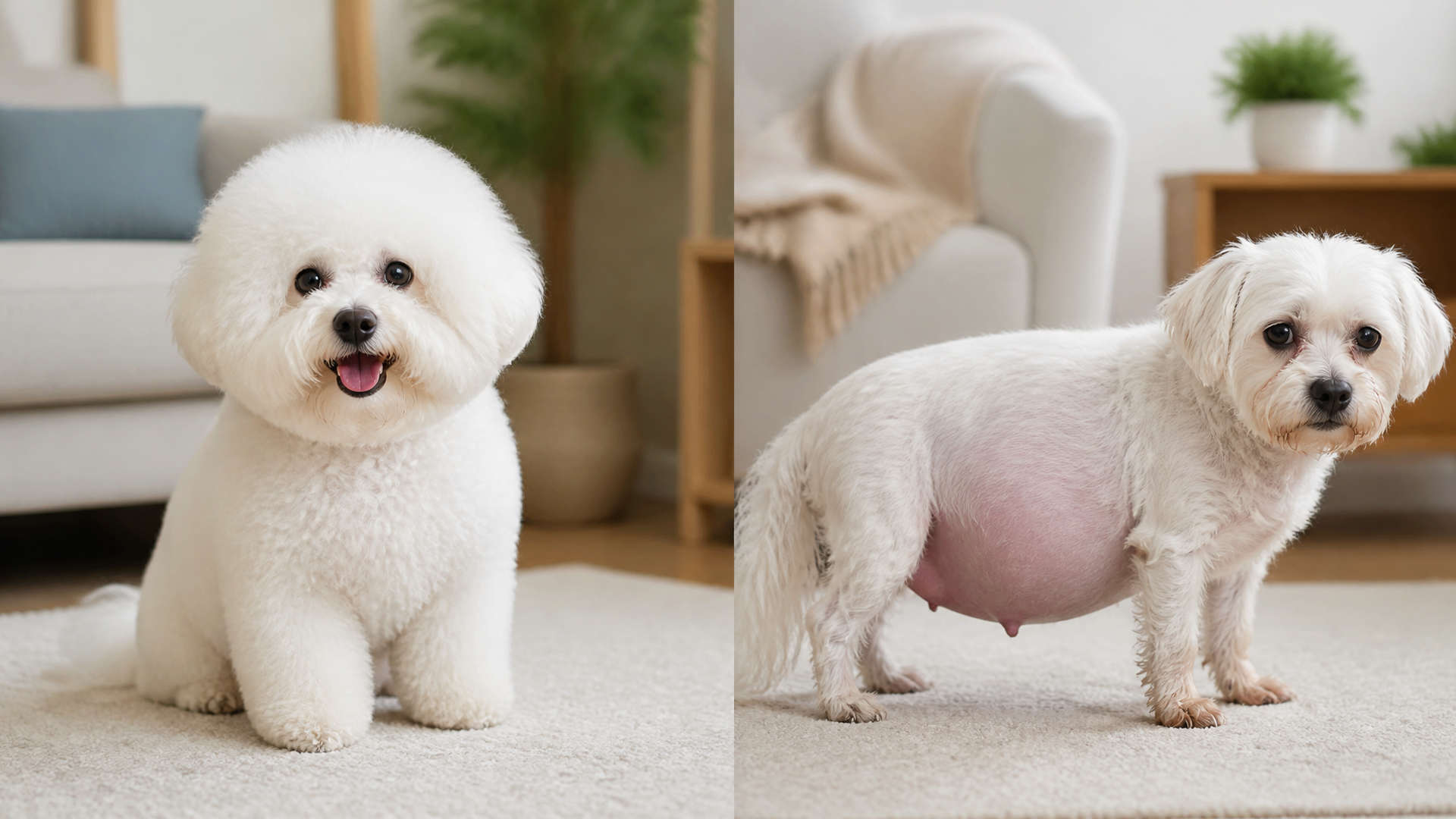
If your Bichon Frise is suddenly drinking like a fish, having accidents in the house, or developing a rounded belly that isn’t from extra treats, Cushing’s disease (hyperadrenocorticism) could be the reason. Look for a combination of excessive thirst, increased urination, a potbelly, symmetrical hair loss on the trunk, and thin or darkened skin. Bichons’ white coats make subtle skin changes easier to spot, but their fluffy build can hide early belly changes — a counter-intuitive twist that trips up many owners.

When to Suspect Cushing’s in Your Bichon
Bichons are long-lived and prone to conditions that mimic early Cushing’s, so knowing exactly what to watch for matters. The most telling clues are increased thirst and urination and a potbelly that isn’t from weight gain alone.
The Three Hallmark Signs
- Excessive drinking and urination – Refilling the water bowl more than twice a day, waking you at night to go out, or finding puddles in the house despite a reliable potty schedule.
- Potbelly – A sagging, rounded abdomen that feels firm, not soft like fat. In Bichons, this can be subtle because their fluffy coat hides body shape. Run your hands along the belly — if it feels distended and tense, that’s a red flag.
- Symmetrical hair loss – Thinning on both sides of the trunk, often sparing the head and legs. Bichons’ dense curls can hide early loss, so part the coat and check for bare patches or thinner hair over the ribs and flanks. This hair loss typically happens without itching — a key difference from allergies.
The Bichon-Specific Pitfall: Allergies vs. Cushing’s
Bichons are notorious for skin allergies, which cause itching, redness, and hair loss. Cushing’s produces hair loss without itching, and the skin feels thin or papery.
Here’s the branch: If your Bichon is scratching constantly or chewing at paws, allergies are far more likely. Try a hypoallergenic diet or an antihistamine (with your vet’s approval) for two weeks and see if symptoms improve. If the itching stops but the hair loss and drinking don’t improve, schedule a Cushing’s screening. If your Bichon is not scratching but still losing hair and drinking heavily, skip the allergy trial and go straight to the vet for bloodwork.
What Causes Cushing’s in Bichons?
- Pituitary-dependent (85–90% of cases) – A small tumor on the pituitary gland overproduces ACTH, stimulating the adrenal glands. This is the most common type in small breeds.
- Adrenal-dependent (10–15%) – A tumor on one adrenal gland produces excess cortisol. Small breeds, including Bichons, have a higher relative risk for adrenal tumors compared to larger dogs.
- Iatrogenic – Long-term use of steroids (oral, injectable, or topical) for allergies or autoimmune disease. Bichons with chronic skin issues are at higher risk because they often receive repeated steroid courses.
How Vets Confirm Cushing’s
You can’t diagnose Cushing’s at home, but knowing the testing sequence helps you understand what’s coming.
The Testing Sequence
1. Routine bloodwork and urinalysis – Elevated liver enzymes (ALP, ALT), high cholesterol, and dilute urine are red flags. A urine cortisol:creatinine ratio test can serve as a quick screen.
2. ACTH stimulation test – Measures cortisol before and after injection of synthetic ACTH. This is the most common confirmatory test but can produce false negatives for pituitary tumors.
3. Low-dose dexamethasone suppression test (LDDST) – More accurate for distinguishing pituitary from adrenal Cushing’s, but requires blood draws over 8 hours.
4. Abdominal ultrasound – Looks for adrenal tumors and checks for other organ changes.
Two Key Branch Points After Testing
First branch: If the LDDST shows pituitary-dependent Cushing’s, your dog will likely go on medication (trilostane). If an adrenal tumor is found, your vet may recommend surgery for a potential cure.
Second branch: If your Bichon has iatrogenic Cushing’s from steroid use, your vet will taper the steroids slowly over weeks — never stop suddenly. Expect to see symptoms improve within 4–6 weeks as the steroid dose decreases.
Checklist: 5 Signs That Warrant a Vet Visit
Use this quick check to decide if it’s time to schedule an appointment:
- [ ] Your Bichon drinks more than 1.5 cups of water per day (breed average is about 1 cup).
- [ ] You’ve found puddles in the house despite a reliable potty schedule.
- [ ] Belly looks rounded or hangs lower than normal compared to six months ago.
- [ ] Hair is thinning on both sides of the body, not just from friction or licking.
- [ ] Skin feels thinner than usual, or you notice dark spots or blackheads (comedones) on the belly.
If you checked two or more, ask your vet to run a baseline blood panel and urine test. Early diagnosis makes management easier.
Treatment Options for Bichons
- Trilostane (Vetoryl) – The most common medication, given once or twice daily. Dose is weight-based, and your Bichon will need periodic ACTH stimulation tests to monitor cortisol levels.
- Mitotane (Lysodren) – Older drug, still used for adrenal tumors. Requires more careful dosing and monitoring.
- Surgery – If an adrenal tumor is found and hasn’t spread, surgical removal can be curative. Bichons are good candidates due to their small size.
- Radiation – For large pituitary tumors causing neurological signs (rare in small breeds).
Note on iatrogenic Cushing’s: If your Bichon is on steroids for allergies, your vet will taper the dose slowly. Never stop steroids suddenly — this can cause a life-threatening Addisonian crisis.
How to Know Treatment Is Working (Verification Step)
After starting trilostane, expect visible improvement in this order:
- Weeks 1–2: Water intake and urination should drop noticeably. Your Bichon should stop waking you at night to go out. Use a measuring cup to track daily water consumption — a pet water fountain can help encourage drinking and make it easier to monitor, but check with your vet first.
- Weeks 4–6: The potbelly should begin to shrink as abdominal muscles regain tone.
- Weeks 8–12: Hair regrowth should start, often appearing as soft, fuzzy new coat on the trunk.
To verify the medication is working, your vet will run an ACTH stimulation test 10–14 days after starting treatment. Cortisol should fall into the target range (typically 1.5–5.5 µg/dL post-ACTH). If your Bichon’s drinking hasn’t improved by week two, the dose may need adjustment.
What Can Go Wrong (Failure Mode)
Over-medication (Addison’s-like crisis): If your Bichon starts vomiting, becomes lethargic, loses appetite, or seems weak or wobbly after starting trilostane, the dose may be too high. This can cause dangerously low cortisol levels. Stop the medication and call your vet immediately — your dog may need IV fluids and temporary steroid support. This is reversible with quick action.
Under-medication or recurrence: Some dogs need dose adjustments over time. If water intake increases again after months of stability, or hair loss returns, a repeat ACTH test is needed. Don’t wait — cortisol levels can creep up without obvious signs until symptoms reappear.
When to Call the Vet Immediately
- Sudden weakness, collapse, or vomiting — could indicate electrolyte imbalance or Addison’s (over-treatment complication).
- Blood in urine — often from bladder stones, which are common in Cushing’s dogs.
- Severe panting that doesn’t stop — can signal a cortisol spike or pancreatitis.
- No improvement in drinking or energy after 3 weeks of treatment — may indicate incorrect dosing or a different underlying cause.
Frequently Asked Questions
Is Cushing’s common in Bichons?
Cushing’s is not breed-specific to Bichons, but because the breed is long-lived and prone to allergies that may require steroid use, iatrogenic Cushing’s is more common than average. Primary pituitary Cushing’s occurs at similar rates to other small breeds.
Can I manage my Bichon’s Cushing’s without medication?
No — untreated Cushing’s leads to diabetes, infections, and organ damage. Medication is required to control cortisol levels. You can support your dog with a low-fat diet, consistent exercise, and high-quality hydration, but these are complements to treatment, not substitutes.
How long do Bichons live with Cushing’s?
With proper medication and monitoring, many Bichons live 2–4 years after diagnosis, often dying from other age-related conditions. The prognosis is worse if an adrenal tumor has spread.
Save This Guide
Watch for three hallmark signs in your Bichon: excessive drinking, potbelly, and symmetrical hair loss without itching. If you spot two or more, have your vet run a baseline blood panel and urine test early. Medication can control symptoms and extend your dog’s quality of life, but regular monitoring is essential. Keep this checklist handy to reference warning signs and vet testing steps at a glance.
Disclosure: This article contains product recommendations and affiliate links. As an Amazon Associate, we may earn from qualifying purchases.