Doberman Pinscher Pointy Ears
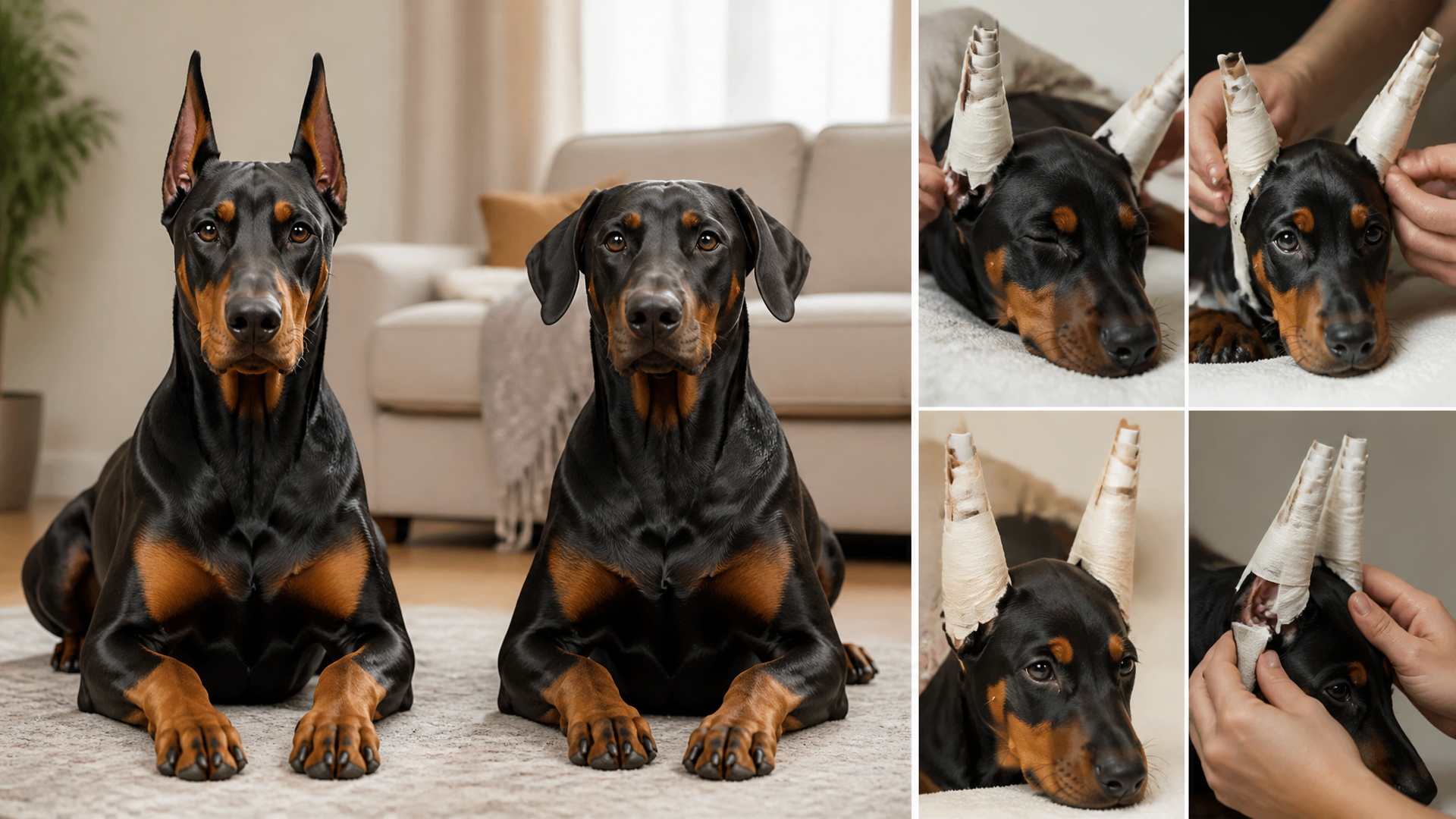
A Doberman’s pointy ears are a breed signature, but they don’t come naturally. The erect look comes from ear cropping—surgery that removes part of the ear flap—followed by months of taping to train the cartilage. If you’re deciding between cropped or natural ears, or already caring for a Doberman, here’s exactly what that decision means for your time, budget, and your dog’s health.

The short answer: Cropped ears require a surgical window (7–12 weeks old), $300–$800+ in costs, and 4–8 months of weekly taping. Natural ears are free, need no surgery, and only require routine cleaning. Your dog’s role—show vs. family pet—will drive the choice.
Cropped vs Natural Ears: What Changes Your Decision
The single most critical factor is your puppy’s age. If your Doberman is over 12–16 weeks old, cropping is off the table. After that, the cartilage is too thick and the ear won’t stand properly. Your first action: know your puppy’s birth date and check with your vet immediately if you’re interested in cropping.
Key Differences at a Glance
| Factor | Cropped Ears | Natural Ears |
|---|---|---|
| Breed standard | Required for AKC conformation shows | Accepted for pet and performance events |
| Age window | Surgery at 7–12 weeks (max 16 weeks) | No age limit |
| Cost | $300–$800+ (surgery + follow-ups) | $0 |
| Aftercare time | 4–8 months of taping + weekly adjustments | 10-minute ear clean every 2–4 weeks |
| Recovery | 2 weeks initial healing, pain meds needed | None |
| Infection risk | Higher during healing (open wounds + moist tape) | Low with routine cleaning |
| Hearing | Slightly improved directional hearing | Normal |
| Show eligibility | Required for AKC conformation | Eligible for AKC performance events |
Practical implication for your next step:
- If you plan to show in AKC conformation, call a vet experienced in Doberman cropping before the puppy turns 8 weeks. Delay means you lose the option.
- If this is a family pet, skip the surgery entirely. Natural ears are healthier, cost nothing, and avoid the risk of post-surgical infections or taping complications. Your Doberman will be just as loyal either way.
Verification Step: Confirm Surgery Eligibility
Ask your vet these three questions before booking:
1. “What is the latest age you will perform cropping?” (If over 12 weeks, the ear may never stand.)
2. “Can I see photos of your previous Doberman crops?” (Look for symmetry and straight tips.)
3. “What post-op taping support do you provide?” (Some vets offer free check-ins; others leave it to you.)
If the vet can’t provide clear answers or recent examples, find a breeder-recommended specialist. A bad crop job can leave your dog with floppy, uneven ears that no amount of taping will fix.
Caring for Cropped Ears: The Step-by-Step Healing Process
If you choose cropping, the next 4–8 months are a hands-on commitment. Here’s the operator flow from day one.
Early Checkpoint: Is the Surgical Site Ready for Taping?
- Wait until stitches/staples are removed (usually day 10–14).
- The ear edges must be fully closed—no scabs, no oozing. If you see redness, discharge, or swelling, stop and call your vet. Taping over an infected wound will make it worse.
- Verify with a quick visual check: lift the ear gently. The incision line should be dry and pink, not red or wet.
Ordered Taping Steps (Repeat Every 5–7 Days)
1. Roll a foam or plastic ear post into a cylinder 1–2 inches long (longer for bigger ears).
2. Insert the post into the ear canal so the ear stands upright. The post should reach the tip.
3. Wrap the ear flap snugly around the post. Not so tight it cuts circulation—you should be able to slide a finger between tape and skin.
4. Secure with medical tape at the base (1-inch width works well). Wrap twice around the base.
5. Bridge both ears with a tape strip across the top to keep them parallel.
Common mistake: Using too much tape or wrapping the base too tightly. This can cause pressure sores or restrict blood flow. Check the ear tips daily—if they feel cold or look pale, re-tape looser.
Likely cause of tape failure: The post is too short. If the ear keeps flopping forward, the post isn’t supporting the full length. Switch to a longer post or add a stiff backing (like a popsicle stick) taped to the inside.
When to Stop Taping
The ears are done when they stand erect without tape for 2 consecutive weeks. This typically happens between 5–8 months, but some Dobermans need 12 months.
Success check: Stand behind your dog and look straight on. Both ears should be symmetrical, upright, and slightly forward. If one ear droops or the tips curl, resume taping for another two weeks, then check again.
Escalation signal: If after 8 months of consistent weekly taping one ear still won’t stand, consult your vet. A surgical revision (re-cropping) may be needed, but it’s a last resort—only about 5% of Dobermans need it.
Caring for Natural Ears: Simple, Low-Maintenance Routine
Natural Doberman ears are floppy, which traps moisture and debris. You need a consistent cleaning routine, but it’s far easier than cropping aftercare.
Weekly Ear Check (Takes 30 Seconds)
- Look: Lift the ear flap. The inside should be pale pink. Redness, dark discharge, or swelling = infection.
- Smell: A yeasty or sour odor means bacteria or yeast overgrowth.
- Touch: Does your dog flinch or pull away when you touch the ear? That’s pain—call the vet.
Cleaning Routine (Every 2–4 Weeks)
1. Apply a vet-recommended ear cleaner with drying agents (like boric acid or salicylic acid). Fill the canal until it almost overflows.
2. Massage the base for 20–30 seconds. You’ll hear a squishing sound—that’s the cleaner breaking up wax.
3. Let your dog shake. They’ll fling out the loosened debris.
4. Wipe the outer ear with a cotton ball. Never use cotton swabs inside the canal—they push debris deeper and can damage the eardrum.
Verification step: After cleaning, the ear should be dry and odor-free within 2–3 hours. If it stays damp or smells musty after 24 hours, switch to a cleaner with stronger drying properties (ask your vet for a recommendation).
Practical Implication for Natural-Ear Owners
- No age deadline—you can adopt an adult Doberman with natural ears and never worry about cropping.
- Lower infection risk overall because there’s no surgical wound. However, floppy ears do trap more moisture than upright ears, so a missed cleaning can lead to an infection. Stick to the routine.
- Cost: $0 beyond a bottle of ear cleaner ($10–$20 every 3–4 months).
Expert Tips for Both Ear Types
Tip 1: Avoid Moisture Buildup (Common to Both)
Actionable step: After baths or swimming, dry the inside of the ear flap with a soft towel. If you have a cropped ear dog still in taping, cover the ears with a shower cap to keep tape dry.
Common mistake: Assuming the ears will air-dry on their own. Moisture trapped under tape or inside a floppy ear is the #1 cause of yeast infections in Dobermans.
Tip 2: Use the Right Tape for Cropped Ears
Actionable step: Choose porous medical tape (cloth or paper) rather than waterproof tape. Porous tape lets the skin breathe and reduces irritation.
Common mistake: Using duct tape or electrical tape—these trap heat and moisture, causing burns and skin breakdown. Stick to medical-grade tape only.
Tip 3: Know When Natural Ears Need More Than Cleaning
Actionable step: If your Doberman shakes their head persistently for more than 24 hours, schedule a vet visit. Head shaking often signals a deeper ear infection that won’t clear with over-the-counter cleaners.
Common mistake: Waiting to see if it resolves. Ear infections in floppy ears can worsen quickly, leading to painful swelling or a ruptured eardrum. Early treatment is cheaper and less stressful.
When Things Go Wrong: Realistic Trade-offs and Mismatches
Cropped Ears That Won’t Stand
Even with perfect taping, some Dobermans end up with “airplane ears”—tips that flare outward instead of pointing straight up. This doesn’t affect hearing, but if you paid for a show-quality look, it can be disappointing. The common cause: the ear was cropped too long (too much ear flap left) or the cartilage is naturally thick. A re-cropping is possible but expensive ($500–$1,000) and risky.
Another trade-off: Cropping requires frequent vet follow-ups that can total $500+ beyond the initial surgery. If you’re on a tight budget or schedule, natural ears eliminate that ongoing cost.
Natural Ears That Are Prone to Infection
Some Dobermans have narrow ear canals that trap debris despite regular cleaning. If your dog gets recurrent infections (more than 2 per year), your vet may recommend a short course of prescription ear drops or even a surgery called a lateral ear resection to improve drainage. This is rare but should be on your radar.
FAQ (Short)
Q: Is ear cropping painful for the puppy?
Yes, it’s surgery. The puppy receives anesthesia during the procedure and pain medication for several days afterward. Most puppies recover in 1–2 weeks. Taping itself is not painful if done correctly.
Q: Can natural Doberman ears stand up on their own?
No. Dobermans are a floppy-eared breed at birth. Without cropping and taping, the ears will stay soft and hang down. There is no natural way to make them stand.
Q: What’s the latest age a Doberman can be cropped?
Most vets recommend 7–12 weeks. Some will attempt up to 16 weeks, but success rates drop significantly after 12 weeks because the cartilage is already thickening.
Q: Do cropped ears affect hearing?
Cropped ears can slightly improve directional hearing (pinpointing where a sound comes from), but overall hearing ability is the same as natural ears.
Save This Guide
Key takeaway: Cropped ears require an early decision (before 12 weeks) and a 4–8 month taping commitment. Natural ears are free, healthy, and low-maintenance. Your Doberman will be just as loyal and handsome either way. Cropped ears need consistent weekly taping and infection monitoring. Natural ears need routine cleaning and drying. Both paths produce a healthy, happy dog when handled correctly.
This guide contains affiliate links. If you purchase through these links, we may earn a commission at no extra cost to you.