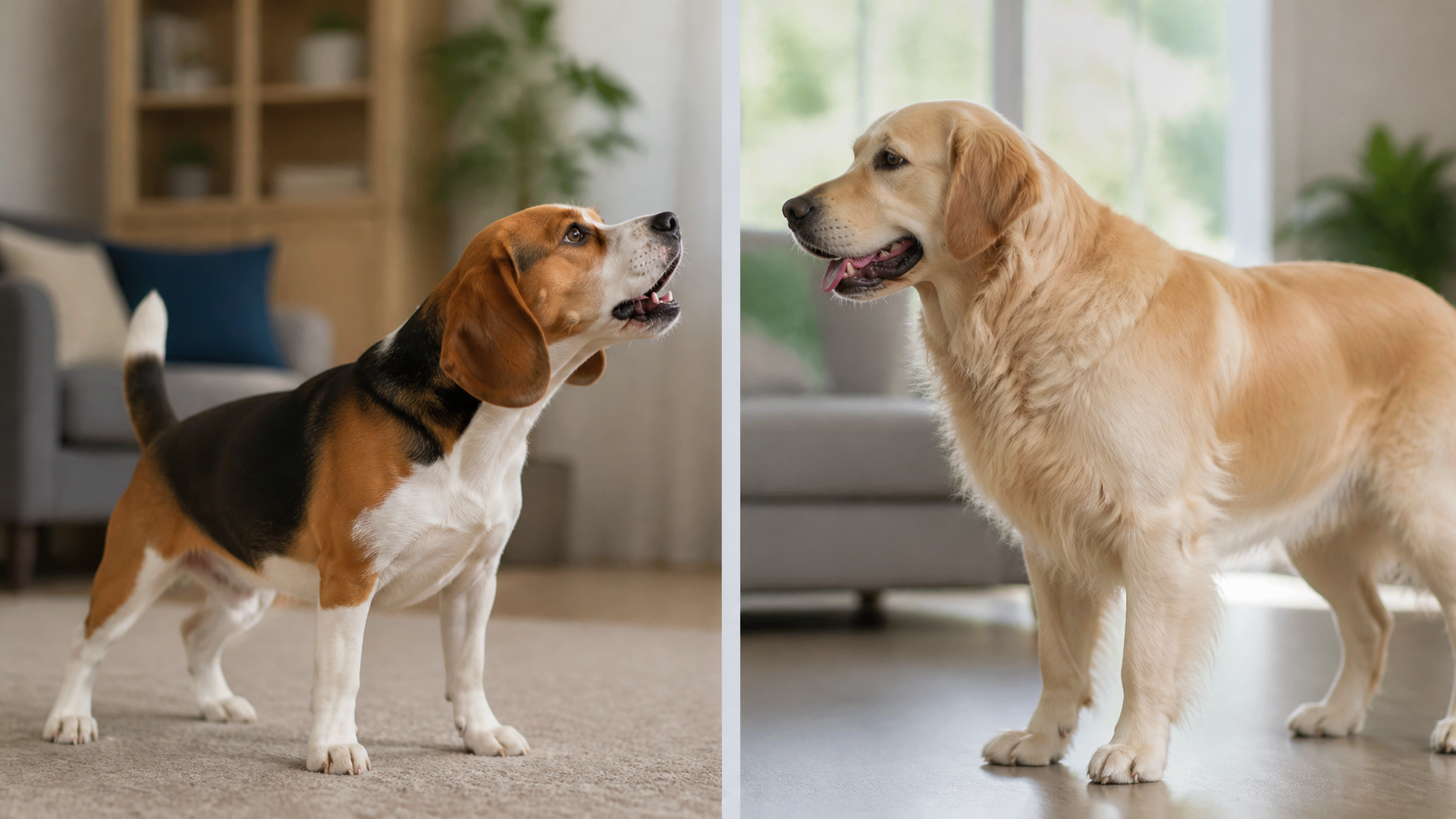
is it Normal For my 6 Year Old Beagle Mix to Whine When he Sees Other Dogs.
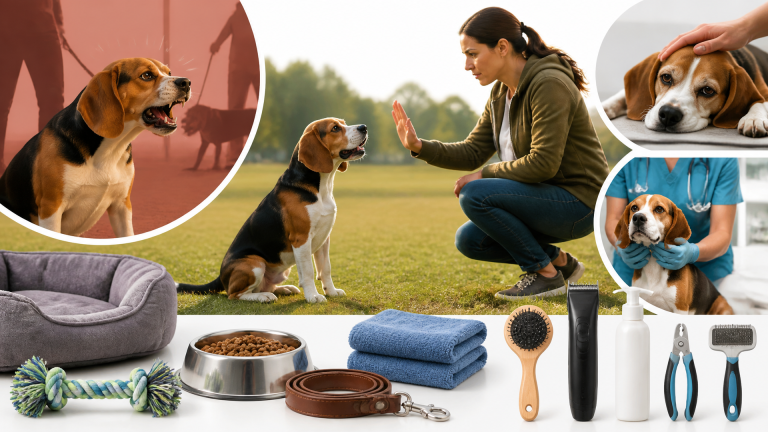
Yes, it’s completely normal. Beagles are one of the most vocal breeds — they were bred to bay and howl while hunting, so whining, barking, and baying are hardwired. But not all whining means the same thing. Your Beagle mix could be excited, frustrated, anxious, or any combination. The difference matters because the wrong response can make the problem worse.

This guide breaks down the three reasons Beagles whine at other dogs, gives you a quick way to tell them apart, and provides a step-by-step training plan you can start today.
Why Your Beagle Mix Whines at Other Dogs
Beagle mixes inherit strong vocal tendencies from their Beagle lineage. Unlike breeds that only bark to alert, Beagles use sound as their primary way to communicate. When your dog sees another dog, the whine can come from three very different places.
Excitement and Social Greeting
This is the most common cause. Your Beagle sees another dog and wants to say hello. The whining is a social signal: “I see you, let’s meet.”
Body language to look for:
- Tail wagging in wide arcs (not tucked or stiff)
- Soft, open mouth
- Ears relaxed or slightly forward
- Whole body wiggling
If this matches your dog, the whining is normal Beagle enthusiasm. No intervention needed beyond polite greetings.
Barrier Frustration (The Failure Mode to Watch For)
This is where most owners get confused. Your Beagle sees a dog he wants to reach but can’t — he’s on leash, behind a fence, or in the car. The whining escalates into pulling, lunging, or even growling.
Why this is your biggest risk: Many owners see the whining and think “he just wants to play.” But barrier frustration is different from excitement. If you allow greetings when your dog is in this state, you reinforce the idea that whining plus pulling equals getting what he wants. Over time, this pattern can turn into full leash reactivity.
Body language to look for:
- Tail held high and stiff, wagging rapidly in short strokes
- Tense body, leaning forward
- Hard stare at the other dog
- Whining that doesn’t stop when you move away
- Ignoring treats you normally can’t resist
How to detect it early: Try to hand your Beagle a high-value treat when he starts whining at a distant dog. If he ignores it completely, you’re seeing barrier frustration, not excitement. An excited dog will still take food. A frustrated or over-aroused dog won’t.
Practical implication for you: If your dog ignores treats when whining, do not let him greet the other dog. Forcing a greeting in this state teaches him that lunging works. Instead, increase distance immediately — cross the street, turn around, or walk behind a parked car. Then wait until his body relaxes before continuing.
Anxiety or Uncertainty
Some Beagle mixes whine because they’re unsure about the other dog. This is less common in a 6-year-old who’s seen plenty of dogs, but it can happen after a bad experience, with unusually large or pushy dogs, or if your dog’s vision or hearing has declined.
Body language to look for:
- Tail tucked or low
- Ears pinned back
- Yawning, lip licking, or turning head away
- Whining mixed with huffing or soft growls
If this sounds like your dog, the whining is a distress signal. Do not force greetings. Remove him from the situation and work on building confidence at a greater distance.
Quick Reference: Is This Normal or a Problem?
| Normal excitement | Needs training attention |
|---|---|
| Loose, wiggly body | Tense, stiff body |
| Takes treats when a dog is in view | Ignores food completely |
| Stops whining when the other dog leaves | Continues whining for minutes after |
| Only whines within a few yards | Whines at any distance |
| Tail wags in wide arcs | Tail held high and stiff, wagging in short rapid bursts |
Verification step you can do today: On your next walk, when you spot another dog at a comfortable distance, hold a treat near your dog’s nose. If he takes it and chews happily, you’re working with excitement — use the training steps below. If he ignores the treat or spits it out, you’re dealing with over-arousal or frustration. Increase distance immediately and start Step 1 from that farther spot.
Step-by-Step Plan to Reduce Whining
This plan works for excitement, frustration, and mild anxiety. It uses your Beagle’s food drive to your advantage. For best results, use high-value treats like small pieces of chicken, cheese, or freeze-dried liver.
Step 1: Find Your Dog’s Threshold Distance
Take your Beagle to a park where you can see other dogs from a distance. Start far enough away that he notices the other dog but does NOT whine, pull, or stare intensely. That spot is his threshold distance. Mark it mentally.
Checkpoint: If he whines immediately, you’re too close. Back up 50 feet and try again. Keep backing up until you find a spot where he looks at the dog, then looks back at you without whining.
Step 2: Teach “Look at That”
At that comfortable distance, every time your dog glances at the other dog, say “Yes!” and give a treat. Repeat 10-15 times. You’re building the connection: other dog equals treat appears.
When to advance: Once he looks at the other dog and immediately turns to you for the treat, take one step closer and repeat. If whining returns, you moved too fast — go back to the previous distance.
Step 3: Build the Redirect Cue
When your dog can hold attention on you for 3-5 seconds with a dog in view, add a cue like “Watch me” or “Touch” (touch your palm with his nose). Reward each correct response.
Friction point: Some Beagles get too focused on the treat and not the cue. Wait until he makes eye contact with you before marking and rewarding. If he’s just staring at your hand, pause for a second.
Step 4: Practice in Real Walking Scenarios
Now apply the skill on walks. When you see a dog approaching, increase distance if possible — cross the street or step behind a parked car. Ask for “Watch me” or “Touch” before the whining starts. Reward with a treat and keep walking calmly without stopping.
Step 5: Use a Front-Clip Harness for Steering Control
A standard collar or back-clip harness lets a pulling Beagle pull harder. A front-clip harness (like the PetSafe Easy Walk or Blue-9 Balance Harness) gives you steering control — when your dog lunges, the clip gently turns him back toward you.
Success check for this step: You should be able to walk past another dog at 20 feet without whining at least half the time. If you’re stuck at 50+ feet after 2 weeks, consider a professional trainer.
When to escalate: If you see actual lunging, growling, snarling, or snapping, stop the above protocol and call a certified positive-reinforcement trainer immediately.
Expert Tips for Beagle Owners
Tip 1: Give a Decompression Walk Before Any Dog Meeting
Let your Beagle sniff freely on a long leash for 10-15 minutes in a quiet area before you walk anywhere with other dogs. Sniffing lowers arousal levels. A tired Beagle is a calmer, more trainable Beagle.
Common mistake: Skipping this because you’re short on time. A wound-up Beagle needs about 15 minutes of sniffing to reach a trainable state.
Tip 2: Use a Positional Cue Instead of “Quiet”
Teach your Beagle a position or action to replace the whining — like “Sit” or “Touch.” You can reward a sit far more reliably than you can reward an absence of whining. Once sitting becomes his automatic response to seeing a dog, the whining will decrease naturally because he’s busy performing a different behavior.
Common mistake: Saying “No” or “Quiet” repeatedly. This teaches your dog that seeing other dogs is frustrating, which increases stress.
Tip 3: Add a Calming Aid Only for High-Stress Events
If your Beagle mix truly panics — not just gets excited — a calming supplement like VetriScience Composure or a ThunderShirt can help take the edge off. Use these only for specific high-stress events like vet visits or crowded parks.
Common mistake: Expecting the aid alone to fix the behavior. Calming tools lower the threshold for training. They don’t substitute for it.
Potential Mismatch and Trade-Offs to Know
This training plan works for most Beagle mixes, but there are limits.
If your Beagle mix has a strong independent streak (common in Beagles), he may not reliably respond to treats when distracted. You’ll need exceptionally high-value rewards — try freeze-dried salmon or stinky cheese.
If the whining is rooted in anxiety, increasing distance and practicing “Look at That” is still the right approach, but progress may take 6-8 weeks instead of 2-3.
If your dog has already rehearsed leash reactivity for years, the frustration may be deeply patterned. A front-clip harness alone won’t fix it. You’ll likely need a certified trainer with experience in reactivity.
What not to use: Prong collars, shock collars, or slip leads. These increase stress and can turn mild frustration into genuine fear-based aggression. For a Beagle, they often make the vocal response worse, not better.
Frequently Asked Questions
Will my Beagle mix always whine when he sees other dogs?
Probably not at full force, but Beagles are naturally vocal. You may always get a soft, brief whine when he’s excited — that’s fine. The goal is to eliminate the high-pitched, frantic whining that signals over-arousal or stress.
Is it too late to train a 6-year-old Beagle mix?
Not at all. Adult dogs learn well. They may take a bit longer to build new habits, but their self-control is often better than a puppy’s. Stay consistent and patient.
What if he whines inside the house or car when he sees a dog outside?
Same protocol applies. Increase distance — close the blinds or move the car farther away — and start the threshold distance training from there.
Save This Guide
Whining at other dogs is normal for Beagle mixes, but it’s also manageable. Print the body language reference table and keep the training steps handy. The fastest fix is finding the right distance, rewarding calm looks, and never forcing a greeting when your dog is over threshold. If consistent training doesn’t improve things within 6 weeks, work with a certified positive-reinforcement trainer.
This article contains affiliate links. As an Amazon Associate, we earn from qualifying purchases, at no extra cost to you.