Color Belly Golden Retriever
Noticed your Golden Retriever’s belly looks pinker, darker, or spotted than before? Most color changes are harmless—Golden Retrievers naturally develop pigment shifts as they age. But some changes signal health issues you shouldn’t ignore. Here’s how to tell the difference in under 60 seconds.

What’s Actually Happening to Your Golden’s Belly
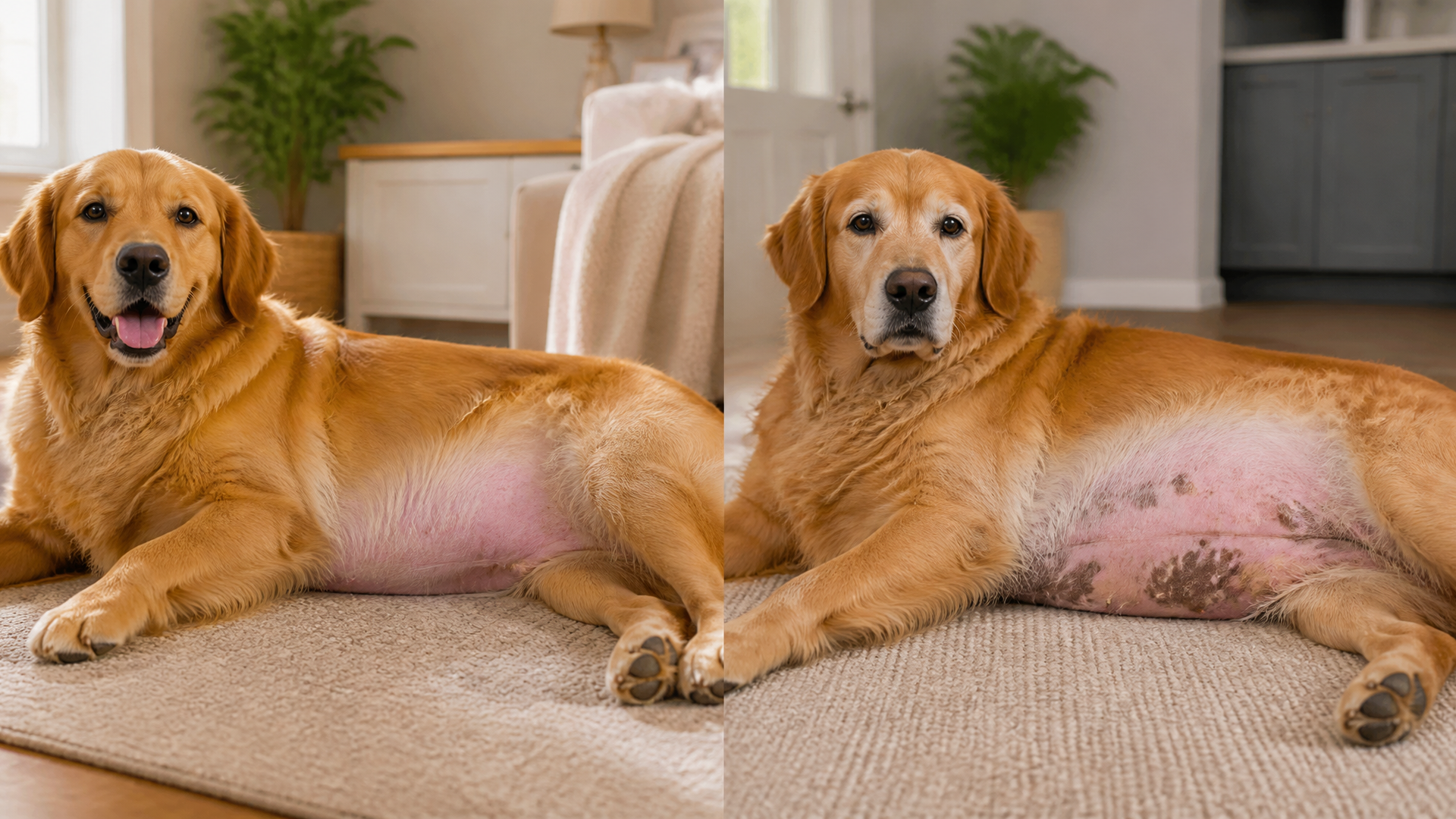
Golden Retrievers are born with light pink belly skin. Over time, that skin naturally darkens or develops freckles—especially in areas with thin fur like the belly, armpits, and groin. This is normal pigmentation, not a health problem.
But context matters. The same color change means different things depending on your dog’s age:
| Age Range | Normal Belly Changes | What Raises Concern |
|---|---|---|
| Puppy (under 1 year) | Light pink, smooth, minimal pigment | Redness, bumps, crusting, or hair loss |
| Adult (1–7 years) | Gradual freckling, slight tanning | Sudden dark patches, greasy texture, odor |
| Senior (7+ years) | More spots, overall darker skin | Thickened “elephant skin,” yellow tint, pale/blue |
Key boundary to remember: If the color change took months or years and your dog acts normal, it’s almost always harmless. If it appeared in days or weeks, or your dog is itchy, sore, or lethargic, it’s time for a vet visit.
Normal vs. Concerning Belly Colors: Quick Reference Table
| Belly Appearance | Likely Normal? | Action |
|---|---|---|
| Pink with smooth skin | Yes, especially puppies or light-skinned adults | Enjoy the belly rubs |
| Small black or brown spots (freckles) | Yes, common with age | No action needed |
| Pale, whitish, or blue-tinted | No – could indicate poor circulation or anemia | Call your vet immediately |
| Bright red or angry rash | No – allergies, infection, or contact irritant | Evaluate cause, see vet if persists |
| Dark, thick, elephant-like skin | No – often linked to hypothyroidism or chronic allergies | Vet checkup + bloodwork |
| Yellow or jaundiced (skin or whites of eyes) | No – liver or gallbladder issue | Urgent vet visit |
| Greasy, smelly, with red-brown staining | No – likely yeast or bacterial infection | Vet for ear and skin swab |
Real trade-off to know: Some mild redness from allergies can look identical to early infection. If you treat redness with over-the-counter wipes and it doesn’t improve in 48 hours, stop guessing—a vet swab costs less than a late-stage treatment.
How to Check Your Golden’s Belly the Right Way
Most owners spot belly changes during baths or belly rubs—by then, the issue may have been there for weeks. Here’s a faster, more reliable check.
First, Know Your Dog’s Baseline
Snap a photo of your Golden’s belly today in natural light. Save it to your phone. This is your reference image. That single photo is the most useful tool you have—it lets you spot real changes instead of guessing.
Verification step: Compare new photos against that baseline every 2–3 weeks. If you see a change that wasn’t there before, you now have a precise timeline for your vet.
Step 1: Position and Light
- Lay your Golden on its back on a blanket or your lap.
- Use indirect natural light or a phone flashlight. Direct sun makes redness look worse than it is.
- Have a treat ready if your dog resists.
Step 2: Inspect Skin, Not Fur
Part the belly fur and look at the skin itself. Check for:
- Color: Pink, red, brown, pale, yellow, blue
- Spots: Are they new? Changing shape or size?
- Texture: Smooth vs. thickened vs. greasy
- Smell: Normal is odorless. Yeasty smells like corn chips or bread. Infection smells sour or foul.
Step 3: Map the Pattern
- Symmetrical, gradual darkening on both sides? Usually normal aging.
- One red or dark patch? Could be a hotspot, pressure sore, or contact allergy (new detergent, new bed).
- Red circles with hair loss? Possible ringworm or bacterial infection.
- Blue or pale belly skin AND gums? Emergency—check inside the mouth, head to the vet.
Step 4: Gauge Pain or Itch
Gently press the belly skin. Watch your dog’s response:
| Reaction | Likely Meaning |
|---|---|
| Relaxed, no reaction | Normal |
| Flinches slightly when pressed | Mild irritation—watch for 24 hours |
| Whines, pulls away, or growls | Pain—seek veterinary advice |
| Constantly licking or scooting | Itch or irritation—typical of allergies |
Step 5: Escalation Signals
See a vet within 24 hours if you notice:
- Yellow or blue skin
- Bleeding, oozing, or open sores
- Sudden, rapid color change (days, not months)
- Hard lumps attached to deeper tissue
- Behavior changes (lethargy, loss of appetite, vomiting)
Success check: You now know your dog’s baseline belly color and can spot meaningful changes. That baseline photo is your best defense against unnecessary worry—or missed problems.
3 Expert Tips for Golden Retriever Belly Care
Tip 1: Make belly checks a weekly grooming habit.
- Actionable step: Once a week after brushing, flip your Golden onto its back and inspect the belly skin for 30 seconds. Use a slicker brush like the Hertzko Self-Cleaning Slicker Brush to keep underbelly fur mat-free so you can actually see the skin.
- Common mistake: Only checking after a bath or when there’s a problem. Weekly checks catch issues when they’re easiest to treat.
Tip 2: Protect the belly from sunburn—yes, Goldens burn there.
- Actionable step: On bright days, apply dog-safe sunscreen to the belly, groin, and inner thighs. These areas have thin fur and burn quickly, especially on lighter-skinned Goldens. Epi-Pet Sun Protector Spray works well and won’t irritate if licked.
- Common mistake: Using human sunscreen. Zinc oxide and other common ingredients are toxic to dogs. Always use a product labeled for dogs.
Tip 3: Stop allergies before they darken the skin permanently.
- Actionable step: If your Golden licks its belly often, switch to a limited-ingredient diet like Purina Pro Plan Sensitive Skin & Stomach and wash bedding weekly with fragrance-free detergent. This cuts the inflammation that leads to hyperpigmentation.
- Common mistake: Assuming all dark belly skin is “just allergies” and ignoring it. Chronic scratching causes permanent darkening and thickened skin. A vet can run a simple test to identify the real trigger—food, flea, or environmental.
What Can Go Wrong: The Mismatch Most Owners Miss
The hardest call isn’t between “obviously normal” and “obviously sick”—it’s the gray zone.
Example: Your Golden develops a slightly darker, slightly greasy belly. It doesn’t smell bad. No itching. You assume it’s normal pigmentation. Three months later, the skin is thick and dark, and your dog has started scratching. What looked normal was actually early-stage yeast overgrowth, treatable with a $30 cream in week one—but now requires weeks of oral medication.
The fix: If your Golden’s belly skin changes texture (greasy, thickened, flaky) along with color, get it checked—even if there’s no itching yet. Texture change with color change is a stronger warning sign than color change alone.
Affiliate Disclosure
Some links in this article are affiliate links. If you purchase through them, we may earn a small commission at no extra cost to you. We only recommend products we genuinely trust for your Golden Retriever.
Save This Guide
Golden Retriever belly color is usually normal—but knowing your dog’s baseline helps you catch real problems fast.
Key takeaway: Snap a baseline photo today. Check your Golden’s belly weekly for color, texture, and smell. If you see yellow, blue, bright red, or rapid changes, head to the vet. If the skin changes texture along with color, don’t wait for itching. Those freckles and pink spots? Just part of your dog’s unique pattern—nothing to worry about.