Sphinx Cat Paws: Guide: What Every Owner Should Know
Sphinx cat paws produce more oil than furry cats’ paws, and without fur to absorb it, that oil collects dirt fast. The quick answer: check paws daily, clean with a damp cloth at least twice a week, moisturize only when the pads look dry, and use unscented products. Most paw issues are minor and fixable at home—but bare skin makes infections escalate faster, so knowing when to call the vet matters.

What Makes Their Paws Unique
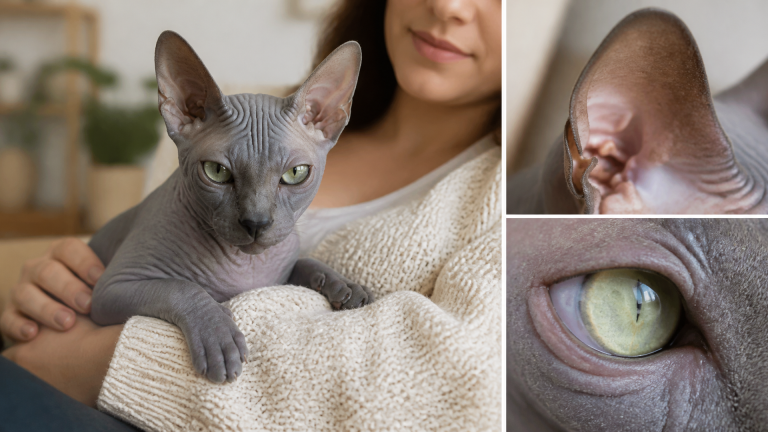
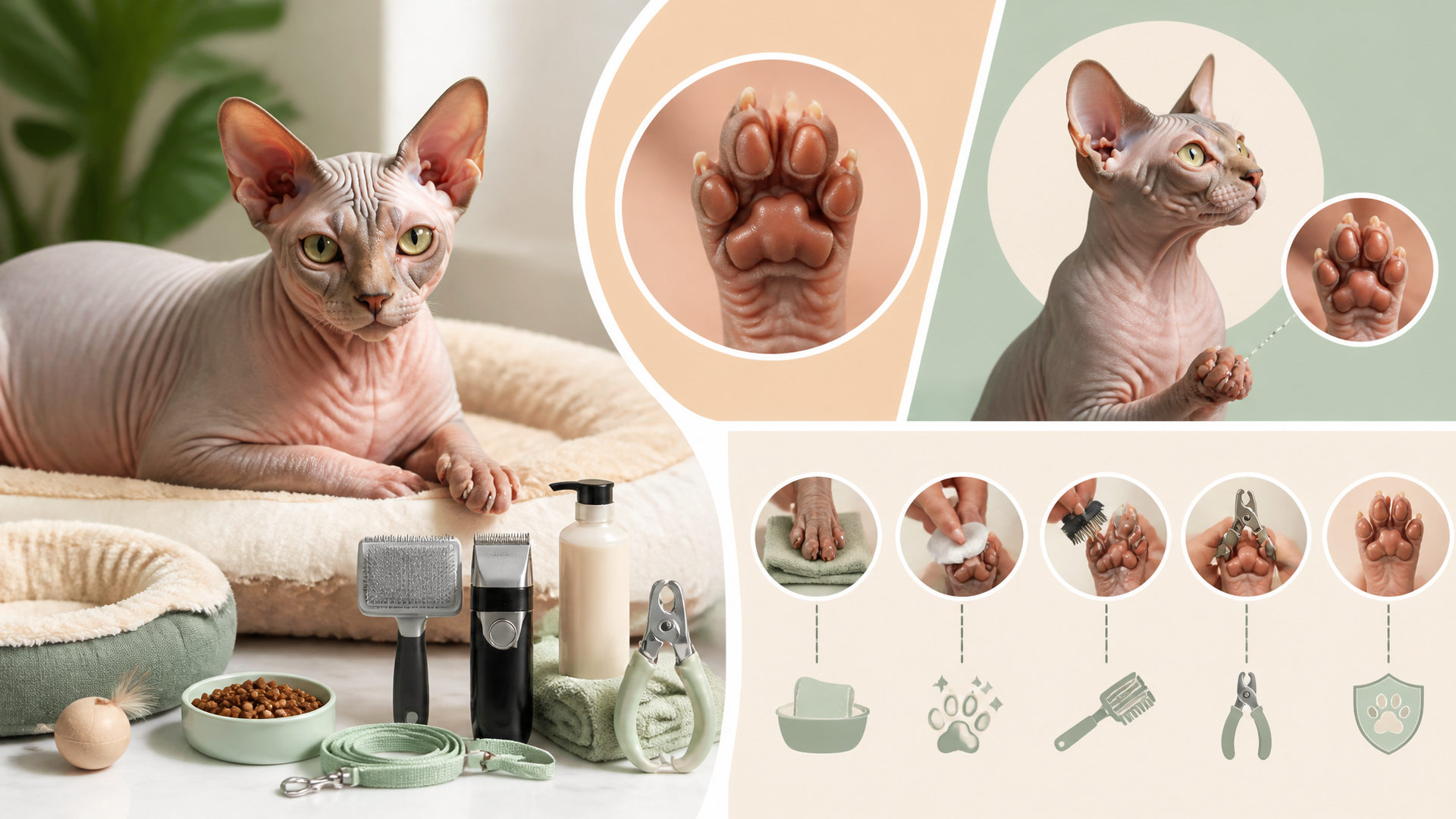
Sphinx cats have a thin layer of peach-fuzz down on their bodies, but their paw pads are completely bare. That changes how you care for them:
- Extra oil production: Oil from the skin collects directly on the pads, leaving greasy prints on floors and furniture. This is normal—not a medical problem.
- No fur between toes: Dirt, litter dust, and debris get trapped against the skin instead of being absorbed by fur. You’ll often find dark gunk in the toe creases.
- They rely on you for cleaning: Furry cats clean their paws by licking through their fur; a Sphinx needs you to get between those toes. If you skip it, the buildup can lead to irritation or infection.
This care routine applies to healthy adult Sphinx cats. If your cat has a known skin condition, is recovering from surgery, or is a kitten under 12 weeks, follow your vet’s instructions instead.
A Simple 5-Minute Paw Cleaning Routine
You don’t need fancy products—just the right order. The whole process takes about five minutes and is easiest to do right before a meal or treat.
What You’ll Need
- Soft, lint-free cloth or unscented pet-safe wipes (avoid baby wipes—many contain aloe or alcohol that can irritate bare skin)
- Bowl of warm water (test on your wrist—should feel barely warm, not hot)
- Cotton swabs for between toes
- Pet-safe paw balm (only if pads look dry)
Step-by-Step
1. Inspect each paw first. Look for cracks, redness, swelling, or debris stuck between toes. Checkpoint: If you see an open wound, oozing, or a nail ingrown, stop and call your vet—don’t clean over it.
2. Wipe with a damp cloth. Gently clean the pad and between each toe. Use a fresh section of cloth for every paw—don’t spread debris from one paw to another. After wiping, run a clean finger between the toes. If any residue remains, wipe again.
3. Use a cotton swab for tight creases. Gently clean the folds where dirt hides. Don’t push deep into the webbing—just the visible crevices.
4. Dry completely. Pat paws with a clean towel. Moisture trapped between toes can cause irritation or yeast issues. Be thorough between the toes.
5. Moisturize only if needed. If the pads feel dry or cracked, apply a rice-grain-sized amount of pet-safe balm. If they feel greasy, skip it—over-moisturizing can clog oil glands and cause blackheads.
Practical tip: Make this part of your evening routine right before a treat. Your Sphinx will learn to sit still for it. Common mistake: rushing through drying. Damp paws invite fungal growth, so take an extra thirty seconds to pat each toe dry.
Moisturizing: When More Is Actually a Problem
Most owners assume a hairless cat needs constant moisturizing everywhere, but Sphinx paw pads produce more oil than furry cats’. Over-moisturizing can clog natural oil glands, leading to irritation or infections.
- When to moisturize: Only if the pads look dry, flaky, or cracked—common in winter or heated homes with low humidity. In summer, most Sphinx paws stay naturally moisturized.
- What to use: Fragrance-free pet balm or a dab of coconut oil. Never use human lotions—they contain alcohols and fragrances that can burn bare skin. Avoid anything with lanolin, which can irritate some cats.
- How much: A rice-grain-sized amount per paw, rubbed in thoroughly. If the paw feels sticky afterward, you used too much.
What this means for your buying decision: You don’t need expensive specialty wipes or creams. A soft cloth and warm water are sufficient for 90% of cleanings. Save your money for a quality pet balm if your cat actually needs it.
Expert tips:
- Tip 1: Use a humidifier in winter to prevent dry paws from the start. A humidity level of 40–50% helps keep your Sphinx’s skin balanced. Common mistake: running the humidifier too close to the litter box—keep it in the main living area. – Tip 2: Switch to unscented, dust-free litter. Scented litters contain oils that can stick to bare paw pads and cause irritation. Many owners report fewer paw issues after changing to a crystal or paper-based litter.
Common mistake: assuming “natural” means unscented—some natural litters still use pine or citrus oils. – Tip 3: After cleaning, apply a thin layer of pet-safe balm to cracked pads only, then distract your cat for five minutes so the balm absorbs before they walk on floors. Common mistake: applying balm and then letting your cat walk on carpet—it picks up debris that sticks to the balm.
Common Paw Problems (and What to Do About Them)
| Problem | What to Look For | What to Do |
|---|---|---|
| Greasy buildup (normal) | Brownish residue on paws, greasy prints | Clean with warm water, dry thoroughly |
| Dry, cracked pads | Flaking, rough texture, visible cracks | Apply pet-safe balm; check home humidity |
| Yeast or bacterial infection | Redness, swelling, odor, discharge between toes | See your vet—needs medicated treatment |
| Litter or debris irritation | Excessive licking, pawing at face | Clean paws immediately; switch to dust-free, unscented litter |
| Ingrown nail | Swelling around a nail, limping | See your vet—don’t attempt home treatment |
One mismatch to watch for: Sphinx cats can develop allergies to scented litters or chemical floor cleaners. Their bare paw pads absorb whatever they step on. If your cat’s paws seem irritated, try switching to unscented, dust-free litter and pet-safe floor cleaners first.
Save-worthy checklist:
- Daily: Quick visual check of all four paws (5 seconds)
- Twice weekly: Damp cloth cleaning + drying (5 minutes)
- Weekly: Full inspection for cracks, redness, odor (during cleaning)
- Monthly: Nail trim check (if nails touch the floor, they’re too long)
- Seasonally: Adjust moisturizing frequency (more in dry winter, less in humid summer)
When to Call the Vet
Infections on bare skin spread fast because there’s no fur barrier to slow them down. Contact your vet if you notice:
- Limping or favoring one paw
- Swelling, redness, or warmth on the pads
- Open sores, blisters, or bleeding
- A foul smell between the toes
- Your cat won’t let you touch their paws (pain response)
- Excessive licking or biting at paws
A quick visit can prevent a small problem from turning into a week of medication. Many common issues like mild yeast can be treated with a topical cream if caught early.
Save This Guide
Daily checks, twice-weekly cleanings with a damp cloth, and early vet visits for swelling or odor form the core of Sphinx paw care. Use unscented products, moisturize only when pads feel dry, and never rush the drying step. This routine keeps your Sphinx comfortable—and your floors free of greasy prints.
Disclosure: This article contains affiliate links. We may earn a small commission if you purchase through these links, at no extra cost to you.