Bichon Frise Adoption Fees
Thinking about adding a fluffy Bichon Frise to your family? Adoption fees range from $50–$400 through rescues and shelters, or $1,500–$3,000+ from a reputable breeder. But here’s the counter-intuitive truth: a “cheap” rescue Bichon can end up costing you more in the first year than a breeder puppy if you don’t plan for hidden medical and grooming expenses. Here’s exactly what those fees cover, what they don’t, and how to budget smartly.

How Much Does It Really Cost to Adopt a Bichon Frise?
The price depends on where you get your dog and what’s included in the fee. This table gives you the quick picture.
| Source | Typical Fee Range | What’s Usually Included |
|---|---|---|
| Breed-specific rescue (e.g., Bichon Frise Rescue Network) | $200–$400 | Spay/neuter, vaccinations, microchip, basic health check, and often a recent grooming |
| General shelter or Humane Society | $50–$200 | Same as above, plus deworming, flea treatment, and sometimes a small bag of food |
| Reputable breeder | $1,500–$3,000+ | First-round vaccinations, health certificate, microchip, pedigree paperwork, and sometimes a starter kit (collar, toy) |
| Puppy mill or backyard breeder (avoid) | $800–$1,200 | None of the above — and high risk of health problems that cost thousands later |
Rescue fees are lower, but many Bichons in rescues are adults (2–8 years) who need extra medical care or training. Breeder fees are higher but usually include a clean health start and the puppy’s first year of support.
When These Numbers Change
Fees shift if you’re looking at a senior dog (10+ years) — rescues often drop the fee to $50–$150 to encourage adoption. Puppies under 6 months from a breeder can cost $500+ more than the low end. Regional differences matter: a Bichon in California or New York typically costs 20–30% more than one in Texas or Ohio. If you’re open to a senior or willing to travel, your upfront fee drops significantly.
Rescue vs. Breeder: What’s Actually Included in the Fee?
It’s tempting to assume a higher price means better value — but the fee itself tells only part of the story.
Rescue Adoption (Adult or Senior Bichon)
What’s covered: Spay/neuter, core vaccines (DHPP, rabies), microchip, heartworm test, dental cleaning if needed, and a professional bath and groom (Bichons often arrive with matted coats).
What’s not covered: Ongoing prescription allergy meds (common in Bichons), ear infections, tear-staining products, or any pre-existing condition treatment.
The surprise: Many rescue Bichons have never been housebroken or walked on a leash. Plan for training costs ($100–$300 for a basic class).
Breeder Puppy (From a Responsible Breeder)
What’s covered: Puppy’s first vet visit, first two rounds of shots, deworming, microchip, and a health guarantee (typically 1–2 years for genetic defects).
What’s not covered: Pet insurance, grooming supplies, or the puppy’s first professional groom (usually needed at 12–16 weeks).
The surprise: Responsible breeders often require you to spay or neuter by 12 months — add $200–$600 for those surgeries.
The Trade-Off You Need to Know
A rescue’s lower fee can mask a costly mismatch: many adult Bichons arrive with years of neglect, so you might face $500–$1,000 in surprise vet bills (dental extractions, heartworm treatment, severe ear infections) within the first three months. With a breeder puppy, those risks are lower, but the upfront fee is much higher. If your budget is tight and you can’t absorb a $1,000 emergency, a rescue with a low fee may actually be riskier than a pricier, healthy breeder puppy.
Hidden Costs Every New Bichon Owner Should Expect
Before you sign the papers, budget for these ongoing expenses that catch many first-time owners off guard.
Grooming – the #1 Cost
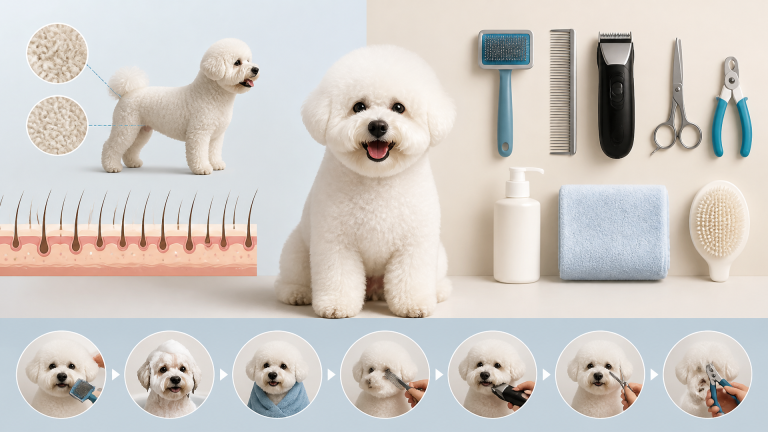
Bichons need professional grooming every 4–6 weeks at $60–$100 per visit. At-home supplies (slicker brush, pin brush, detangling spray, clippers, scissors) add another $80–$150 upfront. Skip the cheap brush — it won’t penetrate a Bichon’s double coat and will cause matting.
Health Care
- Annual vet exam and vaccines: $100–$250
- Heartworm, flea, and tick prevention: $200–$400 per year
- Pet insurance for a Bichon: $30–$50 per month (highly recommended — they’re prone to allergies, bladder stones, and collapsed tracheas)
- Emergency fund: set aside $1,000–$2,000 for unexpected issues like foreign body removal or dental surgery
Daily Essentials
- High-quality small-breed kibble or fresh food: $40–$80 per month
- Harness (Bichons can slip a collar), bed, crate, bowls: $150–$300 initial
Checklist of Must-Haves Before Bringing Home a Bichon
- [ ] Slicker brush and metal comb
- [ ] Tear-stain remover wipes (eye-safe formula)
- [ ] Small-breed harness (no pulling on trachea)
- [ ] Pet insurance quote in hand
- [ ] Local groomer appointment pre-booked
- [ ] Emergency vet number saved
How to Find and Adopt a Bichon Frise: Step-by-Step
Follow this flow to avoid surprises and make the right choice for your budget.
Preparation: Know Your Budget and Readiness
Set a hard cap for the upfront fee AND your monthly grooming, health, and training budget. Bichons are not cheap to maintain — a $300 rescue can easily require $1,500 in the first year.
Ordered Steps
Step 1: Search both rescues and breeders. Check breed-specific rescues (Bichon Frise Rescue Network, local chapters) and general shelters. Also research breeders who perform OFA health clearances.
Checkpoint: Ask every source for full vet records. If they can’t produce them, that’s a red flag.
Step 2: Meet the dog and verify health history. For rescues, ask about known allergies, ear infections, and dental health. For breeders, request proof of hip, eye, and heart clearances.
Likely cause of surprise costs: A Bichon with recurring ear infections (common in this breed) needs monthly cleaning and meds — add $20–$50 per month.
Step 3: Review the contract and guarantee. Breeders should offer a 1–2 year health guarantee for genetic defects. Rescues typically don’t offer refunds.
Escalation signal: If the breeder won’t let you see the puppy’s parents or the living conditions, walk away — this often indicates a puppy mill.
Step 4: Finalize and prepare for pickup. Book a pet insurance policy before you bring the dog home (to avoid pre-existing condition exclusions). Schedule the first vet visit within 48 hours.
Success check: Your Bichon should have a microchip, up-to-date vaccines, and a recent grooming before you leave the source.
Verification Step: Confirm the Dog’s History Before You Pay
Before handing over any money, call the vet listed on the adoption papers or breeder’s records. Ask if the dog has had a recent health exam, what vaccinations were given, and whether any chronic conditions (like skin allergies or ear infections) are documented. If the source can’t provide a vet’s name or refuses the call, walk away. This single step can save you hundreds in surprise bills.
Expert Tips for Saving Money (and Avoiding Regret)
Tip 1: Adopt an Adult from a Breed Rescue
Actionable step: Look for a breed-specific rescue that has an adult Bichon with known temperament and grooming history. The adoption fee is often a fraction of what you’d spend on a puppy’s first year of supplies and vet visits.
Common mistake: Assuming a rescue Bichon is “cheaper overall.” The lower fee is real, but you still need to budget for the same grooming and health care as any other Bichon.
Tip 2: Invest in a Proper Grooming Table and Clippers
Actionable step: Spend $80–$150 upfront on a grooming table and pet-specific clippers. This lets you do basic trims every two weeks between professional grooms, cutting your salon visits from every 4 weeks to every 6–8 weeks.
Common mistake: Using human clippers — they overheat and can burn a Bichon’s sensitive skin. Always use pet-specific clippers with adjustable blade lengths.
Tip 3: Buy Pet Insurance Before the First Vet Visit
Actionable step: Get a $30–$50 per month policy with a $250 deductible. Bichons have breed-specific conditions (allergic dermatitis, patellar luxation, bladder stones) that can run $2,000–$5,000 to treat.
Common mistake: Skipping insurance because your rescue Bichon “seems healthy” — many problems don’t show up until 2–4 years old. Get coverage before any symptoms appear.
Bichon Frise Adoption Fee Comparison Table (At a Glance)
| Scenario | Upfront Fee | First-Year Total (including supplies, vet, grooming) |
|---|---|---|
| Adult rescue from breed-specific rescue | $300 | $1,200–$1,800 |
| Puppy from responsible breeder | $2,000 | $4,000–$5,500 |
| Adult from county shelter | $100 | $900–$1,500 |
| Senior (10+ years) from rescue | $50–$150 | $800–$1,200 (higher vet costs but lower training needs) |
Note: First-year totals assume you have an emergency fund and pet insurance. Without insurance, add $500–$2,000 to the vet and grooming column for typical Bichon health issues.
FAQ
Why are Bichon Frise adoption fees lower than other small breeds?
Bichons are a high-maintenance grooming breed, so rescues often struggle to place them. Lower fees encourage adoption, but the real cost comes from ongoing care — not the initial fee.
Should I buy from a breeder if my local rescue has no Bichons?
Yes, if you can afford it and find a breeder who does OFA health clearances. Avoid “teacup” or “micro” Bichons — they don’t exist as a separate category and come with severe health problems.
Can I negotiate the adoption fee at a shelter?
Sometimes, especially for senior dogs or those who have been waiting more than 30 days. Politely ask if the fee has ever been reduced. Breed-specific rescues usually stick to their fee because it covers spay/neuter and dental work.
What if I can’t afford the upfront fee but really want a Bichon?
Look for a foster-to-adopt program. You pay nothing to foster, and if it’s a good fit, the rescue may waive or reduce the adoption fee after 2–4 weeks.
Save This Guide: A Bichon Frise isn’t cheap, but with the right budget you’ll enjoy years of a loyal, hypoallergenic companion. The adoption fee is just the start — the real investment is in proper grooming and health care. Whether you choose rescue or a responsible breeder, planning for these costs upfront makes all the difference.
This article includes affiliate links for recommended products. We may earn a small commission at no extra cost to you.