American Shorthair Coat Colors: Complete Guide for American Shorthair Owners
American Shorthair cats come in over 80 recognized colors and patterns, from the iconic silver tabby to rare solid sable. This guide covers the most common and rare coat colors, plus a step-by-step grooming routine to keep that dense double coat healthy and shiny.

The Spectrum of Official Colors and Patterns
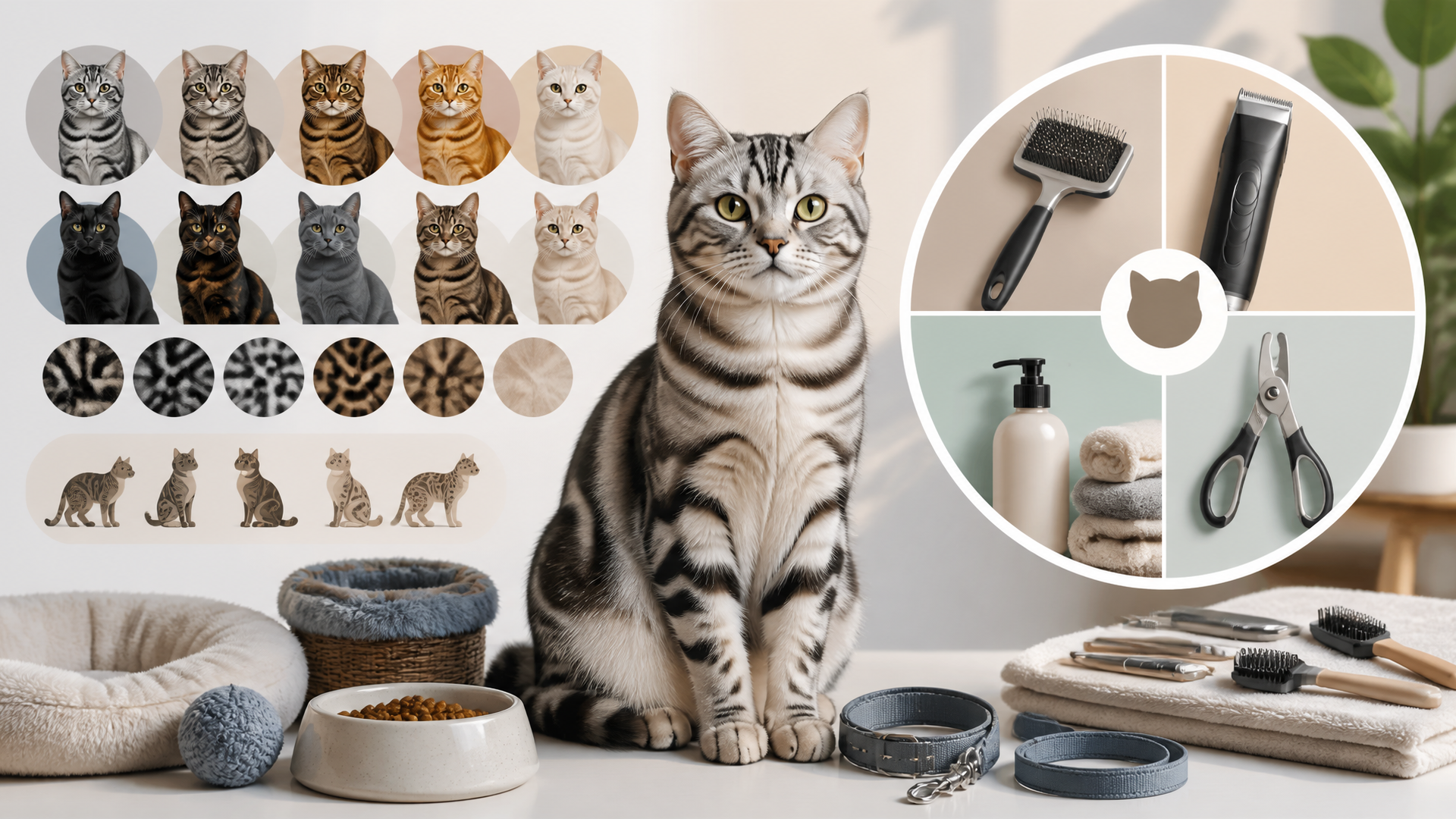
The Cat Fanciers’ Association (CFA) groups American Shorthair colors into solid, tabby, tortoiseshell, calico, and shaded/smoke categories. Each has specific shade, pattern, and eye color requirements.
Solid Colors
- White: Pure white, no markings. Eyes blue, copper, or odd-eyed.
- Black: Deep solid black root to tip. Eyes copper.
- Blue: Soft gray-blue (dilute black). Eyes copper.
- Red: Rich orange-red (not tabby – this is solid). Eyes copper.
- Cream: Pale warm cream. Eyes copper.
- Silver: Light sparkling silver with white undercoat. Eyes copper.
Tabby Patterns
Tabby is the most common pattern. Classic (blotched) tabby has bold swirling side patterns. Mackerel tabby has narrow vertical stripes. Ticked tabby lacks obvious stripes but has banded hairs. Spotted tabby has distinct spots.
Common tabby colors: Silver tabby (the breed’s most famous color), red tabby, brown tabby, blue tabby, cream tabby. Silver tabbies often develop clearer stripes by 2–3 years old.
Tortoiseshell, Calico, and Sable
- Tortoiseshell: Black and red patches (or blue and cream dilute). No white.
- Calico: White coat with black and red patches. Almost always female.
- Sable: Rich brown, sometimes with darker points. Rare in purebred American Shorthairs.
Shaded, Smoke, and Chinchilla
- Chinchilla: Very pale silver with dark tipping on hair tips.
- Shaded Silver: Lighter tipping than smoke, giving a shimmer effect.
- Smoke: Solid color at tips, white at roots (e.g., black smoke, blue smoke).
Bicolor or Van
White with color patches on head and tail only.
Eye Color Variations
Copper is most common. Blue eyes in white cats. Odd eyes (one blue, one copper) in white bicolors. Green eyes in some chinchilla and shaded silver cats.
A Practical Weekly Grooming Flow
American Shorthairs have a short, dense double coat that sheds moderately year-round, heavier in spring and fall. Grooming is simple but regular. Follow this operator flow to keep the coat glossy and catch problems early.
1. Prep: What You’ll Need
- Rubber grooming mitt (e.g., Hertzko self-cleaning slicker – use gentle pressure)
- Soft bristle brush for final polish (e.g., ConairPRO soft boar bristle)
- Cat-safe nail clippers (scissor-style, like GoPets)
- Soft cloth for eye/ear wipe
- Omega-3 fish oil supplement (optional but helpful; e.g., Grizzly Salmon Oil)
2. Early Checkpoint: Assess Before You Start
Before brushing, run your hand over the coat. Is it smooth and soft? Or greasy, flaky, or dull? Check for visible fleas or flea dirt (small black specks). Any redness or bald patches? This quick pass tells you if today is a normal groom or needs extra attention.
Branch decision: If the coat feels greasy or smells off, skip the rubber mitt and go straight to a gentle waterless shampoo wipe. Over-brushing a greasy coat can spread oils and worsen the look. If the coat is dry and flaky, focus on adding omega-3 to food and use a conditioning wipe after brushing. If you see fleas or flea dirt, treat with a vet-approved flea product before any grooming – do not bathe a flea-infested cat until the infestation is under control.
3. Ordered Steps (Weekly Routine)
1. Brush with rubber mitt – Start at the head and work toward the tail. Use firm but gentle strokes to lift loose hair. Work in sections to cover the whole body. This takes about 3–5 minutes.
2. Inspect for skin issues – While brushing, feel for bumps, scabs, or dandruff. Look at the belly and inner thighs where skin problems often start.
3. Wipe eyes and ears – Use a soft damp cloth. Light-coated American Shorthairs may get tear staining – wipe gently with a warm cloth daily if needed.
4. Trim nails every 2–3 weeks – If you hear clicking on hard floors, it’s time. Squeeze the paw pad to extend the nail and clip just past the quick. Keep styptic powder nearby just in case.
5. Bath only when needed – Every few months or after a messy incident. Use a cat-safe pH-balanced shampoo (e.g., Burt’s Bees Waterless Shampoo for spot cleaning). Over-bathing strips natural oils.
4. Likely Causes of a Dull or Unhealthy Coat
If the coat looks lackluster despite regular grooming, check these first:
- Diet low in omega-3 fatty acids – Switch to a food with fish oil or add a feline omega-3 supplement.
- Dehydration – Encourage drinking with a pet fountain.
- Stress or recent change – New pet, moving, or schedule disruption can temporarily dull the coat.
- Underlying health issue – Hyperthyroidism in older cats often causes a greasy, unkempt coat.
5. Friction Points and Fixes
- Cat hates brushing: Start with the rubber mitt during treat time. Short sessions (1–2 minutes) then reward. Gradually increase length.
- Cat has dandruff but not dry skin: Increase humidity, add omega-3, and use a gentle conditioning wipe between baths.
- Excessive shedding in spring/fall: Brush twice a week with a rubber mitt to capture loose undercoat.
6. Escalation Signals: When to See the Vet
Stop DIY grooming and call your vet if you spot any of these:
- Bald patches or excessive itching (allergies, parasites)
- Distinctly greasy or smelly coat (possible infection)
- Red, inflamed skin or open sores
- Sudden weight loss with dull coat (especially in cats over 7 years)
Concrete stop threshold: If your cat’s coat remains greasy or flaky after two weeks of adjusting diet and brushing routine, or if you find any area of hair loss larger than a quarter, schedule a vet appointment. A dull coat that doesn’t respond to standard care often signals a thyroid or kidney issue that needs bloodwork.
7. Success Check: What a Healthy Coat Looks Like
After grooming, the coat should feel smooth and soft, not greasy or brittle. No visible flakes or dandruff. Eyes clear, ears clean. Nails not clicking on floors. To verify your routine is working, run a damp paper towel along the back and belly – if it picks up only a light dusting of hair (not clumps), shedding is under control. If you hit all these, you’re good until next week.
Failure Mode: Over-bathing and Dry Skin
A common mistake owners make is bathing an American Shorthair too often, hoping to reduce shedding or fix odor. The dense double coat has natural oils that protect the skin and keep it flexible. Bathing more than once every 8–10 weeks strips those oils, leading to dry, flaky skin and a brittle coat. The cat may start scratching, which creates small scabs that you might mistake for fleas.
Symptom to watch for: If the coat feels rough and looks dull even after brushing, and you’ve bathed within the last month, stop bathing entirely. Switch to waterless wipes for spot cleaning and add an omega-3 supplement. The coat should regain its lustre in 3–4 weeks. If it doesn’t, check the diet for adequate protein or consult your vet.
Weekly Grooming Checklist
Use this quick pass/fail checklist each week.
- [ ] Coat feels smooth, not greasy – no dandruff or flakes
- [ ] No mats or tangles (rare, but check behind ears)
- [ ] Eyes clear without crust or tear staining
- [ ] Ears clean, no odor or excessive wax
- [ ] Nails not clicking on floors – trim length safe
- [ ] No visible fleas or flea dirt
If any item fails, address it in the same session. For persistent issues, schedule a vet visit.
Product Recommendations for Coat Care
- Rubber grooming mitt – Great for bonding and removing loose hair. Try the Hertzko Self-Cleaning Slicker Brush with gentle pressure.
- Soft bristle brush – For a final shine. ConairPRO Soft Boar Bristle Brush is a good choice.
- Cat nail clippers – Scissor-style like GoPets.
- Omega-3 fish oil – Add to food daily. Grizzly Salmon Oil is cat-safe.
- Cat-safe shampoo – Burt’s Bees Waterless Shampoo for occasional baths.
Disclosure: This article contains affiliate links. We may earn a small commission if you purchase through them, at no extra cost to you.
FAQ: American Shorthair Coat Colors
What is the rarest American Shorthair color?
Sable and solid lavender (a very pale gray with pinkish tones) are rare. True solid white with blue eyes is also uncommon.
Do American Shorthair kittens change color?
Yes. Silver tabbies often develop clearer stripes by 2–3 years. White kittens may get cream patches later.
How can I tell if my cat is a purebred American Shorthair?
Pedigree papers are the best proof. Purebreds have a muscular, rounded body, broad head, and dense, slightly harsh coat. Domestic shorthairs vary widely.
Can two tabby parents produce a solid kitten?
Yes, if both carry the recessive non-agouti gene. The solid kitten may have faint ghost markings on the head.
Does coat color affect temperament?
No. Personality comes from genetics and socialization, not color. American Shorthairs are gentle and easygoing regardless of coat.
Save This Guide
American Shorthair coat colors range from silver tabby to rare sable, and weekly grooming keeps that double coat healthy and shedding under control. Use the checklist above during your next session. Bookmark this page for quick reference.