Are Bichon Frise Hard to Train
Bichon Frise are not hard to train in the intelligence sense—they’re smart and eager to please. The real challenge? They have a stubborn streak masked by a fluffy, smiling face. If you use the right motivation and consistent short sessions, your Bichon will learn fast. The counter-intuitive truth: these dogs will test you more than a Golden Retriever, but less than a Husky. You just need a plan that matches their personality.

This training approach works best for Bichons aged 8 weeks to 2 years old. If you have an adult rescue Bichon with unknown history or past trauma, expect slower progress—start with trust-building exercises (hand feeding, quiet bonding) before any formal cue training. For those cases, consult a force-free professional early.
What This Means for You as an Owner
If you can commit to short daily sessions and high-value rewards, your Bichon will become a well-mannered companion. If you prefer a breed that obeys without much effort, a Labrador or Golden Retriever may be a better fit. Bichons respond to why should I do this? instead of I must obey. That’s not a training failure—it’s a personality trade-off that requires patience and creativity. Consistency is non-negotiable: skipping three days in a row often resets progress, so aim for at least one short session every day.
Before You Start Training: 5 Checkpoints for Success
Use this quick checklist before every session. If you can’t check each item, adjust your environment or timing.
- [ ] Exercise first – A 10‑minute walk or play session burns off excess energy. A tired Bichon focuses better.
- [ ] High-value rewards ready – Dry kibble won’t cut it. Use small bits of freeze-dried liver, cheese, or boiled chicken.
- [ ] Quiet location – No TV, no kids running, no other pets. Start in a low‑distraction room.
- [ ] Short timer set – Sessions max 5 minutes for puppies, 10 minutes for adults. End before your Bichon gets bored.
- [ ] No punishment tools – Bichons shut down with harsh corrections. Positive reinforcement only.
How to verify your treat motivation level: Place a small piece of cheese on the floor. If your dog ignores it or nibbles slowly, you need a higher-value reward (try freeze-dried liver). If they snatch it instantly, you’re on the right track.
Step‑by‑Step Training Flow for Bichon Frise
Follow this flow for any new behavior. Adjust the checkpoint stops based on your dog’s reaction.
Step 1: Capture Attention
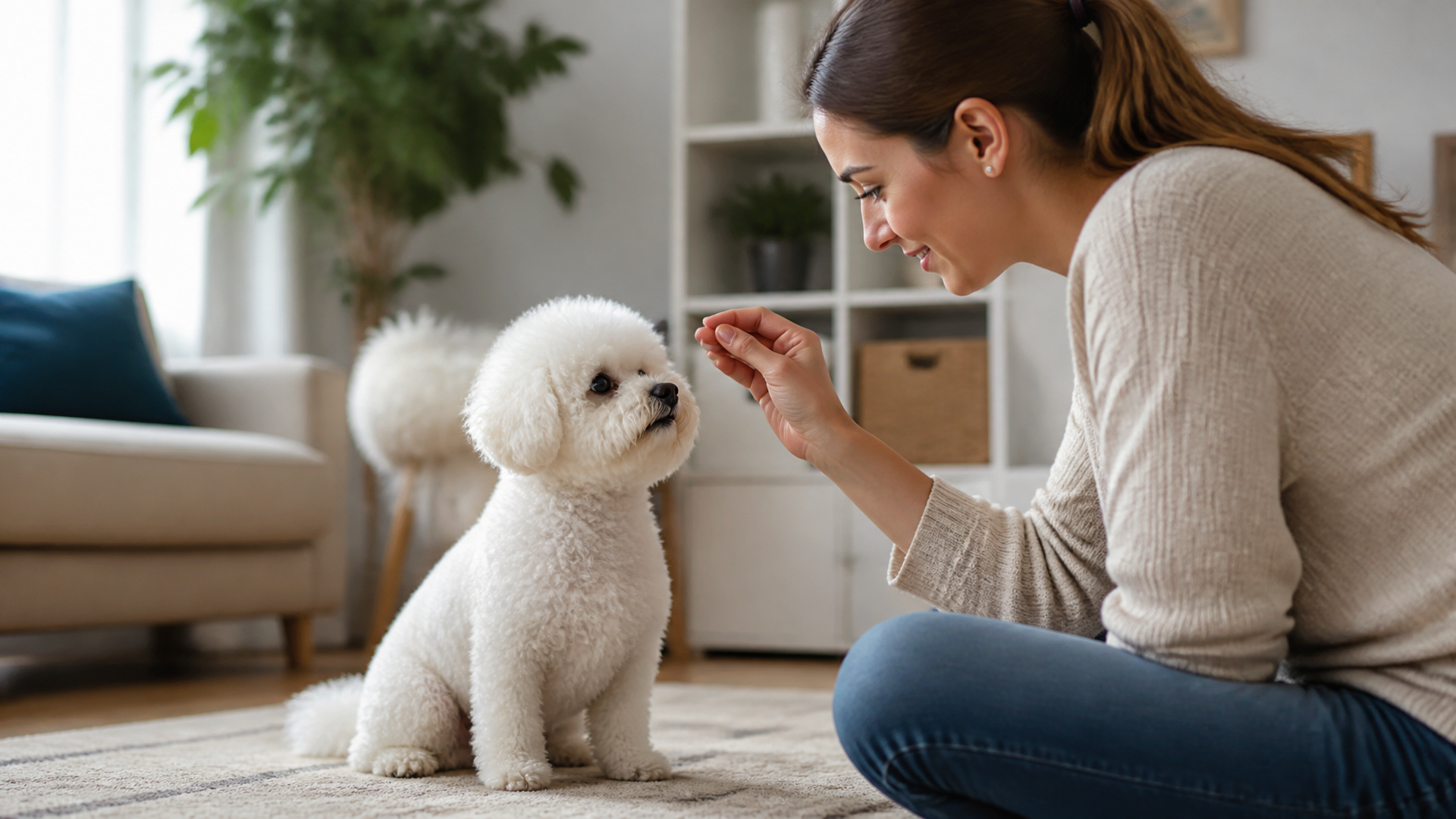
Hold a treat near your Bichon’s nose. Slowly lift it to your eye level. The moment they look at your eyes, say “Yes!” or click a clicker, then give the treat. Repeat until they look at you intentionally.
Early checkpoint: If your Bichon refuses to look up after 5 tries, lower the treat and try a different reward. Some Bichons are more toy‑motivated—try a squeaky ball instead.
Step 2: Lure the Behavior
Use the treat to guide your Bichon into the position you want. For “Sit” – hold the treat above their nose and move it back over their head. Their butt will drop naturally. The moment it touches the ground, mark (“Yes!”) and reward.
Likely cause of failure: Moving the treat too fast or too high. Slow down and keep the treat close to their nose. Bichons have short muzzles; they need a clear visual path.
Step 3: Add the Verbal Cue
After 5‑10 successful lure repetitions, say the word (“Sit”) just before you lure. Then gradually delay the lure by a split second until your Bichon responds to the word alone.
Step 4: Add Duration and Distraction
Once your Bichon reliably sits on the verbal cue, ask them to hold it for 1–2 seconds before rewarding. Gradually increase to 5–10 seconds. Then practice in slightly busier spots—another room, then with a mild distraction (a quiet fan, a person walking by).
Escalation signal: If your Bichon breaks position or ignores you, go back one step (fewer seconds, less distraction) and rebuild. If they seem frustrated (scratching, whining), end the session early and play for a minute.
Common Training Challenges and Fixes
Potty Training Takes Longer – Plan for It
Bichon puppies often need more time than other small breeds because they have tiny bladders and can be picky about bathroom surfaces.
- Take them out every 2 hours, plus after eating, playing, and napping.
- Use a consistent potty spot. If they don’t go within 5 minutes, bring them inside and try again in 15 minutes.
- Product tip: Enzyme‑based cleaners like Nature’s Miracle are essential for removing urine smells that encourage repeat accidents.
- Trade-off: Bichons also dislike wet grass or cold pads. In winter, many owners use indoor potty patches (like Fresh Patch) to avoid accidents. If you prefer outdoor‑only training, expect more patience and more cleanup during the transition.
Leash Pulling – The Bichon Tug‑of‑War
Bichons love to pull toward interesting smells and people. A front‑clip harness (like the PetSafe Easy Walk) stops them from leveraging their strength. Pair it with a “let’s go” cue: when they pull, stop walking. Wait until they look back at you, then reward and resume.
Mismatch warning: Avoid retractable leashes—Bichons learn that tension equals freedom, making pulling worse. A standard 4–6 foot leash gives you better control.
Separation Anxiety – Early Training Matters
Bichons were bred as companion dogs and can become distressed when left alone. Start separation training the day you bring your puppy home.
- Practice brief departures (30 seconds to 1 minute) while you’re in another room.
- Leave a frozen Kong filled with peanut butter or plain yogurt as a positive distraction.
- Gradually increase alone time over several weeks. If your adult Bichon already has separation anxiety, a certified behavior consultant can help with a custom desensitization plan.
Stubborn Refusals – What to Do
If your Bichon suddenly “forgets” a command they knew yesterday, check these three things:
1. Boredom – Have you used the same treat too many times? Switch to something new.
2. Too much pressure – You asked for 10 reps in a row. Cut back to 3–5.
3. Stress – A new environment or loud noise? Move to a quieter spot.
When to escalate: If refusals last more than a week and are paired with hiding, growling, or stiff body language, consult a force‑free professional trainer. Bichons are sensitive and may be signaling pain or anxiety. The trade-off with positive-only training is that it takes time; harsh corrections can permanently damage trust.
FAQ
How long does it take to potty train a Bichon Frise?
Most Bichon puppies become reliably housebroken by 6 to 8 months, but some take up to a year. Consistent crate training and a strict schedule reduces accidents faster.
Can Bichons learn advanced tricks?
Yes. Their eagerness to please and intelligence make them excellent trick learners. Break each trick into small steps and always end on a success.
Should I use a clicker or verbal marker?
Either works. A clicker gives clearer timing, but a consistent “Yes!” is fine. The key is marking the exact moment your Bichon does the right behavior.
What’s the best age to start training?
Start the day you bring your puppy home at 8 weeks. Focus on name recognition, potty schedule, and handling (paws, ears, mouth) for grooming. Basic cues like Sit and Down can begin around 10 weeks.
Save This Guide
Key takeaway: Bichon Frise training isn’t hard—it’s relationship‑based. Use high‑value treats, keep sessions short, and never punish. When your Bichon chooses to work with you, they’ll learn anything you teach them. Bookmark this page for quick reference as your puppy grows.
We may earn a commission if you purchase through the product links in this guide. This helps us provide free, breed‑specific content at no extra cost to you.