Best Dog Garden Deternant
No single deterrent works for every dog. The right one depends on what your dog is doing (digging, marking, trampling), their breed, and your garden layout. For most situations, start with a motion-activated sprinkler at the garden entry point, then add a taste repellent spray on targeted plants. That combination handles about 80% of cases. For the other 20% — especially with stubborn breeds — you’ll need a physical barrier or a rotated method strategy.

Here’s what that means for your next move: If your dog is a persistent digger (Terrier, Dachshund, Husky), skip the scent granules and go straight to buried wire or raised borders. If they’re a marker (especially an unneutered male), combine a perimeter spray with training — repellent alone rarely stops the habit. If they trample beds while running, a sprinkler at the entry path will break the pattern in 3–5 days.
The Quick Answer: What Works and What Doesn’t
Start with a motion-activated sprinkler positioned at the garden entry path, not the center. It startles without harm, works day and night, and covers a wide area. Then add a taste repellent spray (look for capsaicin or bitter apple) on specific plants the dog targets.
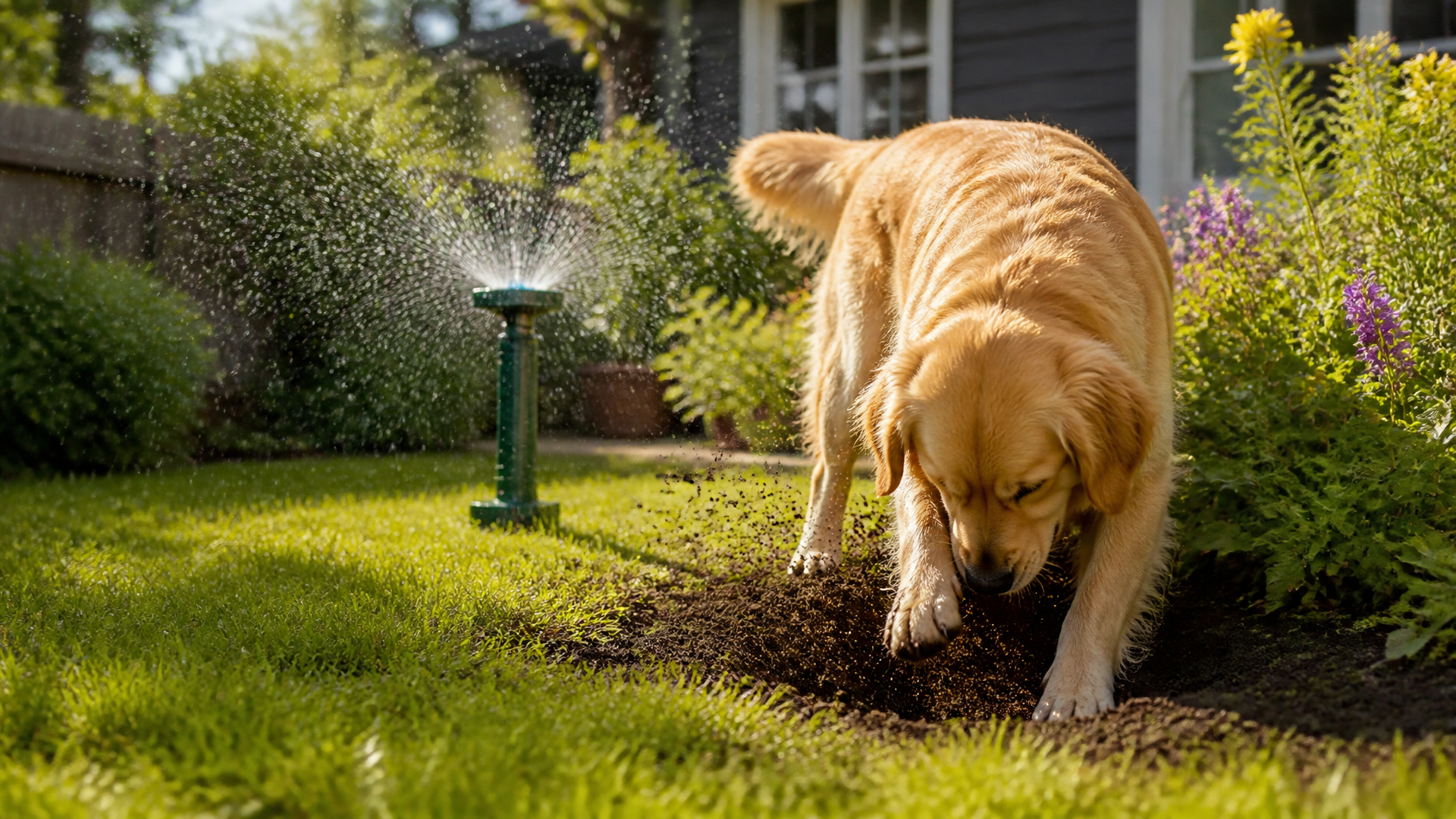
For digging: Buried chicken wire or a raised border edge. Combine with a taste spray on nearby plants.
For urinating on plants: Taste repellent spray applied every 3–4 days. For lawns, use a citrus or garlic-based perimeter spray weekly.
For trampling: Motion-activated sprinkler at the entry point. High-energy breeds (Border Collies, Labs, Dalmatians) may need a second sprinkler or a low fence to fully break the habit.
The mismatch to watch for: Ultrasonic devices stop working on most dogs within 1–2 weeks because they learn the sound is harmless. Scent repellents (coyote urine, pepper powder) often fail on dogs with strong noses — hounds, Beagles, and Bloodhounds will ignore them after a few hours. If your dog is one of these breeds, spend your money on physical barriers instead.
Comparison Framework: What to Choose
| Method | How It Works | Best For | Common Pitfall |
|---|---|---|---|
| Motion‑activated sprinkler | Sprays water when motion is detected | Large gardens, daytime + nighttime, all dog sizes | Needs a hose; can scare timid dogs too much |
| Taste repellent spray | Leaves bitter flavor on leaves or surfaces | Targeted plants, dogs that chew or graze | Washes off in rain; reapply every 3–5 days |
| Ultrasonic device | Emits high‑frequency sound when dog approaches | Barking, marking, small areas | Dogs habituate in 1–2 weeks; ineffective for deaf dogs |
| Physical barrier (fence, border wire) | Blocks digging or access | Digging, specific beds, stubborn breeds | Expensive, needs installation, looks cluttered |
| Scent repellent granules | Odor (coyote urine, hot pepper) deters dogs | Large areas, keeping strays away | Hounds ignore it; loses potency in wet weather |
Best-Fit Picks by Use Case
For Digging in Flower Beds
Go with: A buried wire border or raised garden edge. Motion-activated sprinklers can work, but if the dog digs at night or from underneath, the sprinkler won’t catch them in time.
Breed-specific: Terriers, Dachshunds, Huskies, and Beagles are the most relentless diggers. For these breeds, combine a physical barrier with a taste repellent on the nearby plants — scent alone won’t stop them. A single sprinkler often isn’t enough; you may need two or a full perimeter.
For Urinating on Plants or Lawn
Go with: Taste repellent spray directly on the plants. For lawn areas, apply a citrus or garlic-based perimeter spray once a week.
Breed-specific: Male dogs that mark frequently respond better to training than to any spray. Spaying or neutering reduces marking urge by up to 60%. If you have an intact male, expect repellents to work only 50–70% as well as they do on neutered dogs.
For Trampling or Running Through Beds
Go with: Motion‑activated sprinkler. Place it at the garden entry path, not in the middle. This breaks the habit fast because the dog gets startled before reaching the damage zone.
Breed-specific: High-energy breeds (Border Collies, Labrador Retrievers, Dalmatians, Australian Shepherds) may learn to avoid the sprinkler if they’re food‑motivated. Pair the sprinkler with a “leave it” command and a high‑value treat reward when they stay on the lawn.
5 Quick Checks Before Buying
Use this pass/fail list to decide if a deterrent is right for your garden.
1. Is it safe for your plants? Some sprays (vinegar, essential oils) damage delicate leaves. Test on one leaf first and wait 24 hours.
2. Does it need reapplication after rain? If you live in a rainy climate, choose a rain-resistant spray or a physical barrier. Most taste repellents wash off after a single heavy shower.
3. Will it work at night? Motion‑activated sprinklers and ultrasonic devices work in the dark. Scent granules lose potency faster when wet or cool.
4. Does it cover the entire problem area? A single sprinkler covers about 20–30 feet. For gardens larger than that, you need two sprinklers or a fence.
5. Is your dog likely to habituate? Smart breeds (Poodles, German Shepherds, Collies, Border Collies) may ignore a static deterrent after a few days. For these dogs, rotate methods every 4–6 weeks and combine with training.
Trade-offs to Know
- Ultrasonic devices are quiet to us but can startle sensitive dogs. They often stop working after 1–2 weeks because the dog learns the sound is harmless. They work best as a short-term aid while you train an alternative behavior — not as a permanent solution.
- Taste repellents need reapplication after every rain or heavy dew. A single storm can undo a week of protection. In wet seasons, plan to reapply every 3 days. If you can’t keep up with that schedule, switch to a physical barrier.
- Motion‑activated sprinklers can scare some dogs into avoiding the entire yard, not just the garden. If your dog is already nervous (rescue, senior, or anxious breed), try a low-pressure sprinkler head or a taste repellent instead. The goal is to protect the garden, not make the dog afraid of the yard.
- Scent repellents work well for stray dogs but often fail for your own dog. Your dog lives in the yard and will get used to the smell within a few days. Use coyote urine or pepper granules only for perimeter protection against strays, not as your primary deterrent.
- Combination approaches fail when you stop rotating. If you use the same method for months, most dogs will adapt. Plan to switch methods every 4–6 weeks or add a new element (like a sprinkler where you previously used spray).
Expert Tips to Make Any Deterrent Work Better
Tip 1: Pair the deterrent with positive training.
Actionable step: When your dog leaves the garden alone or responds to a “leave it” command, reward immediately with a high‑value treat (small pieces of cooked chicken or cheese work best).
Common mistake to avoid: Relying only on punishment (spray, noise) without rewarding the correct behavior — this creates anxiety and can make the dog sneak into the garden when you’re not watching.
Tip 2: Place deterrents at entry points, not in the middle.
Actionable step: For a sprinkler, position it at the path your dog uses to enter. For a physical barrier, focus on the most accessible edge.
Common mistake to avoid: Placing the deterrent in the center of the garden — the dog may already be damaging plants before it triggers, and you’ll need to repair damage while also breaking the habit.
Tip 3: Rotate your deterrent method every 4–6 weeks.
Actionable step: Use a taste repellent spray for a month, then switch to a motion-activated sprinkler, then a physical barrier. Mark a calendar reminder so you don’t forget.
Common mistake to avoid: Sticking with one method forever. Dogs are excellent at learning patterns. Changing the deterrent keeps them from getting comfortable. If you have a smart breed (Poodle, Shepherd, Collie), rotate even more frequently — every 3 weeks.
Related Questions
Q: Will a garden deterrent work on all dog breeds?
A: No. Breeds with a strong prey drive (Terriers, Hounds, Huskies) or high intelligence (Poodles, Shepherds, Collies) are harder to deter. They may ignore or quickly adapt to a single method. For these breeds, use a combination of physical barriers and taste deterrents plus consistent training. Expect to rotate methods more often.
Q: How long does a taste repellent spray last?
A: Most last 3–7 days, but rain, heavy dew, and frequent watering will wash it off faster. Check the label — many need reapplication after every rainfall. Plan to reapply every 3–4 days during wet weather. If you water your garden daily, expect to reapply after every watering session.
Q: Are ultrasonic dog deterrents humane?
A: Yes, for most dogs. The sound is loud to dogs but not painful. However, some dogs with sensitive hearing (or those that are already anxious) may become stressed. If your dog shows signs of fear (cowering, hiding, shaking, refusing to go outside), discontinue use and try a different method. Some breeds with naturally sensitive temperaments (Greyhounds, Whippets, many herding breeds) are more likely to react poorly.
Q: Can I use natural ingredients like vinegar or citrus as a deterrent?
A: Yes, but with caution. Diluted vinegar or citrus oil can irritate dogs’ noses and may be effective short-term. However, they can also harm plants (especially young seedlings) and need to be reapplied frequently — every 1–2 days in dry weather. They are less reliable than commercial deterrents. If you go this route, test on one plant first and watch for yellowing leaves.
Q: What should I do if my dog ignores every deterrent?
A: For dogs that ignore all repellents, especially persistent diggers or determined markers, the solution is usually a physical barrier (buried wire, raised beds, or a full fence). Combine this with training — a “leave it” command and consistent reward when they choose the right spot. If the behavior continues, consult a veterinary behaviorist, as some dogs have anxiety-driven habits that need medical or professional behavioral support.
Save This Guide
Bookmark this page for when you need to choose the right dog garden deterrent. The best strategy: combine a motion-activated sprinkler at the entry path with a taste repellent spray on targeted plants, and rotate methods every 4–6 weeks. For persistent diggers or stubborn breeds (Terriers, Hounds, Huskies, or intelligent working breeds), add a physical barrier and pair everything with positive training. Your garden can survive — and so can your relationship with your dog.