How to Care For Link Point Himalayan Cat Indoors
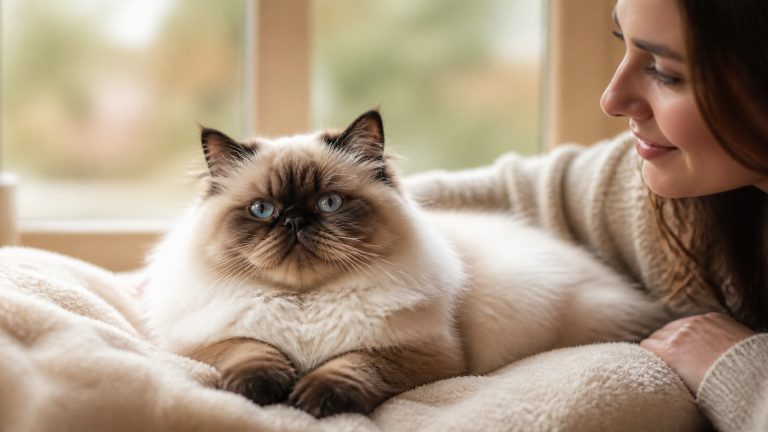
A Link Point Himalayan combines the pointed color pattern of a Siamese with the long, plush coat of a Persian — and that mix demands specific daily care indoors. You’ll need to brush daily, use shallow feeding dishes, keep your home between 65–75°F, and establish a rock-solid routine. Here’s the practical breakdown, from setup to grooming to knowing when something’s wrong.

Set Up Your Home Before the Cat Arrives
Link Point Himalayans are flat-faced (brachycephalic) and have a dense double coat. Standard supplies often don’t fit. Have these ready from day one.
Grooming kit:
- Metal greyhound comb (wide and fine teeth)
- Slicker brush for undercoat
- Pin brush with rounded tips
- Cat-safe detangling spray (water-based)
- Soft eye wipes for daily tear stain removal
- Cat-safe shampoo and conditioner for long coats
Feeding setup:
- Shallow ceramic or stainless steel bowls (max 1.5 inches deep)
- Raised bowl stand, 2–3 inches high
- Cat water fountain (moving water encourages drinking)
Home environment:
- Low-sided litter box (high sides are tough for flat-faced breeds to step over)
- Cat tree with wide, stable platforms — narrow perches won’t support their stocky build
- Sturdy sisal scratching posts near sleeping areas
- HEPA air purifier to reduce respiratory irritants
(This page includes affiliate links. If you buy through them, we may earn a commission at no extra cost to you.)
Daily Grooming: Use the Finger Test First
Run your fingers through your cat’s fur before you start brushing. If you feel any small knots or bumps, increase brushing frequency and add detangling spray. That’s your early checkpoint — the coat should feel smooth and free of tangles after every session.
Decision criterion: If your Himalayan is a show cat or you live in a humid climate, brush twice daily. For a pet-only cat with a low-shedding coat, daily brushing usually suffices — use the finger test to confirm.
Daily (5–10 minutes)
Use the slicker brush over the whole body, working in the direction of hair growth. Then follow with the metal comb to catch tangles the brush missed. Focus behind the ears and under the chin — those spots mat fastest.
Verification step: After brushing, run the metal comb through the coat one final time. If the comb glides without snagging, you’re done. If it catches on any area, go back over that spot with the slicker brush.
Wipe eyes with a soft, damp cloth to remove tear stains. Dried tears can irritate the skin and lead to infection. Check the chin for black specks (feline acne is common in flat-faced breeds) and wipe with a gentle cleansing wipe if needed.
Weekly (20 minutes)
Deep comb the entire coat, especially behind ears, under chin, and on the belly. Trim nails with a proper cat nail clipper — only cut the white tip (the pink quick is sensitive). Check ears for redness, dark wax, or odor. Clean only with a vet-recommended ear cleaner — never cotton swabs.
Monthly (as needed)
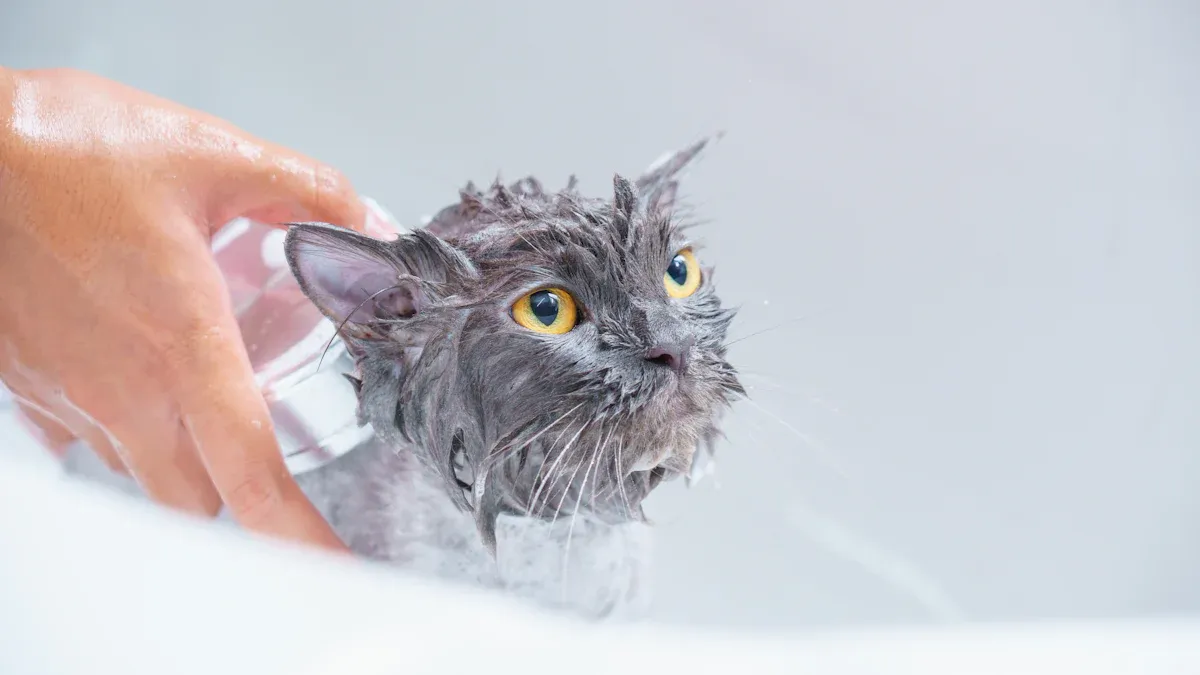
Bathe only when the coat feels greasy or looks dingy. Himalayans don’t need frequent baths, but their coat traps oils. Use lukewarm water and a conditioner for long-haired cats. Rinse thoroughly — leftover product irritates their sensitive skin.
Feeding Setup That Actually Works for a Flat Face
Deep or narrow bowls force your Himalayan to press their cheeks against the rim — uncomfortable and messy. Use shallow dishes (max 1.5 inches deep) and raise them 2–3 inches off the ground to reduce neck strain and improve swallowing. Feed high-protein, grain-free wet food as the primary diet. Dry food alone doesn’t provide enough moisture, and Himalayans are prone to urinary crystals.
Portion guide for an adult (8–12 lbs): ½ to ¾ cup of high-quality dry food OR one 3-ounce can of wet food twice daily. Adjust based on activity and body condition. If your cat free-feeds and gains weight easily, switch to measured portions.
Fresh water from a fountain is non-negotiable. Moving water encourages drinking and reduces the risk of kidney issues and urinary crystals. Change the filter per instructions and clean the fountain weekly.
Health Issues Indoor Care Can Prevent
Link Point Himalayans have breed-specific health risks. Consistent care catches problems early or avoids them entirely.
| Issue | What to Watch For | Prevention |
|---|---|---|
| Tear staining | Brown/red streaks below eyes, damp fur | Daily eye wipes; check for blocked tear ducts |
| Breathing difficulty | Noisy breathing, open-mouth panting, snoring | Keep home 65–75°F; limit exercise in heat; use air purifier |
| Dental disease | Bad breath, drooling, red/bleeding gums | Brush teeth weekly; dental treats; annual vet dental check |
| Urinary crystals | Straining in litter box, blood in urine, frequent small amounts | Wet food diet; water fountain; low-stress home; multiple litter boxes |
| Feline acne | Black specks on chin, red bumps, hair loss | Use ceramic or stainless steel bowls; wipe chin after meals |
When to escalate to the vet: If your Himalayan stops eating for more than 12 hours, has labored breathing with its mouth open, or cannot urinate — these are emergencies for flat-faced breeds. Also call if you notice sudden weight loss, lethargy, or persistent vomiting.
Home Setup That Keeps Your Cat Happy and Healthy
Himalayans aren’t high-energy, but they do need mental stimulation. A bored cat will over-groom, develop litter box issues, or become withdrawn.
Place cat trees with wide, stable platforms — narrow perches are uncomfortable for their stocky build. Use interactive toys like wand toys, puzzle feeders, and treat-dispensing balls. Avoid laser pointers; many cats get frustrated because they can’t catch the dot. Set up a sturdy window perch in a sunny spot for bird watching.
Pro tip for multi-story homes: Put a second litter box on a different floor. Himalayans can be picky about sharing boxes and dislike hurrying down stairs when they need to go.
Weekly Link Point Himalayan Care Checklist
Use this pass/fail check every week. If any item is a “fail,” address it right away.
- [ ] Coat smoothness: Run fingers through fur — no knots or tangles felt. (Fail → increase brushing frequency and add detangling spray)
- [ ] Eyes clear: No dried tear stains or redness. (Fail → clean with damp cloth daily; check for blocked ducts if persistent)
- [ ] Nails short: No clicking sounds on hard floors. (Fail → trim nails, only the white tip)
- [ ] Ears clean: No redness, dark wax, or odor. (Fail → clean with vet-recommended solution; if odor persists, see vet)
- [ ] Food intake normal: Cat ate full portions every day. (Fail → monitor; if skipped more than one meal, call vet)
- [ ] Water consumption adequate: Fountain water level dropped noticeably. (Fail → encourage drinking with fresh water; check fountain is working)
- [ ] Litter box usage: No straining, blood, or small frequent amounts. (Fail → consult vet for possible urinary issue)
- [ ] Play/social engagement: Cat responded to interactive play for at least 15 minutes total. (Fail → increase play sessions; monitor for lethargy)
- [ ] Breathing quiet: No open-mouth panting, noisy breathing, or persistent sneezing. (Fail → check temperature; run air purifier; if open-mouth breathing, seek emergency vet)
- [ ] General posture and activity: Cat is alert, moving normally, not hiding excessively. (Fail → if hiding longer than two weeks or showing signs of pain, vet visit needed)
FAQ
Can a Link Point Himalayan be left alone during the workday?
Yes, but they do better with a companion cat or interactive toys and a window view. A predictable routine helps them feel secure when you’re away.
How often do they shed?
Year-round, heavier in spring and fall. Daily brushing keeps loose hair out of your home and reduces hairballs.
Are they hypoallergenic?
No. No cat is truly hypoallergenic. Their long coat traps dander, but they still produce the Fel d 1 protein. Spend time with an adult Himalayan before bringing one home.
What temperature is best?
Keep your home between 65–75°F. They cannot tolerate heat due to their flat face and thick coat. Air conditioning is essential in summer.
How do I clean tear stains safely?
Use a soft, damp cloth with warm water. Wipe gently from the inner corner outward. Never use hydrogen peroxide, vinegar, or makeup remover — those can burn the delicate skin.
My Himalayan hides a lot. Is that normal?
Yes, especially as a kitten or in a new home. Provide hiding spots like covered beds. If hiding continues more than two weeks without improvement, check for illness and consult your vet.
A Link Point Himalayan is a high-maintenance but deeply rewarding indoor companion. The daily routine costs 15–20 minutes of grooming and face care, plus consistent playtime and a climate-controlled home. If you can commit to that, your Himalayan will thrive indoors for 12–15 years.