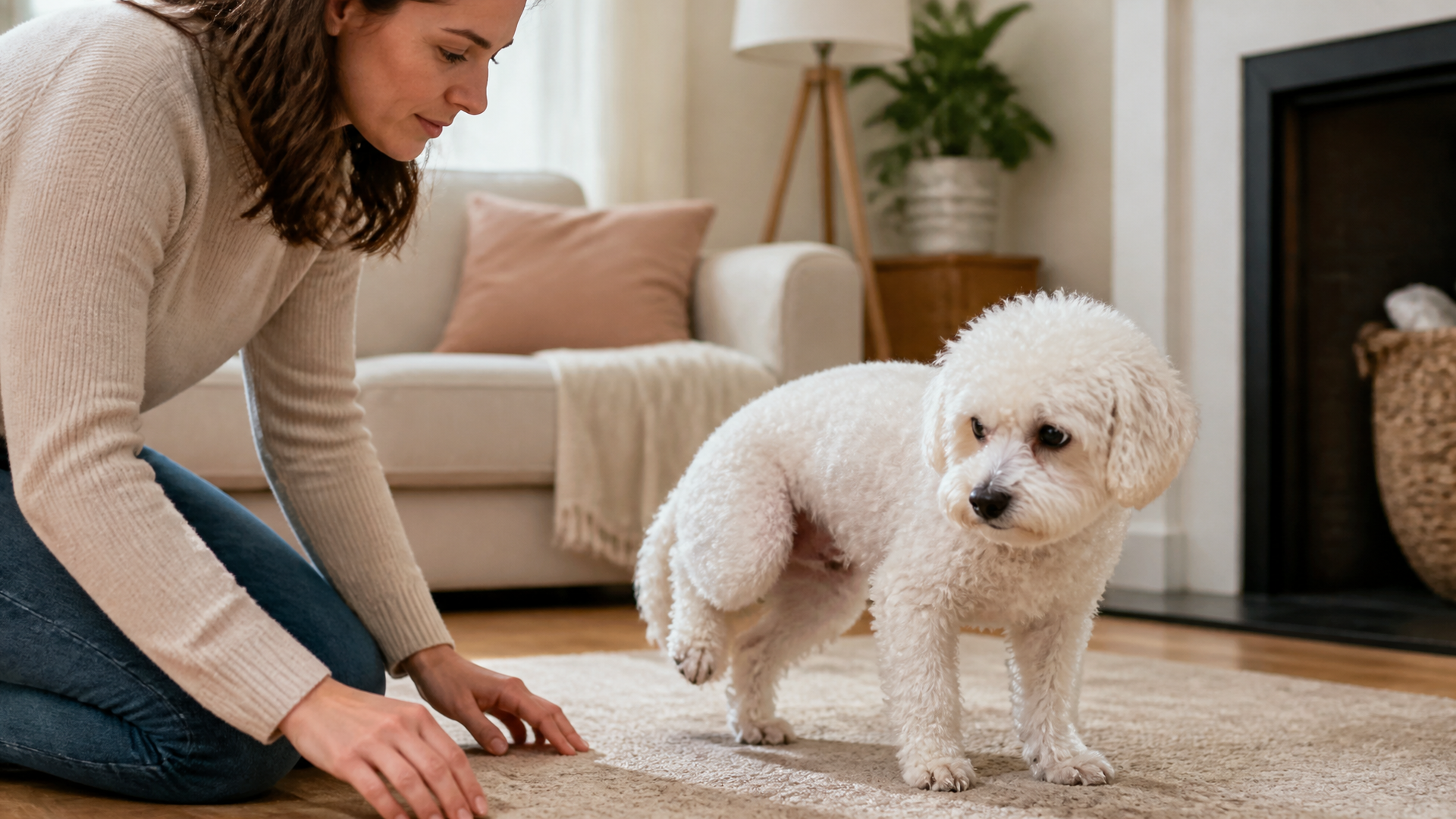
Possible Limb Issues With Bichon
Possible limb issues with Bichons include patellar luxation (slipping kneecap), hip dysplasia, Legg-Calve-Perthes disease, and fractures due to their delicate bones. The most common sign is a sudden hop or skip in one hind leg — your dog may run on three legs for a few steps then return to normal. If you see this, schedule a vet exam. Early detection can prevent permanent joint damage.

What this means for you: If your Bichon shows any hopping, your next step isn’t emergency surgery — most grade 1 or 2 patellar luxations can be managed with weight control and home modifications. But waiting more than a week to see a vet when hopping recurs regularly could allow a mild case to progress to a higher grade that requires surgery. The earlier you act, the more conservative the options.
Common Limb Issues in Bichons
Each condition affects a different part of the limb. Knowing the signs helps you act fast.
Patellar Luxation (Slipping Kneecaps)
This is the #1 limb issue in small breeds like Bichons. The kneecap pops out of its groove, causing a temporary limp.
Signs: Hopping or skipping on one hind leg, then normal walking. Your dog might stretch the leg back to pop the kneecap back in place.
Grades: Vets grade 1–4. Grades 1–2 are often managed with weight control and joint supplements. Grades 3–4 may require surgery.
What to do: Have a vet palpate the kneecap. Avoid jumping on/off furniture — use a ramp.
Verification step: To check whether a ramp will work for your Bichon’s current condition, measure the height of your bed or sofa. The ramp incline should not exceed a 1:3 slope (1 inch of height per 3 inches of ramp length). For a 20-inch bed, you need at least a 60-inch ramp. If your dog still hesitates, the ramp may need a higher-traction surface or a shallower angle.
Hip Dysplasia
Though more common in larger breeds, Bichons can develop hip laxity.
Signs: Bunny-hopping gait (both hind legs move together), reluctance to jump, stiffness after lying down, muscle loss in thighs.
Diagnosis: X-rays.
Management: Weight control, joint supplements, anti-inflammatories, physical therapy, or surgery in severe cases.
Practical implication: If your Bichon shows bunny-hopping, don’t assume it’s just puppy clumsiness. A lean body weight (10–12 pounds for a small-frame Bichon) can delay or even avoid hip surgery. Start a joint supplement now — even if X-rays are clear, it can slow cartilage wear.
Legg-Calve-Perthes Disease
The blood supply to the femoral head (hip ball) fails, causing bone collapse. It typically appears in puppies 4–12 months old.
Signs: Limping that gradually worsens, pain when the hip is moved, muscle wasting in the affected leg.
Treatment: Surgery (femoral head ostectomy) usually restores pain-free function. Most Bichons do well afterward.
Trade-off to know: Recovery from FH0 surgery takes 6–8 weeks, and your Bichon will need strict crate rest and leash walks. Without surgery, the bone collapse causes chronic pain and arthritis. For most puppies, the short recovery period is worth the lifelong mobility gain.
Fractures
Bichons have fine, lightweight bones. Falls from beds or couches can cause forearm or thigh fractures.
Signs: Sudden non-weight-bearing lameness, swelling, crying when touched.
Emergency: Go to the vet immediately. Splinting or surgery is often needed.
Verification step: If you’re unsure whether your Bichon has a fracture vs. a sprain, gently palpate the leg from paw up to shoulder while your dog stands. If you feel sharp pain at one point (yelp, try to bite, or flinch), do not attempt to splint at home — carry your dog to the vet with the leg supported on a towel.
Decision Checklist: When to See the Vet
Use this 5-item checklist to decide if your Bichon needs professional care. If any item is a yes, schedule a vet visit within 24 hours.
| Check | Yes | No |
|---|---|---|
| Is your Bichon hopping or skipping on one leg repeatedly? | ☐ | ☐ |
| Does your dog refuse to put weight on a leg for more than 5 minutes? | ☐ | ☐ |
| Is there swelling, heat, or pain when you gently feel the leg? | ☐ | ☐ |
| Have you noticed bunny-hopping or difficulty standing up? | ☐ | ☐ |
| Is your puppy limping that doesn’t improve after a day of rest? | ☐ | ☐ |
BLOCKQUOTE_0
3 Expert Tips for Preventing Limb Problems
1. Keep Your Bichon Lean
Action: Weigh your dog weekly. A Bichon should weigh 10–18 pounds depending on frame. Extra weight puts 3× more stress on joints.
Mistake: Free-feeding or giving too many treats. Use portion control — check your bag’s feeding guide for your dog’s ideal weight.
Trade-off: If your Bichon is already at a healthy weight but still hops, you’ll need to focus on ramp use and joint supplements instead of cutting food further — underweight dogs can lose muscle support for joints.
2. Use Joint Supplements Early
Action: Start a glucosamine-chondroitin supplement (like Cosequin or Dasuquin) when your Bichon turns 1 year old, even if no signs appear.
Mistake: Waiting until your dog is limping. Supplements support cartilage health but won’t fix existing damage.
Verification step: Check the supplement label for the correct dose based on your Bichon’s weight. Most small-breed chews work for dogs 10–25 lbs — cut a larger chew in half if needed. If your dog has a sensitive stomach, choose a supplement with green-lipped mussel instead of extra fillers.
3. Modify Your Home for Safety
Action: Place a ramp or pet stairs next to your bed and sofa to prevent jumping. Use non-slip rugs on hard floors — Bichons’ tiny legs slide and twist.
Mistake: Thinking “my dog is young, jumping is fine.” Repetitive impact in puppies can worsen patellar laxity.
Realistic limitation: Some Bichons refuse to use ramps for weeks. To increase acceptance, lure with high-value treats and keep the ramp in a consistent spot. If your dog still refuses after 2 weeks, consider a pet step with smaller rises (4-inch risers) instead of a full ramp.
Products That Support Bichon Limb Health
We may earn a commission if you purchase through links, at no extra cost to you.
- Joint Supplement: Cosequin DS Chewable Tablets — contains glucosamine + MSM, vet-recommended for small breeds.
- Orthopedic Bed: PetFusion Orthopedic Dog Bed — memory foam supports hips and elbows. Look for a size small (24×18″).
- Ramp for Furniture: PetSafe CozyUp Ramp — low incline works for Bichon-sized dogs.
- Non-Slip Rugs: Gorilla Grip Premium Mat — machine-washable and grippy.
How to verify fit: For the ramp, measure the vertical height of your furniture. If it’s over 22 inches, look for a longer ramp (e.g., 72″) to maintain a safe slope. For the orthopedic bed, place it in a corner to prevent your Bichon from jumping over the edges — this reduces landing impact.
Save This Guide
Key takeaway: The most common limb issue in Bichons is patellar luxation, and early home monitoring can prevent surgery. Watch for skipping steps, keep your dog lean, and use a ramp for furniture. Bookmark this page so you can quickly reference the checklist and product recommendations when your Bichon shows a new limp.