Controversy About Scottish Fold Cats
Scottish Fold cats are adored for their owl-like folded ears, but that adorable trait comes from a genetic mutation that can cause lifelong pain. The controversy is simple: breeding for folded ears directly causes osteochondrodysplasia, a painful cartilage and bone disorder. If you own one or are considering buying one, you need to understand the health risks, how to spot early warning signs, and what responsible care looks like.

What this means for you as an owner: If you already have a folded-ear Scottish Fold, your job is proactive joint management starting now — not waiting for limping to appear. If you’re considering buying one, understand that seeking folded ears means seeking a cat with guaranteed cartilage problems. The ethical decision is to choose a straight-eared kitten or a different breed entirely.
What Makes Scottish Folds Controversial?
The folded ear cartilage is the result of a dominant gene (Fd) that affects all cartilage in the cat’s body. Every Scottish Fold with folded ears has a form of osteochondrodysplasia — no folded-eared cat is completely unaffected, though severity varies. The condition causes:
- Stiff, swollen, or shortened limbs – especially the back legs and tail base
- Progressive arthritis – pain that gets worse with age
- Difficulty jumping, climbing, or walking – many affected cats avoid activity
- Misshapen or immobile tail – a classic early sign
Straight-eared Scottish Folds carry one copy of the gene but don’t express the fold, and they do not develop the same cartilage problems. This creates the ethical dilemma: responsible breeders should only breed straight-eared individuals, but many buyers specifically want folded ears, driving demand for cats that will suffer.
The Practical Takeaway for Buyers
If you’re still considering a Scottish Fold, ask the breeder for health records showing that both parents have been X-rayed and cleared of joint abnormalities by a veterinarian. A reputable breeder will provide these records without hesitation. If they can’t or won’t, walk away — that’s a red flag for irresponsible breeding.
Early Warning Signs: How to Detect Problems Before It’s Severe
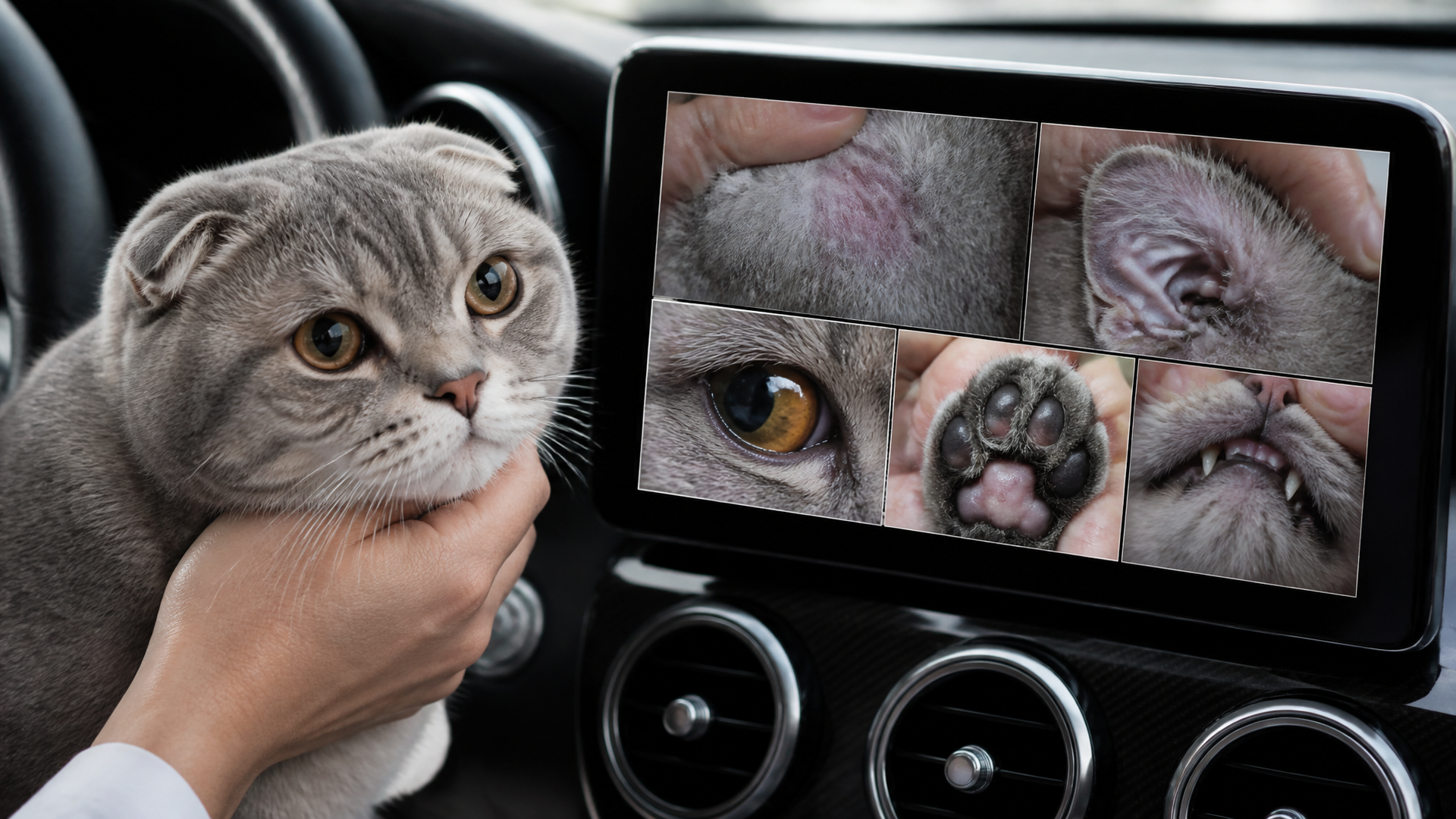
Most owners don’t notice the first subtle symptoms until arthritis is already advanced. Follow this checkpoint system to catch issues early.
Checkpoint 1: Test the Tail
Hold your cat’s tail gently and move it side to side. A healthy cat has a flexible tail with normal joint movement. If the tail feels stiff, knobby at the joints, or your cat flinches and pulls away when touched, that’s often the first sign of cartilage abnormality. This test is not a diagnosis — only X-rays confirm — but it’s a reliable red flag that warrants a vet visit.
Checkpoint 2: Monitor Mobility Weekly
Pay attention to how your cat moves. Look for these specific changes:
- Hesitation before jumping onto low furniture (even a 2-foot couch)
- Sitting with legs splayed out to the side or leaning backward
- A short, choppy gait rather than a smooth, fluid stride
- Avoiding stairs or stopping mid-play session
Likely causes of worsening signs include weight gain from reduced activity, natural aging, or a sudden inflammatory flare-up. If your cat refuses to eat for more than 12 hours or shows clear pain (hiding, hissing when touched, avoiding the litter box), that’s an escalation signal — go to the vet immediately.
Checkpoint 3: Baseline X-Rays at 6–12 Months
Ask your veterinarian to take baseline X-rays of the hind legs, spine, and tail during your cat’s first year. This is the only concrete verification step that confirms the presence and severity of osteochondrodysplasia before you see visible symptoms. Without these X-rays, you’re guessing. With them, you have a roadmap for care.
3 Expert Tips for Managing a Scottish Fold’s Joint Health
You cannot reverse the genetic cartilage defect, but you can slow progression and keep your cat comfortable. These three tips include an actionable step and a common mistake to avoid.
Tip 1: Choose an Orthopedic Bed — Not Just Any Cat Bed
Actionable step: Buy a memory-foam cat bed with at least 2–3 inches of high-density support foam. Place one bed in every room your cat spends time in so they never have to walk far to find soft support. Machine-washable covers are essential for hygiene.
Common mistake: Assuming any soft cushion is enough. A thin, flat cat bed compresses under your cat’s weight, and their pressure joints hit the hard floor through the padding. This accelerates joint stiffness and increases pain. Look for beds specifically labeled “orthopedic” for cats.
Tip 2: Install Ramps, Not Stairs (and Test Which Your Cat Will Use)
Actionable step: Buy a wide pet ramp (not narrow stairs) and place it next to your bed, sofa, and favorite window perch. Train your cat with treats — put a treat on each step, let them walk up, and reward them at the top. Do this daily for two weeks. Some cats prefer ramps, others prefer wide, carpeted steps. Test both if your cat avoids one.
Common mistake: Assuming all cats will use a ramp automatically. If your cat refuses a ramp, try a different slope angle or a wider step set. Cats need vertical territory for security, so don’t remove high spots entirely — that causes stress. The right answer is a ramp or steps that your cat actually uses, not a ban on jumping.
Tip 3: Start Joint Supplements at 1 Year — Not After Symptoms Appear
Actionable step: Ask your vet about a glucosamine/chondroitin supplement specifically formulated for cats, such as Cosequin for Cats, or a liquid omega-3 fish oil designed for feline use. Start at 12 months of age for any folded-ear Scottish Fold, before X-ray changes are visible.
Common mistake: Waiting until your cat limps or stops jumping. By the time you see those symptoms, X-rays can already show permanent bony changes. Supplementation slows cartilage breakdown and reduces inflammation progression, but it cannot reverse damage already done. Early intervention is your only real option.
Comparison: Folded Ear vs. Straight Ear Scottish Fold
| Feature | Folded Ear Scottish Fold | Straight Ear Scottish Fold |
|---|---|---|
| Presence of osteochondrodysplasia | All folded-eared cats have some degree | None (unless they develop unrelated arthritis) |
| Typical lifespan | 10–14 years (often shorter due to pain) | 15–20 years |
| Activity level | Reduced; avoids jumping and play | Normal active cat behavior |
| Breeding ethics | Ethical concern – breeding for a trait that causes pain | Considered ethical when only straight-eared cats are bred |
| Cost | Higher (demand for “cute” ears) | Lower |
| Care needs | Ongoing joint management, possible medication, and regular vet X-rays | Standard cat care |
Trade-Offs You Need to Know
Even with perfect care, a folded-ear Scottish Fold will experience progressive joint changes that eventually limit mobility and cause chronic pain. Medications like pain relievers or anti-inflammatories can help but may have side effects with long-term use. Joint supplements slow the process but don’t stop it. Surgery is rarely an option for cats. If you cannot commit to regular vet check-ups, monthly supplement costs, and potential pain management medications, a folded-ear Scottish Fold may not be the right choice for your household.
Quick-Reference Warning Signs Checklist
Check your Scottish Fold at least once a week for these signs. If you see any, schedule a vet appointment.
- [ ] Stiff or immobile tail that your cat resists you touching
- [ ] Limping, especially on back legs
- [ ] Reluctance to jump onto furniture or bed (even low surfaces)
- [ ] Sitting with legs splayed or leaning to one side
- [ ] Short, choppy gait instead of a fluid stride
- [ ] Swelling at the joints (ankles, wrists, tail base)
- [ ] Excessive grooming of one limb (sign of localized pain)
- [ ] Decreased appetite, hiding more than usual, or avoiding the litter box
FAQ
Is it cruel to own a Scottish Fold?
Not inherently — but it requires full awareness of the health risks and a commitment to proactive care. The cruelty lies in continuing to breed folded-ear cats when the genetic link to pain is proven. If you already own one, you can provide a good quality of life with proper management.
Do all Scottish Folds get arthritis?
All folded-eared Scottish Folds have abnormal cartilage, but not all develop severe arthritis. The condition is progressive, so most will show joint issues by middle age (4–8 years). Regular X-rays are the only way to know where your cat falls on this spectrum.
Can breeders avoid the gene entirely?
Yes. By only breeding straight-eared Scottish Folds — which carry one copy of the gene but don’t express the fold — breeders can produce healthy cats that still carry the breed’s body type and personality. The catch is these cats lack the trademark folded ears, so demand is lower and prices are higher for folded-eared kittens.
What’s the average lifespan of a Scottish Fold?
Folded-eared cats typically live 10–14 years. Straight-eared Scottish Folds often reach 15–20 years, similar to other domestic cats. The difference is directly linked to pain management and disease progression.
What’s the single most important test to request from a breeder?
Ask for X-rays of both parents’ hind legs, spine, and tail, taken by a veterinarian and interpreted for early signs of osteochondrodysplasia. If the breeder cannot provide these, they are not following current best practices for ethical breeding.
Save This Guide
The controversy about Scottish Fold cats isn’t going away — it’s rooted in undeniable genetics. If you own one, your job is to catch joint problems early with weekly tail and mobility checks, start joint supplements at 1 year, create a home with ramps and orthopedic beds, and work closely with your vet. If you’re considering buying one, ask the breeder for health records and insist on a straight-eared kitten. Your cat’s quality of life depends on it.
This article contains affiliate links. As an Amazon Associate, we may earn from qualifying purchases at no extra cost to you.