Why do Doberman Crop Ear Historical
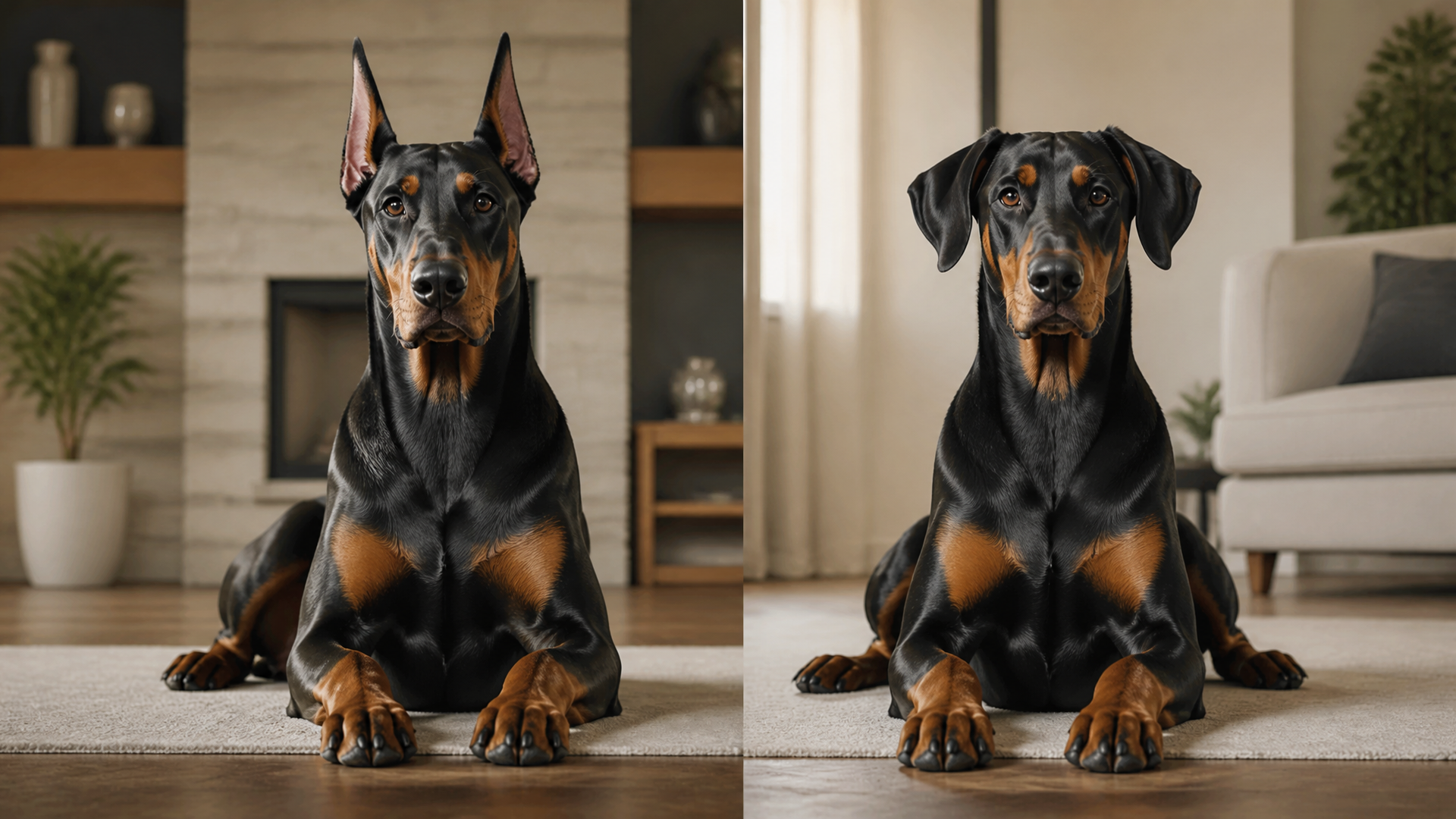
Dobermans were cropped for one reason: work. Ear cropping originally protected working dogs during guard duty and police patrol. Today in most of the US, it’s purely cosmetic, and many owners choose to leave ears natural. This guide covers the history, the modern trade-offs, and what you need to know if you’re considering cropping for your Doberman.

Where Ear Cropping Came From
Guard and Police Work (Late 1800s – Mid 1900s)
Louis Dobermann developed the breed in Germany as a personal protection dog. Cropping served two practical functions:
- Reduced injury risk – Floppy ears are easy for an attacker to grab. Cropped ears remove that target.
- Better sound direction – Standing ears funnel sound more effectively, helping the dog detect threats. The scientific benefit is debated, but it was widely believed at the time.
By the 1920s, Dobermans had become the preferred police dog in Germany, and cropping was standard issue. After World War II, the breed spread to the US, where military and police K9 units continued the practice.
Show Ring Standards (Mid 1900s – Present)
Once Dobermans entered conformation events, cropping became part of the breed’s signature look. The AKC and UKC still allow cropped ears in shows, while many European countries have banned the practice entirely. The Doberman Pinscher Club of America supports owner choice but stresses that health and temperament come first.
What this history means for you: If your Doberman is a family companion, cropped ears offer no practical benefit and add significant cost and aftercare. You can safely choose natural ears without compromising your dog’s health or happiness.
Natural vs. Cropped: What Changes for the Owner
| Feature | Cropped Ears | Natural (Floppy) Ears |
|---|---|---|
| Original purpose | Work protection / show ring | Companion pet |
| Injury risk in a fight | Lower | Higher (rare for most pets) |
| Recovery time | Surgical procedure, 4–6 weeks of taping | None needed |
| Cost | $150–$600+ surgery + $150–$400 in supplies | $0 |
| Aftercare commitment | Weekly taping for 2–6 months | Occasional cleaning for infection prevention |
| Legal status | Legal in US, banned in many other countries | Always legal |
| International travel | May be restricted or require paperwork | No restrictions |
Decision Flow: Should You Crop Your Doberman’s Ears?
Follow this ordered process to decide. Stop at any checkpoint where the answer doesn’t fit.
Step 1: Define Your Dog’s Role
Ask yourself honestly: Will this dog work as a guard, police K9, or protection sport competitor? If yes, cropping may still serve a functional purpose. If this is a family companion, stop here — natural ears are the healthier, cheaper choice.
Step 2: Check Your Aftercare Readiness
Cropping isn’t a one-and-done procedure. You’ll need to commit to:
1. Taping every 3–5 days using 1-inch medical tape and backer rod foam.
2. Cone collar for at least 2 weeks post-surgery to prevent scratching.
3. Daily infection checks – look for redness, swelling, or discharge. Call your vet immediately if you see any.
4. 2–6 months of consistent taping – ears must stay upright while cartilage hardens. One missed session can ruin the result.
Friction point to watch: If you travel frequently, have a busy schedule, or cannot reliably retape every few days, cropping will cause constant stress for both you and your dog.
Step 3: Verify Your Vet’s Doberman Experience
Concrete verification step: Ask the vet for at least 20 before-and-after photos of Doberman ear crops. Look for clean, symmetrical edges and ears that stand upright without folding. If the vet can’t provide this portfolio, find a Doberman-specialist – general practice vets who only crop a few dogs per year often leave scarred or droopy results.
Step 4: Confirm the Legal and Travel Picture
Realistic mismatch to consider: Cropped ears may restrict international travel. Many countries (including the UK, Australia, and most of Europe) ban cropping. If you plan to move abroad or travel internationally with your Doberman, natural ears avoid customs complications and potential confiscation.
Step 5: Budget the Full Cost
Cropping costs $150–$600+ for surgery. Add tape, foam, cone collars, and follow-up vet visits – total $300–$1,000. If that feels tight, natural ears cost nothing.
Success signal: If you answered “yes” to a working role AND you’re fully committed to the aftercare schedule AND the cost doesn’t stress your budget AND you don’t plan international travel, cropping may be a reasonable choice. If any answer is “no,” skip the surgery and keep those floppy ears.
Expert Tips for Owners Who Choose to Crop
Tip 1: Time the Procedure Correctly
Actionable step: Schedule cropping between 8–12 weeks old, after the first vet check and early socialization with littermates and humans are complete.
Common mistake: Cropping before 6 weeks or after 5 months. Early cropping skips critical social development; late cropping risks cartilage that won’t stand because it has already hardened.
Tip 2: Use the Right Taping Supplies
Actionable step: Set up a taping station with 1-inch medical tape, backer rod foam (available at hardware stores), and a cone collar. Plan to retape every 3–5 days for the full healing window.
Common mistake: Using standard cotton rolls instead of backer rod. Cotton collapses, causing ears to fold. Backer rod maintains consistent pressure.
Tip 3: Don’t Quit Early
Actionable step: Treat taping like a non-negotiable weekly appointment. Set phone reminders for retaping days.
Common mistake: Stopping taping as soon as the ears look upright (usually around 3 months). Cartilage continues hardening for 2–6 months. If the ears flop even once during that window, they may never stand properly. Revision surgery is expensive and less reliable.
One Failure Mode to Watch For: Cropping Too Early or Too Late
A common mistake owners make is cropping before the puppy has had essential socialization or after the cartilage has hardened.
How to detect it early: If your Doberman puppy is under 8 weeks, do not schedule cropping yet – you’ll miss the critical socialization window. If over 16 weeks, ask your vet to check if the ear cartilage is still pliable. Most vets advise against cropping after 5 months because the ears often won’t stand, leaving you with uneven, floppy results and a wasted investment.
The safest window is 8–12 weeks after a clean vet check. Outside that range, natural ears are the smarter choice.
FAQ
Is ear cropping painful for Doberman puppies?
Yes. It’s a surgical procedure with post-operative pain, but vets use anesthesia and pain medication. The healing process involves taping and can be uncomfortable for several weeks. Your vet will prescribe pain management.
Can I show my Doberman in AKC events with natural ears?
Yes. The AKC does not penalize natural ears. However, breed-specific competitions (like Doberman Pinscher Club shows) still frequently prefer cropped ears. Check the club’s rules in your area before entering.
Does cropping affect hearing?
Studies are inconclusive. Many owners report that cropped ears help direct sound, but the difference is minimal for a companion dog. Natural ears do not impair hearing in any meaningful way.
What happens if I don’t tape the ears properly?
Inconsistent taping or stopping too early can cause the ears to flop permanently once the cartilage hardens. Revision surgery is the only fix, and it’s more expensive and less reliable than the initial procedure.
Is ear cropping illegal anywhere in the US?
No state currently bans ear cropping, though some cities have considered restrictions. Internationally, it’s banned in the UK, Australia, New Zealand, and most European countries.
Save This Guide
Ear cropping in Dobermans started as practical protection gear, not fashion. If you’re getting a Doberman today, ask yourself: Is my dog going to work in security, or is this a family pet? Choose what fits your dog’s lifestyle and your willingness to commit to post-surgery care. Most modern Dobermans thrive beautifully with natural, floppy ears — and that choice saves you hundreds of dollars and months of taping, while avoiding legal complications for future travel.
As an Amazon Associate, we earn from qualifying purchases on products recommended in this article.