Calico Sphynx: Guide: What Every Owner Should Know
A Calico Sphynx is a Sphynx cat with a tri-color coat pattern — black, orange, and white patches visible directly on hairless skin. They aren’t a separate breed, just a rare color variation. Their pale skin patches need extra sun protection, and their high-oil skin requires consistent weekly care. Here’s exactly how to keep your Calico Sphynx healthy, clean, and comfortable.

What Makes a Calico Sphynx Different From Other Sphynx Cats
The calico pattern in Sphynx cats comes from the same X-linked genetics that creates tri-color coats in furry cats. The result is a patchwork of three colors on the skin itself.
| Feature | Detail |
|---|---|
| Pattern type | Tri-color (black, orange, and white patches) |
| Gender | Over 99% are female (male Calico Sphynx are extremely rare and usually sterile) |
| Separate breed? | No — it’s a color variation of the Sphynx breed, not a hybrid |
| Skin care needs | Identical to other Sphynx except white patches require sun protection |
| Rarity | Moderately rare due to the genetic combination required |
Some Calico Sphynx cats have patches that look like tabby stripes within their orange or black areas. This is called a “Patched Tabby” or “Caliby” pattern, not a true calico. The care needs are the same, but the pattern description changes if you’re registering with a cat association or shopping for a specific look.
Your Calico Sphynx’s white patches will sunburn faster than darker patches because they lack melanin. A cat with mostly white skin needs sunscreen applied before every sunbathing session or window perch. Cats with mostly dark patches have lower sun exposure risk but still need protection on any pale areas. If you’re deciding between a Calico Sphynx and a solid-colored Sphynx, your sun-protection routine will be stricter with the calico pattern.
To verify your cat’s pattern, check the skin color on the ears, nose, and belly. True calico has distinct, non-blended patches of black and orange on a white base. If the orange and black areas are blended or brindled instead of separate patches, you have a tortoiseshell Sphynx, not a calico. Ask your breeder which pattern they registered with the Cat Fanciers’ Association if paperwork matters to you.
Weekly Grooming Routine for Your Calico Sphynx
Sphynx cats produce more skin oil than furry breeds because they have no fur to absorb it. Without regular bathing, oil buildup causes blackheads, skin infections, and a greasy film on furniture and bedding.
What You’ll Need
- Gentle, fragrance-free cat shampoo (avoid human shampoos; they strip natural oils)
- Warm water (about 100°F — test with your wrist like a baby bottle)
- Soft washcloth or silicone scrubber
- Cat-safe ear cleaning solution (like Virbac Epi-Otic or Zymox)
- Cotton balls or soft gauze (never cotton swabs)
- Nail clippers designed for cats
- Pet-safe, zinc-free sunscreen for white patches
Step-by-Step Weekly Bath Routine
Step 1: Bathe once a week. Fill a sink or small tub with 2–3 inches of warm water. Wet your cat’s body (avoid the face), apply a dime-sized amount of shampoo, and gently massage the skin. Rinse thoroughly — leftover soap causes irritation. If you use waterless foam shampoo, follow the product’s dwell time and wipe off completely.
Step 2: Clean ears immediately after bathing. Dampen a cotton ball with ear cleaner. Gently wipe the visible part of the ear flap and the opening. Never insert anything into the ear canal. Repeat twice a week if you notice dark wax or discharge.
Step 3: Trim nails every 10–14 days. Only cut the white tip and avoid the pink quick. If you’re unsure where the quick is, ask your vet to demonstrate on the first trim. Use clippers designed for cats (guillotine-style or scissor-type both work).
Step 4: Apply sunscreen to light patches. White or pale areas of skin burn easily after 20 minutes of direct sun exposure. Use a pet-safe, zinc-free sunscreen. Apply 5 minutes before sun exposure and reapply after bathing or heavy play.
Checkpoints During the Routine
Early trouble sign to watch for: Skin feels greasy or smells musty between baths. If this happens, increase bathing frequency slightly or use a dry wipe with a damp cloth every other day.
Likely cause of skin problems: Over-bathing strips natural oils and triggers rebound oiliness. Under-bathing traps oil and leads to blocked pores or yeast infections. Most owners find the sweet spot is one bath per week, adjusted seasonally.
Escalation signal — stop home care: Red bumps, scabs, open sores, or persistent blackheads mean you should stop bathing and see a veterinarian. Do not try stronger shampoos or scrubs; you can make the problem worse.
Success check for the routine: Skin should feel clean, soft, and free of oily residue. Ears should not smell or show dark wax buildup. Nails should be short enough that you don’t hear clicking on hard floors.
3 Essential Grooming Tips for Your Calico Sphynx
Tip 1: Use a Damp Cloth Between Baths
Actionable step: Keep a dedicated washcloth for your Sphynx. Lightly dampen it with warm water and wipe down the body every other day, focusing on the neck and back where oil collects most.
Common mistake to avoid: Skipping this “dry wipe” and only bathing once a week. Oil buildup between baths can clog pores and cause feline acne, especially on the chin and tail.
Tip 2: Always Use Cat-Safe Sunscreen on White Patches
Actionable step: Buy a sunscreen labeled “pet-safe” or “safe for cats” that is free of zinc oxide and PABA. Before your cat jumps into a sunbeam or perches on a windowsill, apply a thin layer to white patches on the ears, nose, and belly.
Common mistake to avoid: Using human sunscreen, even “baby” formulas. Many contain zinc oxide, which is toxic if your cat licks it off. Check the ingredient list before every purchase.
Tip 3: Clean Ears Gently With the Right Tool
Actionable step: Choose a veterinary-recommended ear cleaning solution. Squeeze a few drops into the ear, massage the base for 10 seconds, then let your cat shake it out. Wipe the outer area with a cotton ball.
Common mistake to avoid: Using cotton swabs. They push debris deeper into the ear canal and can damage the eardrum. Sphynx cats have narrow ear canals that are especially vulnerable to this type of injury.
Health Concerns and When to Call the Vet
Calico Sphynx cats have the same dietary and health needs as all Sphynx: high-quality, protein-rich food with moderate fats. Their high metabolism means they need more calories than furry cats of the same size.
A typical adult Sphynx (8–12 pounds) needs about 250–350 calories per day, split into two meals. Adjust based on activity level and body condition. Consult your vet for exact amounts.
Common Health Issues in Sphynx Cats
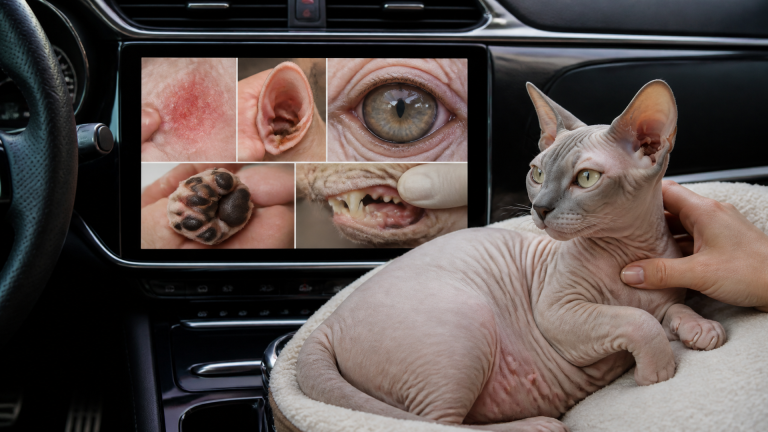
- Skin infections (bacterial or fungal) — caused by trapped oil or moisture in skin folds
- Ear infections — due to the lack of hair in the ear canals, which normally helps wick away debris
- Dental disease — Sphynx are prone to gingivitis; brush teeth 2–3 times per week with a cat-safe toothbrush and toothpaste
- Hypertrophic cardiomyopathy (HCM) — a heart condition common in the breed; ask your breeder for HCM echocardiogram screening results before purchasing a kitten
Warning Signs — When to Call the Vet
| Symptom | What to Do |
|---|---|
| Skin redness, bumps, or oozing | Stop bathing; schedule a vet appointment within 48 hours |
| Dark, waxy ear discharge with odor | Likely ear infection; needs professional cleaning and medication |
| Coughing, rapid breathing, or weakness | Possible HCM or other heart issues; go to the emergency vet |
| Sudden weight loss with increased appetite | Rule out hyperthyroidism or diabetes; schedule bloodwork |
Frequently Asked Questions
Are Calico Sphynx cats rare?
Yes. The combination of the Sphynx hairless gene and the calico pattern is uncommon. Over 99% of Calico Sphynx are female, and male Calico Sphynx are extremely rare and usually sterile.
Do Calico Sphynx have more health problems than other Sphynx?
No. The tri-color pattern itself does not cause health issues. The same breed-specific concerns (skin care, ear infections, HCM) apply equally to all Sphynx cats regardless of color.
Can I breed a Calico Sphynx?
Breeding for color is possible but requires careful genetic pairing. A Calico Sphynx can produce kittens with various patterns. Responsible breeders prioritize health testing (HCM, patellar luxation, and blood typing) over color.
Save This Guide – Bookmark this page for quick reference: weekly bath, ear clean, nail trim, and sun protection on white patches. Your Calico Sphynx’s health starts with consistent grooming.
Note: Product links in this article may be affiliate links. We only recommend products we trust for your pet’s health.