Different Colored Eyes French Bulldog
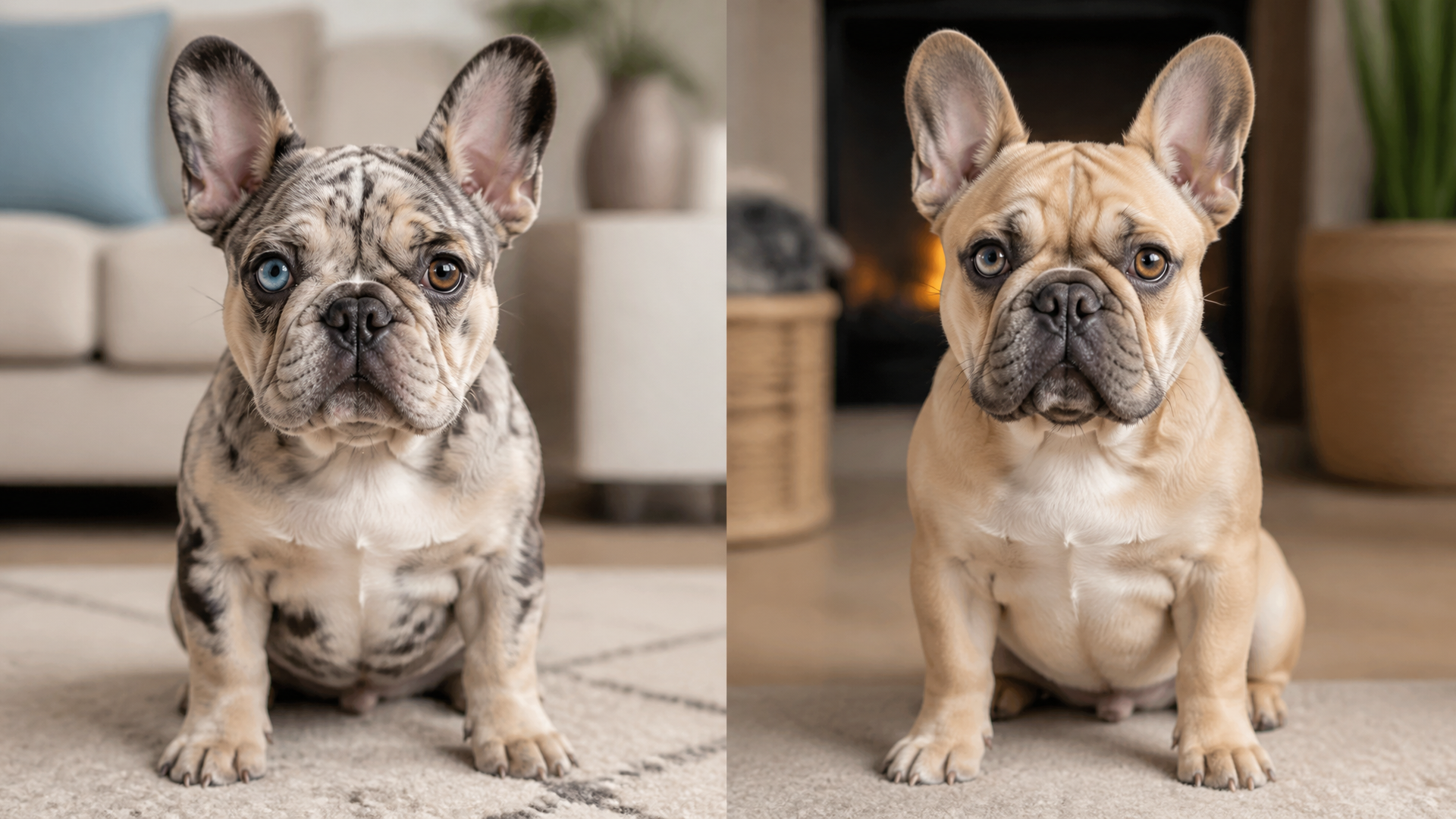
If your French Bulldog has one blue eye and one brown eye, that’s called complete heterochromia iridis. It’s usually a harmless genetic trait, not a health problem. But because white-coated or merle Frenchies can carry additional health risks linked to the same genes, you need to know what’s normal and when to call the vet.

Your next move: If your puppy came with two different colored eyes and no other symptoms, you can relax — but still schedule a hearing test and a baseline eye exam. If you see a color change in an adult dog, skip the internet and go straight to a veterinary ophthalmologist.
What Causes Different Colored Eyes in French Bulldogs?
Heterochromia in French Bulldogs comes down to pigment distribution in the iris. Two main causes exist, and telling them apart matters for your dog’s health.
Genetic Inheritance
The most common reason. The same genes that produce a white face, blue eyes, or a merle coat can also cause one eye to lack pigment (blue) while the other has full pigment (brown). This is present from birth and stable throughout life.
Breed-specific pattern: French Bulldogs with a mostly white or piebald coat are far more likely to have different colored eyes. The same pigment genes affect both coat and iris color.
Merle Frenchies can also show heterochromia, but merle is not a standard accepted color in the breed. It may be associated with deafness or eye defects. Critical trade-off: If you have a merle Frenchie, a pretty eye pattern may hide underlying anatomical issues like microphthalmia or coloboma. A thorough ophthalmoscope exam is non-negotiable.
Acquired Heterochromia (Later in Life)
Resulting from injury, inflammation (uveitis), glaucoma, or a tumor. This is rare but always needs a vet exam. If your adult dog’s eye color changes, treat it as a medical event until proven otherwise.
Is Heterochromia Dangerous for French Bulldogs?
In the vast majority of cases, heterochromia itself is not dangerous. Your dog sees fine and has no pain. The danger comes from the conditions that sometimes travel with the same genes.
When It’s Safe
- Clear, bright eyes with no redness, discharge, or squinting
- Pupils equal in size and react normally to light
- No history of head trauma or eye injury
- Color has been stable since puppyhood
When to Call Your Vet
| Symptom | What It Could Indicate |
|---|---|
| Cloudiness in the blue eye | Cataract or corneal disease |
| Redness, swelling, tearing | Uveitis, glaucoma, or infection |
| One pupil different size | Neurological issue or trauma |
| Eye color change after adulthood | Acquired heterochromia – rule out tumor or inflammation |
| Head tilt, circling, hearing loss in white/mostly white Frenchie | Possible deafness (linked to same pigment genes) |
Quick rule: If the eye color has been the same since you got your puppy and there’s no other symptom, you’re almost certainly fine. If color shifts after 1 year old, call the vet.
How to Tell If Your French Bulldog’s Eye Color Change Is Normal vs. a Problem
Most owners first notice different colored eyes in a young puppy. But if you see a change later, follow this operator flow.
Early Checkpoint: When Did You First Notice It?
- As a puppy — Likely congenital heterochromia. No action needed unless other symptoms appear.
- Not sure — Check old photos. If eyes were identical as a young puppy and now differ, that’s a red flag.
- Recently (adult dog) — This is an acquired change. Stop guessing and schedule a vet visit.
Ordered Action Steps
1. Observe the eye carefully in good light. Look for cloudiness, redness, discharge, or a misshapen pupil.
2. Check both pupils in dim light using a flashlight from the side. Both should constrict equally.
3. Ask about hearing — Heterochromia in white Frenchies increases deafness risk. Try a quiet sound behind your dog. If no reaction, you may need a BAER test.
4. Schedule a baseline eye exam with a veterinary ophthalmologist. They can confirm it’s harmless and measure intraocular pressure.
5. Document the finding — Note the pattern (complete, sectoral, or central heterochromia) in your dog’s health record. It helps future vets know the trait is pre-existing.
Concrete Verification Step
Before you label a puppy as “heterochromia,” confirm the difference is in the iris itself, not the surrounding sclera. Quick phone trick: Take a photo with the flash on. If the blue area is limited to the iris and the pupil reacts normally, it’s heterochromia. If the blue spreads over the white of the eye (sclera), that’s a different issue — scleral thinning or staphyloma — requiring a vet ophthalmologist visit within 24 hours.
Likely Cause Matches
- Puppy, white/piebald coat, no other symptoms — Genetic heterochromia
- Puppy, merle coat — Genetic, but may have additional eye or ear defects
- Adult, brown eye turning blue — Acquired — get it checked
- Adult, blue eye turning brown — Very rare; could be pigmentary keratitis or iris melanoma
Friction Points
Many general practice vets aren’t familiar with heterochromia in Frenchies. Ask for a referral to a board-certified veterinary ophthalmologist if you’re unsure.
Dog insurance often covers diagnostic eye exams but may not cover pre-existing conditions. Get it documented early.
Real-world limitation: Even if your vet is experienced, they may not have a tonometer (to measure eye pressure) or a slit lamp in-house. The ophthalmologist is the gold standard — plan for that visit.
Escalation Signal
Any of these means a vet visit within 24 hours: squinting, pawing at the eye, sudden color change, cloudiness, or a visible mass on the iris.
3 Expert Tips for French Bulldog Owners with Heterochromia
Tip 1: Protect the Blue Eye from UV Light
Blue irises have less pigment, so they’re more sensitive to bright sunlight.
Action: Use dog-safe UV-blocking goggles like Rex Specs or Doggles on sunny walks.
Mistake to avoid: Rubbing sunscreen near the eye — it can sting and cause irritation.
Tip 2: Check Ear Health Early
The same pigment genes that cause heterochromia in white Frenchies also raise the risk of congenital deafness.
Action: Have your puppy’s hearing tested with a BAER test by 6–8 weeks.
Mistake to avoid: Assuming your dog hears fine because it reacts to loud noises — vibration can fool you.
Tip 3: Keep a Photo Library
Photograph both eyes in natural light every 3 months.
Action: Store pics with date stamps in your phone. Compare side-by-side if you suspect a change.
Mistake to avoid: Relying on memory — slow changes are easy to miss.
Common Concern: Mistaking Heterochromia for an Eye Injury
Many owners panic when they first notice their French Bulldog’s mismatched eyes, thinking the blue eye is a corneal scar or infection. Here’s how to tell the difference without guessing:
- Heterochromia — Uniform color across the iris, no white patches or lines. The eye is clear, bright, and comfortable.
- Injury or disease — A cloudy spot, blood vessels on the cornea, squinting, or visible redness around the eye.
- Dry eye (keratoconjunctivitis sicca) — Common in Frenchies; causes a dull, thickened appearance that can look like a color change. Needs a Schirmer tear test to diagnose.
Early detection trick: If the blue eye looks dry or has a stringy discharge, it’s not heterochromia — it’s dry eye, which requires daily medication.
FAQ
Can heterochromia in French Bulldogs cause blindness?
No — the trait itself does not affect vision. However, the underlying genetics can be associated with other eye problems like microphthalmia in merles that may impair sight. Have a full ophthalmic exam to rule those out.
Do different colored eyes require special grooming?
No special grooming is needed, but gently clean around the eyes with a damp, soft cloth daily. French Bulldogs are prone to tear staining; use a vet-recommended tear stain wipe like Nutri-Vet Eye Wash Wipes.
Is heterochromia linked to deafness?
Yes, especially in white or mostly white Frenchies. The pigment cells needed for hearing are the same ones missing in the blue eye. A BAER test is the only reliable way to know.
Can I breed a French Bulldog with heterochromia?
Breeding is not recommended unless you’ve fully health-tested for deafness and eye defects. Many reputable breeders avoid breeding any dog with a blue eye due to potential associated health issues.
What products help protect a French Bulldog’s blue eye?
UV-blocking goggles like Rex Specs or Doggles are excellent for outdoor protection. Eye wipes such as Nutri-Vet Eye Wash Wipes or Miracle Care Eye Wash Pads help with daily cleaning. Angel Eyes Soft Chews can manage tear staining but only if your vet recommends them.
Save This Guide
Key takeaway: Different colored eyes in a French Bulldog are almost always a harmless genetic trait. The real risks come from associated conditions like deafness in white dogs or from mistaking an eye problem for heterochromia. Take a baseline photo, schedule a BAER test for white puppies, and monitor for any changes. A veterinary ophthalmologist is your best partner for peace of mind.
Disclosure: This article may contain affiliate links. We only recommend products we trust. As an Amazon Associate, we earn from qualifying purchases.