Golden Retriever Husband: Guide: What Every Owner Should Know
The “golden retriever husband” describes a partner who is affectionate, loyal, and genuinely excited to see you — exactly the personality of this beloved breed. If you own a Golden Retriever, you already know that devoted temperament comes with real demands: daily brushing to manage relentless shedding, at least an hour of exercise, and a diet that protects joint health from puppyhood through senior years. This guide covers what makes the breed unique, the daily care that keeps them thriving, and a practical checklist you can save and reuse.

What Makes a Golden Retriever a “Husband” Material
Golden Retrievers were bred to work alongside people, retrieving waterfowl across rough terrain. That history created a dog that is people-oriented, biddable, and endlessly enthusiastic — traits that explain the viral trend.
Loyalty and Eagerness to Please
Goldens want to be with you, follow cues, and make you happy. That makes them highly trainable but also prone to separation anxiety if left alone for long stretches.
Expert Tip #1: Crate train your puppy from day one using a wire crate with a divider that matches their current size. A common mistake is leaving the crate too large, which encourages the puppy to eliminate in one corner. Keep it snug — just big enough to stand, turn, and lie down comfortably. This builds a den-like safe space and prevents destructive behavior when you’re away.
Endless Enthusiasm
From greeting you at the door to fetching a ball for the hundredth time, Goldens bring exuberance to everything. That energy is great for play but can overwhelm small children or elderly family members if not managed.
Expert Tip #2: Teach a reliable “settle” cue. Practice by rewarding calm behavior — lying down with a relaxed body — in short sessions. Use a mat or bed as their “place.” The mistake many owners make is only rewarding excitement; Goldens need equal reinforcement for being calm.
Goofy, Affectionate Nature
Goldens lean on you, give “paws,” and bring random objects as gifts. That goofiness is part of their charm, but untrained it leads to jumping on guests or grabbing things off counters.
Expert Tip #3: Stop jumping by turning away and ignoring your dog until all four paws are on the floor, then reward with attention. Never push them off — that feels like play. Consistency across all family members is essential.
Golden Retriever Care That Actually Works
Owning a Golden means committing to their daily needs. Here’s what you need to know for feeding, exercise, and grooming.
Feeding – Joint Health Is Non-Negotiable
Goldens are prone to hip dysplasia, elbow dysplasia, and obesity. Feed a high-quality large-breed puppy food for the first 18–24 months to control growth rate, then switch to an adult formula rich in omega-3s and glucosamine.
- Product types that work: Large-breed kibble with chicken or fish as the first ingredient, plus a fish oil capsule or joint chew daily.
- Portions: Adult Goldens need 2.5 to 3.5 cups per day split into two meals. Adjust based on activity level. You should feel ribs easily under a thin layer of fat — if you can’t, cut back by ¼ cup.
- When to escalate: If your Golden is gaining weight despite controlled portions, or if they limp after exercise, schedule a vet visit to check for early joint issues.
Exercise – The 60-Minute Rule and When to Break It
A tired Golden is a well-behaved Golden. They need at least one hour of structured exercise daily, plus free play. Without it, expect chewing, digging, or barking.
- Ideal mix: 30–40 minutes of brisk walking or jogging, plus 20 minutes of fetch or swimming. Goldens love water — a kiddie pool in summer is a big hit.
- Puppy caution: Don’t over-exercise growing puppies. Follow the “5 minutes per month of age” rule (twice a day) until growth plates close at about 18 months. Forced running or repetitive jumping on hard surfaces can damage developing joints.
- Verification step: After exercise, check your dog’s gait. If they favor a leg, sit down mid-walk, or seem stiff the next morning, reduce duration and schedule a vet check.
Grooming – Double Coat Care
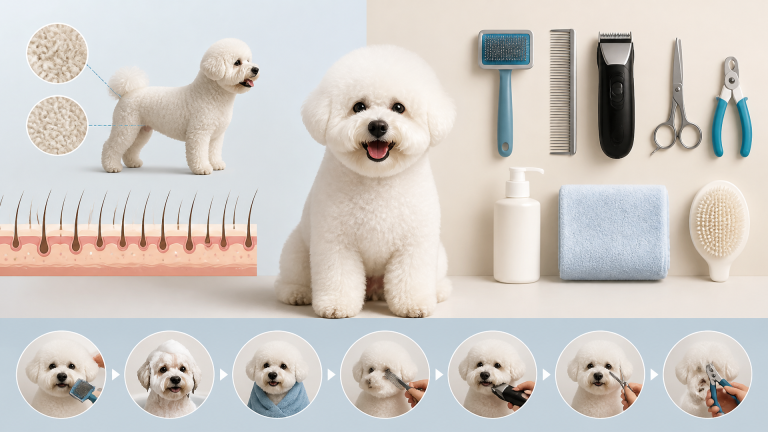
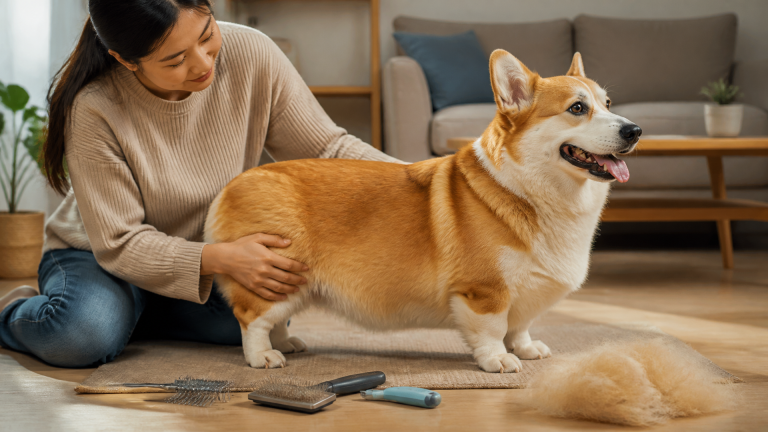
Goldens have a thick double coat that sheds heavily year-round, with a major blowout twice a year. Daily brushing is non-negotiable.
- Tools you’ll need: Slicker brush, undercoat rake, and a deshedding tool (like a Furminator). Use a high-velocity dryer after baths to blow out loose fur.
- Bathing: Every 6–8 weeks with a dog-friendly shampoo. More often if they swim or get dirty.
- Ears and nails: Check ears weekly for redness or odor; clean with a vet-approved ear cleaner. Trim nails every 3–4 weeks — if you hear clicking on the floor, it’s time.
Trade-off to know: That gorgeous double coat comes with constant cleaning. Expect fur on furniture, clothing, and in your car. A robot vacuum rated for pet hair helps, but you’ll still need to lint-roll daily.
Training Your Golden: What Works and What Doesn’t
Goldens are smart and eager to please, but they’re also easily distracted by smells, other dogs, and food. Positive reinforcement is the only method that works — punishment or harsh corrections will damage their trust.
Essential Commands
| Command | Why It Matters | Sample Method | Common Mistake |
|---|---|---|---|
| Sit | Base for all other cues | Lure with treat above nose, then down | Repeating “sit” without following through physically |
| Stay | Safety near doors or roads | Start with 1 second, reward, then increase duration | Moving too fast to longer durations |
| Leave It | Prevent eating dangerous objects | Trade a low-value item for a high-value treat | Yanking the item away instead of trading |
| Recall (Come) | Off-leash safety | Use a long line and reward with play, not just treats | Calling when distracted, then punishing arrival |
Puppy Training Timeline
- 8–12 weeks: Potty training, crate training, and socialization. Expose your puppy to different people, surfaces, and sounds in a positive way. Miss this window and you’ll spend months fixing fear-based behaviors.
- 4–6 months: Obedience classes or private sessions reinforce impulse control. This is the teenage phase — be patient; they’ll test boundaries.
- 12+ months: Advanced tricks, rally, or therapy dog training if you’re interested.
When the Golden Personality Doesn’t Fit
Goldens are wonderful dogs, but they aren’t right for every household. Here’s when the breed’s traits become downsides:
- You work long hours away from home. Goldens with separation anxiety will howl, chew doors, or have accidents. A dog walker or doggy daycare is necessary, not optional.
- You want a low-shedding dog. Goldens shed constantly. If allergies or clean floors are a priority, consider a Poodle or Portuguese Water Dog instead.
- You live in a small apartment with no yard. A Golden can adapt to apartment life — if you commit to 1–2 hours of exercise daily. Without that, the dog will be destructive.
- You prefer a quiet, independent dog. Goldens bark at visitors, whine when excited, and follow you from room to room. They are not a breed for people who want personal space.
Decision implication: If any of these mismatches apply to your situation, think carefully before bringing a Golden home. The breed’s needs are non-negotiable — and an under-exercised, lonely Golden is not the loving companion the “husband” trend promises.
Health Red Flags Every Owner Should Know
Golden Retrievers are generally healthy, but the breed has predispositions you need to monitor. Early detection saves money and extends lifespan.
Warning Signs to Act On
- Limping or stiffness after rest: Could indicate hip or elbow dysplasia. Ask your vet for an OFA or PennHIP evaluation.
- Lumps that grow quickly: Lymphoma and hemangiosarcoma are common in Goldens. Check for new lumps monthly and have any that persist beyond two weeks aspirated.
- Chronic ear infections: Redness, odor, or head shaking often points to allergies. Work with your vet on an elimination diet or allergy medication.
- Weight gain despite normal food: Thyroid issues are common in middle-aged Goldens. A simple blood test can confirm.
Verification step: Run your hands over your dog’s body once a month. If you find a lump, mark its location and size on your phone calendar. Check again in two weeks — if it has grown, book a vet appointment immediately. Most lumps are benign, but size change in a short period is a red flag.
Lifespan and Senior Care
Goldens typically live 10–12 years. After age 8, switch to a senior diet with joint supplements, schedule vet visits every six months, and watch for cognitive decline (pacing, confusion, altered sleep patterns).
Quick Care Checklist for Golden Retrievers (Use Every 8 Weeks)
Run through this list every two months. Each item is a pass/fail check — if you fail any, take action that same week.
- [ ] Daily brushing: Coat is free of mats and tangles. If not, increase brushing frequency and check for hidden mats behind ears and under legs.
- [ ] Ears clean and dry: No redness, discharge, or yeast smell. Schedule a vet visit if dirty or foul-smelling.
- [ ] Nails short: No clicking on hard floors. If