Can Beagles Have Lomger Hair
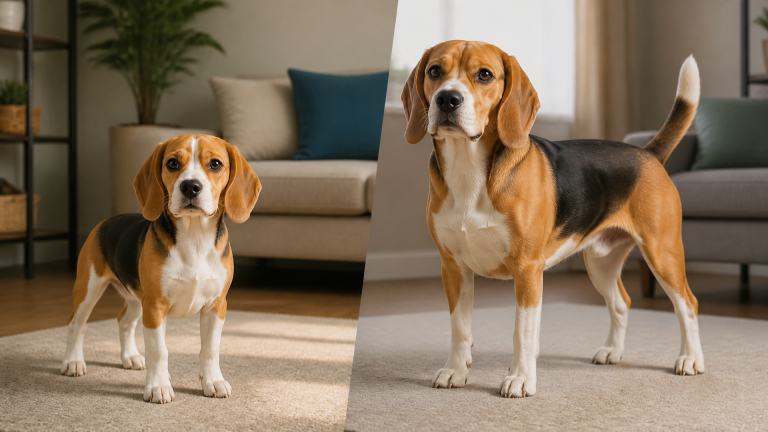
No, purebred Beagles cannot have long hair. The breed standard calls for a short, dense double coat that lies flat and stays about 1 to 1.5 inches long. If your Beagle has noticeably longer hair, it’s almost always a sign of a mixed breed, a temporary puppy coat, or an underlying health issue — and knowing which one matters for your next move.

If your dog looks like a Beagle with long or fluffy hair, don’t assume it’s a rare “long-haired Beagle.” That doesn’t exist in the breed. Your next step is to either run a DNA test to confirm the mix, or watch for other symptoms that point to a health problem. Ignoring the change can mean missing early signs of hypothyroidism or Cushing’s disease — both treatable if caught in time.
What a Healthy Beagle Coat Should Look Like
A normal Beagle coat is short, smooth, and uniform. Here’s the baseline:
| Feature | What’s Normal |
|---|---|
| Length | 1 to 1.5 inches, even across the body |
| Texture | Dense, slightly coarse guard hairs over a soft undercoat |
| Shedding | Moderate year-round, heavier in spring and fall |
| Feel | Firm but not wiry; lays flat against the body |
| Appearance | Smooth, not fluffy, silky, or feathered |
Beagles come in colors like tricolor, lemon, red and white, and blue tick — the coat texture stays the same regardless of pattern.
Practical implication: If your dog’s hair is longer than 2 inches or shows feathering on the ears, legs, or tail, you’re looking at a mixed breed or a health issue. Don’t spend money on “long-hair Beagle” grooming products — they won’t solve the real cause. Instead, use that money on a DNA test or a vet check.
Why Your Beagle Might Look Like It Has Longer Hair
Here are the five real reasons, ranked from most to least common, with a concrete way to confirm each one.
Your Beagle Is a Mixed Breed — The #1 Reason
Many dogs sold as “purebred” Beagles are actually crosses. The longer hair comes from the other parent breed. Common mixes that create longer coats:
- Beagle x Basset Hound – slightly longer, coarser hair with light feathering on legs
- Beagle x Poodle (“Poogle”) – wavy or curly coat that sheds very little
- Beagle x Spaniel – noticeable feathering on ears, legs, and tail
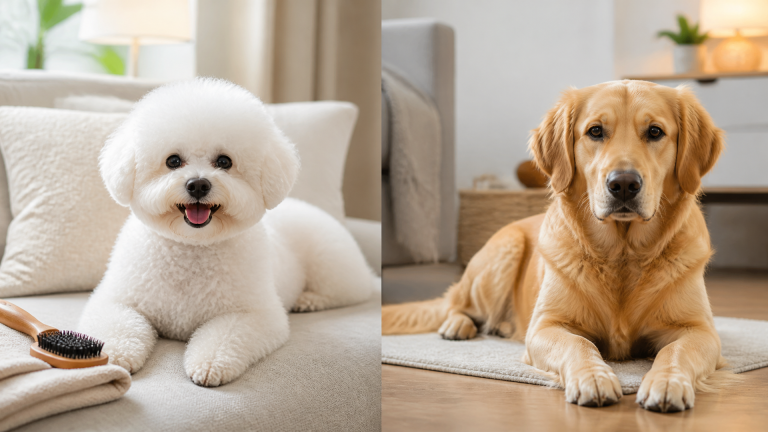
- Beagle x Golden Retriever – medium-length, wavy coat with longer guard hairs
How to verify (concrete step): Run your hand over the ears, tail, and back of the legs. Purebred Beagles have short, smooth hair everywhere — no tufts or feathers. If you find longer patches, the most reliable way to confirm is a DNA test (like Embark or Wisdom Panel). It costs $100–$150 and gives you a clear breed breakdown.
Trade-off to watch: If you assume long hair is normal and don’t identify the mix, you may choose the wrong grooming tools. For example, a slicker brush works fine on a poodle-Beagle mix but can irritate a purebred Beagle’s skin. You might also miss breed-specific health risks (like hip dysplasia in Golden Retriever mixes).
Normal Variation in Guard Hairs
Some Beagles grow guard hairs slightly longer — up to about 2 inches. The coat still looks short and smooth overall, just a touch denser. This is still within the normal range and doesn’t need any action.
Seasonal Coat Changes
In winter, Beagles grow a thicker undercoat. This can make the coat feel denser and look a little “fluffier,” but it’s temporary. The extra undercoat sheds out in spring. You’ll notice more shedding during that transition.
Puppy Coat vs. Adult Coat
Puppy Beagles have a soft, fluffy coat that looks longer than the adult version. This baby coat transforms to the short adult coat by 6–8 months of age. If your Beagle is under a year old, you’re almost certainly seeing the puppy coat — it will change naturally.
Health Issues That Change Coat Texture or Length
This is the category to take seriously, because you can act early. Key conditions:
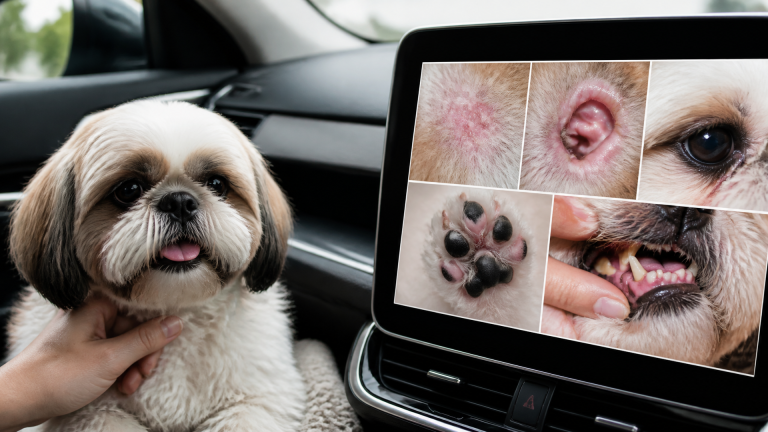
- Hypothyroidism – Causes symmetrical thinning, dry coat, and sometimes thicker patches on the neck or back. Also weight gain, lethargy, and skin infections. A simple blood test at the vet confirms it.
- Cushing’s disease – Leads to hair thinning on the body along with a pot-bellied look, increased thirst and urination, and a dull coat.
- Allergies – Itching, redness, hair loss, and coat changes. Most common in Beagles from food or environmental triggers.
- Skin infections – Patchy hair loss, flaking, crusting, or a greasy feel.
Failure mode to avoid: Many owners write off a change in coat as “just aging” or “winter fluff.” If your Beagle’s coat has changed noticeably in the last 2–4 weeks and is accompanied by weight change, thirst increase, or energy loss, don’t wait — make a vet appointment. These conditions are treatable, but early detection matters.
3 Expert Tips for Beagle Coat Care
Tip 1: Use the Right Brush for Your Dog’s Actual Coat
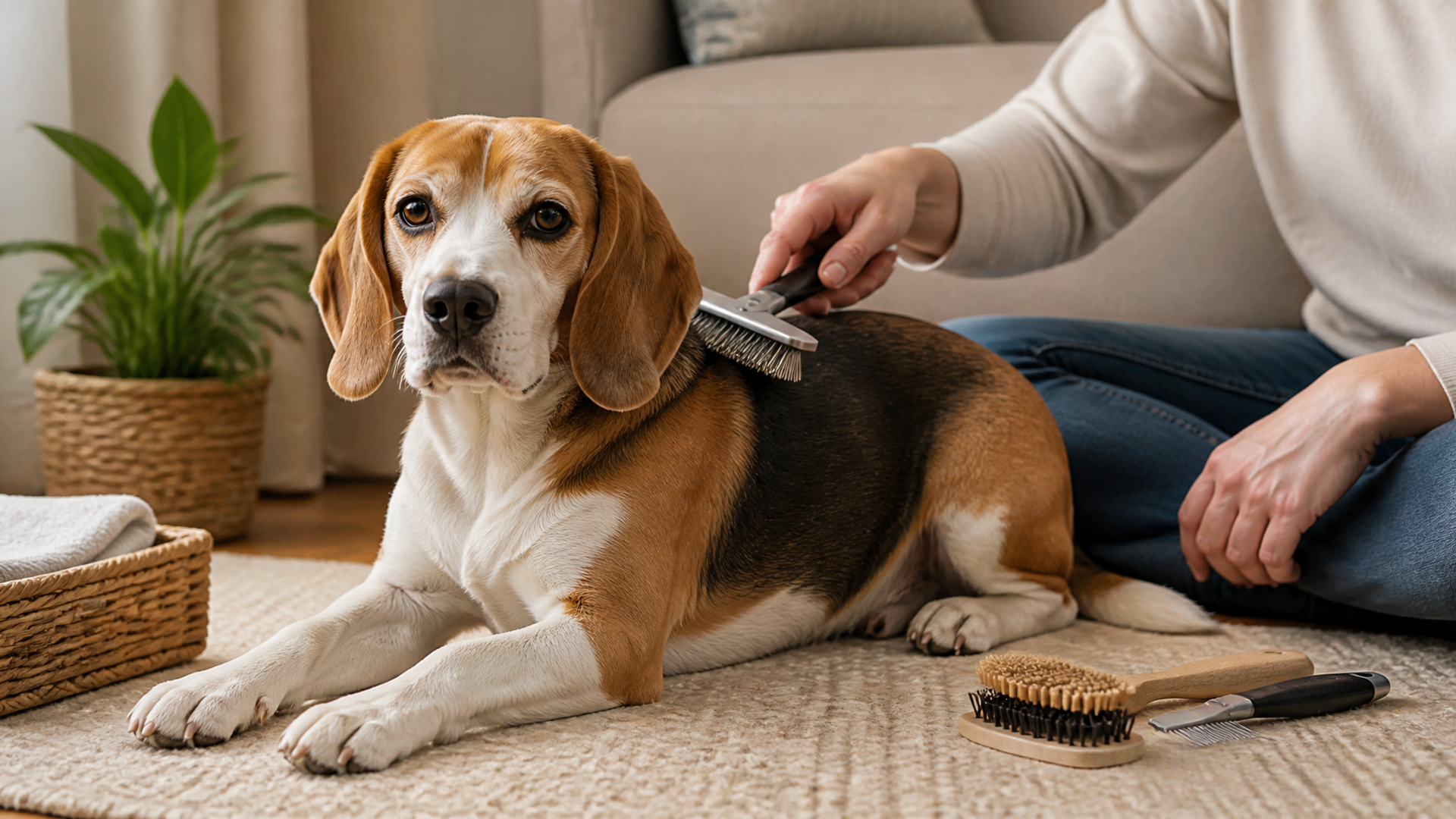
Actionable step: If your Beagle has a short, normal coat, use a rubber grooming mitt or soft bristle brush 2–3 times per week. During heavy shedding seasons, switch to a deshedding tool or shedding blade.
Common mistake to avoid: Don’t use a slicker brush on a purebred Beagle’s short coat — it can scratch the skin and won’t remove undercoat effectively. If your Beagle is a mix with longer hair, a slicker brush or pin brush may be exactly what you need. Match the tool to the coat you see.
Tip 2: Bathe Only When Needed, and Use the Right Shampoo
Actionable step: Bathe your Beagle every 4–8 weeks with an oatmeal-based or gentle dog shampoo. This preserves natural oils that keep the coat healthy.
Common mistake to avoid: Over-bathing strips those oils and leads to dry, flaky skin. If your Beagle smells between baths, try dog grooming wipes or a dry shampoo instead. For dogs with longer coats (mixes), you may need a conditioner to prevent tangles — but not for short-haired Beagles.
Tip 3: Do a Weekly Hands-On Coat Check
Actionable step: Once a week, run your hands over your Beagle’s whole body during grooming. Feel for thinning, rough patches, areas where the coat feels different, or any new lumps.
Common mistake to avoid: Ignoring a coat change as “just a seasonal thing.” Many health issues show up first in the coat. If you notice thinning, balding, or texture changes lasting more than two weeks, schedule a vet visit — especially if your Beagle is older than 6 years.
When to See the Vet: Coat Changes That Signal Trouble
Call your veterinarian if your Beagle shows any of these signs:
- Patchy hair loss — especially on the sides of the body or tail
- Symmetrical thinning — both sides losing hair evenly
- Coat feels dry, brittle, or greasy
- Excessive scratching or licking
- Dull, lifeless coat beyond normal seasonal shedding
- Scaling, flaking, or dandruff
- Hair growing in different colors or textures, especially in older dogs
Stop point: If your Beagle’s coat has changed noticeably over a few weeks and is accompanied by weight change, energy loss, or thirst changes, don’t wait — make a vet appointment. These are classic signs of hypothyroidism or Cushing’s disease.
Beagle Coat Quick Reference Card
Use this check to evaluate whether your Beagle’s coat needs attention:
☐ Coat length is short and uniform across the body — Yes / No
☐ No patchy hair loss or bald spots — Yes / No
☐ Skin feels smooth, no flakes, redness, or bumps — Yes / No
☐ Coat has normal density (can feel undercoat but not see bare skin) — Yes / No
☐ No increase in scratching or licking — Yes / No
☐ Seasonal shedding follows expected pattern (heavier spring/fall) — Yes / No
If you answered “No” to any, start monitoring weekly. If the issue doesn’t resolve in two weeks or gets worse, see your vet.
Products That Help With Beagle Coat Care
For Beagle-specific grooming, these product types work well depending on your dog’s actual coat:
- Rubber grooming mitt – removes loose undercoat without irritating short Beagle coats
- Deshedding tool – essential during spring and fall for all Beagles
- Oatmeal dog shampoo – gentle on sensitive Beagle skin
- Dog grooming wipes – quick freshen-ups between baths
- Omega-3 fatty acid supplement – supports coat health from the inside (ask your vet first)
We may earn a commission if you purchase through these links, at no extra cost to you.
Save This Guide
Keep this page handy for quick reference when evaluating your Beagle’s coat. Key takeaway: If your Beagle’s hair looks longer than expected, identify the cause (mix, health, or normal variation) before changing your grooming routine. A DNA test or vet visit will give you the right answer.
FAQ
Can Beagles have longer hair?
No. Purebred Beagles have short, dense double coats. If your dog has longer hair, it’s likely a mixed breed or there may be an underlying health issue.
Why does my Beagle’s coat feel rough?
A slightly coarse texture is normal for the outer guard hairs. But if it feels unusually rough, brittle, or dry, it could indicate a nutritional deficiency, dehydration, or a skin condition.
How much shedding is normal for a Beagle?
Beagles are moderate to heavy shedders. Expect consistent shedding year-round, with heavier shedding in spring and fall when they “blow” their undercoat.
Can a Beagle’s coat change color as they age?
Yes. Many Beagles lighten or darken slightly with age. The classic tricolor pattern often becomes less distinct. This is normal.
Should I shave my Beagle in summer?
No. Never shave a double-coated breed. The undercoat provides insulation against heat and cold. Shaving can damage the coat permanently and increases risk of sunburn and overheating.