Burmese Cat Health Issues: Warning Signs & What To Do
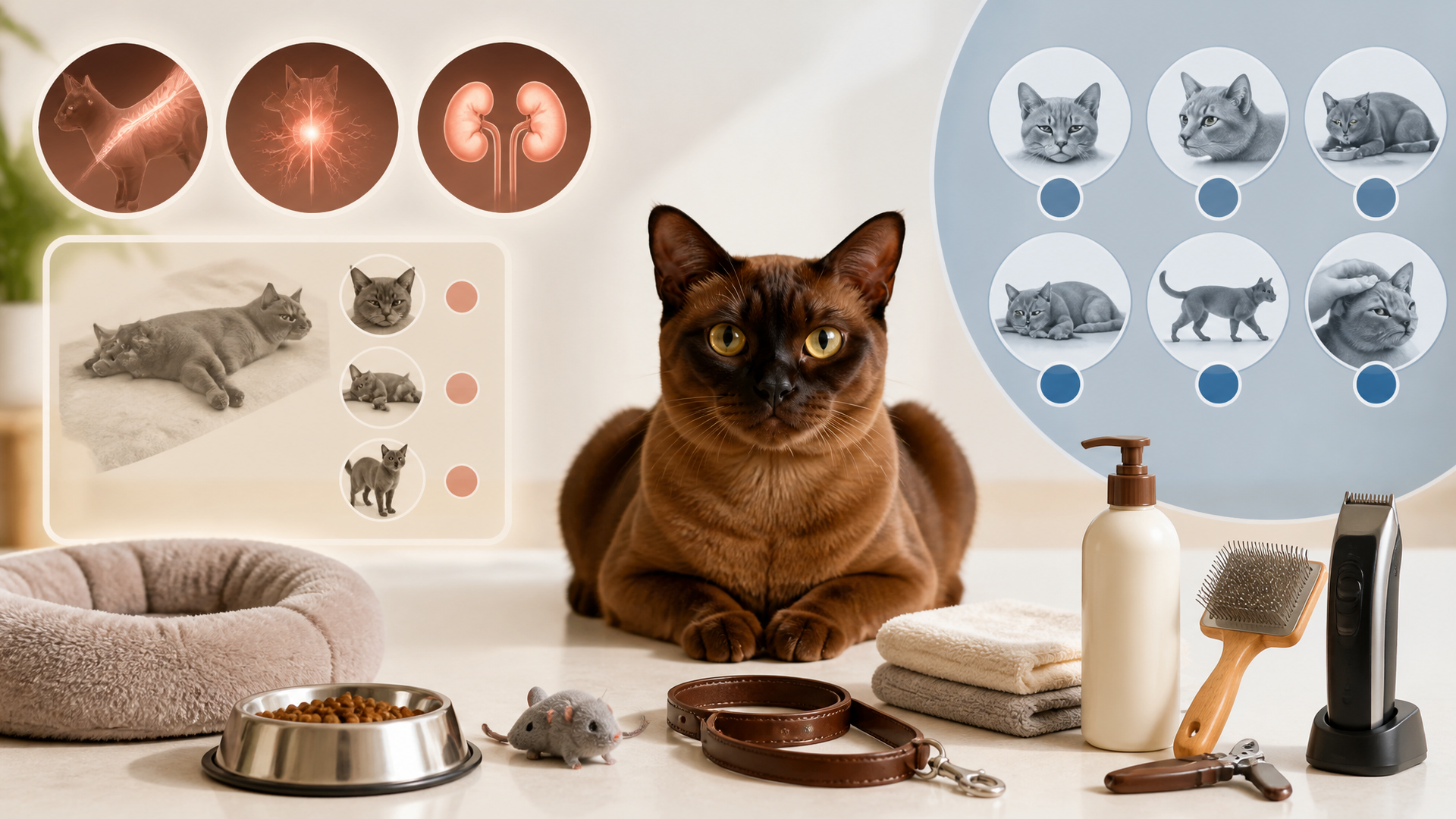
Burmese cats are generally healthy, long-lived cats (15–18 years is common), but they carry breed-specific health risks you need to watch for. The three biggest concerns are hypokalemia (low potassium causing muscle weakness), orofacial pain syndrome (sudden face pawing), and obesity-related diabetes. Catch these early, and your Burmese can live a full, active life. Here’s exactly what to look for and what to do.

The Three Health Issues Every Burmese Owner Should Know
Hypokalemia (Low Potassium)
This is the most well-documented inherited issue in Burmese cats. A genetic defect can cause potassium to drop too low, particularly in young adults (2–8 years old).
Warning signs:
- Sudden neck drooping or head hanging low
- Weak hind legs or a stiff, stilted walk
- Reluctance to jump on furniture
- General tiredness that seems to come and go
What to do: A blood test (serum potassium level) confirms it. Treatment is straightforward — potassium supplementation (oral liquid or powder) prescribed by your vet. Most cats improve within days. Don’t try human potassium supplements; they’re dosed wrong for cats.
Expert tip: Ask your vet to check potassium levels as part of your Burmese’s annual blood work, even if no symptoms are present. Common mistake: Assuming neck drooping is just old age or a sore muscle. In Burmese cats, it’s a red flag until proven otherwise.
Verification step you can do at home: Watch your cat’s head carriage when they’re walking from room to room. A normal Burmese holds their head level. If you see repeated head-drooping or the cat resting their chin on the floor, schedule a same-day vet visit.
Trade-offs to know: Potassium supplements can cause stomach upset in some cats. Your vet may need to adjust the dose over the first week. If your cat vomits after the liquid supplement, ask about a gel formulation instead.
Orofacial Pain Syndrome (Feline Orofacial Pain Syndrome — FOPS)
This neurological condition is more common in Burmese than any other breed. It causes sudden, severe facial pain that looks alarming but isn’t life-threatening.
Warning signs:
- Frantic pawing at the mouth or rubbing the face on furniture
- Chattering or licking movements with no food present
- Crying out suddenly while eating or grooming
- Drooling or chewing on one side of the mouth
What to do: Video the episode — it helps your vet diagnose. Triggers include dental disease, stress, or even a new food texture. Treatment focuses on pain management (gabapentin is common) and removing triggers. Most Burmese outgrow the worst episodes by age 3–4.
Expert tip: Keep a log of episodes: time of day, what the cat was doing, and how long it lasted. This identifies patterns. Common mistake: Assuming it’s a dental emergency or hairball issue. FOPS episodes look dramatic but usually pass in 5–15 minutes.
Practical implication: If your Burmese has FOPS, you may need to switch to a wet food that doesn’t require much chewing, avoid hard treats, and schedule regular dental cleanings. Without proactive dental management, episodes tend to become more frequent.
Obesity and Diabetes
Burmese cats love food and tend to gain weight fast. Obesity is the single biggest preventable health problem in the breed, and it directly drives diabetes risk.
Warning signs:
- Increased thirst and urination (diabetes red flag)
- Weight gain despite seeming to eat the same amount
- Lethargy and sleeping more than usual
- A tucked or sagging belly when standing
What to do: Weigh your Burmese monthly. A healthy adult male should be 8–12 lbs, female 6–10 lbs (check your cat’s ideal weight with your vet). Feed measured portions — free-feeding is risky for this breed. If diabetes develops, insulin injections are manageable long-term.
Expert tip: Use a kitchen scale to weigh food portions exactly. A quarter-cup scoop can vary by 30% depending on how you fill it. Common mistake: Letting your Burmese “graze” throughout the day. They will overeat. Scheduled meals twice daily with no food left out reduces obesity risk dramatically.
Realistic mismatch: Switching from dry kibble to wet food for weight control can cause picky eaters to refuse meals. If your cat turns up their nose at wet food, mix in a small amount of warm water or a low-sodium broth (no onions or garlic) to increase appeal. Do not go back to free-feeding kibble — that trade-off is worse.
Warning Signs Checklist — When to Act Now
Print this list and keep it on your fridge. If your Burmese shows any of these signs, call your vet within 24 hours (sooner if marked urgent):
| Symptom | Urgency | Action |
|---|---|---|
| Head drooping or neck weakness | Same day | Request a potassium blood test |
| Pawing at face + crying out | Same day | Record video, then call vet |
| Drinking + peeing noticeably more | 48 hours | Blood glucose check |
| Sudden hind-leg weakness or collapse | Immediate | Emergency vet — rule out clot |
| Rapid weight gain (1+ lb in 2 weeks) | Schedule soon | Diet adjustment + weigh-in |
| Unexplained vomiting + lethargy | Same day | Vet exam + possible bloodwork |
| Hiding + not eating for 24 hours | Same day | Do not wait another day |
Prevention: What You Can Do Now
Burmese cats reward proactive owners. You can’t change their genetics, but you can manage the triggers and catch problems early.
1. Feed a low-carb wet food. Dry kibble is high in carbohydrates, and Burmese cats process carbs poorly. High-protein, low-carb wet food matches their natural metabolism better and helps prevent both obesity and diabetes. Look for pâté-style foods with <10% carbs on a dry matter basis.
**2. Weigh your cat every 2 weeks.** A bathroom scale works — weigh yourself, then weigh yourself holding your cat, and subtract. A jump of more than 0.5 lbs between weigh-ins means you need to adjust portions.
**3. Annual vet visits aren’t optional.** Burmese cats hide illness well. Yearly blood work (including potassium and glucose) catches problems before symptoms appear. Your vet can also check teeth, since dental disease can trigger FOPS.
**4. Know their normal.** A Burmese that usually greets you at the door but suddenly hides isn’t “being moody.” Behavior changes are early warning signs. Learn their baseline energy, appetite, and litter box habits.
**5. Dental care matters for FOPS prevention.** Brush teeth 2–3 times per week with a veterinary toothpaste. Dental cleanings under anesthesia every 1–2 years reduce mouth pain that can trigger orofacial pain episodes.
**Expert tip:** Teach your Burmese to accept tooth brushing gradually — start with a finger brush and meat-flavored toothpaste. *Common mistake:* Skipping dental care because your cat’s teeth “look fine.” By the time you see tartar buildup, gum disease is already active.
When to See the Vet — Quick Decision Guide
- Emergency vet immediately: Collapse, difficulty breathing, sudden paralysis, seizures, or blue gums. Burmese cats are prone to blood clots (aortic thromboembolism) which can cause sudden hind-leg paralysis — this is a crisis.
- Same-day vet: Head droop, face pawing with distress, vomiting repeatedly, not eating for 24 hours, or any sudden behavior change.
- Schedule within the week: Weight gain that won’t stop, increased thirst + urination, mild intermittent face pawing, or recurring ear/eye discharge.
FAQ (Quick Answers)
Do all Burmese cats get hypokalemia?
No. The genetic risk exists, but not all Burmese develop it. Studies suggest about 15–25% of Burmese in some lines carry the genetic variant. Routine blood work catches it early.
Is orofacial pain syndrome painful for my cat?
Yes, episodes are acutely painful for 5–15 minutes, but they pass. Between episodes, cats are normal. Treatment controls the pain and reduces frequency.
What is the average lifespan of a Burmese cat?
15–18 years is typical. Some live into their early 20s. Good diet, weight management, and early detection of breed-specific issues improve lifespan.
Can Burmese cats go outside safely?
Burmese are curious and social, but outdoor access increases risks: injury, toxins, and infections. If you do supervised outdoor time, use a harness and leash specifically sized for Burmese (they have round necks that slip out of standard collars).
Save This Guide
Print the warning signs table above and keep it near your cat’s food station. A quick monthly weigh-in and a phone video of any face-pawing episodes are the two highest-impact habits you can build. Burmese cats are resilient, but they rely on you to catch what they hide.