What Size Poodle is Best For my Family
The best poodle size for most families with school-age kids is a Standard Poodle, but if you have toddlers, limited space, or want a lower-energy dog, a Miniature Poodle is often the smarter choice. Toy Poodles work best for families with older children or no kids at all. Every size shares the same intelligence and hypoallergenic coat — so your real decision comes down to energy level, physical handling, and your home setup.

Quick Answer
Match your family’s daily rhythm to the poodle’s energy output. Standards need 45+ minutes of active exercise daily and thrive with kids 6+. Miniatures need about 30 minutes and adapt better to toddlers and smaller homes. Toys need 20–25 minutes and are safest with kids 12+. If you’re unsure, start with a Miniature — it’s the most forgiving size for a first-time poodle family.
Before you buy, verify your choice with a real-world test: visit a breeder or rescue and spend at least 30 minutes with the size you’re considering. Bring your children if possible. Observe how the dog responds to noise, sudden movements, and being handled. A Toy that flinches at a toddler’s grab will not “grow out of it.” A Standard that jumps up on everyone may knock over a small child. Trust what you see, not what you hope.
Comparison Framework
| Size | Weight | Height | Energy Level | Best For Families With… | Costs (Monthly Food + Grooming Avg) |
|---|---|---|---|---|---|
| Toy Poodle | 4–6 lbs | Under 10 in | Moderate, indoor-friendly | Older kids (12+), no young children, apartments | $30–$50 food + $50–$70 grooming every 4–6 weeks |
| Miniature Poodle | 10–15 lbs | 10–15 in | Moderate-high, adaptable | Toddlers to teens, smaller homes, first-time owners | $40–$60 food + $60–$80 grooming |
| Standard Poodle | 40–70 lbs | Over 15 in | High, needs daily exercise | School-age kids (6+), active families, yards | $60–$90 food + $80–$120 grooming |
All three sizes share the same sharp intelligence, eager-to-please temperament, and non-shedding coat. The differences in weight and energy make each a better or worse fit for specific family dynamics.
Best-Fit Picks by Use Case
Families with Toddlers and Young Children (Ages 0–5)
Miniature Poodle is the safest bet. Toy Poodles are small enough that a toddler’s rough hug or accidental fall can injure them — patellar luxation and collapsed trachea are real risks. Standards are sturdy but their size and energy can knock over a wobbly child. A Miniature (10–15 lbs) is large enough to handle normal kid interaction but small enough that a fall onto them won’t hurt either party. They also tire out faster than Standards, matching a toddler’s play-and-nap rhythm.
If your child is already steady on their feet and you have space, a Standard Poodle can work with supervised interactions until both dog and child learn boundaries. But expect to manage the dog’s excitement around meal times and when guests arrive.
Families with School-Age Kids (Ages 6–12)
Standard Poodle is the natural pick. Kids this age can walk a dog, throw a ball, and participate in training. Standards thrive on that engagement. They need 45–60 minutes of exercise daily, which pairs well with active kids who want a running or hiking buddy. The size also means a child can’t easily pick up and carry the dog (which reduces stress for the dog).
If your family is less active or lives in an apartment, a Miniature Poodle still fits well — just expect shorter walks and more indoor play. Avoid a Toy for this age group: a 6-year-old’s impulsive movements can easily startle a 5-lb dog, leading to defensive snaps.
Families with Teens
All three sizes work, but Standard Poodle stands out for teens who want a dog they can train, compete with, or take on outdoor adventures. Poodles excel at dog sports (agility, obedience, rally) and teens often enjoy that level of partnership. Toy Poodles work if your teen wants a smaller companion for study sessions or low-key activities. Miniatures are a strong middle ground for teens in apartments.
Families with Other Pets
Miniature or Standard Poodle is the safer choice. Their size and temperament make them less likely to be intimidated by or overly reactive to other dogs or cats. Toy Poodles can be more nervous around larger or high-energy pets and may need slower introductions. All poodles have a moderate prey drive — expect good manners with proper socialization, but don’t assume they’ll ignore a running cat without training.
Trade-Offs to Know
Grooming Is the Same Commitment for Every Size
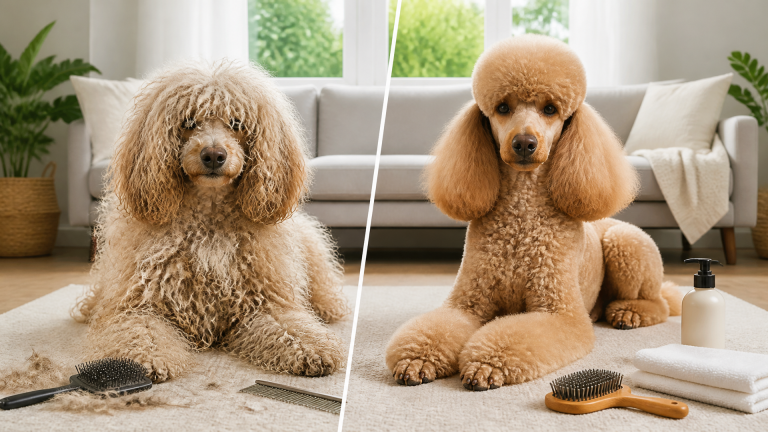
Many families pick a poodle for the hypoallergenic coat, but that coat needs professional grooming every 4–6 weeks plus at-home brushing 3–4 times per week. A Toy Poodle needs the same haircut schedule as a Standard. If you aren’t ready for that recurring time and cost ($50–$120 per session depending on size and region), a poodle of any size will mat quickly and develop skin infections. A slicker brush and metal comb are non-negotiable tools. Skip the cheap plastic brushes — they don’t reach the undercoat.
Exercise Needs Scale with Size, But So Does Recovery
Standards need the most activity — at least 45 minutes of brisk walking or active play daily. Miniatures need about 30 minutes. Toys need 20–25 minutes. The trade-off: Standard Poodles bounce back fast and are ready for another round, while Toys and Miniatures wear out faster and nap longer. If your family is out of the house for 8–9 hours a day, a Standard Poodle may become destructive from under-stimulation — chewing baseboards, barking at neighbors, or developing obsessive pacing. A Miniature or Toy is more forgiving of a slower schedule but still needs enrichment when left alone (puzzle toys, frozen kongs).
Health and Lifespan Differences
Toy Poodles live longest (14–16 years) but are prone to patellar luxation and collapsing trachea — conditions that can be triggered by rough handling from young kids. Miniatures (13–15 years) have fewer skeletal issues. Standards (12–14 years) face a higher risk of hip dysplasia, bloat (GDV), and certain cancers. Bloat is life-threatening and requires emergency vet care within hours. If you choose a Standard, ask your breeder about the line’s bloat history and consider a gastropexy procedure during spay/neuter. Ignoring this trade-off can mean a $3,000–$6,000 emergency surgery or losing your dog.
The Real Risk of Picking the Wrong Size
Choosing a Toy Poodle for a family with toddlers often leads to the dog being injured or becoming defensive — resulting in bites or fear-based aggression that forces rehoming. Choosing a Standard Poodle for a sedentary family without exercise leads to destructive behaviors that strain the household. The most common owner regret? “We got a Toy because we live in an apartment, but our 8-year-old wants to play rough and the dog is terrified.” The mismatch hurts both the child and the dog. If you’re torn between sizes, the Miniature Poodle is the safest hedge — it’s small enough for apartments, sturdy enough for kids, and moderate in energy.
Space Is Not the Deciding Factor You Think
A Toy Poodle doesn’t automatically fit an apartment better than a Standard. Poodles are adaptable — a Standard with sufficient daily exercise settles fine in a one-bedroom apartment. A Toy Poodle that never gets walked or played with will bark and pace in a mansion. Your family’s daily schedule and commitment to exercise matter far more than square footage.
Quick Decision Checklist: Find Your Best Poodle Size
Run through these five questions. If you answer “yes” to most in a size category, that’s your best fit.
Standard Poodle may be right for you if…
- Your kids are age 6 or older and can handle a larger dog
- You can commit to 45+ minutes of exercise daily (rain or shine)
- You have space for a 40–70 lb dog (or you’re willing to exercise them thoroughly)
- You want a dog that can hike, run, or do dog sports
- You’re comfortable with the higher food and vet costs of a large breed
Miniature Poodle may be right for you if…
- You have toddlers or young children under 5
- You live in a smaller home or apartment
- You want a dog that’s easier to manage on walks and during grooming
- You have other pets and need a size that won’t intimidate or get bullied
- You want a balance of playfulness and calmness without the high-energy demands of a Standard
Toy Poodle may be right for you if…
- Your children are age 12 or older and understand gentle handling
- You want a lap dog that fits in small spaces
- You prefer shorter, lower-impact walks (20–25 minutes)
- You travel frequently and want a dog that can come along
- You are home most of the day and can provide close companionship
If you checked “yes” across multiple columns, lean toward the larger size — poodle owners consistently report that they underestimated the exercise and mental stimulation needs of their dog.
Related Questions About Poodle Sizes
Can a Standard Poodle live in an apartment?
Yes, if you give them enough exercise. A Standard Poodle that gets 45–60 minutes of active time plus mental enrichment (training, puzzle toys) adapts well to apartment living. Without that output, they become restless and vocal — expect neighbor complaints from barking.
Are Miniature Poodles good with cats?
Generally yes, especially if raised together. Miniature Poodles have a moderate prey drive, so introduce them slowly and supervise the first few weeks. A well-socialized Miniature typically coexists peacefully with cats, but a running cat can trigger a chase instinct that takes training to manage.
Do Toy Poodles bark a lot?
Toy Poodles are more prone to alert barking than Miniatures or Standards. This is manageable with early training and enough daily activity. A bored Toy Poodle will bark at every sound outside — apartment dwellers be warned. Consistent “quiet” training and daily walks reduce the behavior significantly.
Which poodle size is easiest to train?
All three sizes are highly trainable — poodles consistently rank second in intelligence behind Border Collies. The Miniature Poodle often feels easiest for first-time owners because their smaller size makes handling (leash training, grooming, vet visits) less physically demanding, which gives the owner more confidence. Standards can be more challenging on leash if not trained early due to their strength.