Poodle Care: Daily Routine & Expert Tips
Poodles are brilliant, loyal dogs with a coat that demands daily attention. Whether you have a Standard, Miniature, or Toy, the same core principles apply: brush every day, feed the right portion, give them both exercise and mental work, and stay ahead of matting and ear infections. Here’s the practical routine that will keep your Poodle healthy, happy, and looking great — plus what to do when things don’t go as planned.

Your Daily Poodle Care Checklist
Use this checklist to make sure nothing slips. Check off each item once daily; repeat weekly tasks on a set day.
Daily (every single day)
- [ ] Brush the entire coat with a slicker brush (pay extra time behind ears, under legs, tail)
- [ ] Offer fresh water and measure out the morning and evening meals
- [ ] Minimum 30 minutes of structured exercise (walk, fetch, or swim)
- [ ] 10–15 minutes of brain work (puzzle toy, short training session, hide-and-seek)
- [ ] Quick ear check – sniff for odor, look for redness or dirt
- [ ] Wipe eyes with a damp cloth to prevent tear stains (especially on light-colored coats)
Weekly
- [ ] Full comb-through with a metal comb to catch small mats the brush missed
- [ ] Nail trim or grind (if you can’t hear them clicking on the floor, they’re due)
- [ ] Teeth brushing (use dog toothpaste, not human)
- [ ] Bath only when dirty or every 3–4 weeks (over-bathing strips natural oils)
Grooming: Beating the Matting Trap (with a Branch and a Stop Point)
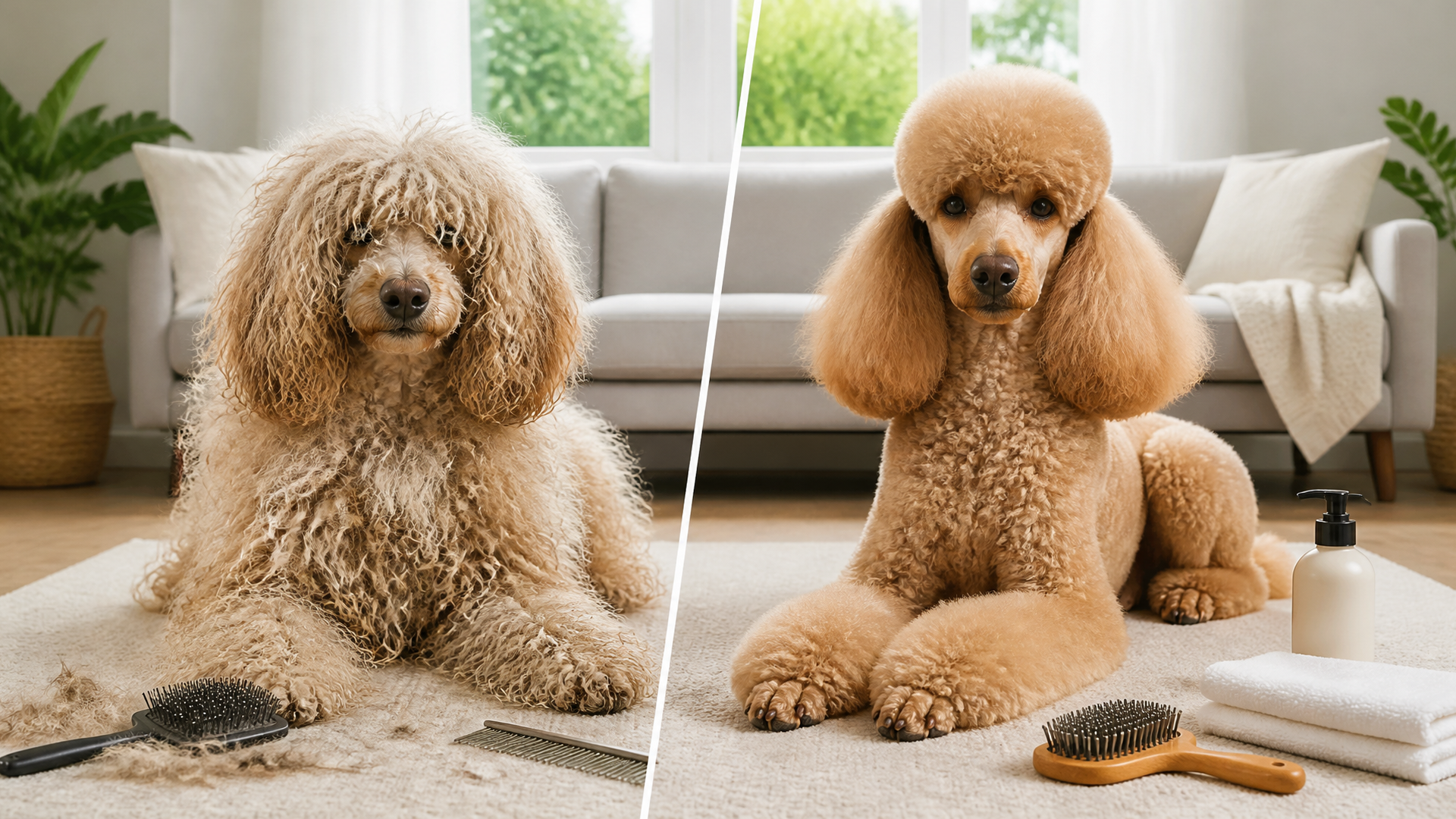
The #1 failure mode for new Poodle owners is letting mats form in the dense, curly coat. Mats hurt – they pull the skin, block airflow, and can lead to hot spots or skin infections. You won’t always feel them with your fingers; the only reliable detection tool is a metal comb.
How to brush a Poodle correctly (step by step):
1. Mist the coat lightly with a detangling spray or water.
2. Start with the slicker brush, brushing in small sections from the skin out.
3. Follow each section with the metal comb. If the comb snags, stop – that’s a micro-mat.
4. Gently tease the mat apart with your fingers or a dematting tool. Do not cut it out with scissors close to the skin (risk of cutting the dog).
What if you find a mat during daily brushing? (The branch)
If the comb catches on a small, loose tangle, you can usually work it out with your fingers or a dematting tool. But if the mat is tight against the skin (you can’t separate the hair from the skin underneath), stop. Do not try to force it. A large, felted mat that’s close to the skin needs clippers from a professional groomer – attempting to brush it out will cause pain and damage the coat.
Verification step: Did your grooming session work?
After brushing, run the metal comb all the way through the coat one last time. If it glides smoothly without snagging anywhere, you’re done. If you hit any resistance, that spot needs more attention. If you find more than two mats you can’t easily remove, it’s time to book a groomer.
Stop/escalate threshold for home grooming:
If your Poodle has multiple mats spread across the body, or any mat that feels like a solid lump against the skin, do not continue DIY attempts. A groomer’s clippers are the safe, humane solution. Trying to brush out large, felted mats at home is painful and will damage the coat.
Feeding Your Poodle: Size Matters
| Poodle Size | Typical Adult Weight | Daily Dry Food (cups) |
|---|---|---|
| Toy | 4–6 lbs | ¼ – ½ cup |
| Miniature | 10–15 lbs | ¾ – 1 cup |
| Standard | 45–70 lbs | 1½ – 2½ cups |
Split the daily amount into two meals (morning and evening) to reduce bloat risk – especially for Standard Poodles, who are prone to gastric dilation-volvulus (GDV). Choose a high-quality dog food with meat as the first ingredient. Avoid foods with excess fillers (corn, wheat, soy) that can trigger allergy symptoms in sensitive Poodles.
Bloat warning: If your Standard Poodle has an unproductive retching attempt, a distended belly, or unusual restlessness after eating, go to the emergency vet immediately. That’s the stop threshold – do not wait.
Exercise & Mental Work (Both Are Non-Negotiable)
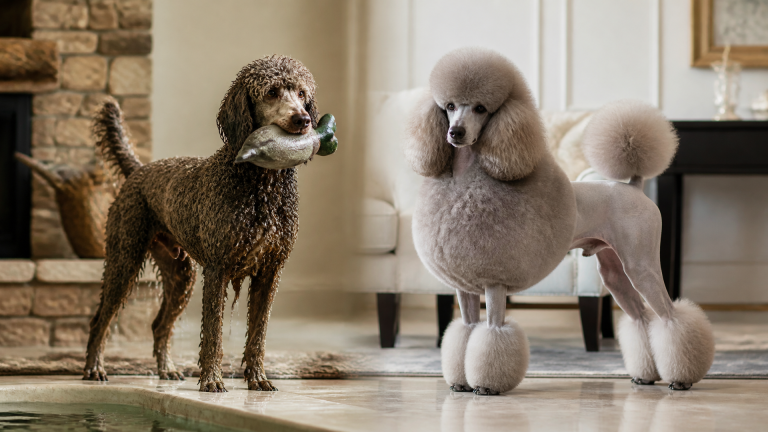
Poodles were bred as water retrievers and circus performers – they need to move and think. A bored Poodle will invent his own entertainment (chewing furniture, excessive barking, digging).
Physical activity:
- Standard: 60–90 minutes daily (running, swimming, hiking)
- Miniature: 45–60 minutes
- Toy: 30–45 minutes (but don’t underestimate their energy – they love fetch)
Mental stimulation (add at least 10–15 minutes daily):
- Puzzle toys (e.g., snuffle mats, treat-dispensing balls)
- Trick training (Poodles excel at “roll over,” “play dead,” “spin”)
- Nose work (hide treats around the house for them to find)
Verification check: After a week of following the exercise and mental stimulation guidelines, your Poodle should be calmer, less destructive, and easier to settle at night. If you’re still seeing problem behaviors, increase the mental work before adding more physical exercise.
Health Monitoring: What to Watch For and When to Call the Vet
Poodles have several breed-specific vulnerabilities. Catch these early:
- Ear infections: Floppy ears trap moisture. Check once a week – if you smell yeast or see brown discharge, clean with a vet-recommended ear cleaner and dry thoroughly. Stop threshold: If the discharge returns within 2–3 days after cleaning, or if your dog shows pain when you touch the ear, schedule a vet visit.
- Eye issues: Progressive retinal atrophy (PRA) and cataracts run in the breed. Watch for bumping into furniture or cloudy lenses. Annual eye exams by a specialist are a good idea.
- Skin allergies: Itchy paws, red belly, or recurrent ear infections often point to food or environmental allergies. Work with your vet on elimination diets or allergy medication.
- Bloat (GDV): Only in Standards. Signs: unproductive retching, distended belly, restlessness. This is a medical emergency – go to the ER immediately. Do not attempt home remedies.
Verification step for ear and skin health: After cleaning ears and adjusting diet (if needed), your Poodle should show no signs of head shaking, ear odor, or scratching within a week. If symptoms persist, the problem needs professional diagnosis.
Training Tips for the Smartest Dog in the Room
Poodles learn fast, but they also get bored with repetition. Keep sessions short (5–10 minutes) and positive (treats, praise, play).
- Start early: Crate training, potty training, and handling for grooming should begin the first week.
- Avoid harsh corrections: Poodles are sensitive – yelling or punishment will shut them down. Redirect instead.
- Socialization matters: Expose your Poodle to different people, dogs, sounds, and surfaces as a puppy. A well-socialized Poodle is confident; an unsocialized one can become anxious or reactive.
Branch for training roadblocks: If your Poodle seems to regress or refuses to respond, step back to a simpler version of the cue and increase rewards. If the behavior doesn’t improve after three sessions, consider a professional trainer who uses positive reinforcement.
Save This Guide
Poodle care is all about consistency: daily brushing, measured meals, plenty of exercise, and early health checks. Stick with this routine, and your Poodle will thrive – no matting, no boredom, no surprises. When you hit a snag (literally or figuratively), you now know exactly when to handle it at home and when to call in the pro.
This article contains affiliate links. If you purchase through these links, we may earn a commission at no extra cost to you.