Are American Bulldogs Safe to be Around Another Dog Who is in Heat ?
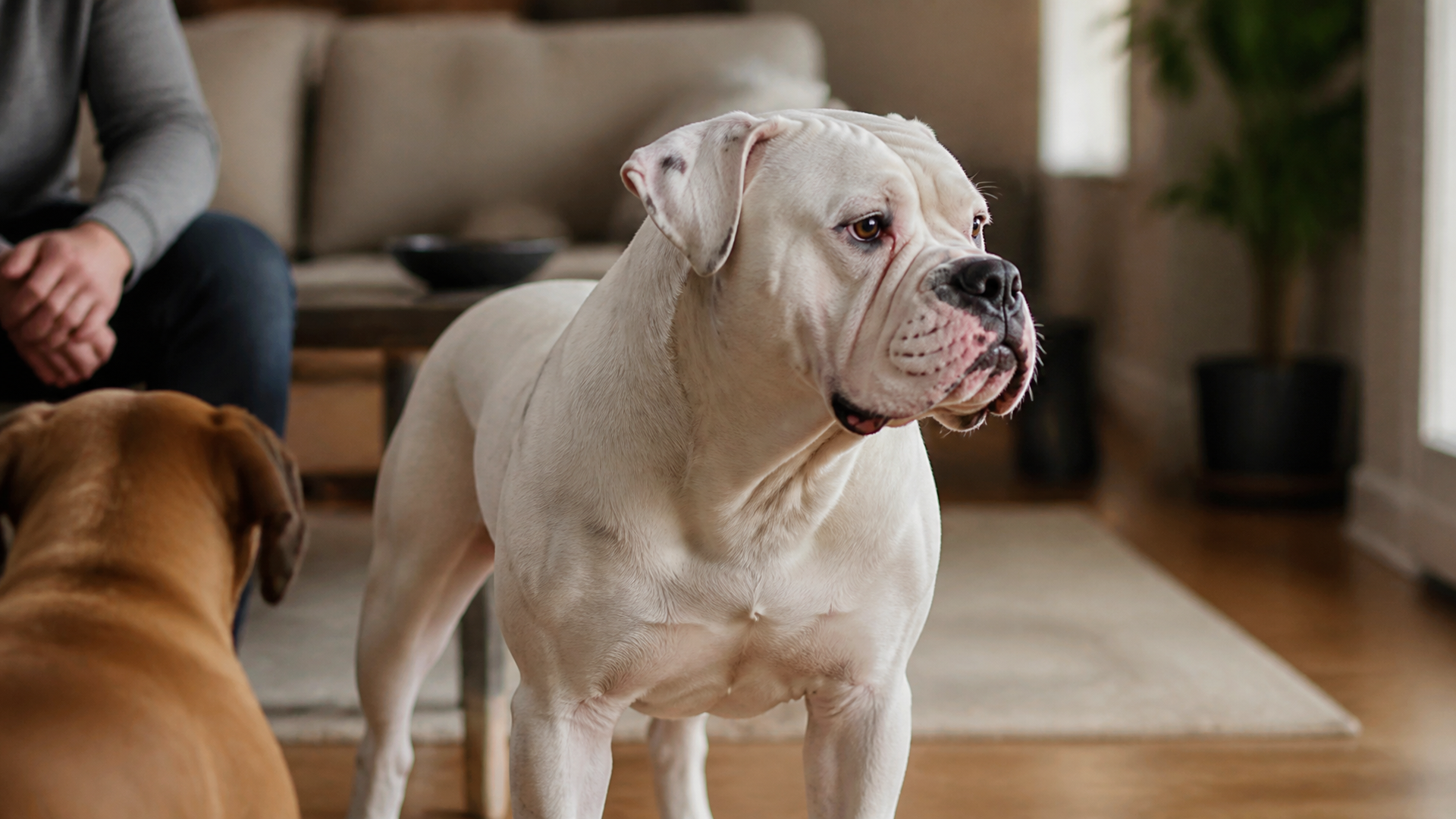
No, not without strict management. An intact male American Bulldog near a female in heat is a high-risk situation. His strong prey drive, powerful build, and stubborn nature can lead to injuries, escapes, or fights—even if they have been fine together before. The safest approach is to keep them completely separated for the full heat cycle (2–4 weeks).

Here is exactly what you need to know to handle this safely.
Why American Bulldogs Are Higher Risk Than Other Breeds
American Bulldogs were bred as working catch dogs—tenacious, fearless, and physically imposing. A male of this breed does not just get “interested” when a female is in heat; he becomes single-minded. His drive to reach her can override all training.
Breed-specific risks to know:
- Strength and size. An adult male can weigh 75–120 lbs. If he jumps a gate or pushes past a door, he can easily knock down a person or injure the female.
- Obsessive behavior. Once he catches the scent, an American Bulldog may stop eating, whine constantly, refuse to sleep, and try to break through barriers.
- Same-sex aggression potential. Even with a male-female pairing, competition can trigger fighting. Males in the presence of heat pheromones often become more possessive and aggressive toward other dogs.
Expert tip: Never assume a calm American Bulldog will stay that way. Even well-trained males can surprise you. The common mistake is leaving them alone “just for a minute” while running an errand—that is all it takes for an accident to happen.
The real risk of relying on training alone: Owners often believe their dog will obey a “stay” command even when a female is in heat. In practice, the instinct to mate overrides months of training. A concrete failure scenario: a male pushes through a flimsy baby gate while you are in the shower, mates with the female, and she ends up injured or pregnant. Never rely on obedience when biology is driving the dog.
Three Key Factors That Change the Recommendation
Neutered vs. Intact Males
Neutered males still react to a female in heat, but the drive is usually weaker. However, neutering does not eliminate risk—especially in a breed as driven as the American Bulldog. If your male is neutered, you still need to supervise, but the chance of injury is lower.
Expert tip: If your male is intact, do not try to manage with supervision alone. Use physical separation: separate rooms with locked doors or a crate in another part of the house. A common mistake is letting them touch through a baby gate and thinking that is safe. A determined 100-lb dog can knock it over in seconds.
Individual Temperament and Past History
Some American Bulldogs are naturally more easygoing, but that does not erase instinct. If your male has ever shown aggression toward other dogs, separate completely. If he has previously mated with a female in heat, he will be even more persistent.
Expert tip: Keep a log of his behavior during past heat cycles. If he has ever escaped, refused to come when called, or growled at you to stay away from the female, treat the situation as high alert. Past behavior is your best predictor.
Verification step: Before the next heat cycle starts, test your barriers. Try to push the gate or door with your body using moderate force. If it budges, it will not stop a determined American Bulldog. Upgrade to a heavy-duty gate that is screwed into the wall or a solid door that locks.
The Female’s Behavior
A female in heat actively encourages male attention—she may stand still, flag her tail, and back up toward him. This can escalate frustration in the male, leading to loud whining, mounting attempts, and potential fights if the female suddenly snaps.
Expert tip: Consider a temporary calming collar or pheromone diffuser in the house to reduce stress for both dogs (such as Adaptil or Sentry). A common mistake is thinking the female can “tell him no” or that they will work it out. She often cannot or will not.
Trade-off: Even if you use calming aids, they only reduce—not eliminate—the drive. Some dogs barely respond to pheromones. If you see no change in behavior after 2–3 days, physical separation is still your only safe option.
Practical Management Strategies at a Glance
| Strategy | What to Do | Common Mistake to Avoid |
|---|---|---|
| Physical separation | Keep them in separate rooms with doors closed. Use heavy-duty gates (not pressure-mounted) if you need a visual barrier. | Leaving a baby gate as the only barrier. Many gates collapse under a determined 100-lb dog. |
| Exercise scheduling | Walk and exercise the male separately at a different time of day. Tired dogs are calmer but still driven. | Canceling exercise hoping he will be less interested. |
A pent-up dog is more destructive, not calmer. |
| Temporary calming aids | Use over-the-counter calming chews with melatonin or L-theanine, or a ThunderShirt. | Giving sedatives without vet approval. Dosage and breed metabolism vary significantly. |
| Block scent | Keep windows closed, use an air purifier with a HEPA filter, and wash bedding often. Scent is the primary trigger. | Assuming out of sight means out of mind. Smell travels through vents and under doors. |
Affiliate disclosure: We may earn a commission from links on this page. As an Amazon Associate, we earn from qualifying purchases. Products like heavy-duty gates, calming chews, and air purifiers are linked where they genuinely help you manage this situation safely.
Quick Safety Decision Checklist
Run through this list before you make any decisions. If even one item points to risk, total separation is your only safe option.
- Is your male American Bulldog neutered? (Yes = lower risk | No = high risk)
- Has he ever successfully ignored a female in heat when given free access? (No = separate immediately)
- Have you ever seen aggression such as growling, snapping, or fighting between these dogs? (Yes = separate entirely)
- Can you supervise 100% of the time—not just when you are home? (No = separate)
- Do you have a secure crate or a separate room with a door that locks? (No = get one before the next heat cycle)
If any answer points to risk, play it safe. A single incident can lead to serious injury or an unplanned pregnancy.
When It Might Be Safe (and When It Absolutely Isn’t)
Only under very specific conditions can you even consider allowing them together—and even then, with strict supervision.
Conditions that might allow supervised short periods:
- Male is neutered and has a history of low interest in females.
- Female is past the most fertile days (confirmed by a vet via progesterone test).
- You have a second handler to manage each dog with leashes.
- You practice a single, 5–10 minute on-leash introduction in a neutral area (not the backyard where they normally play).
Verification step: Before the introduction, do a “stress test” with both leashed. If either dog stiffens, growls, or refuses to look away from the other, end the session immediately. Do not try again that day.
Trade-off: Even a neutered male can become obsessed. If you see him refusing to eat, whining nonstop, or fixating on the door to her room, the risk of an escape attempt rises sharply. The separation plan must remain active for the entire 3–4 weeks, not just the fertile window.
When it is never safe: Intact male, any female in heat, any prior aggression, or if you cannot supervise 100% of the time. In those cases, total separation is the only responsible choice.
Frequently Asked Questions
Can a neutered American Bulldog be around a female in heat?
Yes, but you still need to monitor closely. A neutered male may attempt to mount or become possessive. If he shows persistent interest or any aggression, separate immediately.
How long does a dog stay in heat?
Typically 18–24 days. The most fertile period is around days 10–14, but the male can be aroused the entire time. Plan on at least 4 weeks of separation to be safe.
Will spaying the female solve the problem long-term?
Yes. Spaying eliminates heat cycles entirely, making this situation a non-issue. However, spaying during heat can be riskier—consult your vet for the best timing.
How do I know when the female is no longer in heat?
Signs include sudden lack of interest from the male, reduced swelling of the vulva, and a change in discharge from bloody to clear to none. A vet can confirm via vaginal cytology or progesterone testing.
Save This Guide
The smartest move for an American Bulldog owner is total physical separation during a female’s heat cycle—even if they have always been best buddies. A crate, a locked door, and a separate room are your best tools. Test your barriers before the heat starts, use calming aids as a backup (not a replacement), and never trust training alone. Your vet can provide specific advice for your dogs’ temperament and health history.