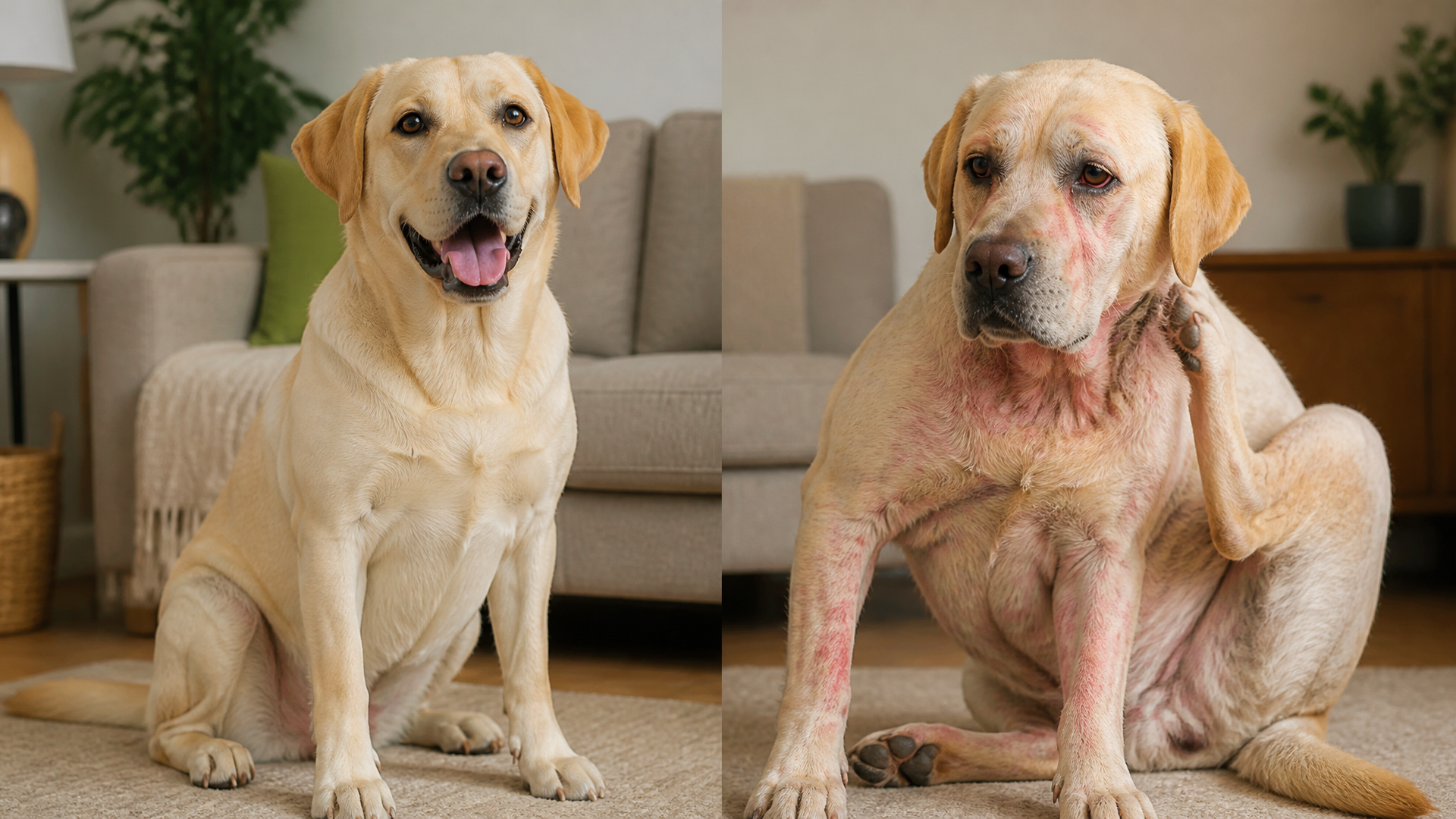
Are Labradors Allergic to Chicken
Yes, Labradors can be allergic to chicken – but true chicken allergy is far less common than most owners suspect. Many Labs with itchy skin, recurrent ear infections, or loose stools actually have a food sensitivity, environmental allergies, or an unrelated stomach issue. Here’s how to tell what’s really going on with your Lab – and what to do about it without wasting time or money on the wrong fix.

The Short Answer – and Your First Step
Chicken is a standard protein in most quality dog foods, and Labradors have no known genetic link to poultry allergies. If your Lab shows signs like scratching, recurrent ear infections, or soft stools after eating chicken, one of four things is likely happening:
- True food allergy (rare – immune system reaction)
- Food sensitivity or intolerance (more common – digestive trouble)
- Environmental allergy (pollen, dust, mold – not food at all)
- Stomach bug or dietary indiscretion (your Lab ate something it shouldn’t have)
Your first move: Track symptoms closely for 48 hours before changing anything. If the reaction happens within 2–4 hours of eating chicken and clears up when you remove chicken from the diet, you’re likely dealing with a sensitivity. If symptoms come and go independently of meals, environmental allergies or another issue may be the real cause.
The 5-Minute Home Check Before You Change a Single Kibble
Don’t switch your Lab’s diet yet. Run through these five checks first – they’ll save you from unnecessary food changes:
1. Timing check: Does the reaction happen only after chicken meals, or also after walks, during pollen season, or when the house is dusty? If it’s seasonal or outdoor-linked, it’s probably not chicken.
2. Symptom check: Itchy paws, face rubbing, and recurrent ear infections point more toward environmental allergies. Vomiting or diarrhea within a few hours of eating suggests a food issue.
3. Other triggers in the food: Your Lab may react to corn, soy, or preservatives in the same bag – not the chicken itself. Check the full ingredient list.
4. Treat and chew audit: Many training treats, dental chews, and even some medications contain chicken byproducts. Go through every single one.
5. Recent change check: New bag of food? New brand? New season? Any of these can cause temporary digestive upset.
Decision branch: If you find that symptoms are seasonal or outdoor-linked (check #1), skip the diet change and talk to your vet about environmental allergy management instead. If symptoms clearly follow chicken meals, move to the elimination diet below.
Allergy vs. Sensitivity vs. Something Else: How to Tell the Difference
Knowing what you’re dealing with changes the management plan. Here’s the breakdown:
| Condition | Typical Signs | What’s Happening | What to Do |
|---|---|---|---|
| True food allergy | Itching, hives, swelling, ear infections, chronic skin issues – can appear hours to days after eating | Immune system overreacts to chicken protein | Strict avoidance of chicken; vet-guided elimination diet |
| Food sensitivity/intolerance | Vomiting, diarrhea, gas, soft stools within a few hours of eating | Digestive system can’t process chicken well | Remove chicken for a few weeks, then reintroduce to confirm |
| Environmental allergy | Itchy paws, face rubbing, licking, ear infections – often seasonal or worse after going outside | Reaction to pollen, dust, or molds – not food | Talk to vet about allergy testing, antihistamines, or immunotherapy |
| Stomach bug or dietary indiscretion | Sudden vomiting/diarrhea, lethargy, fever | Not related to chicken at all | Vet visit; treat the infection first |
Labradors are notorious for eating things they shouldn’t – check for garbage-raiding incidents before you blame chicken.
The Elimination Diet – Step by Step
A home elimination diet is the most reliable way to confirm a chicken allergy – but it requires strict discipline. One slip-up and you’ll have to start over.
Step 1 – Pick a novel protein your Lab has never eaten before. Good options: salmon, whitefish, venison, duck, or rabbit. Avoid anything with chicken meal, chicken fat, or “poultry byproduct.”
Step 2 – Choose a limited-ingredient commercial food like Purina Pro Plan Sensitive Skin & Stomach Salmon, or Hill’s Science Diet Sensitive Stomach & Skin. Or cook a vet-approved recipe if you prefer.
Step 3 – Feed only the new food for 8–12 weeks. No treats. No table scraps. No flavored chews. Even one chicken-flavored treat can ruin the entire test.
Step 4 – Keep a daily symptom diary. Note: stool quality (firm vs. soft), itching level (mild vs. constant), ear issues (redness, discharge), and overall demeanor.
Step 5 – After 8–12 weeks, do a controlled challenge. Add a small amount of chicken back to the diet. If symptoms return within 24–48 hours, the allergy is confirmed.
Step 6 – Verify the result. If symptoms return, switch back to the novel protein and watch for the symptoms to clear again within 48 hours. That double-check confirms chicken was the trigger. If symptoms don’t return at all, chicken was never the problem – your Lab may have a different sensitivity or another health issue.
What to Watch For – The Most Common Mistake
The biggest failure mode? Hidden chicken. Owners think they’ve removed chicken, but the dog’s “duck” food contains chicken meal as a secondary protein. Or the “salmon” treats have chicken fat. Or the chewable heartworm preventative has a chicken flavor coating.
Symptom: Your Lab’s symptoms never improve during the elimination diet, even though you think you removed chicken. You’re frustrated and ready to blame the food.
Likely cause: Read every label again – including supplements, medications, and bedding attractants (some dental chews use chicken protein as a binding agent).
Safer next move: Switch to a single-ingredient diet (one protein, one carb) for a true baseline. If symptoms still don’t improve after 3 weeks, chicken is not the issue – pursue environmental allergy testing with your vet.
When to Stop DIY and Call the Vet
Most mild cases can be managed at home, but some situations need professional help. Use these concrete thresholds:
Call your vet if:
- Your Lab has been on a strict chicken-free diet for 4+ weeks with zero improvement
- Symptoms include vomiting more than once in 24 hours, diarrhea with blood, or lethargy
- Ear infections keep coming back even after a successful elimination diet (likely environmental)
- Your Lab is losing weight or has a poor coat despite eating well
Go to the ER immediately if:
- Difficulty breathing, collapse, or severe swelling around the eyes, face, or muzzle
- Hives (raised welts) covering the body
- Repeated vomiting or diarrhea that causes dehydration
Verification check – what normal looks like: After removing chicken, a Lab with a true allergy should show noticeable improvement in itching and stool quality within 7–10 days. Full skin healing may take 4–6 weeks. If you see no change after 10 days, you either missed hidden chicken or chicken isn’t the trigger.
Product Recommendations for a Chicken-Free Labrador Diet
If you confirm a chicken allergy, look for these labels:
- Limited-ingredient diets (LID) with a single protein source
- Novel proteins (salmon, duck, venison, rabbit, or kangaroo)
- Hydrolyzed protein (prescription diets that avoid immune reactions)
Affiliate disclosure: We may earn a commission if you purchase through these links, at no extra cost to you.
- Dry food: Purina Pro Plan Sensitive Skin & Stomach Salmon & Rice – widely available, affordable, and well-tolerated by most Labs
- Wet food: Hill’s Science Diet Sensitive Stomach & Skin Turkey & Rice or Royal Canin Veterinary Diet Hydrolyzed Protein
- Treats: Zuke’s Mini Naturals Salmon Recipe or Blue Buffalo Wilderness Duck Biscuits
- Chews: No-Hide Salmon Rolls – avoid chicken-flavored rawhides entirely
Always scan the ingredient list. “Chicken meal,” “chicken fat,” and “poultry byproduct” are all still chicken.
Save This Guide
Key takeaway: Chicken allergy in Labradors is real but uncommon. Before you panic and switch foods, run the 5-minute home check, rule out environmental triggers, and try a controlled elimination diet starting with a single novel protein. Most Labs do just fine on chicken – and if yours doesn’t, there are plenty of delicious, chicken-free alternatives. Bookmark this page so you can come back to the checklist and diet steps the next time your Lab has an itchy episode or upset stomach.