Sphynx Cat With Blue Eyes
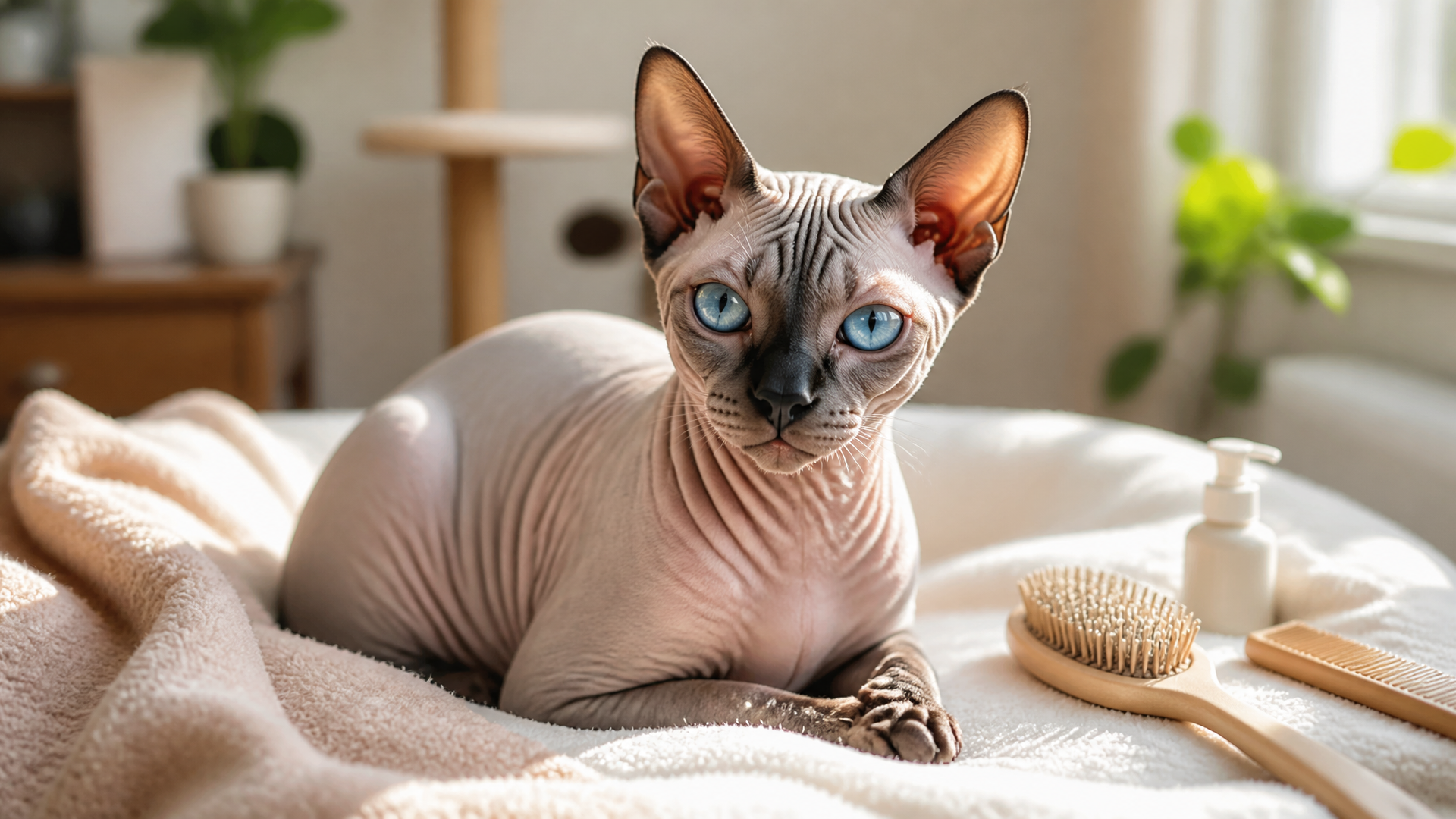
Yes, Sphynx cats can have blue eyes — but it’s rare and almost always tied to a specific coat pattern called colorpoint (think Siamese-style coloring). If you’re looking at a blue-eyed Sphynx, you’re likely seeing a seal point, blue point, or similar pointed pattern. That blue eye color comes from the same temperature-sensitive albinism gene that gives Siamese cats their dark points and pale bodies. Here’s what that means for you as an owner: your cat will need extra eye protection, specific grooming adjustments, and a clear understanding of what’s normal versus a problem.

The Genetics Behind Blue Eyes in Sphynx Cats
Blue eyes in Sphynx cats come from the colorpoint gene (cs allele) — a form of partial albinism that restricts pigment to the coolest parts of the body (ears, face, paws, tail). Because the enzyme that produces melanin only works at lower temperatures, the body stays pale and the eyes develop without their full pigment, appearing blue.
Key points to know:
- Not all blue-eyed Sphynx cats are purebred. Some mixed-breed hairless cats can have blue eyes from other genes (like dominant blue eye in some breeds).
- True colorpoint Sphynx cats will have a pale body with darker points and blue eyes. If the eyes are blue but the cat has solid-colored skin, it may be a different genetic basis.
- Eye color in kittens can shift. Sphynx kittens are born with blue eyes that may darken by 8–12 weeks. If the eyes stay blue past 12 weeks, they’re likely permanent.
- Pedigree verification matters. If eye color is important to you, ask for registration papers showing the colorpoint lineage. Reputable breeders will provide health clearances and genetic testing.
When This Answer Changes
The blue-eyed Sphynx rule applies only to purebred Sphynx cats with documented colorpoint lineage. If you’re looking at a rescue, shelter cat, or mixed-breed hairless cat with blue eyes, the genetic cause may be completely different — and the care requirements may shift. Mixed-breed hairless cats can inherit blue eyes from other genes (like the dominant blue eye gene found in some breeds), and those cats may not have the same UV sensitivity or colorpoint pattern. Always verify the cat’s background before assuming the care protocol above applies. If you can’t confirm the cat’s lineage, treat it as a colorpoint Sphynx for safety — the UV protection advice won’t hurt a cat that doesn’t need it, but skipping it could harm one that does.
The #1 Hidden Risk: Why Blue-Eyed Sphynx Cats Need Extra Sun Protection
This is the failure mode most owners miss: blue-eyed Sphynx cats are significantly more vulnerable to UV-related eye damage than dark-eyed Sphynx cats. Here’s why:
- Less melanin in the iris means less natural UV filtration. More light reaches the retina.
- No fur to shade the eyes. A typical cat has brow fur, lashes, and surrounding hair that blocks some light. A Sphynx has none of that.
- Reflective surfaces indoors (windows, mirrors, light floors) can still cause cumulative exposure.
How to detect it early (warning signs):
- Squinting or keeping eyes partially closed in bright rooms
- Pawing at the eyes or rubbing face against furniture
- Avoiding sunny spots where other cats would sunbathe
- Excessive tearing or redness after sun exposure
- Reluctance to look toward windows during daylight hours
What to do immediately:
1. Install UV-blocking film on windows your cat frequents
2. Provide shaded rest areas away from direct sun
3. Use pet-safe UV eye protection if your cat goes outdoors (some brands offer dog goggles sized for cats — measure head circumference first)
4. Schedule a veterinary ophthalmology exam if you see any of the warning signs above
BLOCKQUOTE_0
Daily Care Checklist for Blue-Eyed Sphynx Cats
Print this or save it. Run through these checks every morning.
| Check Item | Pass/Fail | Action if Fail |
|---|---|---|
| Cat avoids bright rooms or squints | Pass = normal roaming / Fail = hiding or squinting | Move sun-bathing spots, add shade, call vet if persistent |
| Eyes are clear, no discharge or redness | Pass = bright and clean / Fail = red, weepy, or cloudy | Schedule vet visit within 24 hours |
| Skin feels warm but not hot to touch | Pass = normal body temp / Fail = hot spots or sunburn | Apply pet-safe sunscreen, limit sun access |
| Cat eats and drinks normally | Pass = regular intake / Fail = refusal or reduced | Monitor 6 hours, call vet if continues |
| No pawing at eyes or face rubbing | Pass = no irritation behavior / Fail = repeated rubbing | Check for debris, then call vet |
| Window areas have UV film or partial shade | Pass = protection in place / Fail = bare glass | Install UV film or close blinds during peak hours |
Run this checklist daily during summer months and weekly in winter. Sun damage is cumulative — catching it early prevents long-term vision loss.
Expert Tips for Keeping Your Blue-Eyed Sphynx Healthy
Tip #2: Create a Low-Glare Indoor Environment
Actionable step: Switch to warm-white LED bulbs (2700K–3000K) and use lampshades that diffuse light. Avoid bare bulbs or harsh overhead lighting.
Common mistake to avoid: Using cool-white or daylight bulbs (5000K+) in rooms where your cat spends most of its time. These emit more blue-spectrum light, which can cause discomfort for a blue-eyed Sphynx. Your cat will thank you with fewer squints and more lap time.
Tip #3: Bathe With Eye Protection Protocol
Actionable step: Before every bath (Sphynx cats need weekly or biweekly baths), apply a single drop of preservative-free artificial tears to each eye. This protects the cornea if any shampoo or water splashes near the face. Use a warm, damp cloth for the face area instead of direct water spray.
Common mistake to avoid: Using human baby shampoo or dish soap. Sphynx skin has a different pH balance than furred cats or humans. Use a pH-balanced, fragrance-free cat shampoo specifically formulated for hairless breeds. Human products strip natural oils and can cause dry, irritated skin that leads to scratching near the eyes.
Tip #4: Install Window Perches With UV Protection
Actionable step: Place a cat perch or hammock in a window that has UV-blocking film installed. Your blue-eyed Sphynx will still get the warmth and entertainment without the UV exposure. Measure the window first and choose a perch with a weight capacity of at least 20 lbs.
Common mistake to avoid: Assuming “tinted windows” block UV. Many decorative tints only reduce visible light, not UV radiation. Only UV-rated film (look for 99% UV blockage on the label) provides real protection. Check with a UV meter card if you’re unsure.
Grooming and Skin Care — What’s Different for a Blue-Eyed Sphynx
Sphynx cats need regular bathing because they produce more skin oil than furred cats (no fur to absorb it). For a blue-eyed Sphynx, the routine has two tweaks:
1. Sunscreen before every sun session. Use a pet-specific SPF 30+ zinc-free formula. Human sunscreen often contains zinc oxide, which is toxic if ingested during grooming.
- Apply to: ears, bridge of nose, tail, and any pink-pigmented skin patches
- Avoid: a 1-inch radius around the eyes
- Reapply every 2 hours during sun exposure
2. Ear cleaning every week. Sphynx cats produce more ear wax than typical cats. For a blue-eyed Sphynx, the ear canal is lighter in pigment, making irritation easier to spot. Use a vet-recommended ear cleaner and cotton pads — never cotton swabs deep in the ear canal.
3. Moisturize after baths. Sphynx skin can dry out after weekly bathing. Apply a hypoallergenic, fragrance-free pet moisturizer (coconut oil works for some cats — test a small patch first). Dry, flaky skin near the eyes can lead to rubbing, which risks corneal scratches.
BLOCKQUOTE_1
Quick Reference: Blue-Eyed Sphynx at a Glance
| Trait | What to Expect |
|---|---|
| Eye color | Pale blue to ice blue, may have slight variation |
| Eye sensitivity | Higher than dark-eyed cats — needs UV protection |
| Skin color | Pale pink or cream (colorpoint pattern: darker on ears, face, paws, tail) |
| Sun tolerance | Low — limit direct sun to 15–20 minutes max |
| Bathing frequency | Weekly or every 10 days |
| Common health watch | Photophobia, sunburn, corneal irritation |
| Lifespan | 8–14 years (same as other Sphynx) |
| Temperament | Affectionate, social, attention-seeking — wants to be near you |
Save This Guide
A blue-eyed Sphynx cat is a stunning companion, but those pale eyes come with real care requirements. The single most important takeaway: UV protection isn’t optional — it’s as essential as food and water for this cat. Install window film, use pet-safe sunscreen, and watch for squinting or eye rubbing. Address those signs early, and your blue-eyed Sphynx will live a comfortable, healthy life by your side.
Key takeaway: Blue eyes in Sphynx cats mean colorpoint genetics + extra sun sensitivity. Protect the eyes from UV, bathe weekly with eye-safe protocol, and run the daily checklist. Your vet is your partner for any eye redness, discharge, or behavior changes.