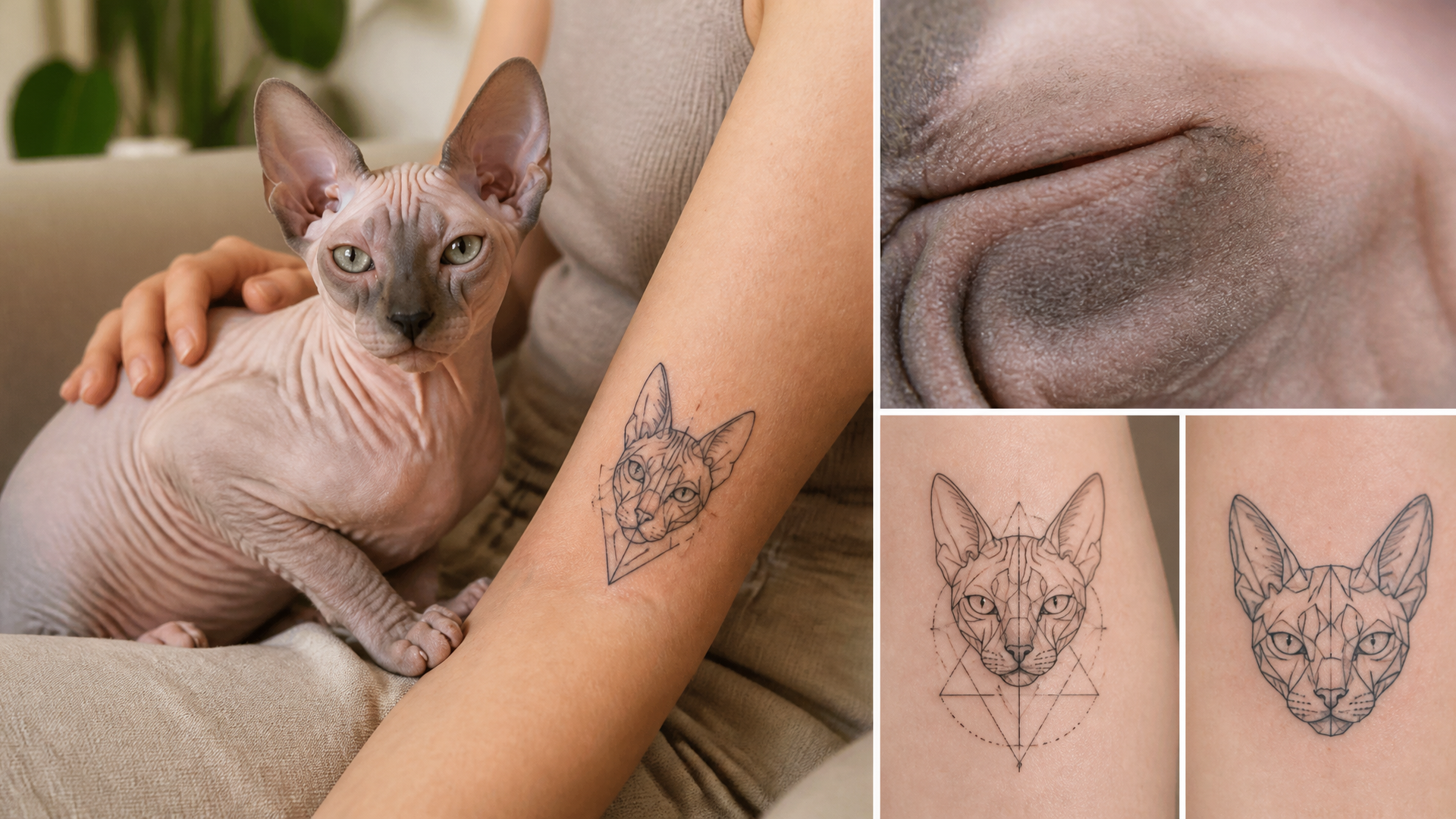
Simple Sphynx Cat Tattoo Geometric
A simple geometric Sphynx cat tattoo is absolutely achievable—but you need a different approach than you would use for a furry cat design. Here’s the counter-intuitive truth most tattoo artists won’t tell you: that bald, warm Sphynx canvas requires more careful planning, not less.

The straightforward answer: bold geometric lines, open negative space, and an artist who understands oily skin will give you the cleanest, longest-lasting result on a Sphynx. This guide walks you through the exact design choices, placement strategies, and aftercare steps that work specifically for Sphynx skin.
Why Sphynx Skin Changes Everything
Sphynx cats produce significantly more sebum than most breeds—that natural oil acts like a slow-moving solvent on ink. Combined with their higher body temperature (101–102°F), the oil and heat together cause ink to spread, fade, and blur faster than on average human skin. Geometric tattoos with bold outlines and open spaces handle this better because the ink has room to stay where it’s placed without bleeding into a smudge.
What this means for your decision: If you want a dense, shaded, ultra-detailed Sphynx portrait, expect it to look muddy within 2–3 years. A geometric style with crisp lines and breathing room will stay recognizable for 5–10 years before needing a refresh. Pick the style that matches your tolerance for future touch-ups.
Before you schedule, verify that your skin (or your cat’s skin if you are tattooing their likeness) is healthy—no active rashes, sunburns, or infections. The same applies if you are a person with Sphynx-level oily skin; your own skin type matters just as much.
Which Geometric Styles Hold Up Best on Sphynx Skin
Not all geometric approaches perform the same. The table below shows which styles match Sphynx skin best, along with a quick verification step you can do before committing.
| Style | Best Placements | Why It Works on Sphynx |
|---|---|---|
| Minimalist line art (continuous single line, basic outline) | Wrist, ankle, behind ear | Fewer ink deposits mean less spreading; simple silhouette stays readable even with slight blurring. |
| Dotwork (stippling) | Shoulder, inner arm | Tiny gaps between dots let oil drain naturally, reducing ink migration. Avoid dots smaller than a 3RL needle. |
| Polygon / low-poly facets | Forearm, calf, shoulder blade | Hard angular boundaries contain the ink; keep individual facets large enough to have visible open space. |
Verification step before committing: Ask the artist to do a small test line (about half an inch) on a hidden spot like your inner ankle or behind the ear. Wait 10 minutes and check if the line stays crisp or if you see ink spreading into the surrounding skin. This 60-second test tells you exactly how your specific skin will behave.
What to avoid entirely: Tiny lettering, very thin lines (smaller than 9RL needle), and dense black fills. On Sphynx skin, those become unrecognizable blobs within a few years. Also skip anything that relies on fine detail in curved areas like the elbow or shoulder—skin elasticity there distorts the pattern.
Where to Place the Tattoo for Best Results
The ideal spot balances low movement, low oil production, and easy aftercare access.
- Forearm or calf – Low movement, easy to keep clean, flat surface for clean geometric lines. Best choice for first-timers.
- Shoulder blade – Flat and stable. Works well for larger polygonal designs (4–6 inches). Hard to photograph yourself, so bring a friend for placement photos.
- Behind the ear – Only for very small, simple outlines (under 1 inch). Keep at least an inch from the hairline to avoid ink migration into hair follicles.
Skip these spots entirely: Belly, inner thighs, armpits, and the stretchy skin at the back of the knees. These areas have thinner, oilier skin with more movement, leading to slower healing, higher infection risk, and faster ink spread.
3 Expert Tips for a Sphynx Geometric Tattoo That Lasts
Tip 1: Request the Right Needle Gauge
Actionable step: Ask your artist to use a 9RL or 7RL needle for all outlines. These thicker gauges deposit a cleaner line that resists the oil-related spreading Sphynx skin causes.
Common mistake: Letting the artist use their default 3RL liner “for precision.” On Sphynx skin, that thin line will double in width within a year. Thick lines are your friend here.
Tip 2: Schedule for Cooler Months
Actionable step: Book your appointment between October and March. Sphynx skin produces less oil in cooler temperatures, giving the ink a cleaner heal without oil interfering with the fresh wound.
Common mistake: Getting the tattoo right before a hot vacation or during a heatwave. Sweat mixes with the healing wound and increases risk of infection and ink loss. If you must tattoo in summer, keep the room air‑conditioned and plan to stay inside for the first week.
Tip 3: Budget for the 6-Month Touch-Up
Actionable step: Ask your artist upfront: “Do you include one free touch-up within the first year?” Most do. If not, budget $50–$100 extra for the session. Sphynx skin expels 10–20% of the ink during the first month of healing.
Common mistake: Panicking when the lines look softened at week 3. That’s normal. Wait until month 6 for the touch-up—by then the skin has settled and the artist can see exactly which lines need reinforcement.
Aftercare Checklist for Sphynx Skin
Use this daily for the first 3 weeks. Each item has a clear go/no-go standard so you know exactly what’s normal versus what needs a doctor.
- ✔ Wash with antibacterial soap (unscented, dye‑free—no bar soaps). Twice daily for days 1–5. Pat dry with a clean paper towel. Red flag: if the area stays wet after 30 seconds, you’re using too much soap residue.
- ✔ Apply moisturizer only if the skin feels tight—do not moisturize proactively. A pea‑sized dab of unscented, non‑comedogenic balm is the max. Red flag: if you see any pooling of oil or greasy film around the tattoo, you’re over‑moisturizing.
- ✔ Keep the tattoo dry from cat dander, saliva, and oils. Your Sphynx will want to rub against you. Wear loose, clean long sleeves or keep the cat off your lap entirely for days 1–10. Red flag: if the tattoo area feels sticky or tacky after contact, wash immediately.
- ✔ No soaking for 3 weeks—no pools, hot tubs, baths, or ocean. Showers are fine with low pressure and no direct spray. Red flag: if water pools on the tattoo surface during a shower, it’s still open and needs more dry healing time.
- ✔ Watch for infection signs daily: spreading redness beyond the tattoo border, yellow/green discharge, warmth, or fever. Sphynx skin’s natural oiliness can trap bacteria if you over‑moisturize. Call a doctor at the first sign of spreading redness—don’t wait for it to get worse.
- ✔ Switch to a light, unscented moisturizer with ceramides after day 21. This keeps the geometric lines from flaking and fading due to dryness in months 2–3.
Stop signal: If any redness, swelling, or warmth increases after day 3 instead of improving, see a doctor immediately. Do not wait for a scheduled touch-up.
FAQ
Will a Sphynx geometric tattoo hurt more?
The pain is similar to any tattoo—bony spots (wrist, ankle, shin) hurt more than fleshy spots (forearm, shoulder). Sphynx skin itself isn’t more sensitive, but the artist will need to stretch the skin more, which some people describe as a duller, heavier sensation. The bigger difference is that your skin’s oiliness may make the needle feel “stickier” going in.
How does oil affect the long-term look of the tattoo?
Over years, excess oil pushes black ink outward, causing lines to thicken by 10–20%. Geometric styles with bold outlines and open spaces manage this gracefully—the lines get slightly thicker but stay recognizable. Dense designs turn into blobs. This is why the “simple” approach is actually the most durable for Sphynx skin.
Can I get a colored geometric Sphynx tattoo?
Yes, but expect faster fading for color. Black ink is more stable on oily skin. If you want color, use it sparingly—only the cat’s eyes or a single accent line. Budget for full color touch‑ups every 2–3 years. Black outlines will outlast the color by a significant margin.
How do I find the right artist?
Search for “geometric pet portrait artist [your city]” and look for anyone who has tattooed hairless animals or human clients with known oily skin. Call and ask: “Have you tattooed a Sphynx cat design or worked on very oily skin before?” An honest artist will say no if they haven’t. If they say yes, ask to see healed photos (not just fresh ones). Healed photos from 6+ months out tell you how their work holds up.
Save This Guide
A simple geometric Sphynx cat tattoo is absolutely doable with the right preparation. Choose bold lines and open spaces, book for a cooler season, use 9RL needles, and follow the dry‑first aftercare routine. That 6‑month touch‑up is your best friend. Your cat’s unique silhouette will stay clean and recognizable on your skin for years.
Disclosure: This article contains affiliate links to recommended aftercare products. If you purchase through them, we earn a small commission at no extra cost to you. All product choices were made based on suitability for Sphynx skin conditions.