Should i Cut The Wool Over my Bichons Eyes
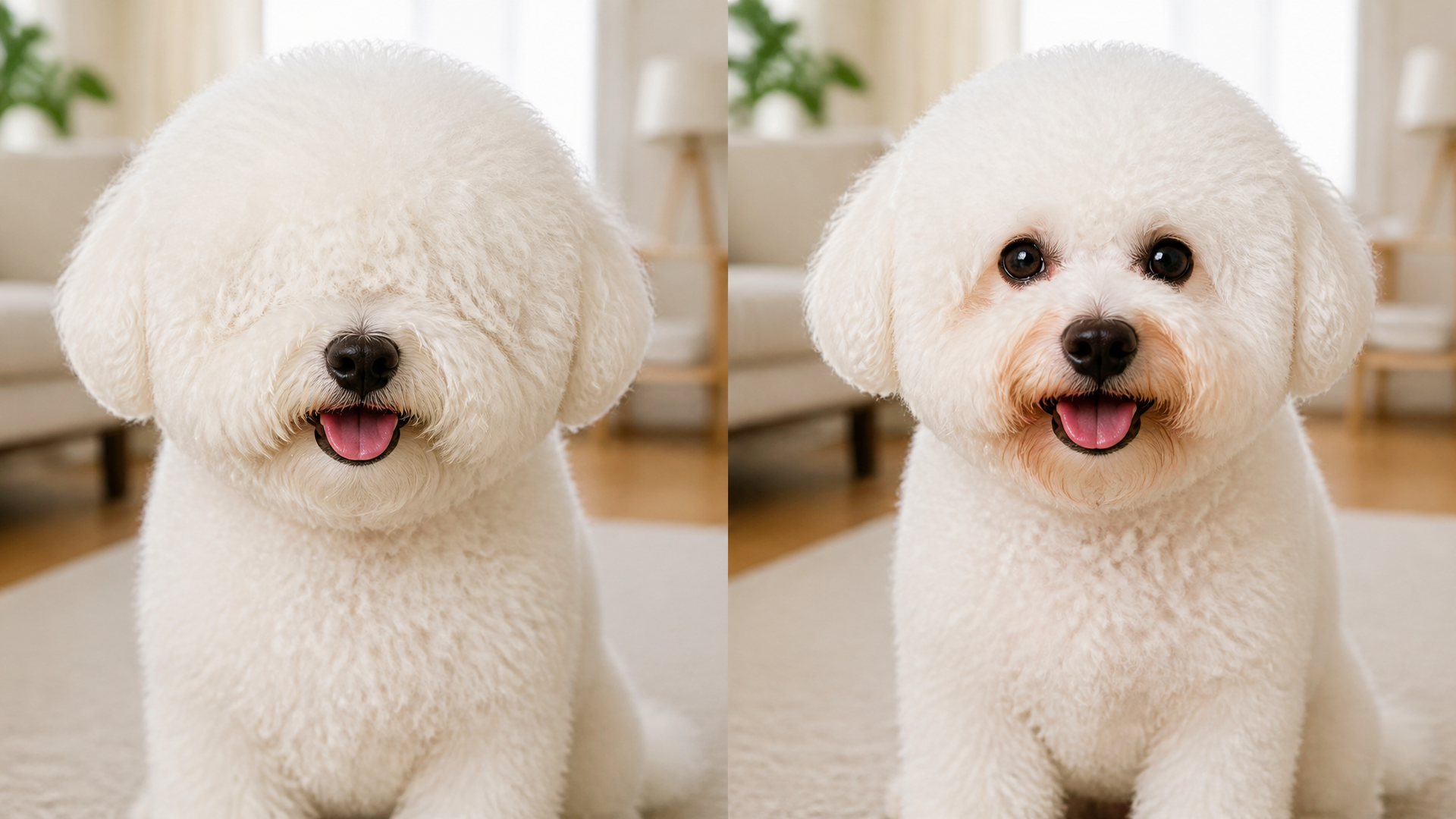
Yes, you should trim the woolly hair over your Bichon Frise’s eyes. The dense, curly coat around the eyes can poke the cornea, cause chronic tearing, and lead to reddish-brown tear stains or even corneal ulcers if left untrimmed. Leaving it long is actually riskier than trimming it carefully. The goal is a clean ¼‑inch trim that keeps the hair off the eyeball without leaving prickly stubble.

This guide gives you a step‑by‑step plan, three expert tips most articles skip, and clear warning signs so you can trim safely at home.
The Short Answer (and When to Hold Off)
Trim every 2–3 weeks for maintenance. The one exception: if your Bichon has an active eye infection, corneal ulcer, or recent eye surgery, do not trim at home. Let the vet clear the eye first.
For all other Bichons – puppies, seniors, and show dogs – regular trimming is essential. Show dogs actually need more precise eye-area grooming. The only other scenario to hold off is if your Bichon is so anxious you can’t handle them safely; in that case, book a professional groomer for the face trim.
How to Tell If the Hair Needs Trimming Today
Before you pick up scissors, do this quick test:
1. Stand in bright natural light next to your Bichon.
2. Blow gently on the hair around the eyes. The strands will separate. Look for any hair that touches the eyeball or the inner corner of the eye.
3. Watch your dog blink. If the hair moves with the eyelid, it’s contacting the surface – trim it.
This verification takes 10 seconds and prevents unnecessary cutting. If no hair touches the eye, you can wait another week.
Why the “Protective Wool” Myth Is Wrong
Many owners believe the long eye fur protects the eyes. The reality is the opposite. Bichon Frise coats have no natural shedding cycle, and the dense, curly “wool” around the eyes acts like tiny paintbrushes – each strand can touch the eyeball every time your dog blinks.
- Constant irritation – leads to excess tearing, red eyes, and squinting
- Tear staining – moisture trapped against the hair creates the classic reddish-brown marks
- Corneal scratches – rough or split hairs can abrade the eye’s surface, causing pain and vet bills
A clean, short trim actually shields the eye from debris and reduces irritation. The long hair is the hazard.
Your Step-by-Step Eye Wool Trim Plan
Work in good light on a calm dog. Never rush.
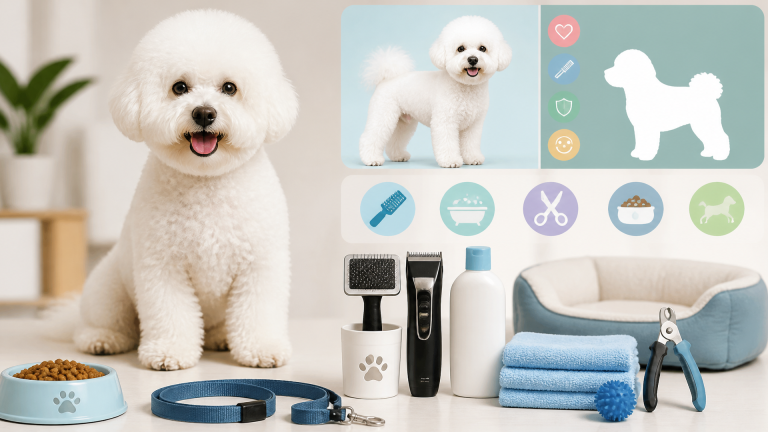
What You’ll Need
| Tool | Why It Matters |
|---|---|
| Curved, blunt‑tip scissors (e.g., 4.5” grooming shears) | Rounded tips prevent accidental pokes. Curved blade follows the eye contour. |
| Thinning shears | Reduces bulk without leaving blunt edges that stick into eyes. |
| Fine‑tooth comb | Lifts hair away from the eye so you see exactly where the blade will cut. |
| Styptic powder or cornstarch | Stops bleeding fast if you nick a tiny vessel. |
| Grooming spray (optional) | Helps separate matted or stained hair before trimming |
We may earn a commission if you purchase products through links in this guide.
Step‑by‑Step Routine
1. Comb the eye hair upward and forward. Work from the inner corner outward. This separates the hair from the eyelid.
2. Hold the scissors parallel to the eye socket. Keep the points angled away from the eyeball – never toward it.
3. Snip only the hair that extends past the closed eyelid. Trim until the hair is ¼ inch above the eyelid margin.
4. Use thinning shears on the bulk around the outer corner of the eye. This softens the edge so stray ends don’t poke.
5. Check both eyes in natural light – any stray strand touching the cornea needs another tiny snip.
Early Checkpoints Before Each Cut
- Is your dog blinking excessively? Stop. A hair may already be poking the eye – address that first.
- Are the scissors clean and sharp? Dull blades crush hair and pull, making the dog flinch.
- Can you see the eyelid clearly? If not, comb again. Blind cuts are the #1 cause of nicks.
Likely Friction Points
- Dog won’t hold still – Try a high‑value treat (cheese, freeze‑dried liver) in one hand; trim with the other. Work in 30‑second rounds.
- Hand tremors – Rest your holding hand on the dog’s skull to steady both of you.
- Too much hair pulled taut – Comb gently; over‑tension lifts the eyelid and increases risk.
What Can Go Wrong If You Over-Trim
Trimming the eye hair too close to the eyelid (less than ⅛ inch) creates prickly stubble that can stab the eye when your Bichon blinks. Using regular household scissors with even slightly pointed tips can poke the cornea if the dog jerks – and that single poke can cost hundreds in vet fees. If you see any stubble rubbing against the eye after trimming, you’ve gone too short. Let it grow back out for 3–5 days, then re‑trim more conservatively.
When to Stop and When to Call the Vet
| Situation | Action |
|---|---|
| You accidentally nick the skin (small blood spot) | Apply styptic powder or cornstarch; clean with saline. If bleeding continues >2 minutes, call the vet. |
| You see a corneal scratch (cloudy spot, squinting, pawing at eye) | Immediate vet visit – corneal ulcers can worsen fast. |
| Dog is panicking, growling, or snapping | Stop entirely. A professional groomer may be safer. |
| Eye hair was matted to the skin | Do not cut – mats hold moisture and bacteria. Soak with grooming spray, comb out gently, then trim. If still tight, see a groomer. |
3 Expert Tips Most Owners Miss
These tips go beyond basic technique and address the toughest part of Bichon grooming.
Tip 1: Use a Wet Comb to See Flyaway Hairs
Actionable step: Lightly mist the eye hair with water or grooming spray, then comb upward. Wet hair clumps together, revealing individual strands that stick out toward the eye. Trim just those errant strands instead of taking off a whole section.
Common mistake: Snipping a full “bang” straight across. That creates blunt ends that poke the eye when your Bichon blinks. Always point‑cut (snip at an angle) into the hair to soften the edge.
Tip 2: Trim in Phases Over Several Sessions
Actionable step: On day one, trim only the hair that touches the inner corner of the eye. On day two, do the outer corner. Spreading the work over 2–3 days keeps your dog calm and lets you check each change without overwhelming yourself.
Common mistake: Trying to fix everything in one sitting. Most nicks happen when the owner is tired or the dog is done cooperating. Stop after 2–3 snips if needed.
Tip 3: Pre‑Treat Tear Stains Before Trimming
Actionable step: Apply a vet‑approved tear‑stain remover (powder or pad) to the eye hair 24 hours before you trim. Cleaner hair makes it easier to see the eyelid margin – and reduces the chance of cutting into crusty, stained hair that hides the skin.
Common mistake: Trimming stained hair without cleaning first. Stained hair is often crusty and hides the eyelid line, increasing the risk of a cut.
Frequently Asked Questions
How often should I trim the wool over my Bichon’s eyes?
Every 2–3 weeks for maintenance. Most Bichons also need a full face trim every 4–6 weeks from a groomer or at home.
Can I use regular household scissors?
No. Only blunt‑tip grooming scissors or curved shears. Any pointed tip (even small craft scissors) can cause serious eye injury if the dog moves.
What if my Bichon’s eye hair is already matted to the eyelid?
Never cut mats stuck to the skin. Soak with a detangling spray or warm water, then gently work the mat free with a comb. If it won’t release, call a professional groomer.
Is it better to use electric clippers?
Clippers with a guard (e.g., #10 blade) can be used on the forehead and top of the head, but never directly in the eye area. The vibration and noise often spook the dog, and the blade can accidentally catch the eyelid. Stick to scissors for the immediate eye zone.
Save This Guide
Bottom line: Yes, carefully trim the wool over your Bichon’s eyes to prevent irritation, staining, and corneal injuries. Use curved blunt‑tip scissors, comb hair away from the eye first, and stop at the first sign of discomfort or difficulty. If you’re unsure, ask your groomer to show you the technique on your next visit – then practice at home in short, calm sessions.
Key takeaway: Bichon eye wool is a safety hazard, not a protector. A clean ¼‑inch trim is the kindest thing you can do for your dog’s comfort and eyesight.