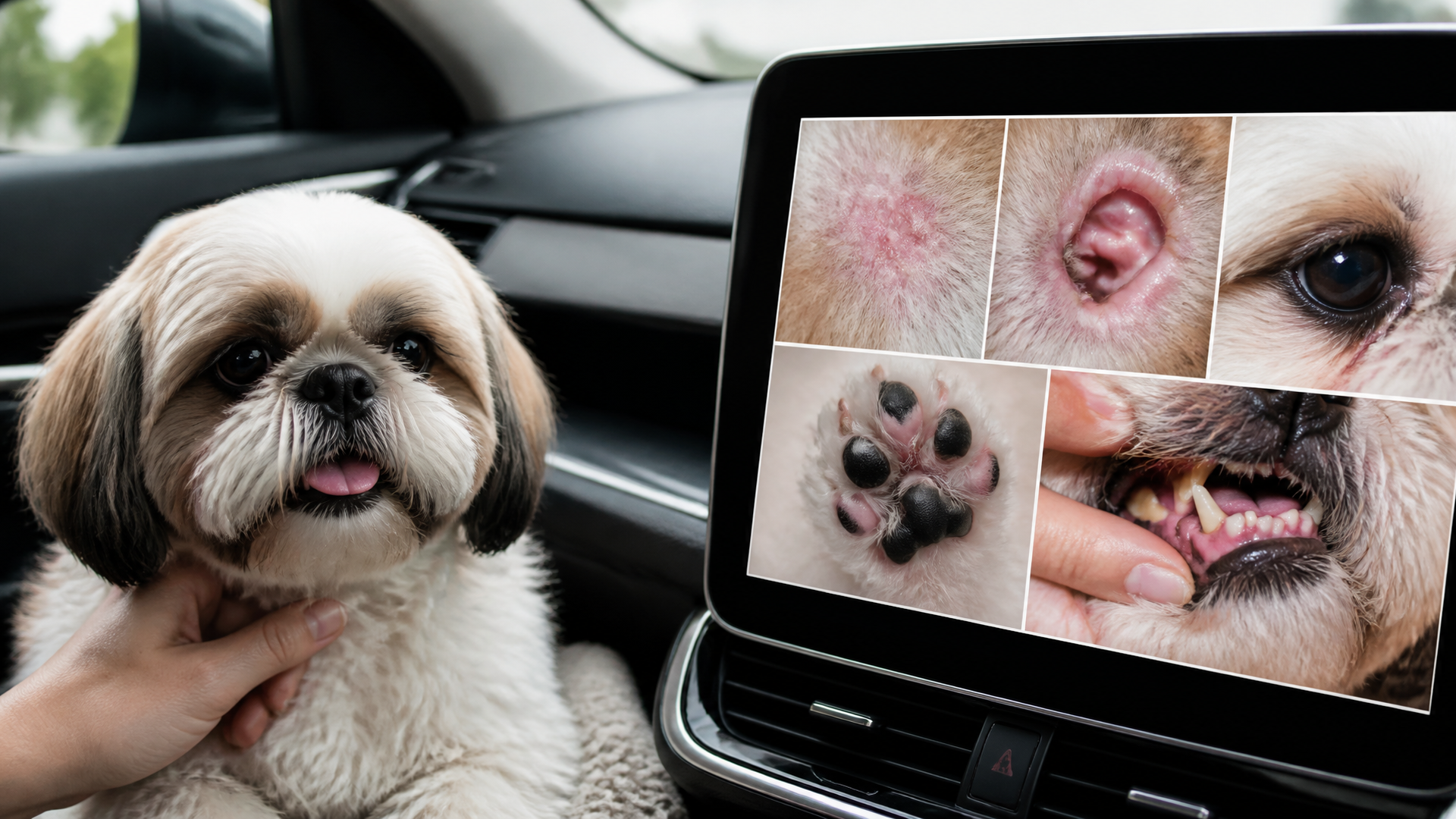
Shih Tzu Breed Problems Breathing
Shih Tzus have flat, pushed-in faces (brachycephalic skull shape), which physically narrows their airways. This makes them prone to breathing problems from puppyhood through senior years. The good news: most owners can manage these issues with the right gear, environment awareness, and early vet checks.

First action: Switch from a collar to a harness immediately. Collars put pressure on the trachea and can worsen breathing difficulty. Use a step-in or front-clip harness designed for brachycephalic breeds.
Why Shih Tzus Struggle to Breathe
The breed’s short snout leaves less room for the soft palate, nasal passages, and windpipe. Several anatomical and external factors can compound the problem.
Brachycephalic Obstructive Airway Syndrome (BOAS)
BOAS is a cluster of structural issues common in flat-faced breeds. In Shih Tzus, the most frequent findings are:
- Elongated soft palate – the soft tissue at the roof of the mouth is too long and partially blocks the airway.
- Stenotic nares – nostrils that are too narrow or collapsed, restricting airflow at the nose.
- Everted laryngeal saccules – small sacs inside the larynx get pulled into the airway, further narrowing it.
Not every Shih Tzu has BOAS, but about 50–60% show at least mild signs by middle age. A vet can grade BOAS severity during a physical exam or with respiratory function scoring.
Other Common Triggers
- Heat and humidity – Shih Tzus cannot pant efficiently. Even a 75°F day with high humidity can cause distress.
- Excitement or stress – Heavy panting during play, greeting, or car rides can trigger respiratory distress.
- Obesity – Extra body fat, especially around the chest and neck, compresses the lungs and airway.
- Allergies – Pollen, dust, or food allergies can cause nasal swelling and worsened snoring.
- Exercise intolerance – A Shih Tzu that collapses or coughs after short walks likely has underlying airway restriction.
7 Warning Signs Your Shih Tzu Is Having Trouble Breathing
Catch these early so you can adjust care or seek help before an emergency.
1. Noisy breathing – Snorting, gagging, or whistling sounds during rest or mild activity.
2. Open-mouth breathing at rest – Normal is nose breathing; mouth breathing while lying down signals effort.
3. Blue or pale gums – Check gum color inside the lip; pink is normal, bluish-gray means low oxygen.
4. Elbows out, neck extended – Your dog may stand or sit with front legs spread and head stretched forward to open the airway.
5. Rapid belly movement – Chest and abdomen heave visibly with each breath (normal rate is 10–35 breaths per minute).
6. Coughing after drinking or eating – The elongated soft palate may interfere with swallowing.
7. Collapse or fainting – Even brief episodes require an immediate vet visit.
When to Call the Vet — and When to Stop Trying at Home
Some breathing episodes can be managed at home (cool down, stop activity, offer water). But there is a clear threshold where you must stop DIY care and escalate immediately.
Stop-and-escalate threshold: If your Shih Tzu shows any of these signs, stop all at-home care and go to the nearest emergency vet:
- Gums turn blue, gray, or pale white — this means oxygen levels are dangerously low.
- Your dog collapses or cannot stand — even a few seconds is an emergency.
- Breathing rate stays above 40 breaths per minute for more than 10 minutes while at rest.
- Your Shih Tzu is unable to settle, seems panicked, or is thrashing.
- There is a sudden change in the sound or pattern of breathing (e.g., from snorting to silent gasping).
Emergency signal: If gums are blue, carry your dog (don’t let them walk) to the car, keep the AC on full, and go to the nearest emergency vet. Time matters.
Daily Care Tips to Protect Your Shih Tzu’s Breathing
Follow this operator flow to reduce daily stress on your dog’s airway.
Preparation
- Have a cool, shaded resting area with fresh water available.
- Use a brachycephalic-safe harness (step-in or front-clip) for walks.
- Keep a portable fan or cooling mat for warm days.
Daily Routine
1. Walk only during cool hours – Early morning or after sunset when temps are below 75°F. Keep walks under 15 minutes.
2. Use the harness, never a collar – Attach the leash to the front D-ring of a front-clip harness to discourage pulling.
3. Monitor breathing during play – Stop immediately if you hear snorting or see open-mouth breathing.
4. Keep weight within breed standard – Shih Tzus should weigh 9–16 pounds. An overweight dog breathes harder.
5. Groom regularly – Mats around the face and neck can restrict movement and trap heat. Brush face hair daily.
Verification Step: How to Confirm Your Dog Is Breathing Comfortably
After rest or after a walk, check these three signs to confirm the fix worked:
- Respiratory rate: Less than 35 breaths per minute while lying down (count chest movements for 15 seconds and multiply by 4).
- Gum color: Pink, not blue or pale.
- Nose and mouth: Nostrils are not flaring wide with each breath; mouth is closed or only slightly open.
If all three are normal, your Shih Tzu is breathing comfortably. If any are off, continue resting in a cool area and recheck in 10 minutes. If still abnormal, call your vet.
Likely Causes of Worsening Symptoms
- Recent weight gain of 1–2 pounds.
- Seasonal allergy flare-up.
- New medication or vaccination reaction.
- Dental disease causing pain that changes breathing patterns.
Failure Mode: When Symptoms Return Despite Care
Even with perfect management, breathing problems can recur. Here is a common pattern:
Scenario: Your Shih Tzu seems fine for weeks, then suddenly starts snorting heavily at night and coughing after meals.
Likely cause: Seasonal allergies have caused mild nasal swelling, compounding a previously mild elongated soft palate. The combined effect pushes the airway into trouble.
Safer next move: Do not assume it will pass on its own. Schedule a vet visit for a respiratory assessment. In the meantime, use an air purifier near the dog’s bed, wipe paws and face after outdoor time, and use a raised bowl (4–6 inches off ground) to reduce swallowing effort.
If coughing after meals becomes frequent, ask your vet about anti-inflammatory medication or a BOAS surgery consultation.
Escalation Signals
Any of the 7 warning signs above that do not resolve within 10 minutes of rest and cooling.
Comparison: Best Harness Types for Brachycephalic Breeds
Using the right harness reduces tracheal pressure. Here is a quick comparison of the three most common styles for Shih Tzus.
| Harness Type | How It Fits | Best For | Watch Out |
|---|---|---|---|
| Step-in harness | Dog steps into two leg holes; buckle sits on back | Easy on/off, no pulling | May ride up on short-legged dogs; adjust straps to avoid armpit chafing |
| Front-clip harness | Leash attaches to a ring on the chest | Discourages pulling, good for walk training | Can twist if not fitted snugly; need good chest strap padding |
| Overhead/Vest harness | Slides over head, buckles around chest | Even pressure distribution, soft padding | Some dogs dislike having it pulled over head; check fit around neck |
Recommendation: Start with a front-clip harness from a brand that offers brachycephalic-specific sizing (e.g., Gooby, Puppia, or Ruffwear Front Range). Measure chest girth with a soft tape before buying.
3 Expert Tips for Managing Breathing Problems
Tip 1: Use a cooling mat, not ice water.
- Actionable step: Place a pressure-activated cooling mat (no electricity needed) in your Shih Tzu’s bed or crate on warm days.
- Common mistake: Offering ice water or ice cubes can cause gulping and airway spasm. Stick to cool (not cold) fresh water in a shallow bowl.
Tip 2: Elevate food and water bowls.
- Actionable step: Use raised bowls at chest height (about 4–6 inches off the ground) to reduce neck bending and decrease risk of food entering the airway.
- Common mistake: Forgetting to adjust bowl height as your puppy grows. Measure and adjust every few months. A bowl that is too low forces your dog to crane its neck and can compress the trachea.
Tip 3: Teach calm greetings.
- Actionable step: When you come home, ignore your Shih Tzu until it sits calmly. Then reward with a quiet pet.
- Common mistake: Allowing excited jumping and barking at the door, which triggers rapid panting and can lead to a coughing episode. If your dog gets too worked up, calmly turn away and wait for 10 seconds of quiet before acknowledging it.
Save This Guide: Quick Reference for Shih Tzu Breathing Health
Key takeaway: A collar is the single biggest preventable threat to your Shih Tzu’s breathing. Switch to a harness, keep walks cool and short, and watch for blue gums or collapse as emergencies. Verify your dog is breathing comfortably by checking respiratory rate, gum color, and nostril flare after activity.
Breed-specific note: Even a healthy-looking Shih Tzu can have hidden BOAS. A respiratory assessment at the first annual checkup establishes a baseline. If symptoms recur after good care, it may not be temporary — a vet can help manage allergies or evaluate for BOAS surgery.
This guide contains affiliate links. As an Amazon Associate, we may earn a small commission from qualifying purchases at no extra cost to you.