Sphynx Cat Angry: Guide: What Every Owner Should Know
If your Sphynx cat is suddenly hissing, swatting, or hiding, it’s not just “being moody.” These hairless cats communicate distress clearly, but their anger is almost always a response to an unmet need—temperature discomfort, skin irritation, or overstimulation. Here’s how to decode the behavior and what to do about it, with breed-specific guidance you can use right now.

BLOCKQUOTE_0
Is Your Sphynx Actually Angry or Just Vocal?
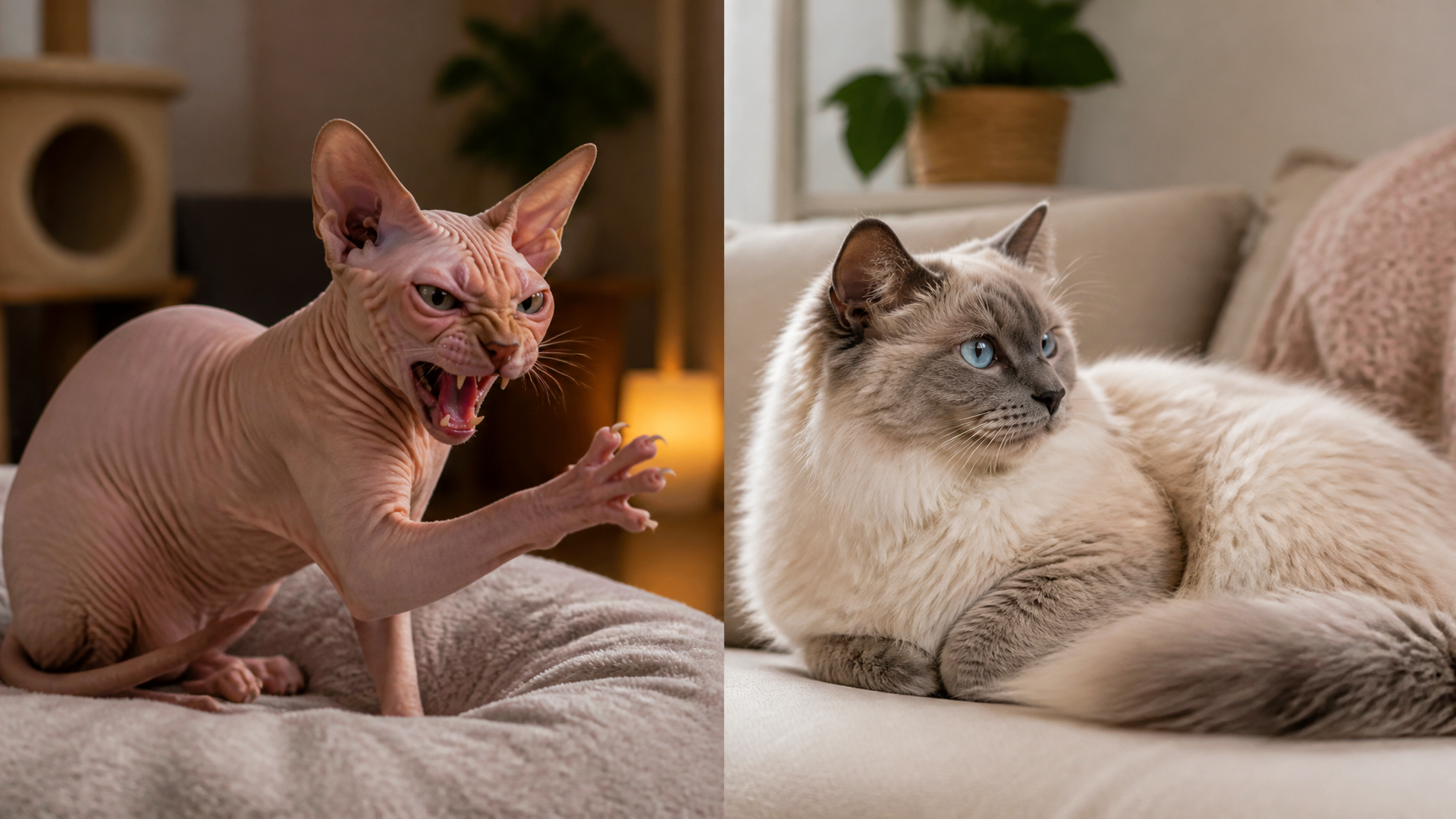
Sphynx cats are naturally talkative, curious, and high-energy. They often make chirping, trilling, and meowing sounds that can sound like complaints but aren’t anger. Real anger signs include:
- Ears flattened sideways or backward (not just rotated forward during play)
- Tail lashing rapidly (hard whips side to side, not gentle swishes)
- Raised hackles (the sparse peach-fuzz stands up)
- Hissing or growling with a tense body
- Direct stare with dilated pupils
If you see two or more of these, your Sphynx is angry, not just talking. Now the question is why.
What this means for your next move: The table below helps you match the likely cause. Once you identify the trigger, you’ll know whether to adjust the room temperature, change grooming habits, or call the vet. If you’re not sure after checking all six triggers, book a vet visit within 24 hours—Sphynx cats hide pain well, and anger is often the only visible clue.
6 Common Reasons Your Sphynx Is Angry (with Sphynx‑Specific Twists)
Because Sphynx cats lack fur, they experience the world differently. Every anger trigger below has a unique Sphynx angle.
| Trigger | Sphynx‑Specific Angle | Quick Fix |
|---|---|---|
| Temperature discomfort | Drafty room, cold floor, or direct sun too hot. Sphynx need 70–80°F. | Move to a warm spot or add a heated bed. |
| Skin irritation | Oily buildup, dry patches, or sunburn. Sphynx produce more sebum. | Wipe with a gentle pet wipe; check for redness. |
| Ear discomfort | Wax buildup is common because no hair wicks it away. | Clean with vet-approved ear cleaner weekly. |
| Overstimulation | Too much handling or loud play. Sphynx are social but need breaks. | Stop all contact; give 10 minutes of quiet. |
| Hunger or thirst | High metabolism means they may be hangry. | Feed on a strict schedule – small meals 3–4 times daily. |
| Pain or illness | Arthritis, dental issues, or urinary infections. | Vet visit if other causes are ruled out. |
Expert Tips for Managing These Triggers
Tip 1 – Keep a thermometer in your Sphynx’s favorite sleeping spot. If the room drops below 68°F, add a heated bed immediately. Common mistake: assuming the cat is fine because you’re comfortable. Another issue: low-quality heated beds may overheat and cause burns. Pick a model with adjustable temperature and auto shut-off. Test the surface with your hand before the cat settles.
Tip 2 – Keep a soft, covered carrier near your Sphynx’s favorite spot. Angry cats often feel safer in a dark, enclosed space. A carrier like the GAPZER Pet Carrier for Large Cats gives them a quiet retreat. Common mistake: forcing them into the carrier when they’re already agitated – that makes it worse. Trade-off: soft-sided carriers may not hold up if your Sphynx scratches it repeatedly—look for reinforced zippers if your cat is strong.
Tip 3 – Use puzzle feeders for every meal. Sphynx cats are smart and need mental work. Common mistake: free-feeding kibble, which leads to boredom and frustration (and anger). One limitation: some Sphynx lose interest in the same puzzle after a few uses—rotate between two or three different feeder types to keep them engaged.
How to Calm an Angry Sphynx – Step by Step
Follow this sequence in order. Do not skip steps.
1. Stop what you’re doing. Freeze and avoid eye contact. Do not reach for your cat.
2. Give space. Move slowly away. A tense Sphynx needs at least 5–10 feet of distance.
3. Check the environment. Feel the floor – is it cold? Feel their ears – are they hot? Look for drafts from windows or vents.
4. Verify your suspicion with a quick test: For temperature, use a digital room thermometer. For skin, use a damp white cloth to wipe the back—if it comes away yellow or greasy, your cat needs a gentle bath. For ears, look for dark waxy debris inside the ear flap. If you see it, schedule an ear cleaning when the cat is calm.
5. Offer a distraction. Toss a wand toy or a crinkle ball away from you. Many Sphynx will redirect to play within seconds. But if the cat ignores the toy and continues to look tense, the cause may be pain, not boredom—move to step 6 and escalate.
6. Use a calm voice. Say “it’s okay” in a low, even tone. Never scold – anger in Sphynx is never malicious.
7. After they relax, inspect. Gently check skin, ears, and belly for redness, bumps, or tenderness.
Quick Decision Aid – When to Worry vs. When to Wait
Run through these checks before escalating to the vet. Each item is a pass/fail check you can apply immediately.
- [ ] Temperature check – Room is 70–80°F and no drafts nearby. Use a thermometer to confirm—don’t guess.
- [ ] Skin check – No red patches, dry flakes, or oily clumps. Wipe with a damp cloth to verify.
- [ ] Ear check – No dark wax or odor. Use a flashlight and look inside the ear flap.
- [ ] Food/water check – Bowl is full, water is fresh, last meal was within 4 hours. Sphynx may need a snack between meals.
- [ ] Recent changes check – No new pet, visitor, furniture move, or schedule change in the last 48 hours.
If all five checks pass and the anger persists for more than 30 minutes, book a vet appointment. If any check fails, fix it first and wait 15 minutes. If the cat calms down, you’ve resolved it. If not, move to the vet list below.
When to Call the Vet Immediately
Some angry behavior signals a medical emergency, not a mood:
- Sudden aggression paired with lethargy or hiding
- Crying or yowling when touched
- Refusal to eat for more than 12 hours
- Excessive scratching or biting at their own skin
- Vomiting or diarrhea accompanied by anger
Sphynx cats are prone to hypertrophic cardiomyopathy (HCM) and skin infections. Anger can be the first sign of pain. Don’t wait—a vet visit can rule out serious conditions and save you (and your cat) a lot of stress.
FAQ – Sphynx Cat Anger
Why is my Sphynx suddenly angry at me?
Sudden anger usually means something changed in their body or environment. Check temperature, ears, and skin first. If nothing is wrong, consider a vet visit to rule out pain.
How long does a Sphynx anger phase last?
Most anger episodes resolve within 5–15 minutes once the trigger is removed. If anger lasts longer than 30 minutes without improvement, it’s likely a medical issue.
Can I train my Sphynx to stop being aggressive?
Aggression in Sphynx is usually a symptom, not a personality trait. Address the underlying cause (discomfort, hunger, boredom). Positive reinforcement with treats and clicker training can help, but never punish.
Save This Guide
This guide helps you quickly identify triggers for a sphynx cat’s anger and resolve most episodes with environmental checks and breed-specific care. When in doubt, a vet visit is the safest next step.
We may earn a small commission if you purchase through links in this article, at no extra cost to you.