do Beagles Need Coats: Complete Guide for Beagle Owners
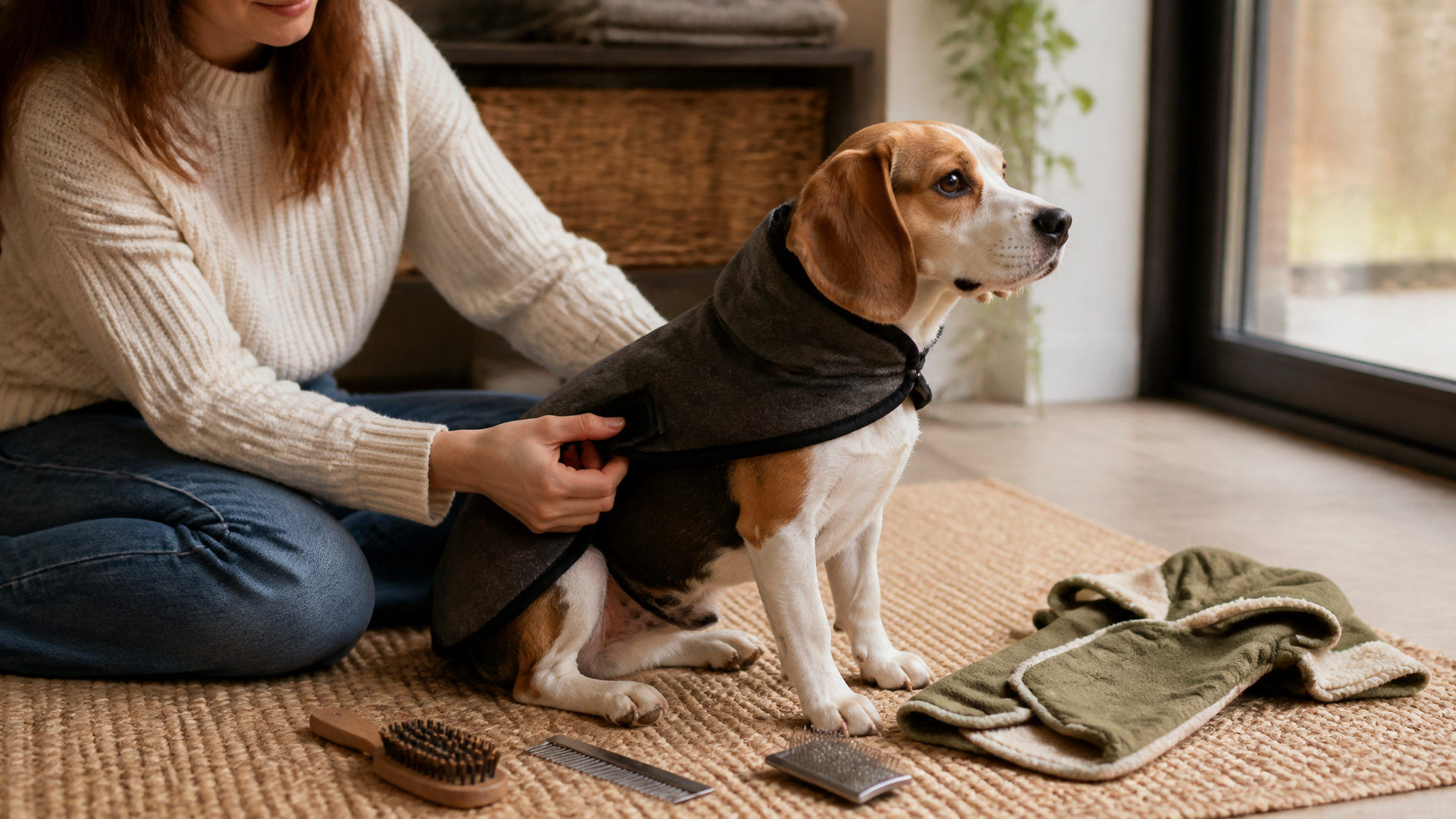
Yes, your Beagle may need a coat in cold weather — but less often than most owners assume. Beagles have a single-layer coat bred for endurance hunting in moderate climates. It provides less insulation than double-coated breeds but handles cool, dry conditions surprisingly well. The real danger isn’t just cold; it’s cold combined with wet or windy conditions. A well-fitted coat becomes valuable when temperatures drop below freezing, rain or sleet is falling, or walks stretch beyond quick potty breaks.

When to Reach for a Coat (and When to Skip It)
Beagles have a dense, short coat that sheds water decently but traps minimal warmth. They were built for moving, not standing still in the cold. Use these conditions to decide:
Your Beagle likely needs a coat when:
- Temperature is below 32°F
- Wind chill or precipitation is present (rain, sleet, snow)
- Your dog is 7+ years old or underweight (under 20 lbs)
- Walks last longer than 10 minutes below 40°F
- Your Beagle stands still or shivers within 5 minutes outside
Your Beagle probably does not need a coat when:
- Temperature is above 45°F with calm, dry conditions
- Your dog is actively running or playing
- A quick potty break takes less than 5 minutes in 35–45°F weather
The counter-intuitive truth is that a moving Beagle generates its own heat well in cooler weather. It’s when they stop moving — or when wetness strips away body heat — that problems start.
How to Choose the Right Coat for Your Beagle
Beagles have a unique build: deep chest, short legs, and a barrel-shaped torso. Many generic coats sag off the back or rub under the armpits. Measure carefully before buying:
- Back length: base of neck to base of tail
- Chest girth: around the widest part behind the front legs
- Neck circumference: where the collar sits
What to Look For
Outer shell: Water-resistant nylon or polyester is ideal. Beagles have long, floppy ears that trap moisture — look for a coat with a collar flap or hood to keep ears dry. Rain dripping onto cold ears can chill them fast and increase the risk of ear infections.
Lining: Fleece or microfleece provides warmth without bulk. Avoid quilted styles that restrict shoulder movement for a breed built to trot.
Fastening: A belly strap with Velcro or snap works best for barrel-shaped torsos. Make sure there’s space for a harness if you use one for walks.
Reflective elements: Essential for low-light walks. Beagles follow their nose without watching for traffic.
Product Types to Consider
- Lightweight fleece sweater (45–50°F, dry weather): Adds a thin warmth layer for milder days
- Insulated waterproof jacket (below freezing, wet snow): Blocks wind and moisture for serious winter walks
- Hooded vest (wind protection with less coverage): Good for Beagles that resist full jackets — still protects the core
Quick Decision Checklist: Should You Buy a Coat?
Check each condition that applies to your Beagle:
- [ ] Outside temperature is below 40°F
- [ ] Wind chill is 30°F or lower
- [ ] Rain, sleet, or snow is falling during walks
- [ ] Your Beagle is 7+ years old or under 20 lbs
- [ ] Your Beagle stands still or shivers within 5 minutes outdoors
- [ ] Walks last longer than 10 minutes
- [ ] Your Beagle has thinning fur, a recent grooming clip, or short natural coat
If you checked 3 or more, a coat is worth owning. If you checked 0–1, your Beagle is probably fine without one for normal outings.
Step-by-Step: Getting Your Beagle Comfortable in a Coat
Beagles can be dramatic about wearing new gear. They may freeze, flop over like a fish, or try to chew the coat off. This operator flow helps you get them used to it without forcing the issue.
Preparation
Let your Beagle sniff the coat first while it’s lying flat. Reward curiosity with a high-value treat. Then drape the coat over their back for 30 seconds without fastening anything. Reward again. If they try to bolt at this stage, stop and try again the next day.
Early Checkpoint
If your Beagle accepts the draped coat without stress, move forward. If they show signs of fear (ears back, tucked tail, refusing treats), go back to just sniffing sessions for a few more days. Some Beagles need extra exposure before progressing.
Ordered Steps
1. Fasten one strap (neck or belly) and let them wear it indoors for 5 minutes. Distract with a toy or a stuffed Kong.
2. Add the second strap. Keep sessions indoors at first, 10–15 minutes each.
3. Take a short outdoor trip — just to the yard and back. Praise warmly and give a treat.
4. Gradually extend duration. Most Beagles accept the coat within 3–4 short sessions.
Likely Causes of Resistance
- The coat is too tight under the armpits — recheck fit and consider a different size or style
- The fabric is noisy or stiff — switch to a softer fleece or cotton-lined option
- Your Beagle genuinely dislikes anything around their chest — try a vest-style coat that wraps around the belly instead
Friction Points to Watch
- Freezing in place when wearing the coat: Go back one step and use higher-value treats like chicken or cheese
- Chewing or biting at the coat: Check for rubbing spots or overheating. If resistance continues, try a vest instead of a full jacket
- Refusing to walk outdoors with the coat on: Remove it and try again on a warmer day, or walk in a sheltered area first
Escalation Signal
If your Beagle shows genuine distress — panting, whining, hiding, or refusal to move after multiple patient attempts — stop for good. For mild winters (above 40°F), a dry Beagle can handle short walks without any coat. For truly cold conditions, try a different style (vest vs. full jacket) or a softer fabric before giving up. If resistance remains, consult a positive-reinforcement trainer before forcing the issue.
Verification Step: How to Know the Coat Fits Right
After your Beagle wears the coat on a short walk, check the fit. Run your hand between the coat and your dog’s body. You should be able to fit two fingers flat under the neck strap and one finger under the belly strap. The coat should not shift sideways or rub under the armpits. If it does, adjust the straps or exchange for a different size. A properly fitted coat allows full shoulder movement and does not restrict breathing.
Short Success Check
Your Beagle is comfortable with the coat when they:
- Walk normally without freezing or stopping
- Do not attempt to remove the coat
- Are not shivering after 5 minutes outdoors
Caring for Your Beagle’s Coat
Beagle coats are low-maintenance but need regular attention during winter use:
- Machine wash on gentle (cold water) every 2–3 weeks during heavy use, or when visibly dirty
- Air dry only — heat can damage synthetic linings and waterproof shells
- Check for mud buildup on the belly strap and under the chin (Beagles love to sniff wet ground)
- Replace when water stops beading on the outer shell — that’s your sign the waterproofing is gone
Quick FAQ
At what temperature does a Beagle need a coat?
Generally below 32°F for most Beagles, and below 40°F for seniors, underweight dogs, or walks longer than 10 minutes.
Can a Beagle wear a coat indoors?
Only if your home stays unusually cold (below 60°F). Otherwise, remove the coat after walks to prevent overheating.
How do I measure my Beagle for a coat?
Measure back length from the base of the neck to the base of the tail, and chest girth around the widest point behind the front legs. Compare to manufacturer sizing charts — many brands run small for deep-chested breeds like Beagles.
Does a wet Beagle need a coat indoors after coming inside?
If your Beagle is wet and the house is cool (below 65°F), towel dry them thoroughly first. A coat on a damp dog can trap moisture against the skin and cause chills or skin irritation.
Save This Guide
Beagles don’t automatically need coats, but cold weather, wet conditions, and longer walks change the calculation. Use the checklist above to decide, measure carefully for fit, and introduce the coat slowly. A well-chosen coat keeps your Beagle warm without restricting their signature nose-to-ground exploring style.