American Bull.dog Puppy Weight Chart
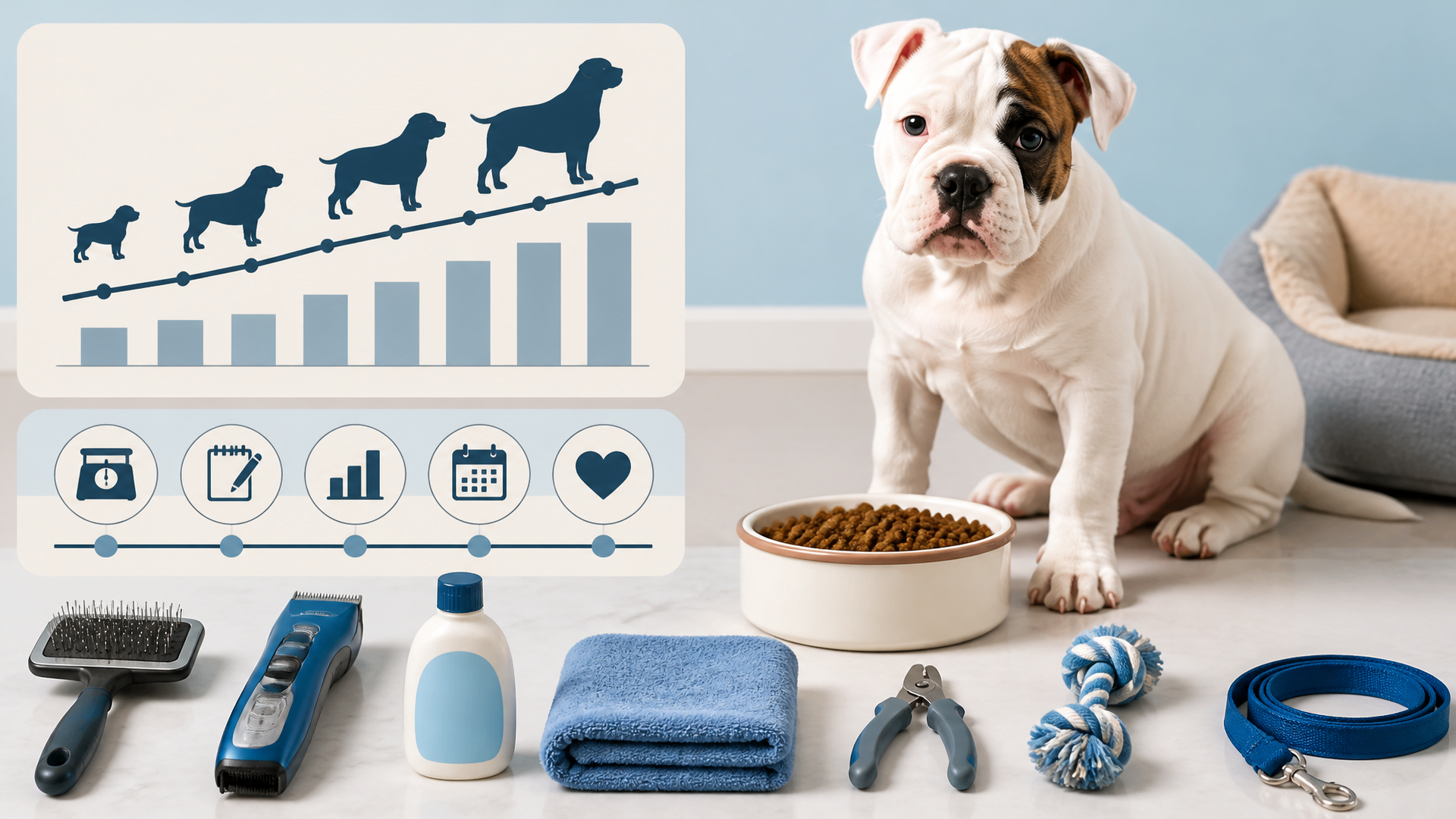
At 8 weeks, a healthy American Bulldog puppy typically weighs 10–18 pounds. By 6 months, males often reach 40–55 lbs, and females 35–45 lbs. Full-grown adults land between 60–120 lbs, with males at the higher end. Use this chart to check if your pup is on track — and what to do if it’s not.

Quick Reference Weight Chart (By Age)
| Age | Male (lbs) | Female (lbs) |
|---|---|---|
| 8 weeks | 10–18 | 8–15 |
| 12 weeks | 20–30 | 16–25 |
| 4 months | 30–45 | 25–35 |
| 6 months | 40–55 | 35–45 |
| 9 months | 55–75 | 45–60 |
| 12 months | 70–95 | 55–75 |
| 18 months (full grown) | 80–120 | 60–90 |
Ranges are based on breed standards. Your pup’s exact numbers depend on genetics, diet, and which American Bulldog line it comes from — Johnson or Scott.
Male vs. Female Differences
- Males grow faster and carry more muscle mass. Expect a taller, heavier frame. A male from a Scott line will be leaner than a Johnson-line male at the same age.
- Females mature earlier and stay smaller. If your female is under 35 lbs at 6 months, it doesn’t automatically mean trouble — but you should check her body condition score first. Some working-line females stay lean throughout their lives.
How to Track Your Puppy’s Weight (5-Step Checklist)
Use this checklist weekly to catch problems early.
- [ ] Weigh on the same day each week – Use a digital bathroom scale. Hold your puppy, subtract your weight. Write it down.
- [ ] Compare to the age range – If the weight falls inside the range, growth is normal. If it’s outside, move to the next step before panicking.
- [ ] Check body condition – You should feel ribs without pressing hard, and see a visible waist and abdominal tuck. This matters more than the number on the scale. A puppy at the lower end of the chart with good body condition is likely fine.
- [ ] Adjust food portions based on what you see – Overweight? Cut treats and swap to a measured large-breed puppy formula. Underweight? Add a third meal or consult your vet.
- [ ] Keep a log – Note the date, weight, and any changes in appetite or energy. Sudden drops or plateaus are red flags.
The Branch: What to Do When Weight Is Outside the Range
Say your 4-month-old male weighs 28 lbs — 2 lbs under the chart minimum. Don’t rush to the vet yet. First, check his body condition:
- Ribs easily visible and waist very tucked? He’s genuinely underweight. Increase his food by 25% for one week, then re-weigh. If no gain, call the vet.
- Ribs feel normal but weight is low? He may just be a lean, smaller-framed individual from a lighter line. Keep tracking weekly — if he’s gaining steadily, he’s fine.
- Ribs hard to feel and weight is low? That’s unusual and worth a vet call. Could be worms or a metabolic issue despite adequate food.
This branch saves you unnecessary worry (or a costly vet visit) while still catching real problems.
What Affects Your American Bulldog Puppy’s Weight?
- Genetics – Some lines are stockier or leaner. Ask your breeder about the parents’ adult weights. A pup from two 70-lb parents will likely land on the lower end of the chart. Johnson-type bulldogs are heavier and more muscular, while Scott-type dogs are more athletic and lighter-framed.
- Diet quality – Cheap fillers (corn, soy) cause bloating without real growth. Use a high-protein, large-breed puppy kibble like Purina Pro Plan Large Breed Puppy or Hill’s Science Diet Large Breed Puppy. These formulas have the right calcium-to-phosphorus ratio for healthy bone development.
- Exercise – Puppies need short bursts of play, not long runs. Too much exercise burns calories they need for bone growth; too little leads to fat. Aim for 5 minutes of structured activity per month of age, twice a day. Avoid forced running or jumping until the growth plates close at 12–18 months.
- Health issues – Intestinal worms, hip dysplasia, or a thyroid condition can stall growth. If your puppy is consistently below the chart range and not gaining after a food increase, a stool test and vet check are warranted.
Failure Mode: The Steady-But-Slow Pattern
Here’s a common trap: your puppy is gaining weight slowly but consistently — 0.5 lb per week when the chart expects 1 lb. The weight is technically increasing, so it’s easy to assume everything is fine. The problem: if the puppy is also eating less than the recommended amount, has soft stools, or seems less energetic, this slow gain may signal low-grade parasites (like coccidia or giardia) that don’t cause dramatic symptoms but still rob nutrients. The safer move: if your pup’s weight gain is consistently half the expected rate for two weeks in a row, bring a fresh stool sample to your vet for a fecal float test, even if the puppy seems OK otherwise.
Feeding Guide for Steady Growth
American Bulldog puppies grow fast but shouldn’t get fat. Rapid weight gain can stress developing joints. This breed is especially prone to hip and elbow dysplasia, so keeping your puppy lean during the first year is one of the best things you can do.
- 8–12 weeks: 3 meals a day, ½ to 1 cup per meal (follow bag instructions for your specific food).
- 3–6 months: 3 meals, then drop to 2 after 6 months. Total 2–4 cups daily, split evenly.
- 6–12 months: 2 meals. Increase to 3–5 cups total as they bulk up.
- After 12 months: Switch to adult large-breed formula. Continue 2 meals, about 3–6 cups total depending on activity.
A note on verification: After adjusting portions, wait one full week before re-weighing. Puppy weight changes don’t show up overnight. If after one week the weight moved in the right direction (gained or lost as intended), your adjustment is working. If it didn’t budge, check your measuring — are you using a kitchen scale or just eyeballing the cup? A digital kitchen scale like the OXO Good Grips gives precise portions and costs less than a vet visit for obesity.
When to Call the Vet
Your clear stop/escalation threshold: If your puppy’s weight is more than 10% below the chart range for two consecutive weeks — and you’ve already tried increasing food portions for one week with no improvement — stop DIY adjustments and schedule a vet visit. That combination (below-range + no response to food increase) is the most reliable early signal that something medical is going on.
Other reasons to call:
- Weight more than 10% above the chart range – especially if ribs are hard to feel. Puppy obesity sets the stage for joint problems later.
- Sudden drop (more than 1 lb in a week) – could be parasites or a metabolic issue.
- Lethargy, vomiting, or diarrhea alongside size issues.
- Limping or trouble standing – fast-growing American Bulldogs are prone to hip and elbow dysplasia. A quick vet check can catch this early.
A quick vet weight check costs little and can prevent long-term joint problems.
Save This Guide – Bookmark this chart for weekly weigh-ins, use the body condition check before panicking about the number, and remember the one-week food test before calling the vet. A steady growth curve now means a healthy adult bulldog later.