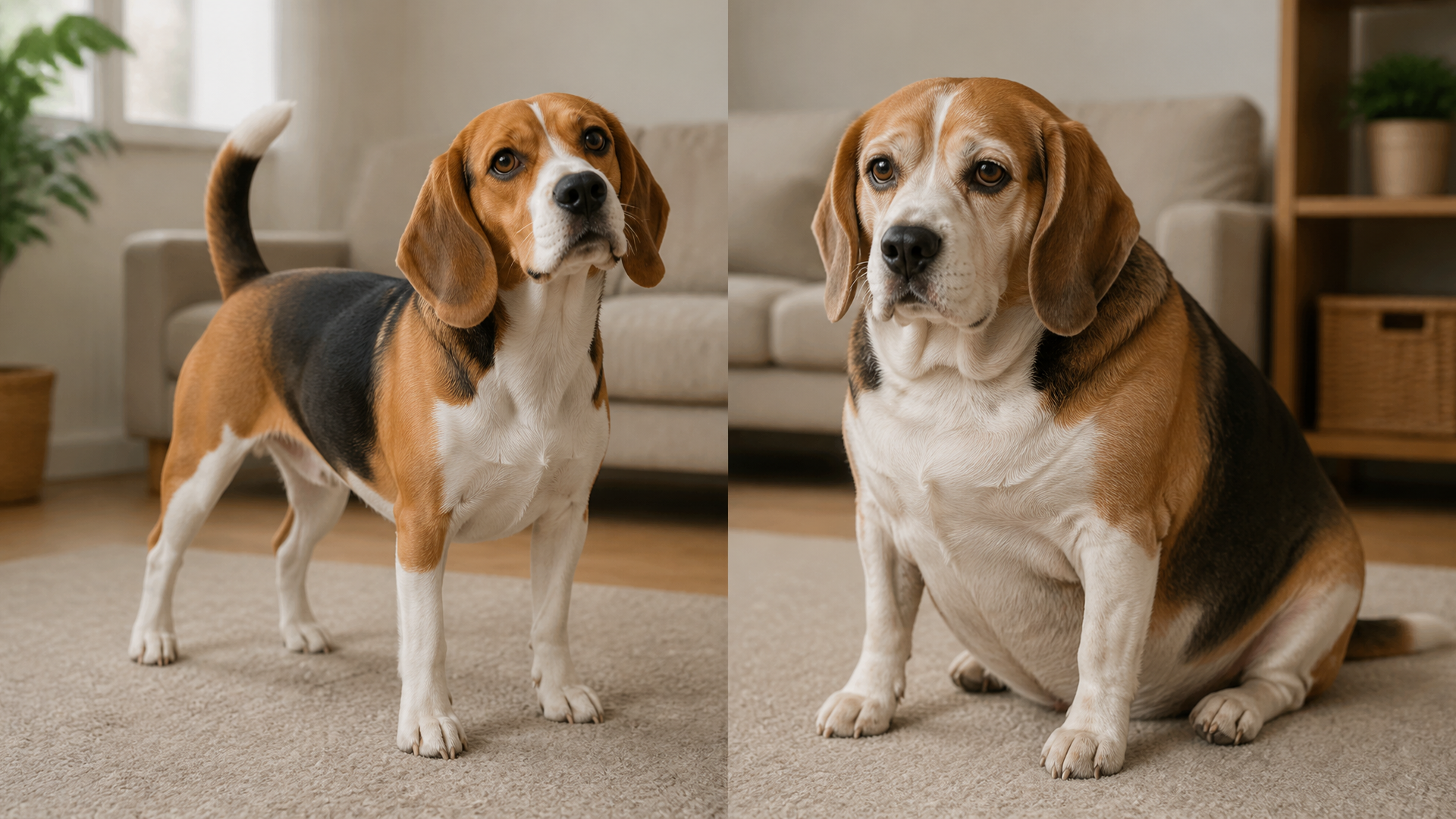
Thyroid Symptoms in Beagle: Warning Signs & What To Do
Your Beagle’s sudden weight gain, thinning coat, or unusual laziness might not be “just a Beagle thing.” Thyroid disease — specifically hypothyroidism — is one of the most underdiagnosed health problems in the breed, and early signs are easy to mistake for normal behavior. Beagles are genetically predisposed to autoimmune thyroiditis, and the symptoms often creep in so slowly that owners don’t realize something is wrong until the condition is advanced. Here’s exactly what to watch for and what to do next.

Why Beagles Are at Higher Risk
Beagles rank among the breeds most frequently diagnosed with hypothyroidism. The condition is usually caused by lymphocytic thyroiditis, an autoimmune attack on the thyroid gland that gradually reduces hormone production. While any dog can develop thyroid issues, Beagles have a strong genetic component — if your Beagle’s parents or littermates had thyroid problems, your dog’s risk is significantly higher.
The average age of onset in Beagles is between 4 and 7 years, but it can appear earlier or later. Spayed females and neutered males appear to be at slightly elevated risk, though the reason isn’t fully understood.
What the Thyroid Actually Does
The thyroid gland produces hormones (T3 and T4) that regulate metabolism, body temperature, heart rate, skin health, and energy levels. When production drops, every system in your Beagle’s body slows down. That’s why the symptoms are so widespread — and why they can mimic so many other conditions.
The “Beagle Normal” Trap: Why Owners Miss the Signs
Most generic articles list weight gain, lethargy, and coat changes as thyroid red flags. But for Beagles specifically, those same signs can be written off as breed-typical behavior. This is the counter-intuitive angle most guides skip: your Beagle’s most “normal” traits are exactly what hide the disease.
Food obsession is normal for Beagles — but a Beagle who suddenly begs more intensely, scavenges constantly, or gains weight despite the same diet may have a slowed metabolism from hypothyroidism. Beagles are known as “low-energy” by many owners — but a Beagle who stops greeting you at the door, refuses walks, or sleeps 18+ hours may be experiencing thyroid-related fatigue, not just a chill personality. Beagles have thick, water-repellent double coats — seasonal shedding is normal, but a coat that looks dull, brittle, or develops bald patches (especially on the tail, back, or sides) is a thyroid red flag, not normal shedding.
The key distinction: Change over time. If your Beagle has always been food-driven and moderate-energy, that’s likely normal. If those traits intensify or shift noticeably over 3–6 months, thyroid testing is worth considering.
7 Warning Signs Most Beagle Owners Miss
1. Unexplained Weight Gain Despite the Same Diet
This is the most common sign. A Beagle on a measured diet who keeps gaining needs a thyroid check before you cut calories further. Your Beagle may look “healthy” or “filled out,” but if the food amount hasn’t changed and the weight keeps climbing, something is off.
2. Coat and Skin Changes
Look for these specific changes:
- Thinning fur on the tail (sometimes called “rat tail”)
- Bald patches on the flanks or back
- Dry, flaky skin that doesn’t respond to diet change
- Increased shedding that doesn’t follow seasonal patterns
- Dark pigmentation in the groin or armpit area
3. Lethargy That Goes Beyond Laziness
Your Beagle may:
- Sleep through meal times
- Stop following you from room to room
- Show no interest in favorite toys or walks
- Tire quickly on short outings
4. Cold Intolerance
Beagles with hypothyroidism seek heat sources (heat vents, sunny spots, your lap) more than usual. They may shiver in temperatures they previously handled fine. If your Beagle is suddenly burrowing under blankets in a 68°F house, pay attention.
5. Recurring Ear or Skin Infections
Hypothyroidism weakens the immune barrier of the skin. If your Beagle has frequent ear infections, hot spots, or stubborn skin issues that antibiotics only temporarily fix, thyroid function could be the underlying cause. Beagles are already prone to ear infections — thyroid issues make them more frequent and harder to clear.
6. Facial Changes
A “tragic” or sad-looking expression caused by mild facial nerve weakness. The eyelids may droop slightly, and the face can appear puffy or thickened. This is often mistaken for aging or “just how Beagles look.”
7. Behavioral Shifts
Some Beagles become irritable, anxious, or unusually clingy. Others seem “foggy” or slow to respond to commands they once knew well. This is often mistaken for stubbornness or age-related decline, but it can be a direct effect of low thyroid function on brain chemistry.
Quick Home Check: Is It Thyroid or Just “Being a Beagle”?
Use these 7 questions to decide whether your Beagle needs a vet visit. Answer honestly based on changes over the last 3–6 months.
| Check Item | Yes (Possible Thyroid) | No (Probably Normal) |
|---|---|---|
| Has your Beagle gained weight on the same food amount? | ☐ | ☐ |
| Is the coat noticeably thinner, duller, or balding in spots? | ☐ | ☐ |
| Does your Beagle sleep significantly more than 6 months ago? | ☐ | ☐ |
| Are ear or skin infections happening more than twice a year? | ☐ | ☐ |
| Does your Beagle seek heat (vents, sun, blankets) more than before? | ☐ | ☐ |
| Has your Beagle’s energy for walks or play clearly dropped? | ☐ | ☐ |
| Have you noticed any facial puffiness or droopy eyelids? | ☐ | ☐ |
Your next move depends on your score:
- 3 or more “Yes” answers → Schedule a vet appointment this week for thyroid testing. Don’t wait to see if it gets worse.
- 1–2 “Yes” answers → Start a symptom log (see below) and monitor closely for 30 days. If any symptom intensifies or a new one appears, move to the “3 or more” action.
- 0 “Yes” answers → Your Beagle likely does not have hypothyroidism right now. But keep an eye on these signs, especially as your dog ages.
What To Do Next: Your Action Plan
Step 1: Start a Symptom Log (Do This Today)
Before the vet visit, note down:
- Your Beagle’s current weight and what it was 6 months ago
- What and how much you feed daily (include treats)
- How many hours per day your Beagle sleeps
- Any skin, ear, or coat changes with dates
- Photos of any bald patches or coat changes
This log is invaluable for your vet because thyroid symptoms develop slowly, and owners often underestimate the timeline.
Step 2: Request the Right Blood Test
A standard wellness blood panel may not catch early hypothyroidism. Ask your vet for a full thyroid profile that includes:
- Total T4
- Free T4 (by equilibrium dialysis — this is the most accurate)
- TSH (thyroid-stimulating hormone)
- TgAA (thyroglobulin autoantibody — positive in autoimmune thyroiditis)
Many Beagles with early disease still have “normal” total T4 but show abnormalities on the free T4 and TSH. Don’t let a single “normal” result stop the investigation if symptoms are strong.
Step 3: Understand Treatment and How to Verify It’s Working
If diagnosed, hypothyroidism in Beagles is treated with daily oral levothyroxine. Here’s how to confirm the treatment is working.
Verification step — 4 to 6 weeks after starting medication:
- Your Beagle should be more alert and energetic — if they’re still sleeping 18+ hours, the dose may be too low.
- Weight should stabilize or start a slow, steady drop (not crash-diet fast, but 1–2% per week is reasonable).
- Coat will not fully regrow in 4 weeks, but you should see less shedding and the skin should feel less dry.
- If ear or skin infections were frequent, they should stop recurring.
Your vet will recheck blood T4 levels at this point. The goal is a T4 in the mid-to-upper normal range 4–6 hours after the morning pill. If the blood test shows the level is still low, the dose needs adjusting.
Failure mode to watch for:
Sometimes a Beagle’s symptoms don’t improve even on the correct T4 dose. Common causes include wrong timing of the blood test — testing too close to the pill can give a falsely high reading. Always test 4–6 hours after the morning dose. Concurrent illness can also play a role — dogs with hypothyroidism may also have Addison’s disease or other autoimmune conditions. If symptoms persist, ask your vet about an ACTH stimulation test. Gastrointestinal issues are another factor — if your Beagle has chronic diarrhea or vomiting, the medication may not be absorbed. Discuss switching to a liquid or compounded form.
If energy and coat still haven’t improved after 8 weeks of a correctly dosed medication, it’s time to revisit the diagnosis with a full thyroid panel, not just T4.
Products That Help Alongside Treatment
Affiliate disclosure: As an Amazon Associate, we may earn from qualifying purchases.
- A high-quality slicker brush (like the Hertzko Self-Cleaning Slicker Brush) helps remove dead undercoat during thyroid-related shedding changes
- Omega-3 fatty acid supplements (look for fish oil with EPA/DHA) support skin and coat recovery — ask your vet for a dosage recommendation
- A digital kitchen scale for accurately weighing your Beagle’s food to manage weight during the adjustment period
- An elevated food bowl can help Beagles with hypothyroidism who also develop neck or joint stiffness
When To See the Vet Urgently
Schedule a vet appointment this week if your Beagle has 3 or more signs from the checklist above. You do not need to go to the emergency room for suspected hypothyroidism — it develops slowly and is not a crisis — but you shouldn’t delay months either. Untreated hypothyroidism worsens over time and can lead to secondary infections that become harder to treat, neurological symptoms (facial paralysis, balance issues), and myxedema coma (rare, but life-threatening — signs include severe lethargy, low body temperature below 99°F, and collapse).
Go to an emergency vet if your Beagle’s temperature drops below 99°F, they cannot stand or seem confused, or their gums feel cold to the touch.
Save This Guide
Key takeaway: Beagles are prone to hypothyroidism, and the early signs — weight gain, coat changes, lethargy — are easily dismissed as normal breed traits. Watch for change from baseline, keep a symptom log, and request a full thyroid profile (not just a basic panel). Treatment is straightforward and most dogs feel dramatically better within weeks. This guide gives you the warning signs and checklist to act confidently.