Beagle Coat Type: Complete Guide for Beagle Owners
Your Beagle has a short, dense double coat — a soft undercoat for insulation and a coarser topcoat that repels dirt and water. That sounds low-maintenance, but it sheds year-round with two heavy blowouts each spring and fall. The right grooming routine keeps shedding manageable and his skin healthy.

What You’ll Need
Beagles don’t need clippers or scissors. Just a few tools that match a short double coat.
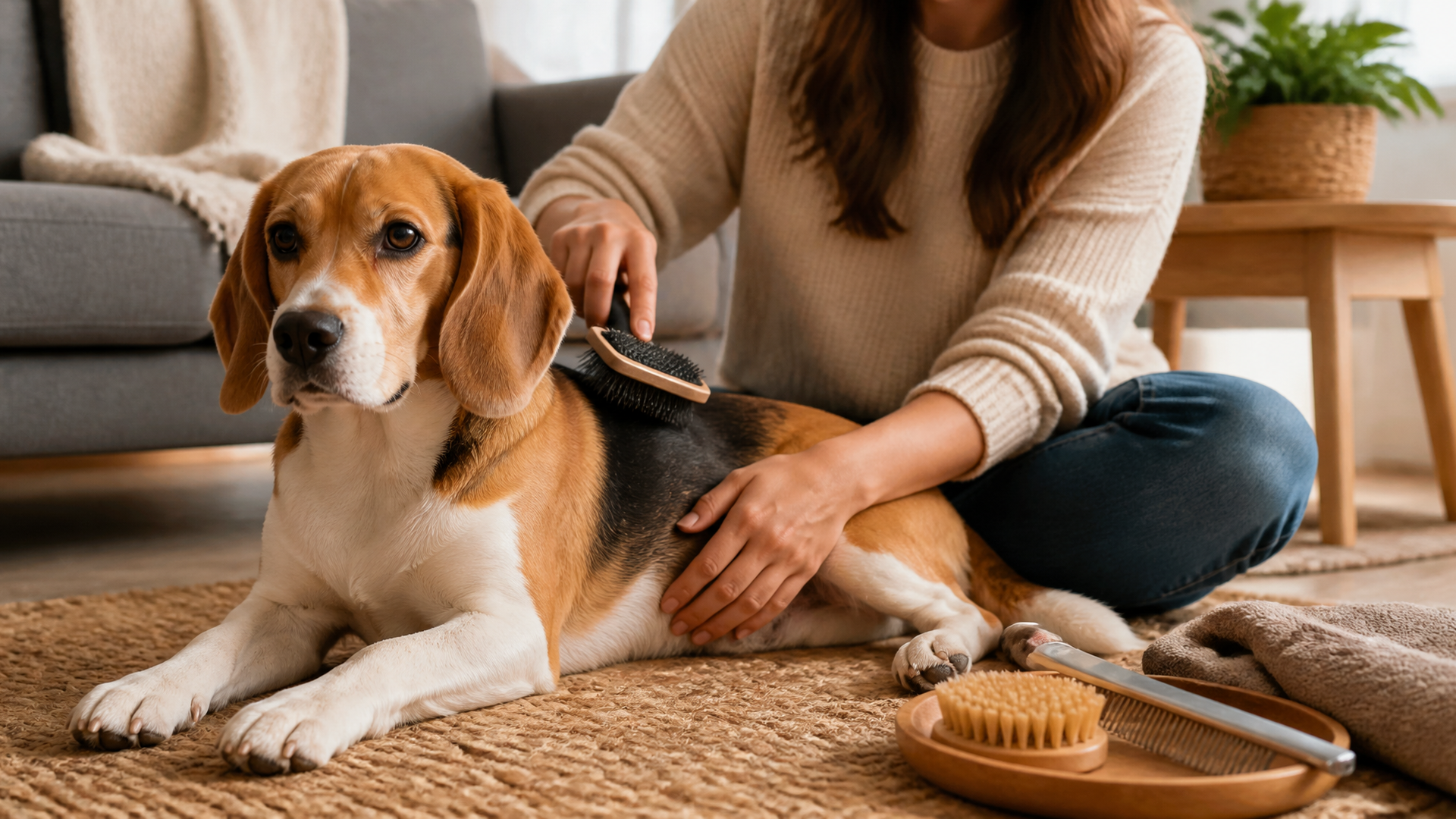
- Slicker brush – The fine wire bristles reach the undercoat without scratching skin. Use it for the first pass on the back, sides, and chest.
- Rubber curry or grooming mitt – The rubber nubs lift loose hair from the topcoat and stimulate natural oil distribution. Great for finishing.
- Deshedding tool (undercoat rake or Furminator-style) – Use only during heavy shedding seasons (spring and fall). Overuse thins the coat (more on that below).
- Nail clippers or grinder – Trim every 2–3 weeks. Beagles have black nails on some paws, making the quick harder to see. A grinder reduces the risk of cutting too short.
- Dog-specific ear cleaner and cotton balls – Beagle ears are floppy and trap moisture and debris. Weekly cleaning prevents yeast and bacterial infections.
- Gentle dog shampoo – Oatmeal-based if your Beagle has sensitive skin or seasonal allergies. Avoid human shampoo – it strips natural oils.
BLOCKQUOTE_0
Start Grooming
Step 0: Make a Decision Before You Brush
Take 30 seconds to check your Beagle’s coat condition first. This simple call saves time and prevents skin problems.
- If the coat is dry and dusty → Start with the rubber curry to lift surface dirt and loose hair. Follow with the slicker brush to remove undercoat.
- If the coat is muddy, greasy, or smelly → Skip dry brushing entirely. Head straight to a bath. Brushing mud into a dry coat pushes debris deeper into the skin and can cause irritation or hotspots.
This early check ensures you’re not wasting effort on the wrong approach.
Step 1: Brush Before Bath
Give a thorough brushing to remove loose hair and loosen dirt. Start with the slicker brush on the back, sides, and chest, following the direction of hair growth. Spend extra time on the rump and upper thighs – those areas hold the most undercoat. Then switch to the rubber curry in circular motions. This takes about 5–7 minutes and cuts bath time in half because less hair ends up in the tub drain.
How to confirm it worked: Run your palm against the grain of his coat. If fewer than a dozen hairs stick to your hand, you’ve removed the loose undercoat. If clumps still come away, brush another 2 minutes on the heavy-shedding areas.
Step 2: Bath (Every 4–6 Weeks)
Beagles don’t need frequent baths unless they’ve found something smelly (which they will – it’s a Beagle). Use lukewarm water (not hot – that dries skin). Wet the coat thoroughly. Apply shampoo starting at the neck and work down to the tail. Massage into the undercoat, not just the top layer. Rinse completely – leftover soap irritates Beagle skin. A second rinse is cheap insurance. Towel dry vigorously, then let him air-dry in a warm room or use a low-heat pet dryer. Never use a human hair dryer on high heat – it burns skin.
Stop signal: If your Beagle shivers uncontrollably or tries to escape repeatedly, end the bath regardless of soap residue. Rinse quickly with a pitcher and towel dry. Stress baths cause more grooming resistance long-term.
Step 3: Post-Bath Brush
Once mostly dry (still slightly damp), brush again. Use the slicker brush first, then the rubber curry. This redistributes natural oils and prevents matting – yes, even short coats can mat near the collar and behind the ears. Pay special attention to those spots.
Success check: When his coat looks sleek, not patchy, and a hand wipe leaves no loose hair on your palm, you’re done.
Step 4: Check Ears and Nails
Beagles’ floppy ears trap moisture and debris. Wipe the inside of each ear with a cotton ball soaked in ear cleaner – never dig deep. Look for redness, discharge, or a yeasty smell. Trim nails until you see the quick start to curve (pink area in light nails) or use a grinder. If your Beagle has black nails, trim a tiny bit at a time – when the inner circle on the cut surface turns from white to darker, you’re near the quick.
Deshedding Decision Checklist
Use this quick pass/fail checklist to decide if your Beagle’s coat needs extra attention.
- [ ] Seasonal shedding – Is hair coming out in clumps when you pet him? → Start daily brushing with a deshedding tool for 1–2 weeks until the blizzard stops.
- [ ] Dandruff or dry patches – Flaking skin? → Switch to an oatmeal shampoo and add a fish oil supplement (check with your vet first for the right dose).
- [ ] Bald spots or hot spots – Loss of hair in patches? → Vet visit needed; may be allergies, fleas, or a skin infection. Do not treat with over-the-counter creams.
- [ ] Greasy or smelly coat – Odor that doesn’t go away after a bath? → Could be skin infection. Schedule a vet check – they may prescribe a medicated shampoo.
- [ ] Visible matting (rare but possible behind ears/under collar) – Can you feel small tangles? → Use a detangling spray and work them out with a slicker brush. Do not cut them with scissors – Beagle skin is thin and easy to nick.
- [ ] Excessive shedding outside of spring/fall – If he’s losing hair in winter or summer, see the vet. It may indicate a thyroid or allergy issue.
If you checked more than one “no” box, your Beagle’s grooming routine is on track. If you checked a “yes” on any health-related item, see your vet.
What Goes Wrong: Over-Deshedding
A common mistake is using a deshedding tool too often. Symptom: Your Beagle’s coat starts looking thin or patchy, especially along the back and sides. The undercoat appears sparse. Likely cause: You’re using the Furminator or undercoat rake more than once a week outside of heavy shedding season. Safer move: Switch to the rubber curry only for 3–4 weeks and let the undercoat regenerate. A damaged undercoat exposes skin to sun and irritants and can take months to grow back. Reserve deshedding tools for the two annual blowouts only.
When to Stop DIY Grooming
Most Beagle coat issues are grooming-related and easy to fix at home. But stop brushing and move to a vet visit if you notice:
- A bald spot that feels hot to the touch or grows larger within 48 hours
- Persistent scratching or biting at the skin after a week of consistent grooming
- Red, inflamed, or oozing patches
- A sudden change in shedding pattern (e.g., heavy shedding in winter – Beagles normally shed less in cold months)
- Lumps, bumps, or crusty lesions under the fur
Concrete escalation threshold: If you’ve brushed daily for 5 days and the hair loss is getting worse, not better, stop brushing and call your vet. You’re dealing with a medical issue, not a grooming issue.
Beagles are prone to skin allergies – often from food (chicken, corn, wheat) or environmental triggers (pollen, dust mites). If you’ve ruled out fleas and grooming is consistent, your vet can help pinpoint the cause through elimination diet or allergy testing.
Save This Guide
Your Beagle’s double coat is simple to manage with the right tools and a consistent routine. Brush twice a week (daily during shedding seasons), bathe every 4–6 weeks, and check ears and nails weekly. Key takeaway: A well-groomed Beagle sheds less, smells fresher, and has healthier skin – and you’ll spend less time vacuuming. Bookmark this page for quick reference during the next heavy shed.