Turkish Van Cat Grooming: Complete Guide for Pet Owners
Turkish Van cats need brushing once or twice a week, baths only every 4–6 months, and nail trims every 2–3 weeks. Their single-layer, water-resistant coat lacks the insulating undercoat found in most longhaired breeds, which means minimal matting risk but also less natural shedding control. The loose hairs fall freely onto your floors instead of trapping in an undercoat, so consistent brushing keeps both your cat comfortable and your home cleaner.

Why the Turkish Van Coat Is Different (and Easier)
The Turkish Van is a semi-longhair with a critical twist: it has no dense woolly undercoat. Instead, the coat consists of a single layer of fine, silky, water-repellent guard hairs. This adaptation allows them to enjoy swimming—Turkish Vans are famously drawn to water.
What this means for grooming:
- Minimal matting risk (no undercoat to felt or clump)
- Less dander and allergens compared to double-coated breeds
- Coat dries quickly if it gets wet
- Shedding is seasonal but still noticeable on furniture
The trade-off is that loose guard hairs fall directly onto your floors and upholstery. A weekly brushing routine doesn’t just keep the cat comfortable—it dramatically reduces the hair floating around your home.
Decision checkpoint for outdoor access: If your Turkish Van goes outside (even supervised), check the coat for burrs, twigs, or plant debris after each outing. These can snag the single-layer guard hairs and cause small tangles if left overnight. Indoor-only cats don’t need this step.
Grooming Tools You’ll Actually Use
Skip heavy-duty dematting tools meant for Persians or Ragdolls. A Turkish Van’s coat responds best to gentler options.
| Tool | Purpose | Frequency of Use |
|---|---|---|
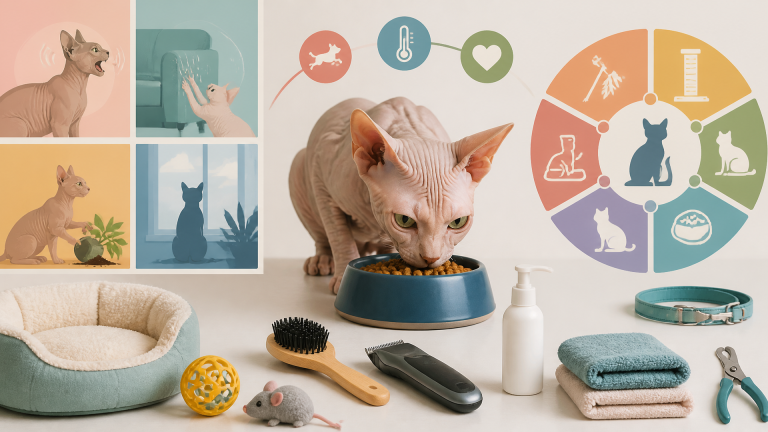
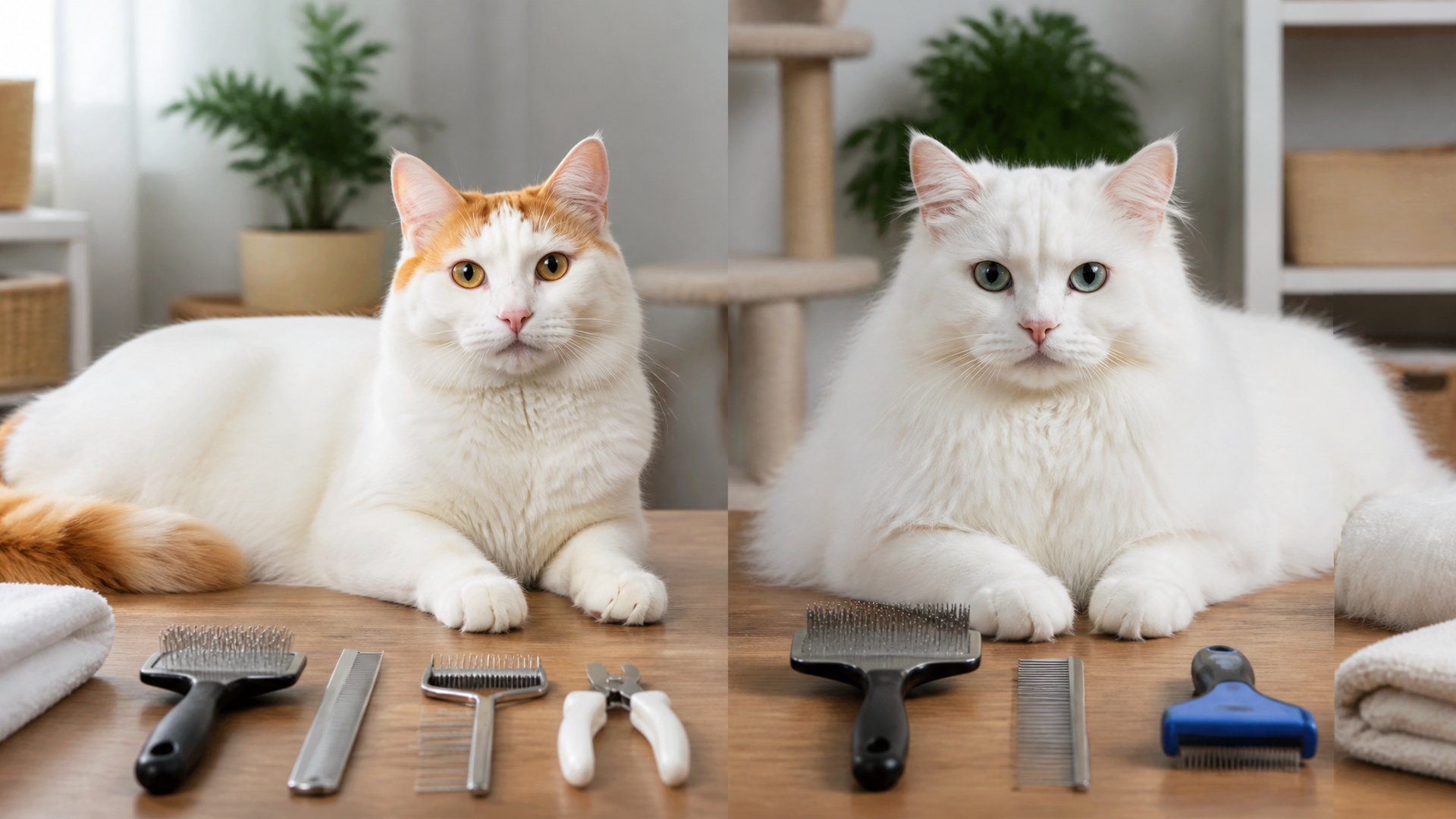
| Slicker brush (fine wire pins) | Removes loose guard hairs and distributes natural oils | 1–2 times per week |
| Stainless steel greyhound comb | Finishing comb for tail, behind ears, and britches | Same session as brushing |
| Soft bristle brush | Polishes coat and adds shine | Optional, after slicker brush |
| Nail clippers (guillotine or scissor style) | Nail maintenance | Every 2–3 weeks |
| Grooming wipes or waterless shampoo | Spot cleaning between baths | As needed |
For trimming tricky areas like paw pads, the rear, or sanitary zones, a small curved shear gives precision without risking accidental nicks. The Fenice Professional Grooming Curved Shear (45-degree arc, 6.5″ blade) follows the natural contours of the cat’s body, making it easier to trim around sensitive spots. If you prefer a full starter set, the Saccison Professional 4 in 1 Dog & Cat Grooming Scissors Kit includes straight, curved, and thinning shears plus a comb.
The GLADOG Professional 5 in 1 Dog Grooming Scissors Set adds a cleaning cloth and leather case for keeping everything organized.
We may earn a commission from affiliate links on this page.
Step-by-Step Grooming Routine
This routine takes about 10–15 minutes. Aim for once a week during low-shedding seasons and twice a week during spring and fall coat turnover.
Step 1: Brush the body with a slicker brush
Start at the neck and work backward using short, gentle strokes. The coat lies close to the body, so you don’t need to lift layers. Focus on the flanks, back, and tail—these areas collect the most loose hair.
Early checkpoint: If small clumps of hair come out easily, you’re on track. If the cat seems uncomfortable or you feel resistance, you may be pressing too hard. The single-layer coat sits close to sensitive skin.
Step 2: Follow with a greyhound comb
Run the comb through the tail plume, behind the ears, and along the britches (fur on the back of the thighs). These spots can form small tangles. The comb catches loose hairs the slicker missed.
Verification check: After combing, run your hand flat over the cat’s back and tail. The coat should feel smooth and lie flat. If you feel any small bumps or loose hairs sticking up, re-comb that area gently. Repeat until the coat feels uniform.
Step 3: Check ears and eyes
Turkish Vans have moderately tufted ears. Wipe the inner ear flap with a damp cotton ball—never use a cotton swab inside the ear canal. Check eyes for discharge and wipe with a soft, damp cloth. Tear staining is less common in this breed than in flat-faced cats, but it can still happen.
Step 4: Trim nails
Hold the paw firmly but gently. Look for the quick (the pink vein inside the nail). For light-colored nails it’s easy to see; for dark nails, trim small slivers and look for a dark dot in the center of the cut surface. Trim every 2–3 weeks.
Step 5: Sanitary trim (as needed)
If fur around the rear or under the belly is long enough to catch urine or feces, trim it short. Use a curved shear designed for contour work, like the Fenice Professional Grooming Curved Shear. Go slowly and only trim hair you can see clearly.
Friction point to watch for: Some Turkish Vans dislike having their belly or rear touched. If your cat tenses up, skip the sanitary trim that session and try again after building a positive treat association.
Step 6: Finish with a soft bristle brush
This last step polishes the coat and spreads natural oils, giving that characteristic glossy sheen. It also feels pleasant to the cat, which helps build positive grooming associations.
When to Bathe a Turkish Van
Most Turkish Vans need a bath only once every 4–6 months. Their water-resistant coat naturally repels dirt, and over-bathing strips the natural oils that keep the fur silky.
Bathe only when:
- The coat feels greasy or sticky
- There’s a noticeable odor beyond normal cat smell
- The cat has gotten into something messy
- A vet or groomer has recommended it for a skin condition
If you do bathe, use a gentle, sulfate-free cat shampoo. Rinse thoroughly—residual soap causes skin irritation. The coat dries quickly thanks to the lack of undercoat, so a towel dry followed by a low-heat blow-dry (if tolerated) is usually enough. Never rub the coat vigorously; squeeze and blot instead.
Quick Grooming Decision Aid
Use this checklist before each grooming session:
- [ ] The brush is appropriate for a single-layer coat (fine slicker or soft bristle, not a rake or dematting tool)
- [ ] You’ve checked the tail plume and behind ears for tangles specifically
- [ ] Nails are on a regular trim schedule (every 2–3 weeks, not just when they click on the floor)
- [ ] Ears are checked for redness or debris before cleaning
- [ ] A curved shear is ready for sanitary trims instead of household scissors that can cause injury
Common Grooming Mistakes (and How to Avoid Them)
Over-bathing is the most frequent error. Owners assume a semi-longhaired coat needs frequent washes. It doesn’t. Stick to every 4–6 months unless the cat is visibly dirty.
Using the wrong brush. Double-coat tools like the Furminator can pull out healthy guard hairs and damage the coat’s protective texture. Stick with a fine slicker brush or soft bristle brush.
Skipping nail trims. Turkish Vans that don’t get regular trims develop overgrown quicks, making future trims stressful for both cat and owner. A consistent 2–3 week schedule prevents this.
Rushing grooming sessions. The single-layer coat is sensitive. Pressing too hard with a brush or moving too quickly can cause discomfort and make future sessions harder.
Ignoring skin changes. A sudden increase in flaking, dandruff, or greasiness that doesn’t resolve after one or two brushing sessions is a red flag. It could indicate dry air, allergies, or an underlying skin condition.
When to Call a Groomer or Vet
Most Turkish Van grooming is straightforward DIY. But these situations warrant professional help:
- Matted tail plume — Rare, but a neglected tail can form a small mat near the base. A groomer can remove it safely without sedation.
- Overgrown or dark nails — If the quick has grown long, a groomer or vet can trim them back gradually over multiple visits.
- Skin changes — Flakes, red patches, hair loss, or excessive greasiness may signal allergies, parasites, or metabolic issues. Stop grooming and schedule a vet visit.
- Aggressive behavior during grooming — If your cat hisses, swats, or bites, stop and consult a vet or behaviorist. Pain from arthritis, dental issues, or skin sensitivity may be the cause.
Escalation threshold: If your Turkish Van’s skin shows red bumps, scabs, or excessive dandruff that doesn’t resolve after one thorough brushing and combing session, stop DIY grooming and schedule a vet appointment within 48 hours. Continuing to brush irritated skin can make it worse.
Success signal: Your cat tolerates grooming sessions without hiding or aggression. The coat stays glossy between sessions. Your home has noticeably less loose hair.
Save This Guide
Turkish Van grooming is refreshingly simple for a longhaired breed. Brush weekly with the right tools, trim nails every few weeks, and bathe only when needed. Focus on the tail, ears, and sanitary areas as priority spots, and you’ll keep that water-resistant coat in peak condition with less shedding on your clothes.
FAQ
How often should I brush my Turkish Van?
Once or twice a week during most of the year, increasing to every other day during spring and fall shedding peaks.
Do Turkish Vans need haircuts?
No. Their single-layer coat doesn’t require full-body clipping. Only trim the sanitary area, paw pads, and any small tangles on the tail plume.
Can I use a Furminator on a Turkish Van?
Not recommended. The Furminator is designed for double-coated breeds with an undercoat. Using it on a Turkish Van’s single-layer coat can pull healthy guard hairs and damage the protective texture.
Why does my Turkish Van’s coat look greasy?
Occasional greasiness near the tail base is normal (there’s a scent gland there). If it’s widespread, you may be over-bathing or under-brushing. Brush more often before reaching for shampoo.
How do I get my Turkish Van used to grooming?
Start with short sessions (2–3 minutes) and pair them with high-value treats. Brush when the cat is relaxed—after a meal or nap, not during play mode. Keep strokes gentle and short since the single-layer coat is sensitive.