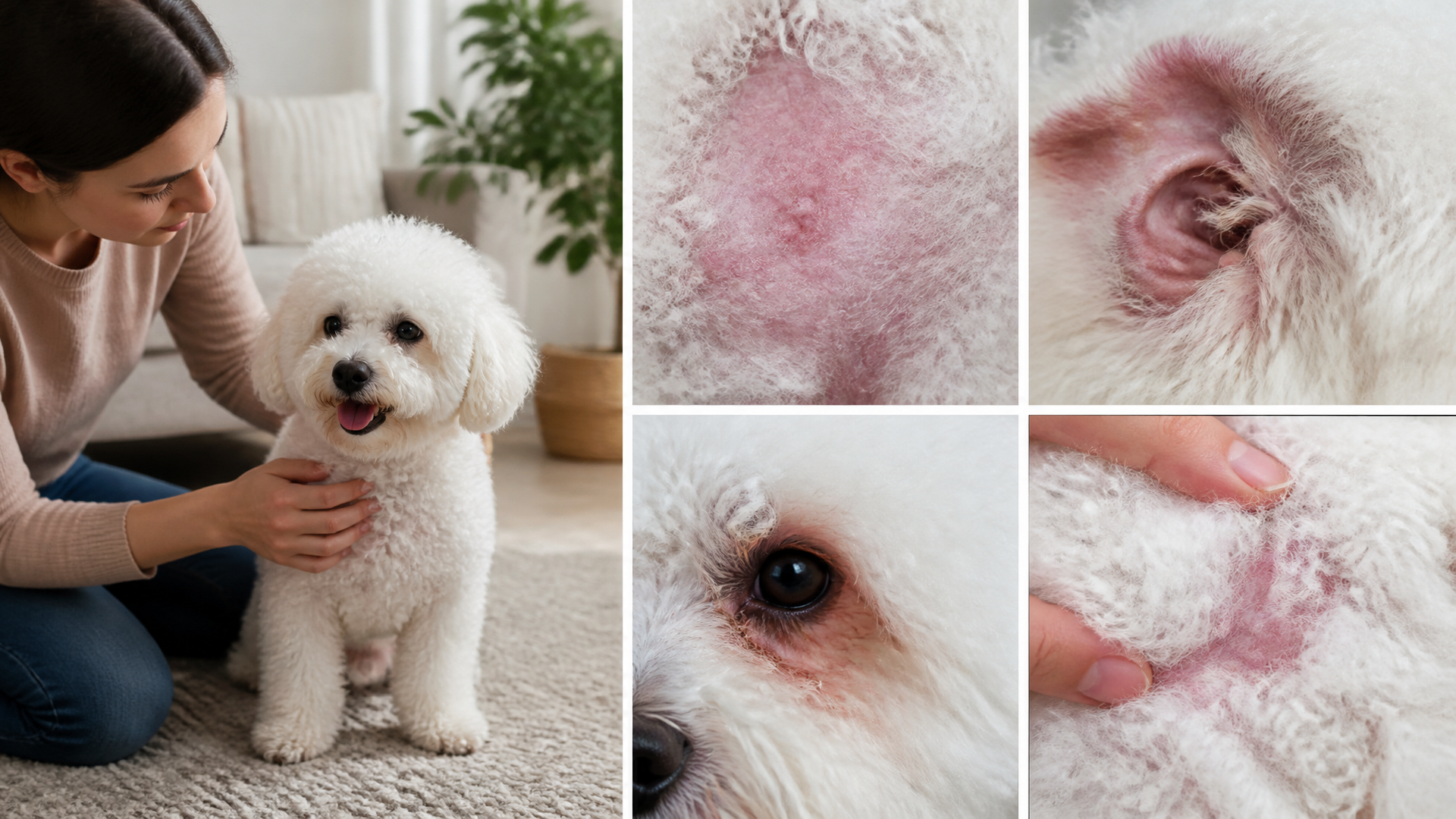
Bichon Frise Skin Problems Pictures
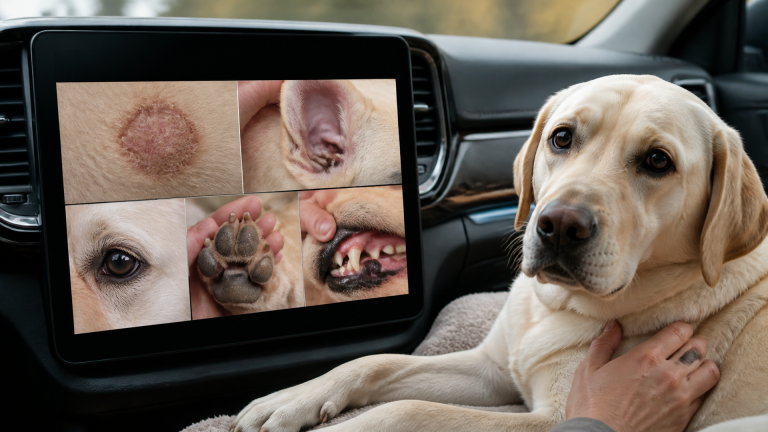
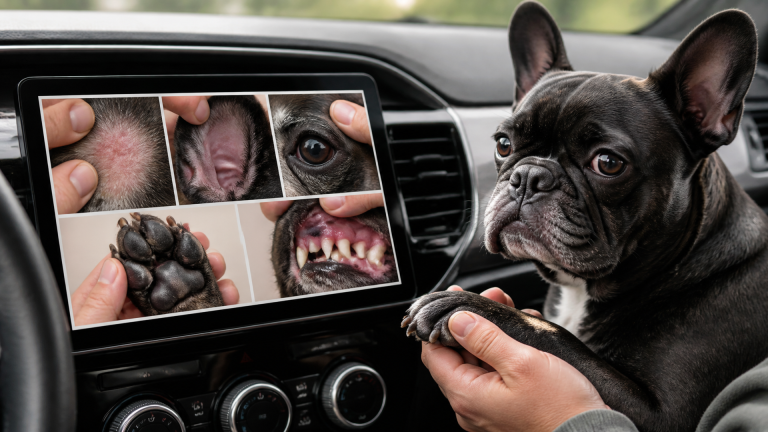
Bichon Frises are prone to skin issues—allergies, yeast, infections, and tear stains top the list. If you’re comparing photos to figure out what’s on your dog’s skin, here’s the short answer: red, inflamed patches often point to allergies; greasy yellow-brown spots usually mean yeast; and crusty circular patches suggest ringworm. But Bichons hide symptoms well, so what looks mild can be more advanced than it seems. Start with the checks below before jumping to conclusions.

The First 3 Checks Before You Panic
Run through these before digging into cause lists:
- Is the skin red or just stained? Bichons’ white coats show tear stains and saliva staining (pink-brown under eyes, between paws) that look like rashes but aren’t. Wet a cotton pad and wipe—if color transfers, it’s likely staining, not inflammation.
- Does your dog itch more than usual? Occasional scratching is normal. Non-stop chewing or rubbing against furniture means something is active.
- Can you smell anything unusual? A yeasty, corn-chip odor between the toes or in the ears strongly suggests a yeast overgrowth, not a simple allergy.
If any of these raise flags, move to the observation checklist below. If all three check out but you still see spots, take photos and monitor for 24 hours—some minor irritation resolves on its own.
What You’re Probably Seeing: Likely Causes Grouped by What You Can Observe
Red, Inflamed Skin with Itching
This is the most common Bichon complaint. The breed is genetically predisposed to environmental allergies (pollen, dust mites, grass) and food sensitivities.
- Allergic dermatitis — redness on belly, paws, armpits, and around the eyes. You’ll see licking or chewing at these spots. Bichons often react to chicken, beef, or dairy in their food.
- Flea allergy dermatitis — even one flea can trigger intense itching, especially at the base of the tail and along the back. Check with a fine-tooth comb; fleas are small and move fast.
Yellow-Brown Patches, Greasy Hair, or Musty Smell
These signs point to yeast (Malassezia) or bacterial overgrowth, often secondary to allergies.
- Yeast dermatitis — greasy, thickened skin between paw pads, in the ear folds, or on the chin. Hair may look darker or stained. Smell is the giveaway.
- Bacterial pyoderma — pus-filled bumps, scabs, or circular crusty spots. Bichons’ thick double coat can hide these until they’re well established.
Crusty, Circular, or Hairless Patches
- Ringworm — circular areas of hair loss with red, scaly edges. It’s contagious to humans. A Woods lamp test at the vet can confirm.
- Demodectic mange — patchy hair loss, often starting on the face or paws. More common in puppies and young Bichons. Requires a skin scrape for diagnosis.
Eye-Stained Fur That Looks Irritated
Bichons produce excess tears due to shallow eye sockets, but sometimes the staining signals an underlying issue.
- Epiphora — brownish-red tear tracks are normal genetics for many Bichons, but if the skin underneath is red or swollen, check for blocked tear ducts, eye infections, or dental problems (Bichons have tiny mouths and hidden tooth pain).
Home Observation Checklist
Use this as a quick pass/fail guide before deciding on next steps.
| Check | What to Look For | Pass / Fail |
|---|---|---|
| Skin color | Pink = normal for Bichon. Deep red or purple = inflammation. | Pass: Pink. Fail: Red/purple. |
| Coat texture | Clean, dry, no greasy patches. | Pass: Normal. Fail: Greasy or sticky. |
| Odor | Faint dog smell only. | Pass: Mild. Fail: Strong yeasty or sour. |
| Scratching | Fewer than 5 scratching sessions per hour. | Pass: Low. Fail: Constant or intense. |
| Paw condition | Pads smooth, no redness between toes. | Pass: Clean. Fail: Red, moist, or stained. |
| Ear smell | Neutral or mild wax. | Pass: Neutral. Fail: Musty or sweet. |
| Appetite/energy | Normal eating and play. | Pass: Normal. Fail: Lethargic or off food. |
If any two items show “Fail,” a vet visit is the right next step. For a single Fail, try the home care below and recheck in 48 hours.
What happens after recheck? If the single Fail resolved, continue monitoring weekly. If it stayed the same or worsened, move to vet. If a new Fail appeared, escalate to vet—this pattern suggests the issue is spreading despite your efforts.
What You Can Safely Do at Home
For Suspected Allergies (Red Skin, Itching)
- Switch to a limited-ingredient diet — try single-protein foods (venison, duck, or hydrolyzed protein). Avoid chicken and beef first.
- Bathe with a gentle oatmeal or chlorhexidine shampoo — weekly for 2–3 weeks. Rinse thoroughly; Bichons’ thick coat traps residue. How to confirm: After the first bath, check 24 hours later. If redness decreased by half and itching dropped to fewer than 3 scratching sessions per hour, you’re on track. If no improvement, re-evaluate—maybe the allergen isn’t in the environment or the shampoo isn’t strong enough.
- Wipe paws and belly after walks — use a damp cloth or hypoallergenic wipe to remove pollen and grass.
For Suspected Yeast (Greasy Skin, Smell)
- Use a medicated shampoo with ketoconazole or miconazole — lather and leave on for 5–10 minutes per label. Repeat twice weekly. Verification step: After two treatments, the musty smell should noticeably fade. If the smell is unchanged, you may need a prescription-strength product from the vet.
- Dry paws completely between toes after baths or rain. A blow dryer on low heat works well.
- Clean ears weekly with a vet-recommended ear cleaner and cotton balls. Never use cotton swabs deep in the canal.
For Tear Stains
- Keep eye area hair trimmed short — reduces moisture trapping.
- Wipe tear tracks daily with a sterile saline solution or pet-safe eye wipe.
- Consider a stainless steel water bowl — plastic bowls can harbor bacteria and worsen staining.
Common mistake that derails home care: Over-bathing or leaving shampoo residue behind. Bichons’ coats hold moisture and product like a sponge. If you see flaky, dry skin after a medicated bath, you may have rinsed too little (residue) or bathed too often (stripped natural oils). Scale back to every other week and rinse until water runs clear.
Products that help: a quality slicker brush for daily grooming (prevents mats that trap moisture), a pin brush for the coat, and a detangling spray for sensitive spots.
Red Flags: When Home Care Isn’t Enough
See the vet within 24 hours if you notice any of these:
- Open sores, oozing, or bleeding — could be infected and needs antibiotics.
- Hair loss in distinct circular patches — ringworm or mange requires medical treatment.
- Lethargy or fever — skin issues can become systemic.
- Swollen face or hives — possible allergic reaction that can worsen quickly.
- Pus or yellow-green discharge on the skin or in the ears.
- Your dog stops eating or seems painful when touched — Bichons hide pain until advanced.
What failure looks like after home care: Say you bathed with medicated shampoo for a week, but the greasy spots spread to new areas and the smell is stronger. This isn’t a failure of your effort—it’s a signal that the underlying cause (likely a bacterial infection or stubborn yeast) needs prescription treatment.
Bottom line: Bichons’ white coats make every spot look dramatic, but not every pink patch is a problem. If your dog is acting normal and only one area looks off, try the home care above. If symptoms spread, smell changes, or your dog seems uncomfortable, a vet visit is the safer call. After a vet visit, ask for a recheck schedule—most Bichon skin issues need follow-up to ensure they don’t bounce back.
FAQ (Quick Answers)
Q: Can I use human anti-itch cream on my Bichon?
A: No. Human creams often contain hydrocortisone or ingredients dogs can ingest by licking, which can cause stomach upset or worse. Use only pet-formulated products.
Q: My Bichon has red skin but isn’t scratching — is that still a problem?
A: Possibly. Redness without itching can indicate early infection, contact irritation, or even a mild food reaction. Monitor for 48 hours; if redness persists, see the vet.
Q: Are Bichons allergic to grass?
A: Yes, many Bichons develop contact allergies to grass. Wiping paws and belly after outdoor time is one of the most effective prevention steps.
Q: How often should I bathe a Bichon with skin problems?
A: Weekly medicated baths for active issues, then every 2–4 weeks for maintenance. Over-bathing can dry the skin, so use a gentle, moisturizing shampoo between medicated baths.
This guide covers the most common Bichon skin issues, what they look like, and how to decide between home care and a vet visit. Keep it handy for quick reference when you spot a change in your dog’s coat.
This page contains affiliate links. If you purchase a product through one of them, we may earn a small commission at no extra cost to you.