do Russian Blue Cats Shed
Russian Blue cats shed less than most breeds, but they do shed. Their double coat releases fine, short hairs year-round rather than dramatic clumps. A weekly grooming session with the right tools will keep your home nearly fur-free. Here’s exactly what to do.

What You’ll Actually See (and What You Won’t)
The Russian Blue’s coat has two layers. The guard hairs form the visible silver-tipped outer layer and shed slowly in small amounts. The undercoat is soft, fine, and short, shedding lightly but continuously.
What owners notice in practice:
- Light dusting on furniture that wipes off with a lint roller
- Fine hairs on dark clothing, but far less than with most short-haired cats
- No fur tumbleweeds or clumps
- A slight uptick in spring and fall, but nothing dramatic
If you expect zero shedding, a Russian Blue isn’t for you. If you want minimal fur left behind, this breed is one of the best low-shedding choices.
How to Manage Russian Blue Shedding
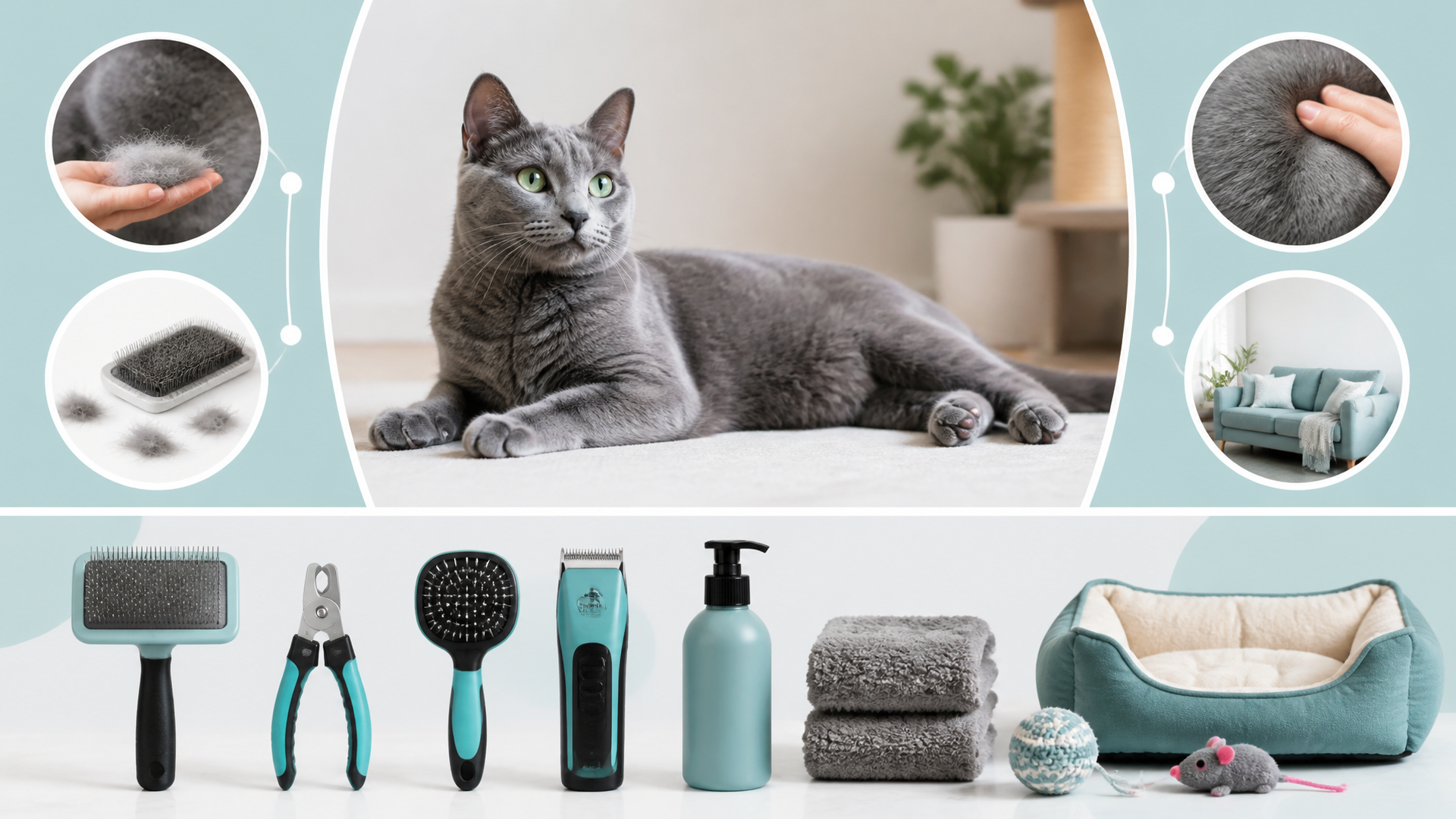
Prep – Tools You’ll Need
| Tool | Purpose | Recommended Type |
|---|---|---|
| Slicker brush | Lifts loose undercoat without pulling guard coat | Medium-firm bristles with fine tips |
| Fine-toothed metal comb | Catches shed guard hairs | Stainless steel with tight tines |
| Grooming glove or rubber brush | Final pass plus bonding | Silicone nubs, washable |
| Lint roller or rubber squeegee | Furniture cleanup after grooming | Wide roller or rubber pet hair remover |
| De-shedding tool (optional) | Use gently if shedding spikes | Designed for fine coats, light pressure only |
This article contains affiliate links. As an Amazon Associate, we earn from qualifying purchases at no extra cost to you.
Early Check – Is Your Cat’s Coat Healthy?
Before you start grooming, do a quick visual and tactile check.
- Coat feels smooth and soft with no rough patches or excessive oil
- No bald spots, thin patches, or redness visible
- No dandruff or flaking on the skin
- Cat isn’t scratching, biting, or over-grooming a specific area
- Shedding level is consistent with last week, not suddenly much higher
If all pass, proceed with grooming. If any fail, pause and assess. Could be diet, allergies, or a skin condition. If it persists more than a few days, schedule a vet visit.
The Grooming Routine – 5 Steps
Step 1: Brush with the slicker brush (2–3 minutes per side)
Start at the head and work toward the tail using gentle, short strokes. Focus on the back, sides, and belly. The slicker brush lifts loose undercoat without disturbing the guard coat. Don’t press hard – Russian Blue skin is sensitive.
Step 2: Switch to the fine-toothed comb
Run it through the guard coat from head to tail. This catches any shed hairs the slicker missed. Pay extra attention along the spine and behind the ears.
Step 3: Use the grooming glove for a finishing pass
Most Russian Blues love the massage sensation. The glove picks up the last few loose hairs and adds shine. Your cat will likely lean into it – use this moment for bonding.
Step 4: Wipe down with a damp cloth or grooming wipe
Russian Blue coats stay clean naturally. A wipe removes surface dander and body oils. Bathing is only needed every 4–6 weeks unless your cat gets into something messy.
Step 5: Combine with nail trim and ear check
Trim nails every 2–3 weeks. Inspect ears for wax buildup or redness and clean with a vet-approved ear cleaner if needed. Doing this right after grooming keeps the routine efficient.
Likely Causes of Increased Shedding
| Cause | How to Spot | What to Do |
|---|---|---|
| Seasonal coat change (spring/fall) | Slight increase over 1–2 weeks, no other symptoms | Increase brushing to twice a week; use de-shedding tool gently |
| Poor diet (low protein or omega fats) | Dull coat, dandruff, increased shedding | Switch to high-protein food with omega-3/6; add fish oil supplement |
| Stress (new pet, move, schedule change) | Shedding spike plus hiding, reduced appetite, or over-grooming | Provide safe spaces, keep routine consistent; consider a Feliway diffuser |
| Health issue (allergy, thyroid, skin infection) | Sudden heavy shedding, bald patches, redness, scratching, weight change | Vet visit – don’t wait |
Common Owner Mistakes
Brushing too hard. Russian Blue coats are fine. Aggressive brushing can damage the guard coat and irritate skin. Use light pressure.
Forgetting the comb. The slicker brush alone misses guard hairs that settle on furniture. Always follow with the fine-toothed comb.
Not adjusting for seasons. In spring and fall, one weekly brush is not enough. Double it.
Ignoring diet. A poor-quality food makes shedding worse. Check the ingredient list – the first three ingredients should be named meat sources.
Thinking low shedding means no allergens. Shedding is only part of the allergy equation. Dander and saliva proteins matter more.
Failure Mode: Over-Brushing Causing Coat Damage
Your cat’s coat starts looking thin, patchy, or dull in certain spots, especially along the spine. You might see short, broken hairs or small bald areas that don’t seem related to scratching.
The likely cause is using too much pressure with the slicker brush or de-shedding tool, or brushing more than every other day. Russian Blue guard hairs are fragile and break off when overworked.
Stop brushing for 3–4 days and let the coat rest. When you resume, use only the grooming glove first, then the fine-toothed comb. Skip the slicker brush entirely for a week. If the coat doesn’t improve or you see redness, visit your vet.
When to Call the Vet
Stop the routine and contact your vet if you see:
- Bald patches or thinning coat that doesn’t improve within a week after reducing brushing
- Persistent scratching, redness, or scabs
- Sudden heavy shedding in the middle of a season with no obvious cause
- Weight loss or gain alongside coat changes
- Visible fleas or flea dirt (small black specks)
Most Russian Blue shedding is normal and manageable. These signs point to something deeper.
How to Confirm the Fix Worked
After following the routine for two weeks, do this simple check.
The lint roller test. Press a fresh lint roller sheet firmly against your cat’s back. Pull it off. You should see fewer than 10 hairs per strip. If you’re still picking up more than 20 hairs, you either missed a grooming session or there’s an underlying cause.
The rub test. Gently stroke your cat from head to tail with a dark cloth. A healthy, well-groomed Russian Blue will leave only a few fine hairs. If the cloth comes away covered in fur, increase brushing frequency and check the list of likely causes above.
Visual confirmation. The coat should be smooth and shiny with no visible loose hairs standing up or shedding off when your cat rubs against furniture.
When these three checks show minimal shedding, you’re in good shape. Keep the weekly routine steady.
Success Check
Your cat’s coat is smooth, shiny, and free of loose hairs after brushing. Furniture needs a lint roller session only once or twice a week. You can wear dark clothing without carrying a fur cloud. Your cat seems comfortable and isn’t scratching more than usual.
If that describes your home, your grooming routine is working. Keep it up.
Quick Decision Aid: Is a Russian Blue the Right Low-Shedding Cat for You?
Use this checklist to decide.
| Check | Question |
|---|---|
| □ | I’m okay with light, fine fur on furniture and clothes, not zero. |
| □ | I can commit to a weekly 5–10 minute brushing session. |
| □ | I’m prepared to brush twice a week in spring and fall. |
| □ | I want a cat that needs minimal baths and grooming tools. |
| □ | I understand that low shedding helps allergies but doesn’t guarantee allergy relief. |
If you checked 4–5, a Russian Blue is an excellent match. If you checked 0–2, consider a non-shedding breed like a Sphynx (requires baths instead) or a LaPerm (minimal undercoat).
Save This Guide
Russian Blue cats shed lightly, not heavily. With a weekly brush, a fine-toothed comb, and a high-quality diet, you’ll keep your home fur-free and your cat’s coat looking its silver best. No special tools, no daily vacuuming – just a few minutes of grooming that your cat will actually enjoy.
Bottom line: Stick to the routine above, avoid over-brushing, and use the lint roller test to confirm you’re on track. A Russian Blue can be your low-shedding companion without the constant cleanup.