Chartreux vs Russian Blue: Which Is Right For You?
You’re torn between two stunning blue-gray breeds that both seem perfect on paper — quiet, intelligent, and elegant. But the Chartreux and Russian Blue have very different personalities under that silver coat. Here’s how to pick the one that actually matches your home.

Quick Answer
- Choose a Chartreux if you want a calm, dog-like companion that follows you from room to room, gets along with kids and other pets, and doesn’t mind being picked up.
- Choose a Russian Blue if you prefer a reserved, one-person cat that thrives on routine, needs plenty of vertical space, and will bond deeply but on its own terms.
Both breeds are low-shedding, quiet, and intelligent. The Chartreux is the cuddlier extrovert; the Russian Blue is the discerning introvert.
What this means for you in practice: If you’re hoping for a cat that greets guests and tolerates children, the Russian Blue will let you down. If you want a cat that entertains itself and needs minimal grooming, the Chartreux’s heavy brushing schedule and social demands will frustrate you. Pick based on your daily reality, not the coat color.
Applicability note: This guide covers purebred Chartreux and Russian Blue cats. If you’re considering a rescue or mixed-breed cat, temperament can vary widely. Always verify health clearances with your breeder regardless of breed.
Comparison Framework
| Trait | Chartreux | Russian Blue |
|---|---|---|
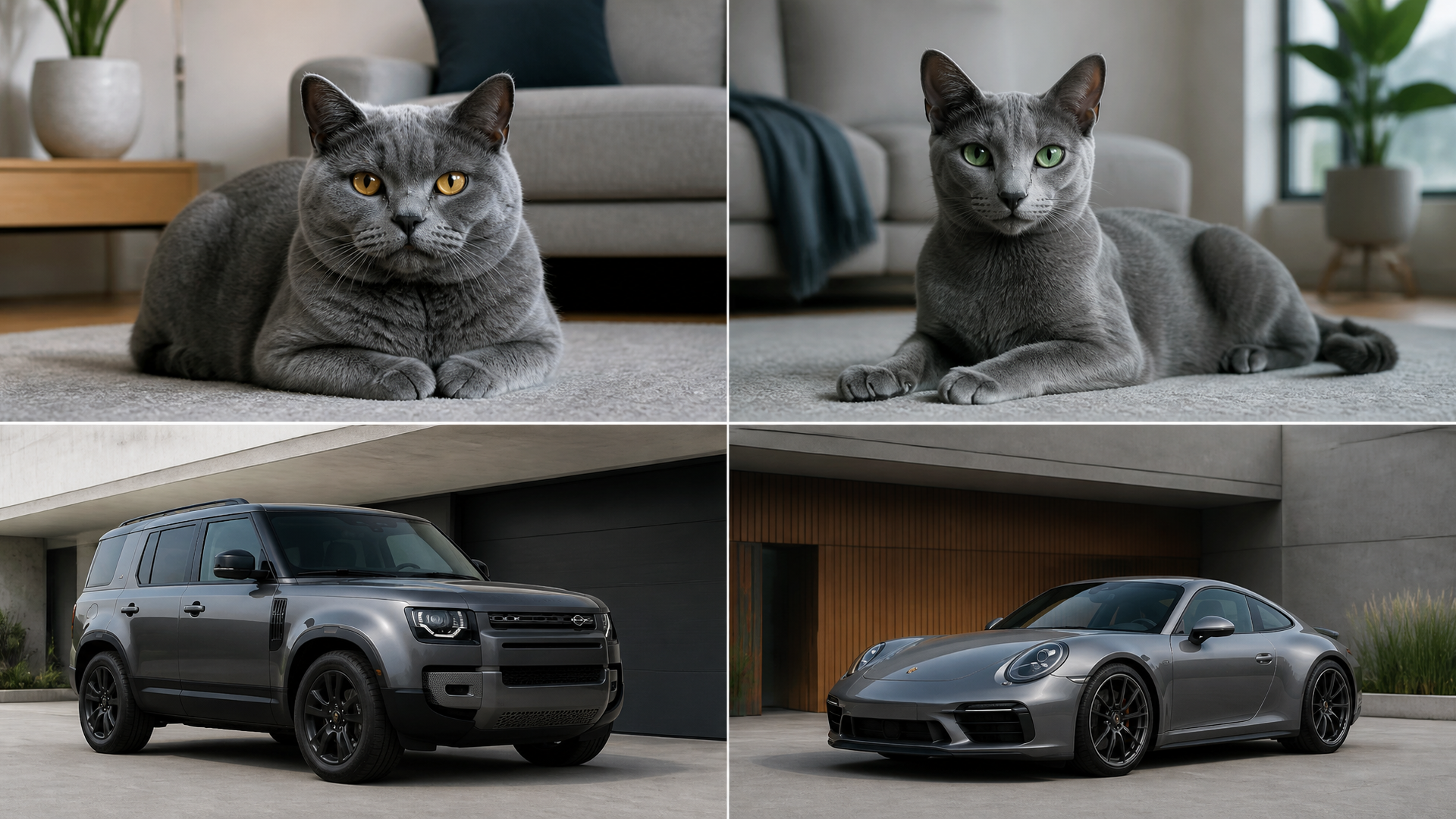
| Coat | Thick, woolly double coat (feels like sheepskin) | Dense, plush single coat (silky, no undercoat) |
| Color | Any shade of blue-gray, from slate to ash | Uniform silvery-blue with silver-tipped guard hairs |
| Eye color | Copper to gold | Vivid emerald green |
| Body type | Stocky, muscular, round head (smiling expression) | Slender, long, graceful, angular head |
| Temperament | Affectionate, playful, dog-like loyalty | Reserved, sensitive, bonds to one person |
| Activity level | Moderate — enjoys games but naps heavily | Moderate to high — needs interactive play daily |
| Vocalization | Quiet — rarely meows, may chirp or purr | Quiet — soft meow, doesn’t demand attention |
| Good with kids | Yes, very tolerant | With older, calm children only |
| Good with other pets | Usually yes, easygoing | Can be territorial, better as only cat |
| Grooming needs | Brush 2–3 times per week to prevent mats | Brush once a week to distribute oils |
| Common health issues | Patellar luxation, hip dysplasia, urinary stones | Urinary tract issues, obesity, dental disease |
| Lifespan | 11–15 years | 15–20 years |
How to confirm your decision: Visit a CFA- or TICA-registered breeder and spend at least one hour with adult cats of each breed. Watch how the cat reacts to you, to loud noises, and to being held. That direct interaction will tell you more than any article.
Best-Fit Picks by Use Case
The Family Home with Children or Other Pets
Go with the Chartreux. This breed’s easygoing, confident nature makes it a better fit for homes with kids, dogs, or other cats. They’re famously patient — some owners report their Chartreux allowing toddlers to dress them up. They adapt to changes in routine without stress.
The Solo Owner or Couple Who Want a Lap Cat
Again, the Chartreux. If “velcro cat” appeals to you, a Chartreux will shadow you around the house and gladly curl up on your chest while you read. They’re not needy, but they do want to be near you.
The Apartment Dweller or Busy Professional
Both work well, but with a catch. Russian Blues are quiet, independent, and fine being left alone for a workday — as long as you give them focused playtime when you’re home. Chartreux can also be left alone but may become depressed if they don’t get enough interaction. A tall cat tree placed by a window helps both breeds stay entertained while you’re out.
The Owner Who Wants a “Smart” Cat Without the Destructiveness
Russian Blue is the breed for you. They’re highly intelligent and trainable — you can teach them fetch, puzzle games, and even leash walking. But they will get bored and destructive (e.g., knocking things off shelves) if you don’t offer challenging toys. Invest in interactive puzzle feeders to keep them occupied.
Trade-offs to Know
Counter-Intuitive Angle: The “Same” Coat Requires Totally Different Grooming.
It’s easy to assume both blue cats have the same care needs. Wrong. The Chartreux’s woolly double coat mats fast — you need a good slicker brush and a wide-tooth comb to get through the undercoat. Skip one brushing session, and you’ll be dealing with clumps near the armpits and belly. Ignore those mats and they tighten into painful skin tangles that often require a vet visit to shave.
The Russian Blue’s single coat is almost zero-shedding and rarely mats. It just needs a weekly rubber curry brush or a chamois cloth to keep that silvery sheen. You can get away with far less grooming time.
Personality Trade-Off: The Chartreux Is Easier Day-to-Day; the Russian Blue Is a Long-Term Investment.
Both are quiet, but the Russian Blue’s sensitivity can be a problem. They hide from guests, refuse to eat if stressed, and may develop urinary crystals if the routine changes. A Russian Blue is a better fit for someone who works from home or has a quiet, predictable schedule. The Chartreux shrugs off visitors, moving trucks, and new furniture.
Health Trade-Off: Russian Blues Live Longer but Need More Dental and Urinary Care.
Chartreux are prone to patellar luxation (knee issues) and hip dysplasia — schedule an orthopedic exam every few years, especially as they age. Russian Blues frequently develop urinary tract crystals and periodontal disease. Budget for high-quality wet food and annual dental cleanings.
What Can Go Wrong — Real Consequences
Bringing a Russian Blue into a chaotic home with young children often leads to a stressed, hiding cat that develops urinary tract problems (painful crystals, blocked urethras). The Russian Blue’s need for calm predictability isn’t a preference — it’s a health requirement.
Skipping the Chartreux’s twice-weekly brushing doesn’t just look messy. Matted fur pulls on the skin, causing bruising and hot spots, and severe mats require sedation and shaving at the vet. This is a vet visit you can prevent with 15 minutes and a good brush.
Quick Decision Checklist
Run through these five items to confirm your choice:
- Can you handle daily interaction?
– Chartreux: Yes, thrives on it.
– Russian Blue: Needs daily play but not constant cuddling.
- Do you have young children or other pets?
– Chartreux: Yes, fits right in.
– Russian Blue: Only if kids are gentle and other pets are calm.
- Are you comfortable with a cat that hides from strangers?
– Chartreux: No, they greet guests.
– Russian Blue: Yes, that’s normal.
- Can you commit to brushing twice a week?
– Chartreux: Must — expect 10–15 minutes, 3×/week.
– Russian Blue: Optional — 5 minutes/week is enough.
- Do you have at least one tall cat tree or climbing shelf?
– Both breeds need vertical territory. Russian Blue especially needs high perches to feel secure.
If you answered “yes” to most Chartreux-side items (especially about children and brushing), get a Chartreux. If your “yes” answers lean Russian Blue (especially about solitude and low grooming), that’s your cat.
Related Questions
Are Chartreux and Russian Blue the same breed?
No. They are separate breeds with distinct histories. Chartreux originated in France and was bred as a working mouser; Russian Blue comes from Archangel, Russia. The only visual overlap is the blue-gray coat — body shape, eye color, and coat texture are all different.
Which is better for allergies?
Neither breed is hypoallergenic, but many allergy sufferers react less to Russian Blues because they produce less Fel d 1 protein. Note: this varies by individual cat. Spend time with an adult from the breed before committing.
Do Chartreux get along with dogs?
Yes, generally. Chartreux are known for their tolerant, unflappable temperament and often become best friends with dog-savvy dogs. Russian Blues are more cautious and may hiss or hide.
How much does a Chartreux or Russian Blue cost?
Reputable breeders charge $800–$1,500 for either breed. Chartreux are rarer in the US, so expect longer waitlists and possibly higher prices. Russian Blue breeders are more common. Always visit the cattery in person and ask for health clearances (hip/patella for Chartreux, urinary health for Russian Blue).
Can either breed be left alone for 8–10 hours?
Yes, both handle a standard workday, but the Russian Blue adapts better to solitude. Leave out puzzle feeders and a window perch. The Chartreux may get lonely — consider a second cat or a pet sitter visit if you’re gone longer than 9 hours.
Save This Guide
Key takeaway: The Chartreux is the easygoing, family-friendly extrovert; the Russian Blue is the elegant, sensitive one-person cat. Match your lifestyle to the personality, not just the coat color.
Disclosure: Some links in this article are affiliate links. We may earn a small commission if you purchase through them, at no extra cost to you.