Sphynx Cat Pyramid: Guide: What Every Owner Should Know
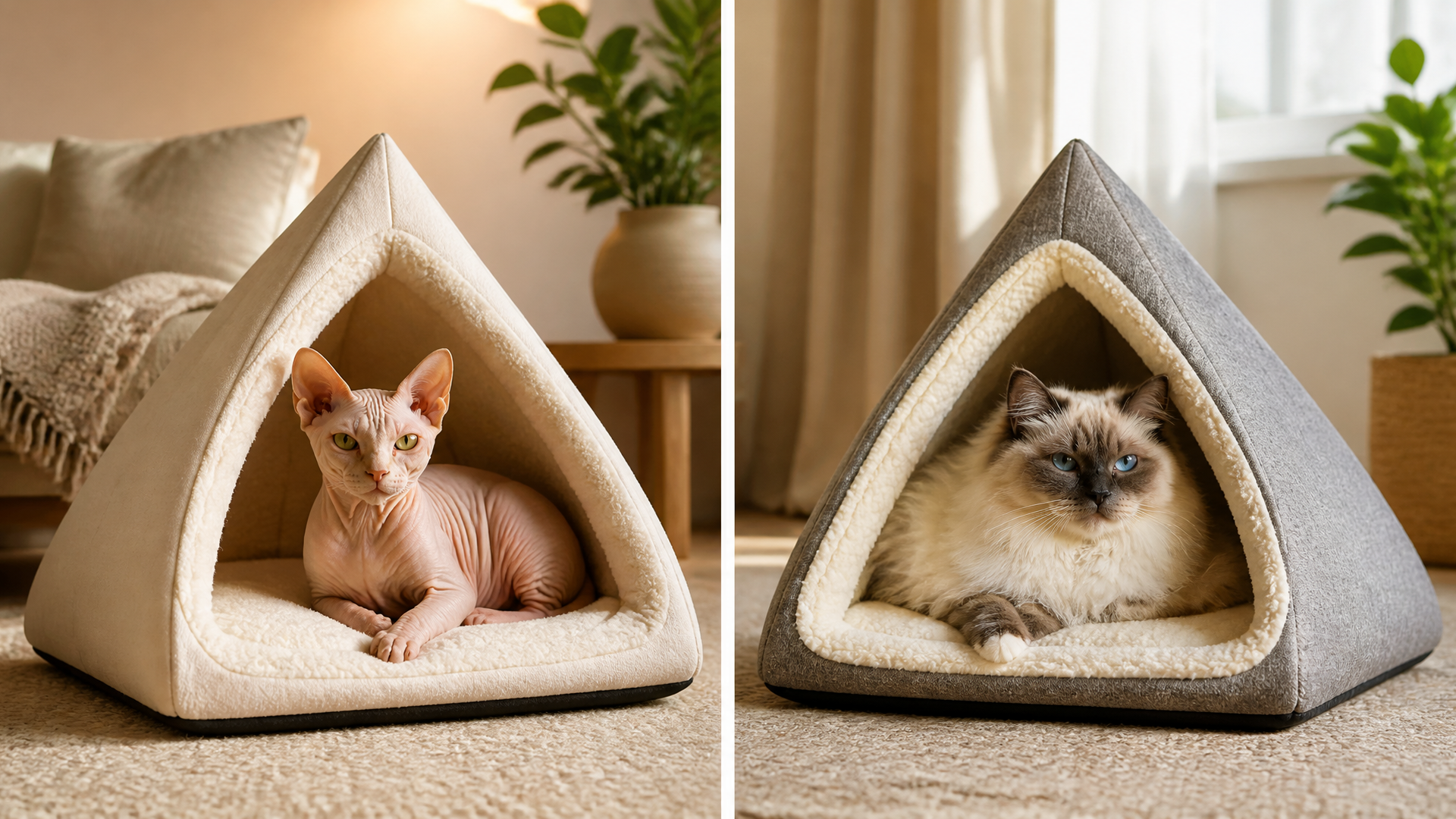
A sphynx cat pyramid is a covered, heat-trapping bed designed to help hairless cats stay warm. The best ones have removable machine-washable covers, non-slip bases, and at least 1 inch of foam or fiberfill insulation. Here’s what to look for and how to make your Sphynx actually use it.

Features That Matter for a Sphynx
Not every pyramid bed labeled “for cats” works for a Sphynx. The breed’s oily skin, low body fat, and intolerance to cold and drafts demand specific construction.
Material Choices
- Interior lining – Look for removable fleece or microfiber covers. Sphynx cats produce more skin oil than furred breeds; the inside will need weekly washing. Avoid permanent covers.
- Foam core – Memory foam retains heat best. Make sure it’s sealed or has a removable cover – open-cell foam absorbs oil and begins to smell within months.
- Outer fabric – Sturdy canvas or polyester with a non-slip bottom. Cheap nylon can feel rough against bare skin.
Sizing Guide
Adult Sphynx cats typically weigh 6–12 lbs and measure 14–16 inches from nose to tail base. Aim for:
- Base width – At least 18 inches so the cat can turn around.
- Height – At least 14 inches so the cat can sit upright.
- Entrance – At least 8 inches wide × 10 inches tall.
Too large a bed won’t trap heat effectively; too small will feel cramped. A tightly fitted space retains body heat better than a cavernous one.
Decision criterion that changes the recommendation: If your home stays above 75°F year-round, skip the pyramid bed entirely – it can trap too much heat for a hairless cat. Opt for a flat fleece bed or a low-sided cave bed instead. For homes between 65–75°F, a pyramid with a removable flap is ideal. Below 65°F, choose a pyramid with thick memory foam and a draft-proof entrance. Your specific home temperature determines whether a pyramid helps or harms.
Choosing the Right Pyramid: A Quick Decision Aid
Use these five pass/fail checks before you buy:
| Check Item | Pass | Fail |
|---|---|---|
| Interior cover is removable and machine-washable | Zip or Velcro access | Permanently sewn |
| Base has non-slip rubber dots or grip layer | Yes | Slides on tile or wood |
| Insulation is at least 1 inch thick (foam or fiberfill) | Dense padding | Thin quilted fabric only |
| Entrance flap can be tied open or removed for hesitant cats | Adjustable | Fixed closed opening |
| Zipper is covered by a fabric flap (to protect bare skin) | Covered seam | Exposed metal or plastic zipper |
Verification step: To confirm insulation thickness, place the empty bed on a scale – a fully insulated 18-inch pyramid should weigh at least 2–3 lbs. Also run your hand inside along the zipper; if you feel rough metal, plan to cover it with fabric tape or choose a different model. Cheap beds often skimp on foam density while keeping the exterior looking plush.
Realistic trade-off: Stiff foam cores hold their shape well but make the bed heavy to move. Softer models pack flat for travel but tend to lose loft after a year. If you frequently rearrange furniture or take the bed on trips, a foldable pyramid with a removable foam panel is a better compromise than a rigid one. For a stationary bedroom setup, the rigid core performs better over time.
How to Get Your Sphynx to Actually Use the Pyramid
Tip 1: Position it near a gentle heat source
Place the pyramid beside a radiator, heat vent, or low-wattage pet-safe heating pad (not direct sunlight). Avoid drafty hallways. Common mistake: putting the bed in a basement or tiled area – the floor stays cold and the interior never warms up. The Sphynx will ignore a bed that stays cooler than a lap or a sunny spot.
Tip 2: Introduce it slowly
Leave the pyramid open with a familiar blanket inside. Drop a treat or catnip inside once a day. Do not close the flap until the cat freely enters. Common mistake: zipping the bed shut on the first day – a trapped Sphynx may refuse to go near it again for weeks. Some owners drape a second familiar blanket over the top to make the new shape seem less threatening.
Tip 3: Wash the interior cover weekly
Machine-wash the cover every 7 days using a fragrance-free, pet-safe detergent. Common mistake: waiting until the cover feels greasy – that oil can cause chin acne or skin irritation on a Sphynx. If the foam core gets wet, dry it completely before replacing the cover to prevent mold. Keep a second cover on hand so you can rotate them between washes.
Safety Considerations Specific to Sphynx Cats
- Overheating risk – Pyramid beds can get very warm. Watch for panting, restless behavior, or your cat moving to a cool floor. If the cat leaves the bed after a few minutes, the interior may be too hot. Reduce heat source or prop the entrance open. A cat that sleeps with its paws sticking out of the entrance is trying to regulate temperature – that’s normal as long as it stays inside.
- Non-toxic materials – Sphynx cats often knead and lick fabric. Choose beds with OEKO-TEX or CertiPUR certification on foam. Avoid any bed that has a strong chemical smell out of the box – off-gassing can irritate sensitive skin and respiratory tracts. Let a new bed air out for 24–48 hours before introducing it.
- Skin chafing – Internal tags and rough seams can rub bare skin. Remove all tags, and check that the zipper is on the underside (not against the cat’s body). A zipper cover flap is ideal. Apply a small patch of soft fabric tape over any exposed zipper teeth as an immediate fix.
- Ventilation – Some pyramid beds with small entrances limit airflow. If your Sphynx is a heavy sweater, look for a model with mesh side panels or a top vent. Stale, humid air inside the bed can contribute to skin fold infections.
Cleaning and Maintenance Schedule
| Task | Frequency | Details |
|---|---|---|
| Wash interior cover | Weekly | Machine-wash on gentle cycle, air-dry or low heat |
| Spot-clean outer fabric | As needed | Damp cloth with mild soap, avoid soaking |
| Inspect foam core | Monthly | Check for odor, compression, or discoloration |
| Replace foam core | Every 12–18 months | Softer beds may need replacement annually |
| Vacuum entrance area | Weekly | Remove hair, dust, and litter tracked inside |
A well-maintained pyramid bed should stay functional for 2–3 years before the outer fabric shows wear. Replace it sooner if the interior lining develops holes or if the non-slip base stops gripping the floor.
When a Pyramid Bed Isn’t the Right Fit
Pyramid beds work best for Sphynx cats that enjoy enclosed, cave-like spaces. Some Sphynx prefer open beds where they can stretch out fully. Watch your cat’s sleeping habits for a week before buying:
- Curler – Sleeps in a tight ball, often under blankets. Pyramid bed is a good match.
- Sprawler – Sleeps stretched on its side or back. Prefers flat beds or low-sided donut beds.
- Perch seeker – Sleeps on high surfaces like cat trees or shelves. Needs a heated perch pad more than a floor bed.
- Blanket burrower – Digs under blankets to sleep. A pyramid bed with a removable entrance flap mimics that covered feeling.
If your Sphynx falls into the sprawler or perch seeker category, save your money and buy a heated cat pad or a simple fleece throw instead. The pyramid shape only helps cats that naturally seek enclosed warmth.
Save This Guide
A well-chosen pyramid bed gives your Sphynx a warm, secure den that meets its unique temperature and skin-care needs. Use the five-point decision aid before buying, wash the cover weekly, and introduce the bed slowly for the best chance of success. For hesitant cats, keep the flap open and use a familiar blanket inside. For homes above 75°F, skip the pyramid entirely and choose a flat fleece bed instead.
We may earn a commission if you purchase through links in this article, at no extra cost to you.