Are Bichon Frise Good With Other Dogs
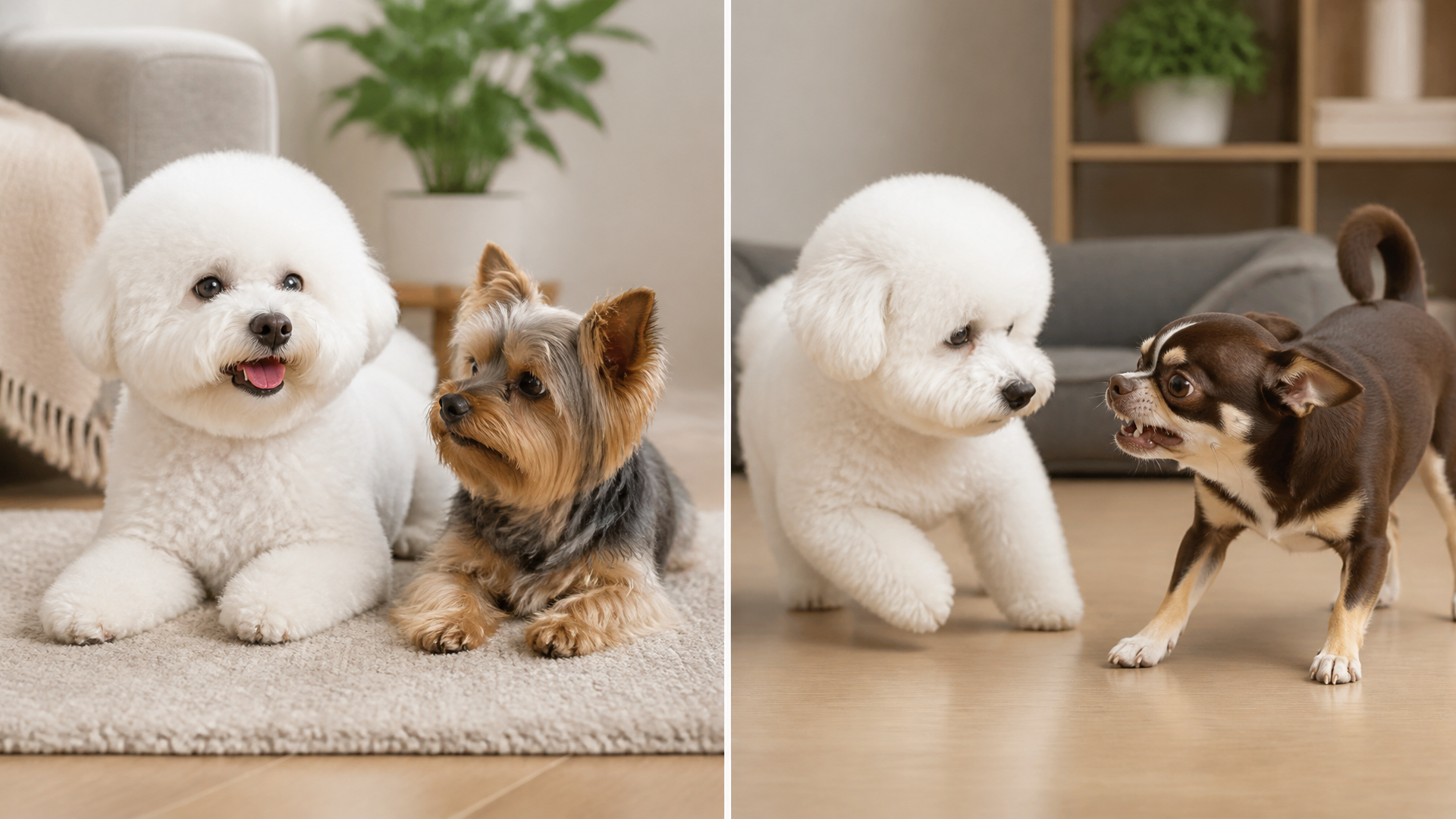
Yes, Bichon Frise are generally good with other dogs. They’re companion dogs through and through — friendly, playful, and rarely aggressive. But there’s one catch that catches many owners off guard: a Bichon’s dog-friendliness depends almost entirely on how you introduce them and whether you socialize early.

If you skip the introduction protocol, your sweet Bichon can turn possessive, anxious, or reactive. Here’s exactly what to do instead.
Why This Breed is Different from Other Toy Dogs
Bichons were bred for one job: being with people. They don’t have guard instincts, prey drive, or a territorial streak. That makes them naturally open to other dogs — as long as they learn early that other dogs are safe.
- Default temperament: Social, curious, eager to please. A well-socialized Bichon typically greets other dogs with a wagging tail and a play bow.
- The catch: Bichons form intense attachments to their owners. If they feel replaced or ignored, they may whine, body-block, or snap at the “rival” dog. This looks like aggression, but it’s resource guarding of you.
- Size matters: At 12–18 pounds, Bichons do best with dogs of similar size or calm temperaments. A 70-pound dog that plays rough can accidentally hurt or scare them.
One failure mode to catch early: A Bichon that didn’t meet other dogs during puppyhood (8–16 weeks) may react with fear-barking, hiding, or defensive growling when introduced as an adult. This isn’t natural aggression — it’s lack of exposure. But it gets harder to reverse the longer you wait.
What This Answer Means For Your Next Step
If you’re considering adding a second dog, the answer is clear: a well-socialized Bichon is a great match. But if your Bichon is already an adult with minimal dog experience, you’re looking at a 2-week structured introduction before you can trust them together. Plan for extra patience, not extra cost — unless you need a professional trainer, which runs $100–$200 per session.
For owners who simply want to take their Bichon to a dog park or daycare: do the readiness check below first. If your Bichon freezes or hides when meeting new dogs on leash, hold off and start parallel walks at a distance before going off-leash.
The Step-by-Step Introduction Protocol
This three-phase process works whether you’re bringing home a new dog or introducing your Bichon at a dog park. Don’t skip phases.
Pre-Introduction Readiness Check
Before you start, observe your Bichon on walks. Can it:
- Ignore a dog across the street without whining or staring?
- Walk past a fence with a barking dog without freezing?
- Accept treats near you without guarding?
If you answered no to any, start the protocol at extra distance. If your Bichon shows freezing, stiff tail, whale eye, or growling during these checks, consult a positive-reinforcement trainer before attempting an introduction.
Step 1: Neutral Territory Meet (Days 1–3)
What to do: Meet in a fenced area neither dog lives in — a friend’s yard, a quiet park corner, or an empty tennis court. Keep both dogs on loose 4–6 foot leashes (no retractable leashes). Walk in parallel at least 10 feet apart, then gradually decrease the distance as both dogs stay relaxed.
Checkpoint: Both dogs should be able to walk calmly within 3 feet of each other without staring, freezing, or stiffening. If either dog freezes with a tucked tail or direct stare, stop. Increase distance and try again later. That’s a stress signal, not friendliness.
Expert Tip #1
- Actionable step: Bring high-value treats (small bits of boiled chicken or cheese) and reward your Bichon the moment it looks at the other dog without reacting. Reward before any barking or lunging starts.
- Common mistake: Rewarding after your Bichon already reacts. That reinforces the wrong behavior. Timing is everything.
Step 2: Controlled Parallel Walks (Days 4–7)
What to do: Walk both dogs side by side, same direction. Start with several feet between you, then over several sessions gradually bring the leashes closer until the dogs can walk shoulder to shoulder. Talk cheerfully. Keep moving — walking together builds a cooperative mindset.
Checkpoint: Your Bichon should show relaxed body language — soft eyes, loose tail wag, open mouth (happy pant). If you see stiffness or whale eye (showing the whites of their eyes), increase distance and slow down.
Expert Tip #2
- Actionable step: Use a front-clip harness like the PetSafe Easy Walk during introductions. It gives you steering control without pulling on your Bichon’s delicate neck, and it discourages pulling toward the other dog.
- Common mistake: Using a retractable leash. The constant tension and unpredictable distance changes can stress both dogs. Stick with a fixed 4–6 foot leash.
Disclosure: If you buy through links, we may earn a small commission at no extra cost to you.
Step 3: Off-Leash Interaction (Days 8–14)
What to do: Let both dogs interact off-leash in a secure, fenced area. Supervise every second. Keep sessions short — 5–10 minutes at first. Let them sniff, circle, and invite play. A Bichon’s play style is typically chase-and-be-chased with gentle mouthing.
Checkpoint: Both dogs should take breaks naturally. If one dog won’t stop pestering the other, or if your Bichon hides behind your legs, end the session. Don’t push.
Expert Tip #3
- Actionable step: End every session on a positive note after a calm moment — not after a conflict. This builds a lasting positive association.
- Common mistake: Leaving them unsupervised too early. Even friendly introductions can go sideways. Wait until you’ve seen at least 5 calm interactions before letting them hang out alone together.
| Phase | Duration | Key Goal | Stop If You See |
|---|---|---|---|
| Neutral Territory | 3 days | Calm proximity | Freezing, staring, tucked tail |
| Parallel Walks | 4 days | Cooperative walking | Stiff body, whale eye |
| Off-Leash Play | 7 days | Positive play sessions | One dog hiding or refusing breaks |
Trade-Offs To Consider Before Adding a Second Dog
Adding another dog isn’t always the right call for every Bichon owner, even if the introduction goes smoothly. Here are realistic mismatches and limitations to weigh:
- Bichon may bond more with the new dog than with you. Some Bichons become inseparable from their new housemate and show less interest in cuddling or following you around. If you want a dog that stays glued to your side, this can feel like a loss.
- Two Bichons can create a “pack mentality.” A pair of small, high-energy dogs may feed off each other’s excitement, leading to more barking, door dashing, or refusal to settle. You’ll need separate training sessions to maintain good behavior.
- Health costs double. Bichons are prone to skin allergies, dental issues, and luxating patellas. Two dogs means two vet budgets. Pet insurance for a Bichon typically runs $30–$50 per month; multiply by two.
- Space constraints. Bichons are small, but they need safe zones. If your home doesn’t have room for separate crates, feeding stations, and a quiet retreat, introductions may fail even with good protocol.
The trade-off is clear: a second dog can be a perfect playmate, but you trade some of the one-on-one bonding and simplicity of a single-dog household.
What Can Go Wrong (And How To Fix It)
Likely Causes of Conflict
- Owner resource guarding: Your Bichon sees the new dog as competition for your attention. Fix it by giving your Bichon extra one-on-one time away from the new dog and rewarding it for tolerating shared attention.
- Fear from lack of socialization: If your Bichon is an adult meeting dogs for the first time, take introductions slower. Use parallel walks for two full weeks before trying face-to-face play.
- Mismatched energy levels: A hyper, rough-playing dog can overwhelm a Bichon. If the other dog won’t respect boundaries, separate them and find calmer playmates.
Friction Points
- The first week is the hardest. Expect some tension. Your Bichon may ignore the new dog, growl once or twice, or try to hide. That’s normal — don’t punish it. Just follow the protocol steps.
- Feeding time can trigger conflict. Feed Bichons and other dogs in separate rooms or crates for at least the first month. Don’t leave food bowls accessible.
Escalation Signals — When to Call a Professional
- Blood is drawn during a fight.
- Your Bichon refuses to eat, play, or sleep after introductions.
- The growling doesn’t decrease after 7 days of consistent parallel walks.
In these cases, hire a certified positive-reinforcement trainer who works with small breeds. This is rare with Bichons, but it does happen.
Success Check
You can consider the introduction complete when:
- Both dogs can share a room calmly while you’re present.
- They take turns playing and resting without tension.
- Your Bichon doesn’t body-block or snap when you pet the other dog.
If you reach this point after 2–3 weeks, you’re set. Most Bichons who go through this protocol become close companions with their new housemate.
Bichon Frise vs. Other Small Breeds: Dog-Friendliness Comparison
| Breed | Typical Dog-Friendliness | Common Issue to Watch For |
|---|---|---|
| Bichon Frise | High | Owner possessiveness |
| Cavalier King Charles Spaniel | Very High | Rarely aggressive |
| Shih Tzu | Moderate | May prefer human company |
| Pomeranian | Low to Moderate | Small-dog syndrome, prone to barking |
| Miniature Schnauzer | Moderate | Territorial with same-sex dogs |
| Havanese | High | Similar companion personality |
Bichons rank among the most dog-friendly toy breeds — when properly introduced. The table above shows that no small breed is universally perfect with other dogs. Each has its own quirk.
Save This Guide: Bichon Frise Dog-Friendliness at a Glance
- Temperament: Friendly, playful, non-aggressive by nature.
- Best match: Dogs of similar size or calm, medium-energy temperaments.
- Critical factor: Start socialization between 8–16 weeks. If your Bichon is older, follow the 3-phase protocol over 2 weeks.
- Warning sign: Freezing, staring, tucked tail = stress, not friendliness. Never force interaction when you see this.
- Introduction rule: Neutral territory → parallel walks → off-leash play. Never skip ahead.
- Trade-off to remember: A second dog can be a great playmate, but it changes the one-on-one dynamic and increases costs. Make sure you want that trade-off before you commit.
Key takeaway: A well-socialized Bichon Frise is one of the most dog-friendly small breeds available. But that friendliness doesn’t happen by accident — it happens when you manage the introduction process with patience and structure. Follow the protocol, watch for the warning signs, and you’ll have two happy dogs sharing your home.