How Much Food Must a 9 Month Old Turkish Angora Cat Ear
Your 9-month-old Turkish Angora needs 200–280 calories per day, split into two meals. Exactly where your cat lands depends on their weight, activity level, and whether they’re spayed or neutered. A typical cat at this age weighs 6–9 pounds, so aim for ⅓ to ½ cup of high-quality dry food per day, plus one 2.6–3 oz can of wet food, or adjust accordingly.

What this means for you practically: Before you buy your next bag of food, check the calorie density on the label. Most dry foods fall between 350–400 kcal per cup, but some premium brands run as low as 320 or as high as 450. If you assume the middle and your food is on the high end, you could be overfeeding by 20% without realizing it. Switch to a kitchen scale for dry food (weigh in grams) and you’ll get consistent portions no matter which brand you buy.
The most common mistake owners make is overfeeding — Turkish Angoras are naturally lean, and extra weight at this stage can lead to joint problems later. Check your cat’s body condition weekly (see the checklist below) and adjust portions before the pounds sneak on.
Feeding Chart for a 9-Month-Old Turkish Angora
Use this table as a starting point. Adjust by 10% if your cat is very active or very sedentary.
| Weight (lbs) | Daily Calories | Dry Food Only (cups/day) | Wet + Dry Combo |
|---|---|---|---|
| 6–7 | 200–230 | ⅓ – ⅜ cup | 1 small can (2.6 oz) + ¼ cup dry |
| 7–8 | 230–260 | ⅜ – ½ cup | 1 small can + ⅓ cup dry |
| 8–9 | 260–280 | ½ – ⅝ cup | 1 medium can (3 oz) + ⅓ cup dry |
All dry food amounts assume a typical 350–400 kcal/cup food. Check your bag’s calorie density — if it’s outside this range, recalculate using the calories per gram on the label.
5-Point Feeding Checklist
Run through this quick check once a week. It catches the most common feeding problems early.
- [ ] Body condition score: Can you feel your cat’s ribs easily without pressing? If you have to push to feel them, reduce food by 10%. If ribs are visible, increase slightly.
- [ ] Meal consistency: Feed at the same times twice a day. Free-feeding at this age often leads to overeating.
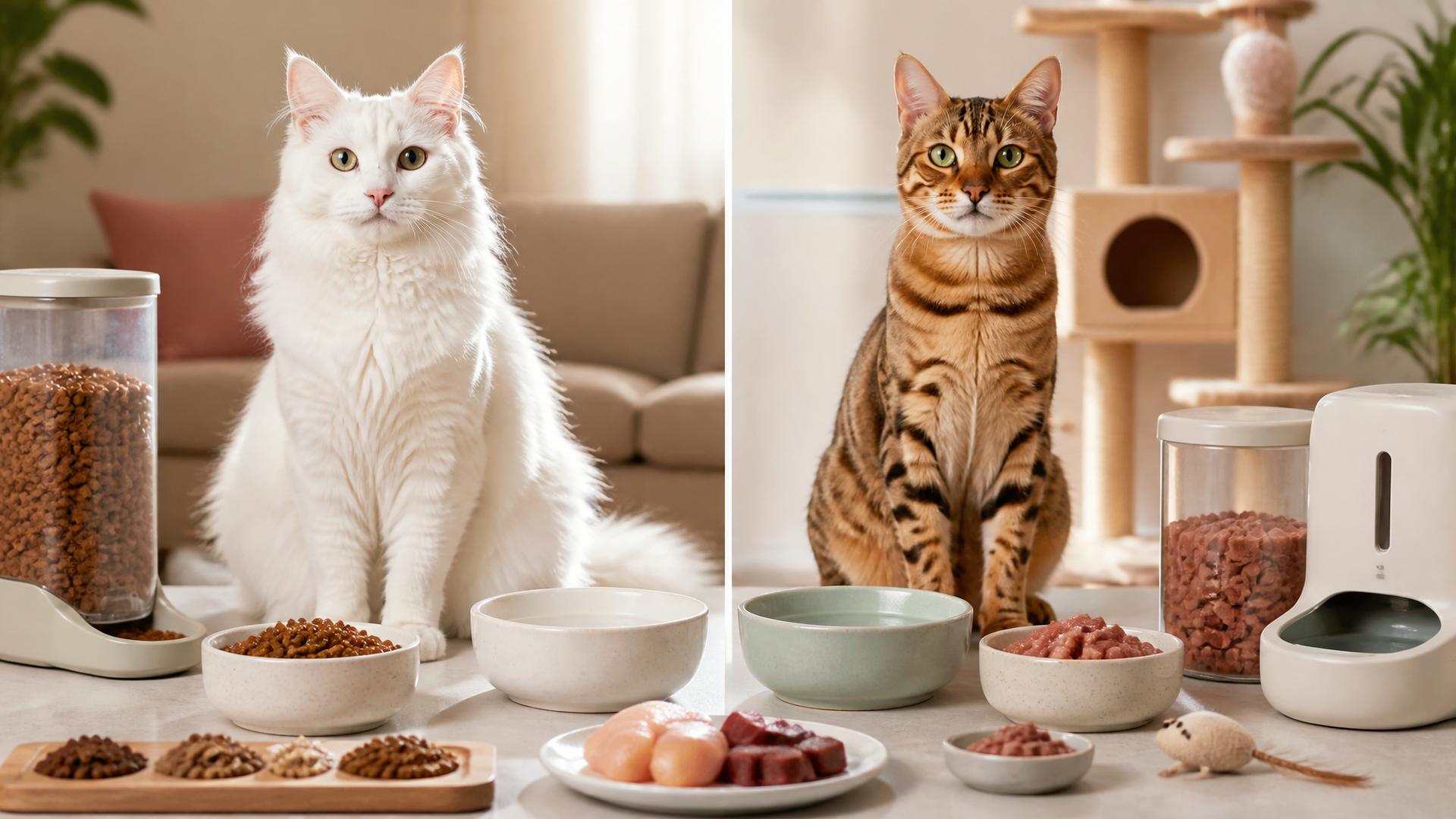
- [ ] Water intake: Always provide fresh water. If you feed only dry food, use a pet fountain to encourage drinking.
- [ ] Stool quality: Firm, dark brown, and not too dry or runny. Changes can signal food intolerance or overfeeding.
- [ ] Coat condition: Turkish Angoras have a single, silky coat. Dull or greasy fur may mean a nutrient imbalance.
Verification step: Once a week, weigh your cat on a baby or kitchen scale at the same time of day (before a meal). Write it down. A 9-month-old Turkish Angora should gain roughly 0.5–1 lb per month at this stage. If weight stays flat for two weeks or jumps more than 1 lb, adjust portions immediately rather than waiting for the next check.
If you check all five, you’re on track. If one or two flag, adjust portion size or talk to your vet.
Steps to Get Your Cat’s Portion Right
Follow these three steps to dial in the exact amount.
1. Weigh your cat using a kitchen scale or baby scale. Write down the number.
2. Check your food’s calorie density on the bag or can label. Most high-quality dry foods are 350–400 kcal per cup; wet foods range 70–100 kcal per 2.6 oz serving.
3. Match the chart above, then watch body condition for one week. If your cat gains or loses more than 1% of body weight, adjust portion by 5-10% and recheck.
Choosing the Right Food for a Turkish Angora
Turkish Angoras are lean but prone to urinary issues. A wet-food component is a smart move. Look for:
- High-quality protein (chicken, turkey, fish) as the first ingredient.
- Moderate fat (15–20% dry matter basis) to support coat health.
- No fillers like corn, wheat, or soy.
One limitation to watch for: calorie density varies significantly between brands. A ⅓ cup from one bag might deliver 120 calories, while another brand’s ⅓ cup could pack 160 calories. If you switch foods without recalculating, your cat could gain or lose weight even though the volume looks the same. The fix is simple: check the “kcal per cup” on the new bag and adjust the portion size accordingly before you pour the first bowl.
A great choice is Sheba Perfect Portions Wet Cat Food Pate with Sustainable Salmon, Signature Seafood Entree, and Tender White Fish and Tuna Entree Variety Pack. Each twin tray gives two single servings — no leftovers. It’s grain-free and formulated for adult maintenance. The calorie count is printed on each tray (typically 70–85 kcal per serving), making it easy to track total daily intake.
For variety, add a low-calorie topper like Sheba Bisque Lickable Cat Treats, Chicken, Tuna and Salmon Recipes. Use it as a mix-in or standalone snack — just account for the extra 10–15 calories per serving in your daily total.
When to Adjust Portions
Turkish Angoras mature slowly — some keep growing until 12–14 months. Monitor weight every two weeks. Signals you need to change food:
- Gaining too fast: Reduce dry food by 10–15% or replace one meal with a lower-calorie wet food.
- Still hungry after meals: Add a small amount of low-calorie wet food (like Sheba Selections Filets in Broth) as a topper instead of more kibble. The broth-based formula adds moisture and flavor for about 25–35 calories per cup.
- Lethargy or weight loss: See your vet immediately. This can signal parasites, hyperthyroidism, or other issues.
Trade-off to keep in mind: Adding wet food improves hydration and urinary health, but it also introduces more variability in daily calories if you switch flavors or brands frequently. Stick with one or two staple wet foods and rotate treats within a known calorie range.
FAQ
How much food must a 9 month old Turkish Angora cat ear?
The correct spelling is “eat.” Your cat needs 200–280 calories per day, divided into two meals. Use the chart above to convert that to cups and cans based on your specific food.
Can I feed only dry food?
Yes, but wet food helps prevent urinary issues — especially important for Turkish Angoras. If you feed only dry, provide a pet fountain and monitor water intake closely. The trade-off is that dry-only diets make it harder to manage calorie precision, since kibble density varies by brand.
When should I switch to adult food?
At 9 months you can begin transitioning to adult maintenance formula over 7–10 days. Some Turkish Angoras do better staying on kitten food until 12 months — ask your vet. If you switch too early, your cat may not get enough calcium and phosphorus for continued bone development.
What if my cat is a picky eater?
Try warming the wet food slightly (10 seconds in the microwave, stir well) to release aroma. If your cat refuses food for more than 24 hours, consult your vet — Turkish Angoras can develop hepatic lipidosis if they stop eating suddenly.
Save This Guide
At 9 months, your Turkish Angora is almost an adult. Stick to the calorie range above, split into two daily meals, and run the 5-point checklist weekly. Catch overfeeding early with the body condition check and weekly weigh-ins. Use a kitchen scale for dry food to eliminate brand-to-brand calorie variation. With the right food and routine, your cat will stay lean, energetic, and silky — exactly what this breed is meant to be.
Disclosure: Some links in this guide are affiliate links. We may earn a small commission at no extra cost to you.