How to Care For a Tuxedo Cat
Tuxedo cats aren’t a breed—they’re domestic shorthairs or longhairs with that formal black-and-white coat pattern. Their care is straightforward: brush weekly, measure portions, play daily, keep the litter box clean, and watch for dental and urinary issues. But those white areas need extra attention: sun protection, tear stain cleaning, and closer checks for dehydration. Here’s the complete routine with the exact signals you need to watch for.

The 5-Point Tuxedo Care Check
Run through these five items each week. A “no” on any one tells you exactly where to focus.
- Grooming: Brush at least once a week (short hair) or 3–4 times per week (long hair). No mats or excessive shedding on the white bib or behind ears?
- Feeding: Measured portions twice a day, fresh water in a fountain or multiple bowls. No free-feeding during the day?
- Litter box: Scooped daily, deep cleaned every 2–3 weeks. Cat uses it consistently without straining or skipping it?
- Play & enrichment: Two active play sessions per day (15–20 minutes each). Cat isn’t destructive, withdrawn, or overeating from boredom?
- Health monitoring: Nails trimmed every 2–4 weeks, teeth brushed 2–3 times per week, annual vet exam done. Any warning signs (bad breath, straining to pee, weight change) checked and addressed?
If all five are “yes,” your care is solid. If one is a “no,” the steps below show what to adjust first.
Your Weekly Care Flow: Daily, Weekly, and Monthly Steps
This routine covers the essentials in the right order. Start with the daily baseline, then layer in weekly and monthly tasks.
Daily – 10 minutes total
1. Check water and food bowls – Wash and refill both. Measure food portions (200–300 calories for adults, split into two meals). Never free-feed—tuxedo cats gain weight easily, and the white coat hides it well.
2. Scoop litter box – Remove clumps and solid waste. A dirty box is the #1 reason a tuxedo cat starts peeing elsewhere, and urinary issues progress fast.
3. Play session #1 – Wand toy or treat puzzle for 10 minutes. Tuxedo cats are smart and need this outlet to avoid destructive behavior like scratching furniture or overeating.
Weekly – 30 minutes total
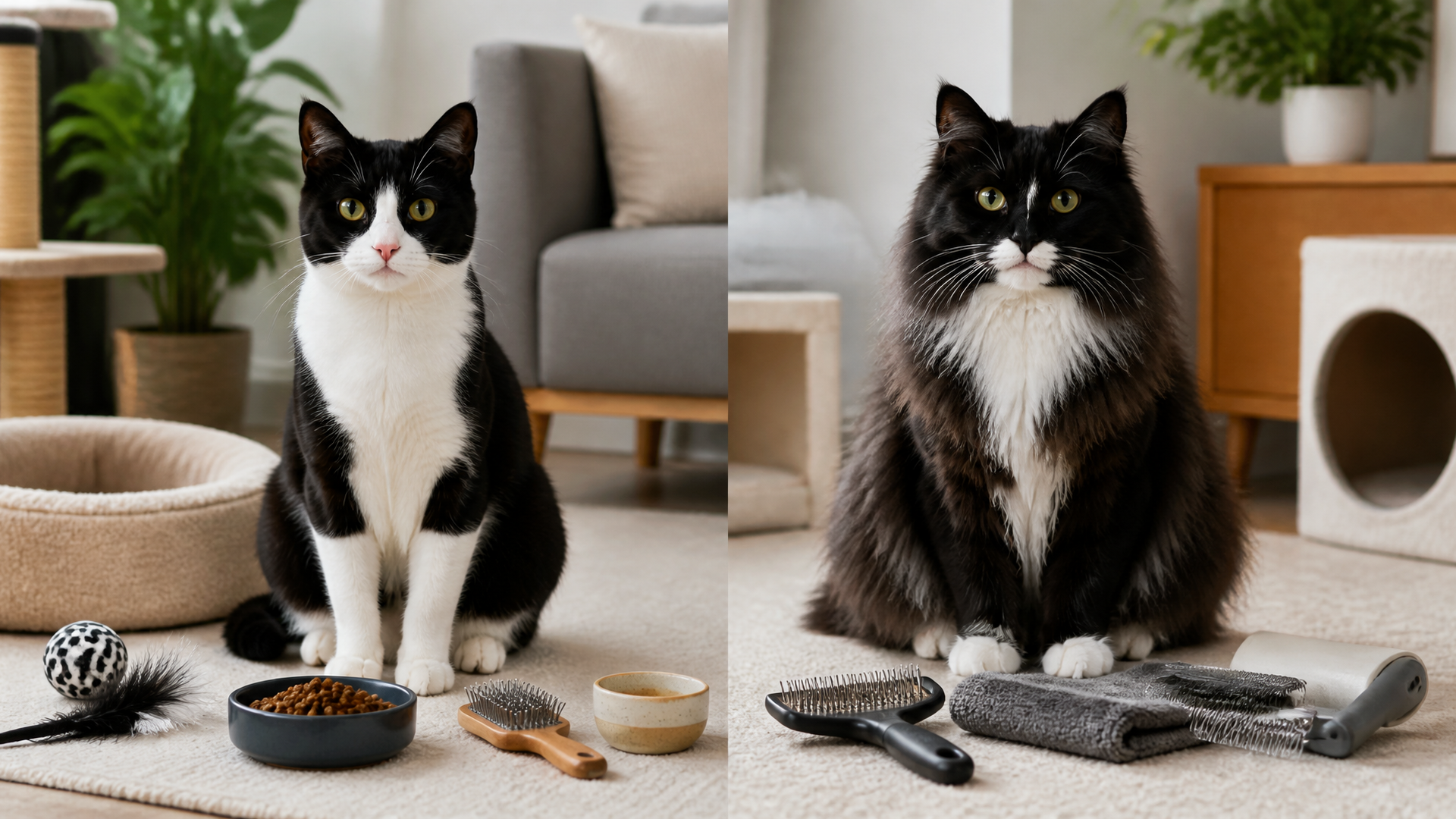
4. Brush coat – Short-haired: rubber curry or soft bristle brush. Long-haired: slicker brush then metal comb. Pay extra attention to the white bib and behind ears—mats form there first and can irritate the skin underneath.
5. Check ears and eyes – Wipe tear stains on the white face with a damp cloth. Clean ears with a vet-approved solution on a cotton ball if you see debris. Redness or strong odor means an ear infection.
6. Weigh your cat – Use a baby scale or step on a bathroom scale holding them, then subtract your weight. White patches hide weight gain; you should feel ribs easily without pressing hard. A ½-pound gain in a month is worth adjusting portions.
Monthly – 15 minutes
7. Trim nails – Cat-specific clippers, cut just below the quick (the pink line). If your cat fights it, do one paw a day and reward with a treat. Skipping this leads to snagged nails and torn quicks.
8. Deep clean litter box – Empty, wash with mild soap and water (no bleach—it smells like chemical to cats), dry, refill with fresh litter.
When to Stop and Call the Vet
These are non-negotiable escalation signals. Don’t wait to see if they improve:
- Male cat in and out of litter box 3+ times in one hour with no urine produced – This is a urinary blockage emergency. Go to the vet immediately.
- Vomiting or diarrhea for more than 24 hours – Especially if paired with lethargy or refusal to eat.
- Sudden hiding, aggression, or withdrawal – Cats hide pain. If your normally friendly tuxedo won’t come out from under the bed, something is wrong.
- Eye injury, squinting, or sudden blindness – Corneal ulcers progress fast in cats.
- Blood in urine or straining to pee – Could be crystals, infection, or blockage.
If you hit any of these, stop all home care and contact your vet or an emergency clinic within 2 hours. Having a EVERLIT Pet Medic First Aid Kit on hand can help you manage minor issues while you arrange transport, but it never replaces professional care for these escalation signals.
Grooming the White Areas: Where Problems Start
Most tuxedo cats have short, low-maintenance fur, but the white areas are different. The skin under white fur is lighter and more sensitive, and the fur itself shows dirt, stains, and mats more easily.
Short-haired tuxedos – Brush once a week. Use a rubber curry brush to remove loose hair and distribute oils. The white bib and paws will show stains first—dampen a cloth with warm water and wipe the bib weekly. Baths are rarely needed, only if they get into something sticky or oily.
Long-haired tuxedos – Brush 3–4 times per week. Start with a slicker brush to loosen tangles, then follow with a metal comb to catch mats the brush missed. Focus on the white bib, armpits, and behind the ears. If you find a mat, use a dematting tool with safety tips—never scissors, because the skin on tuxedo cats is thin and easy to cut, especially under a mat where you can’t see the skin line.
Tear stains on the white face – Tuxedo cats with flat faces (some mixed breeds have Persian or Exotic ancestry) get tear stains that turn brown or reddish on the white fur. Wipe daily with a damp cloth or pet-safe grooming wipe. If stains persist, check with your vet—chronic tear production can mean blocked tear ducts or eye irritation.
Dental care – Tuxedo cats are prone to gingivitis. Brush 2–3 times per week with a pet-safe toothpaste. If you notice yellow or brown teeth, bad breath that smells like rot, or drooling, schedule a veterinary dental cleaning. Don’t wait—dental disease can damage kidneys and the heart.
Sun protection for white areas – The pink skin under white fur has less pigment and can sunburn. Limit direct sun exposure during peak hours (10 a.m. to 4 p.m.) or apply pet-safe sunscreen to ear tips and nose if your cat likes sunny windowsills. Repeated sunburns on the ears can lead to squamous cell carcinoma, especially in cats with white faces.
The Failure Mode Most Owners Miss
Many tuxedo cat owners focus on the coat and forget to check the litter box signals. The most common early failure is a gradual drop in water intake that leads to urinary tract issues, especially in male cats.
What to watch for:
- Smaller litter box clumps than usual, or fewer clumps overall
- White fur on the belly feels oily or sticky (dehydrated cats stop grooming properly)
- Frequent trips to the box with little or no urine produced
- Strong-smelling urine or pinkish tinge
Why it happens: Tuxedo cats are picky drinkers. If their water bowl is near their food bowl, if the water isn’t fresh, or if the bowl is plastic (some cats hate the taste), they’ll quietly drink less for days or weeks before symptoms show.
Likely cause: A dirty water bowl, a used filter in the fountain, or a bowl placed too close to the food. Cats are biologically wired not to trust water near their food source.
How to verify the fix worked:
1. Switch to wet food and add one tablespoon of warm water to each serving.
2. Move water bowls to a separate location away from the food bowls (even a different room).
3. Check the litter box clumps after 24 hours. Normal clumps should be about the size of a ping-pong ball. If clumps remain small or absent, dehydration is still present and you need vet intervention.
4. Feel the belly white fur for oiliness. If it’s dry and clean after 48 hours, hydration is improving.
Safer next move: If increasing water intake and switching to wet food doesn’t show normal-sized clumps within 48 hours, or if your male cat strains to pee, call your vet. Don’t wait—urinary blockages can be fatal within 24–48 hours.
Feeding: Portions Matter More Than Pattern
Tuxedo cats don’t have breed-specific dietary needs, but they’re often food-motivated and prone to obesity. Portion control is the biggest factor, and their white coat makes weight gain easy to miss until they’re already overweight.
Daily calorie guide (adult cat):
- 200–250 calories for a 10-pound neutered or spayed cat
- 250–300 calories for a 12-pound active cat
Check your food labels—most dry foods are 350–450 calories per cup, so a full cup is too much for most cats. Use a measuring cup or kitchen scale. “One scoop” from a random cup in the pantry isn’t accurate.
Wet food advantage – Canned food provides moisture that supports urinary health. Aim for at least one wet meal per day. If your cat is male or has had urinary issues, wet food should make up most of the diet.
Water intake – Tuxedo cats are picky drinkers. Use a ceramic or stainless steel fountain to encourage drinking. Place at least two water bowls around the house, away from food bowls. Inadequate water raises the risk of urinary crystals and blockages, especially in male cats.
What to do if your cat is already overweight: Switch to a measured wet-food diet (canned food has fewer carbs than dry kibble). Feed three smaller meals instead of two. Use puzzle feeders to slow eating. Aim for 1–2% weight loss per week—your vet can give you a target weight and timeline.
Litter Box Success: The Simple Rules
Tuxedo cats are clean animals—a dirty box is the fastest way to get urine on your rug.
- Use a large, uncovered box. Hooded boxes trap odors inside and can make your cat feel trapped with the smell. Tuxedo cats are especially sensitive to this.
- Unscented clumping litter works best. Avoid heavily perfumed types—what smells fresh to you is overwhelming to a cat’s nose.
- One box per cat plus one extra. In a multi-cat home, that means three litter boxes for two cats. Place them in different rooms so no single cat can guard all the boxes.
- Location matters. Place boxes in quiet, low-traffic areas away from food and water. Avoid laundry rooms (noisy machines scare cats) and basements (hard to access).
- If your cat starts peeing outside the box, rule out a medical issue first (urinary tract infection or crystals), then check box cleanliness, location, and litter preference. Change only one thing at a time so you know what fixed it.
Health Care and Vet Visits
Annual wellness exams catch problems early. For cats over 7 years old, twice a year is better—kidney disease and hyperthyroidism become more common at that age.
Core vaccinations: Rabies and FVRCP (feline viral rhinotracheitis, calicivirus, and panleukopenia) are the standards. Your vet may recommend additional vaccines based on your cat’s lifestyle and region.
Parasite prevention: Year-round flea, tick, and heartworm prevention is recommended even for indoor-only cats. Tuxedo cats don’t have special sensitivities here, but skipping prevention is risky—fleas can hitch a ride inside on your shoes or pants.
Spay or neuter: Done before 6 months of age reduces roaming, spraying, and certain cancers. For adopted adult tuxedos, get it scheduled at your first vet visit if it hasn’t been done.
Watch for:
- Bad breath (dental disease—common in tuxedo cats)
- Increased thirst and urination (kidney disease or diabetes)
- Weight loss despite eating normally (hyperthyroidism)
- Straining to pee (urinary blockage—especially in males)
Fun fact: Tuxedo cats are famously long-lived. With good care, many reach 15–20 years. The care you put in now pays off in years of healthy companionship.
Save This Guide
Tuxedo cat care boils down to five weekly checks, a daily routine that takes 10 minutes, and watching for the one failure mode most owners miss: silent dehydration that leads to urinary trouble. Brush the white areas for mats, measure portions by the calorie (not by the scoop), and move water bowls away from food bowls. Your tuxedo cat will thank you with 15–20 years of those big green or gold eyes looking at you over that crisp white bib.
Disclosure: This article contains affiliate links. If you purchase through these links, we may earn a small commission at no extra cost to you.