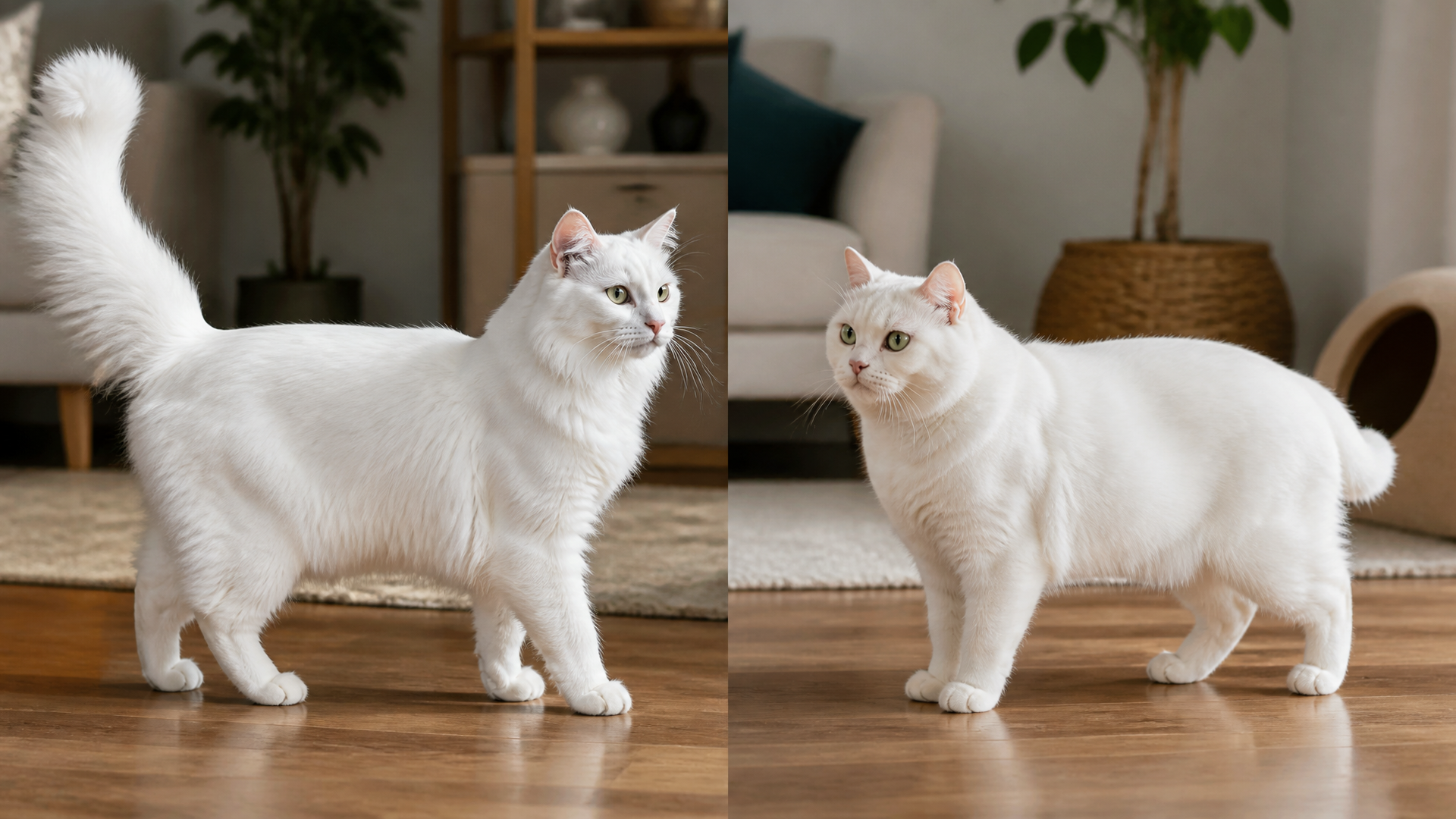
Avg Size Dimensions of Male Cat Turkish Angora
A healthy adult male Turkish Angora typically weighs 8–12 pounds and stands 8–10 inches tall at the shoulder. His body length (nose to tail base) averages 15–18 inches, with a full tail adding another 8–12 inches. These cats are medium-sized but surprisingly lightweight for their length — a long, fine-boned build means they look larger than the scale suggests.

What Makes the Male Turkish Angora’s Build Unique
Unlike heavy-boned breeds like the Maine Coon, the male Turkish Angora is built for agility, not bulk. His body is long, slender, and fine-boned, supported by a wedge-shaped head and large, upright ears. The chest tapers to a narrow waist, and the back legs are slightly longer than the front, giving him a lifted, ready-to-pounce stance.
Counter-intuitive fact: A 10-pound male Turkish Angora may look the same size as a 14-pound domestic shorthair because his dense, fine-boned frame and flowing coat create visual volume. Never estimate his weight by eye — use a baby scale.
When These Numbers Don’t Apply
The 8–12 pound range covers the vast majority of pet and show-line males, but there are exceptions. Working-line Turkish Angoras from specific Turkish breeding programs can reach 14–15 pounds with heavier bone structure. Conversely, some bloodlines produce smaller males that top out at 7–8 pounds. If your cat’s parents or littermates fall outside the standard range, your male may follow suit. Check his pedigree or ask your breeder about typical adult sizes in his line.
Neutered males tend to weigh slightly more (10–13 pounds) because spaying slows metabolism. Intact males often stay leaner at 8–11 pounds. Don’t panic if your neutered male sits at 12.5 pounds with a clear waist and easily felt ribs — that’s still healthy for his altered status.
Skeleton and frame
- Bone structure: Fine to medium-fine. Ribs are felt easily without pressing hard.
- Shoulder width: Narrower than most cat breeds of equal weight.
- Torso length: Long — when stretched out, a male Angora can span 20+ inches from nose to tail tip.
Male vs. Female Turkish Angora Size Comparison
| Measurement | Male | Female |
|---|---|---|
| Average weight | 8–12 lbs | 5–9 lbs |
| Shoulder height | 8–10 in | 7–9 in |
| Body length (nose to tail base) | 15–18 in | 13–16 in |
| Full tail length | 8–12 in | 7–10 in |
| Full adult size reached | 3–4 years | 2–3 years |
Males reach their full length sooner than weight. Your male may look fully grown at 18 months but will continue filling out through year three or four.
Growth Chart: What to Expect by Age
| Age | Typical Weight Range (Male) | Key Development |
|---|---|---|
| 8 weeks | 1.5–2.5 lbs | Weaning complete |
| 6 months | 5–7 lbs | Lanky “teen” stage |
| 12 months | 7–9 lbs | Near full height |
| 24 months | 8–11 lbs | Muscle filling in |
| 36 months | 9–12 lbs | Full adult size |
Warning signs during growth:
- Weight drops during any month without illness explanation
- Ribs are visibly protruding at any age
- Belly hangs low or sways when walking (obesity indicator)
- Kitten does not double birth weight by 2 weeks
What These Numbers Mean for Your Daily Care
Knowing your male Turkish Angora’s size isn’t just trivia — it directly affects three decisions you’ll make regularly:
Feeding: A 9-pound intact male needs about 200–250 calories per day, while a 12-pound neutered male may need only 180–220. Use the weight ranges above to calculate portions, not his visual size. Overfeeding based on fluff alone causes weight gain before you notice it.
Vet visits: Bloodwork ranges for thyroid, kidney, and liver function are calibrated by body weight. A male that’s 7 pounds at adult age may get different medication doses than one at 12 pounds. Track weight trends, not single measurements.
Gear sizing: Harnesses, carriers, and cat trees sized “medium” for domestic shorthairs may fit loosely on a male Turkish Angora’s narrow chest. Look for adjustable gear with a snug fit around the ribcage, not the neck.
How to Verify Your Cat’s Size at Home
Before you buy a new carrier or adjust his diet, confirm his actual measurements rather than guessing:
The touch test for body condition: Stand over your cat while he’s standing still. Run your fingers along his ribcage with light pressure. You should feel each rib like the knuckles of a slightly clenched fist — not sharp like piano keys, not hidden under padding. If you can’t feel individual ribs, he’s likely overweight regardless of what the scale says.
The scale check: A digital baby scale gives the most accurate reading for cats under 15 pounds. Place a towel on the scale, zero it, and lure your cat on with a treat. Weigh three times in one session and take the middle number.
The belly test: With your cat standing, look at his belly from the side. A healthy male Turkish Angora should have a slight tuck — the belly rises behind the ribcage before reaching the hind legs. If the belly hangs level with or below the ribs, he’s carrying extra fat, even if his ribs feel fine.
3 Expert Tips for Monitoring Your Male Turkish Angora’s Size
Tip 1: Feed for lean muscle, not coat volume
Actionable step: Choose a high-protein, low-carb diet with at least 70% animal protein (look for named meat as the first ingredient). Use a digital kitchen scale to portion meals by weight, not volume, and feed 3–4 small meals per day.
Common mistake to avoid: Free-feeding dry food because “he’s skinny” leads to pouch belly, not proper frame. Grain-heavy kibble fills the belly without building the lean muscle this breed needs.
Tip 2: Check body condition with a weekly brush
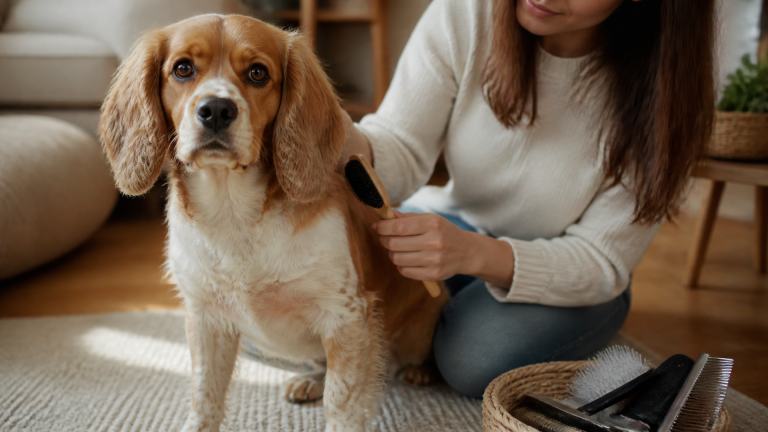
Actionable step: Use a slicker brush (like the Hertzko Self-Cleaning Slicker) once a week. Brush against the growth direction at the hips and ribs to feel for fat deposits. You should easily feel the outline of ribs and hip bones without pressing.
Common mistake to avoid: Assuming a “fluffy coat” hides normal weight. The Turkish Angora’s single-layered, silky coat lies close to the body — if you can’t feel ribs, the cat is likely overweight regardless of how the coat looks.
Tip 3: Don’t cut calories after height growth stops
Actionable step: Keep monitoring weight monthly through year three, even after your cat reaches full height (around 18–24 months). Muscle mass and chest depth continue developing until age 3–4. Use a baby scale for accurate monthly weigh-ins.
Common mistake to avoid: Reducing food portions too early because he “looks full grown” — this stunts muscle development and can leave your male underweight at full maturity.
How to Properly Measure Your Male Turkish Angora
What you’ll need
- Digital bathroom scale or baby scale
- Flexible cloth measuring tape
- Treats to keep him still
Step 1: Weigh
Place a towel on the scale and zero it. Gently set your cat on the towel. If he won’t stay still, weigh yourself holding him, then subtract your solo weight.
Step 2: Height
With your cat standing square on a flat surface, measure from the floor to the highest point of the shoulder blades (the withers). Do not include the neck or head.
Step 3: Body length
Measure from the tip of the nose to the base of the tail (where the tail connects to the spine). Do not include the tail.
Step 4: Tail length
Measure from the base of the tail to the tip of the last bone. A healthy male Turkish Angora tail is long — don’t be surprised if it matches his body length.
Operator flow checkpoints
- Early checkpoint: Your cat should allow handling without stress. If he resists, take one measurement per day over a week rather than forcing all at once.
- Success signal: Numbers fall within the ranges above and your cat is active, eating well, and has a sleek, silky coat.
- Escalation signal: Weight drops more than 10% from baseline in less than 4 weeks, or he gains more than 1 pound per month after 24 months. Call your veterinarian.
When Size Deviations Matter — and the Risks of Ignoring Them
Underweight: Below 7 pounds as an adult male. Possible causes: hyperthyroidism (common in this breed), dental pain, intestinal parasites, or poor-quality food. See the vet for a blood panel.
Overweight: Above 13 pounds. Turkish Angoras are prone to obesity-related joint stress and diabetes. A male over 13 pounds likely needs a portion-controlled diet and increased play.
Oversized frame: Some working lines produce males reaching 14–15 pounds with heavy bone. If your cat’s weight exceeds 12 pounds but ribs are still easily felt, check his pedigree — larger specimens exist. Compare to parents if possible.
What Can Go Wrong
- Buying the wrong carrier or harness: A medium-sized cat carrier designed for a 12-pound domestic shorthair will be too roomy for a fine-boned male Angora. He may slide around during car rides or slip out of a poorly fitted harness. Measure his actual chest girth before ordering.
- Overfeeding based on fluff: The long coat hides weight gain until he’s already 13–14 pounds. By then, the extra weight stresses his fine-boned frame. A Turkish Angora with a body condition score of 6 or 7 out of 9 (overweight) has a higher risk of cystitis and urinary blockages.
- Underfeeding a growing male: Cutting calories at 18 months because he’s “done growing” stunts chest depth and muscle density. He may end up at 7.5 pounds instead of 10—that’s not just small, it’s underdeveloped. Keep feeding for muscle gain through year three.
Quick Reference Card: Healthy Male Turkish Angora Size
| Metric | Healthy Range | Action Needed Outside Range |
|---|---|---|
| Weight | 8–12 lbs | <7 lbs: vet visit; >13 lbs: diet adjustment |
| Height | 8–10 in | Not a primary health indicator alone |
| Body length | 15–18 in (nose to tail base) | Measure with weight to assess frame |
| Body condition | Ribs felt easily, waist visible | Can’t feel ribs: overweight; ribs protruding: underweight |
| Chest girth (for gear sizing) | 12–14 in | Use this measurement for harnesses and carriers, not weight alone |
Save This Guide: Male Turkish Angora Size Quick Facts
- Healthy adult male weight: 8–12 pounds at full maturity (3–4 years)
- Height: 8–10 inches at shoulder
- Body length (nose to tail base): 15–18 inches
- Tail length: 8–12 inches — often matches body length
- Full size reached by 3–4 years, not 1 year
- Estimate is unreliable because long coat hides frame — always weigh on a scale for accuracy
Key takeaway: Your male Turkish Angora should feel light for his visual size due to fine bone and lean muscle. If he feels heavy or looks bulky, check body condition — not coat volume. Monthly weigh-ins with a digital scale and monitoring weight trends give better guidance than single measurements. When shopping for carriers, harnesses, and cat trees, actual chest girth is a more reliable fit indicator than visual size.