do All Russian Blue Kittens Lose Their Tabby Stripes?
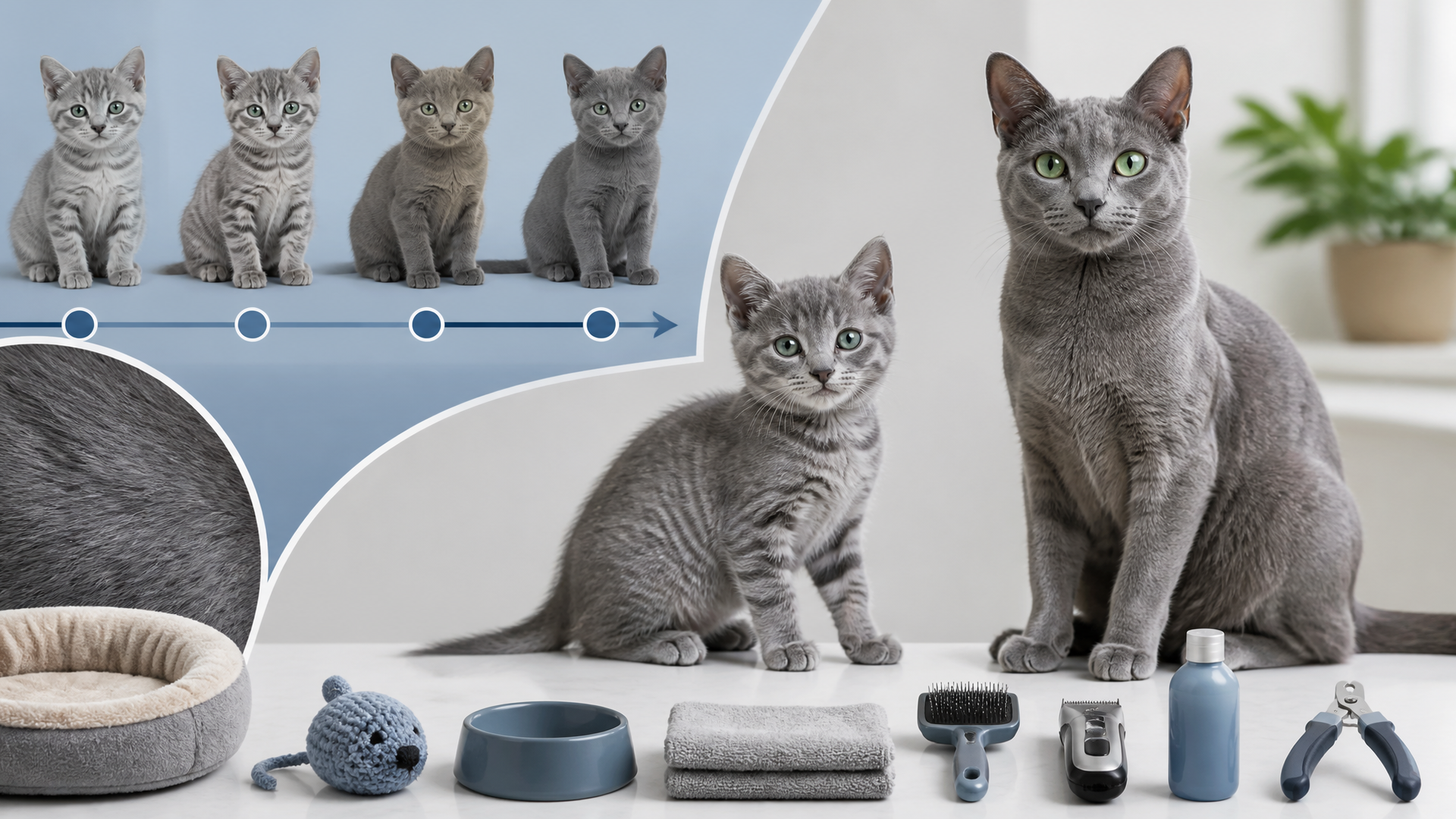
Yes, nearly all Russian Blue kittens lose their visible tabby stripes by adulthood. Those faint markings you see on a young Russian Blue are “ghost stripes”—a temporary coat trait that almost always fades completely as the kitten matures. Russian Blue kittens are often born with subtle tabby stripes, especially on the forehead (the classic “M” mark) and along the tail and legs. By 6–12 months of age, those markings typically disappear, leaving the breed’s signature solid blue-gray coat with silver-tipped guard hairs.

If you’re waiting for stripes to vanish or wondering if your kitten is purebred, here’s exactly what to expect—and when to pay closer attention.
What Are Ghost Stripes on Russian Blue Kittens?
Ghost stripes are faint tabby markings that appear on solid-color cats as kittens. They’re a remnant of the agouti (tabby) gene that most cats carry in their ancestry.
Key facts about ghost stripes:
- They appear on the forehead, tail, legs, and sometimes the body
- They’re most visible in bright natural light or when the kitten is relaxed
- They are not a sign of mixed breeding in a Russian Blue
- They fade as the kitten’s adult coat grows in
The stripes are subtle—think pencil-sketch lines rather than marker strokes. A true tabby has bold, dark stripes that don’t fade.
Ghost Stripes vs. True Tabby Markings: Quick Comparison
| Feature | Ghost Stripes (Normal) | True Tabby Markings (Concerning) |
|---|---|---|
| Intensity | Faint, shadowy outlines | Dark, bold, clearly defined |
| Location | Forehead, tail, legs; rarely on sides | Sides, flanks, chest, back |
| Change with age | Fade progressively over 6–12 months | Stay the same or darken |
| Adult appearance | Solid blue-gray by 12–18 months | Stripes persist past 18 months |
The Timeline: When Do Stripes Disappear?
Most Russian Blue kittens follow this coat development pattern:
| Age | What You’ll See |
|---|---|
| Birth to 8 weeks | Faint stripes present, especially on forehead and tail |
| 2–4 months | Stripes still visible but fading; adult coat starts appearing |
| 4–6 months | Ghost markings begin to blend into solid blue-gray |
| 6–12 months | Stripes mostly or completely gone |
| 12+ months | Adult coat fully established — solid blue-gray with silver sheen |
Important checkpoint: If your Russian Blue is over 18 months old and still shows distinct tabby stripes (not just faint shadows in certain lighting), the cat may not be purebred or may carry a recessive tabby gene from mixed ancestry. This is the moment to act, not wait.
Why Some Russian Blues Retain Faint Stripes
Here’s the counter-intuitive angle most articles skip: Some purebred Russian Blues retain subtle ghost markings in adulthood—but only under specific conditions. Three factors influence stripe persistence.
Lighting Angle
In direct sunlight, some adults show faint ghost striping on the forehead or tail. In normal indoor lighting, those same cats appear solid. This is why your cat can look stripe-free at home but show shadow marks in bright outdoor light. It’s not a purity issue—it’s optics.
Coat Phase During Seasonal Shedding
During heavy shedding, the undercoat becomes more visible, which can reveal faint stripe patterns. This is temporary and normal. The stripes reappear only during the shed and vanish once the new coat settles.
Actual Mixed Ancestry
A cat sold as a Russian Blue that has non-purebred ancestry may retain stripes permanently. This is more common than breeders like to admit. If stripes remain bold past 12 months, the lineage likely isn’t pure. Practical implication: A cat with retained stripes can still be a wonderful pet, but you should adjust expectations for showing or breeding. If you paid a premium for a “purebred” and stripes persist, request DNA testing from a service like Wisdom Panel or consult a breed association before investing more money in show registration or breeding fees.
Three Expert Tips to Track Stripe Fading
Use these actionable steps to monitor your kitten’s coat development accurately.
Tip #1: Photo Log in Natural Light
Take photos of your kitten in natural light every 2 weeks from 8 weeks to 6 months old. This gives you a clear record of fading progress.
Common mistake: Relying on dim indoor lighting and concluding stripes are gone when they’re still visible outside. Use a consistent spot near a north-facing window at the same time of day.
Tip #2: Check the Undercoat with the Right Tools
Use a high-quality slicker brush (like the Hertzko Self-Cleaning Slicker Brush) and a fine-toothed flea comb to reveal any hidden stripe patterns in the undercoat. Concrete verification step: Brush your cat over a white towel. If you see dark fur on the towel instead of the expected blue-gray, that indicates pigment variation in the undercoat—a red flag for mixed ancestry. Compare the towel debris to a known purebred Russian Blue undercoat image from a breed association site.
Common mistake: Brushing too aggressively and missing subtle undercoat markings that could indicate mixed ancestry. Use gentle, short strokes and inspect the brush after each pass.
Tip #3: Verify Show Eligibility Early
If you’re planning to show your Russian Blue, confirm stripe status by 6 months. Kitten class entries often allow some leniency, but adult show cats must have a solid coat.
Common mistake: Assuming a reputable breeder’s guarantee covers ghost stripes—most do not. Get your breeder’s policy in writing. If stripes persist, you won’t have a claim for a refund unless the contract specifically addresses coat pattern.
How to Tell If Your Kitten’s Stripes Are Normal
Use this quick checklist to assess ghost stripes versus concerning markings.
Normal ghost stripes (purebred Russian Blue):
- Faint, like shadowy outlines
- Most visible on forehead (M-shape) and tail
- Fade progressively over 6–12 months
- Don’t appear on the body sides or back
Potential concern (possible mixed breed):
- Dark, bold stripes like a classic tabby
- Stripes on the sides, flanks, or chest
- Stripes that get darker with age
- No fading by 12 months of age
If your kitten’s stripes look bold and distinct rather than ghost-like, the cat may not be a purebred Russian Blue. Realistic mismatch to watch for: Some breeders sell “Russian Blue” kittens that are actually blue British Shorthairs or domestic blue cats. The British Shorthair has a denser, plush coat and rounder face; the Russian Blue has a wedge-shaped head and a silvery sheen. If stripes persist, compare your kitten side-by-side with breed standard photos from CFA or TICA to spot structural differences.
What a Purebred Russian Blue Coat Should Look Like
The breed standard calls for a solid blue-gray coat with silver-tipped guard hairs that create a shimmering effect. By adulthood:
- No stripes, spots, or patches
- Even color across the body
- Silver sheen from the tipped guard hairs
- Dense and plush double coat
A purebred Russian Blue’s coat feels like silk to the touch. The silver tipping is most visible when the cat moves in natural light, giving the coat a luminous, glittering appearance.
What to Do If Your Adult Russian Blue Still Has Stripes
If your cat is over 18 months old and clearly shows tabby stripes, follow this operator flow.
Prepare: Gather your documents and tools
- Breeder contract and pedigree paperwork
- Photos of your cat in natural light from multiple angles
- Access to a DNA test kit (Wisdom Panel or similar) if needed
Likely Causes
- Mixed ancestry (most common)
- Recessive tabby gene from a non-purebred line
- Temporary undercoat visibility during seasonal shed (rare for bold stripes)
Ordered Action Steps
Step 1: Check your breeder paperwork and pedigree. A purebred Russian Blue from a reputable breeder should be stripe-free by adulthood. Review the pedigree documents and look for any non-standard ancestors. If you see “blue” parentage without “Russian Blue” certified, that’s a red flag.
Step 2: Confirm the actual breed. Russian Blues are often confused with British Shorthairs (blue variety) and Chartreux. Compare face shapes: Russian Blue has a wedge-shaped head, large ears, and a distinctive “M” pattern that fades. British Shorthairs have round heads and smaller ears. Chartreux has a woolly coat and orange eyes. Use CFA and TICA online galleries for side-by-side comparisons.
Step 3: Adjust expectations. A cat with retained stripes isn’t unhealthy. It simply may not meet breed standard for show or breeding. Your cat is still a wonderful companion with the same gentle, intelligent temperament.
Escalation Signals
- Stripes appear suddenly or change pattern on an adult cat: Schedule a vet visit. Coat changes can signal thyroid issues or other health concerns.
- Bold, dark stripes present at 18+ months: Consult a breed association for DNA testing options. Do not proceed with show registration or breeding without confirmation.
Success Check
If stripes fade by 12 months and are invisible in normal indoor lighting by 18 months, your Russian Blue is developing normally. No further action needed. If stripes remain faint but visible only in direct sunlight, that’s still within normal range for some purebred lines.
Frequently Asked Questions
Can a Russian Blue kitten be born without any stripes?
Yes, but it’s less common. Most ghost stripes are visible in the first 8–12 weeks. A very solid kitten at birth may still develop faint stripes as the coat grows before they fade again.
Do male and female kittens lose stripes at the same rate?
Yes, there is no gender difference in ghost stripe fading. Coat development depends on genetics and individual growth rate.
Will neutering or spaying affect the stripes?
No. Spaying or neutering does not change coat color or pattern. The stripes fade independently of reproductive hormones.
Can diet help stripes fade faster?
No scientific evidence supports that. A balanced diet supports healthy coat growth, but ghost stripes are determined by genetics, not nutrition.
Save This Guide
Ghost stripes on Russian Blue kittens are normal and almost always fade by 12 months. The rare exception is a mixed-breed cat or one with recessive tabby genetics that retains stripes into adulthood. Track your kitten’s progress with photos in natural light, and use a quality slicker brush to monitor undercoat development. If stripes persist past 12 months, check your breeder paperwork, confirm the breed with side-by-side comparisons, and consider DNA testing before any show or breeding decisions. Your Russian Blue’s solid silver-blue adult coat is worth the wait—but only if the genetics are truly purebred.
Disclosure: This article contains affiliate links. We may earn a small commission if you purchase products through these links, at no additional cost to you.