Blue Russian Cat With Green Eyes
The Blue Russian cat with green eyes is one of the most instantly recognizable breeds—that shimmering silver-blue coat and vivid emerald gaze are unmistakable. If you’re considering this cat, here’s the short answer: Russian Blues (the correct breed name) are intelligent, loyal cats that form deep bonds with one person and need a calm, predictable home. They are low-shedding and require only weekly grooming, but they do need daily interactive play and a consistent routine.

Decision criterion that changes the recommendation: If you live in a quiet household with no young children or loud pets, a Russian Blue is an excellent match. If your home is noisy, unpredictable, or has small kids, choose a Ragdoll or Maine Coon instead.
Why Green Eyes Are the Definitive Breed Marker
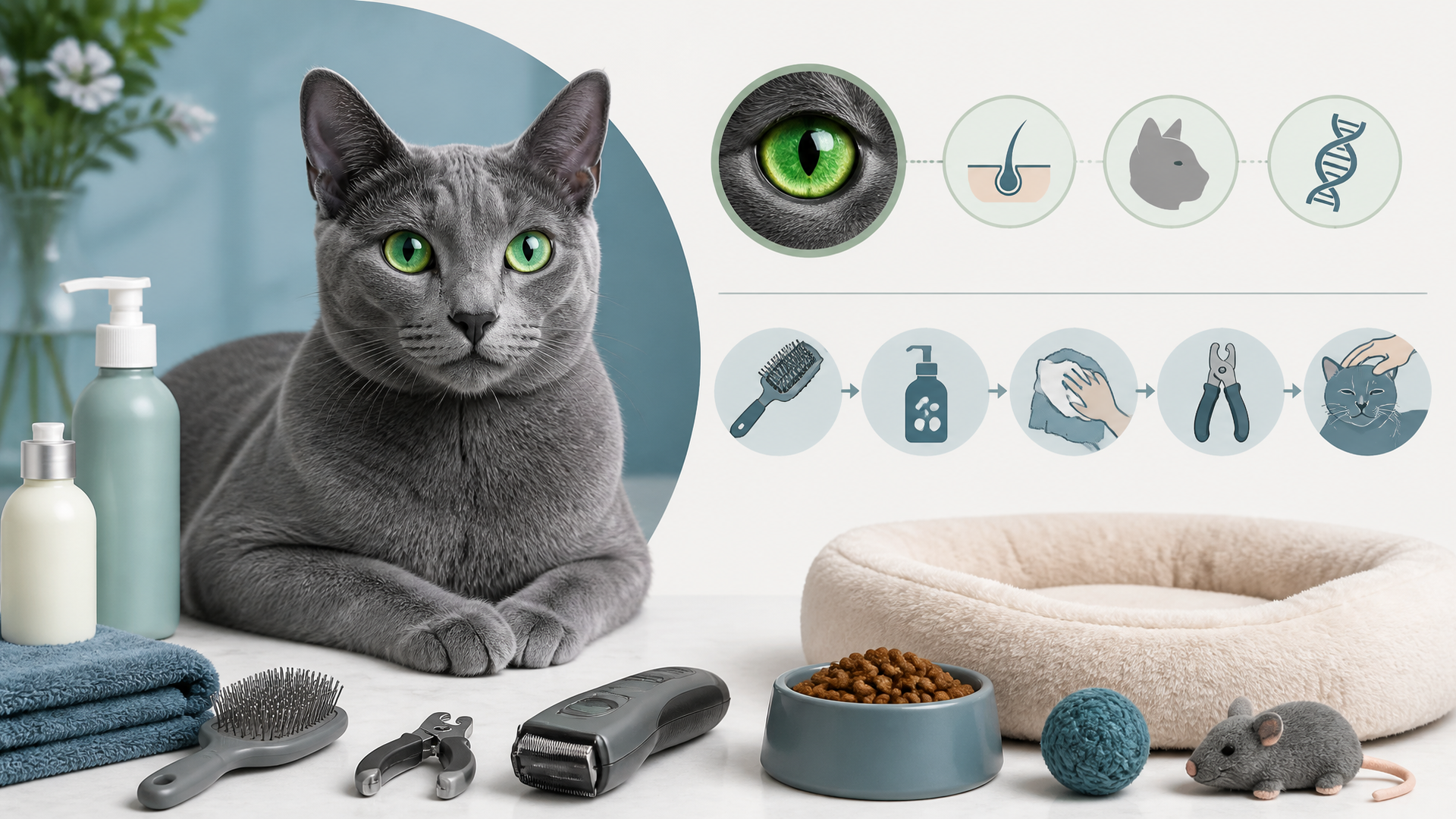
Vivid green eyes are the single most reliable sign of a purebred Russian Blue. Kittens start with yellow or gold eyes. The green shift begins around 4 months and finishes by 1–2 years of age. The final color should be a clear, bright green with no yellow, orange, or blue tones.
How to verify in person:
- Shine a soft light at the cat’s eyes. Pure green reflection confirms purebred status.
- A yellow ring around the iris means the cat is likely a mix or a different blue-coated breed.
What to ask a breeder:
- Request photos at 6 months old to confirm early green tones.
- Eye color must be all green with no gold rims for show quality.
- Green eyes combined with a distinct double coat (soft and plush, not flat) are the two strongest breed markers.
Common mistake: Assuming any gray-blue cat with green eyes is a Russian Blue. Chartreux and British Shorthairs can look similar but have copper or gold eyes and different coat textures.
Daily Care Routine: An Operator Flow for Owners
Russian Blues thrive on predictability. Follow this step-by-step routine to keep your cat healthy and bonded.
Step 1: Feeding (Twice Daily)
- Amount: ¼ to ⅓ cup of high-quality dry food per day, split into two meals. Adjust by body condition.
- Food type: Grain-free, high-protein formula (chicken, salmon, turkey). Avoid fillers like corn and soy.
- Bowl choice: Use a shallow, wide bowl—stainless steel or ceramic—to prevent whisker fatigue.
- Trade-off: If you switch to wet food for kidney health, reduce dry food by half to avoid calorie overload. Russian Blues are prone to obesity. Weigh your cat monthly and adjust portions.
Likely cause of overeating: Free-feeding. This breed will graze all day, leading to rapid weight gain. Stick to scheduled meals.
Step 2: Grooming (Weekly)
- Brush: Once a week with a fine-toothed comb or slicker brush. Their dense undercoat matures at 12–18 months—start brushing early to get them comfortable.
- Bath: Rarely needed. A warm, damp cloth every few months is sufficient.
- Nail trim: Every 2–3 weeks using guillotine-style clippers.
- Common mistake: Over-bathing strips natural oils. Bathe only if visibly dirty or advised by a vet.
Friction point: Some Russian Blues dislike brushing on their belly and hind legs. Use short sessions with treats to build tolerance.
Step 3: Play & Exercise (15–20 Minutes Daily)
- Use wand toys, laser pointers, or puzzle feeders. Russian Blues are intelligent and need mental stimulation.
- Invest in a tall cat tree with sisal scratching posts. They love height and scratching.
- Success signal: A cat that initiates play and purrs daily is content and well-adjusted.
Likely cause of destructive behavior: Boredom. If your cat knocks items off tables or meows excessively, increase play sessions or rotate toys.
Step 4: Health Checks (Weekly + Monthly)
- Weekly ears: Check for wax or redness. Clean with a vet-recommended solution only if dirty.
- Weight monitoring: Weigh monthly. Healthy adult weight is 8–12 lbs.
- Vet visits: Annual checkup, with urine and blood tests starting at age 7.
Escalation signal: If you notice increased thirst, weight loss, or vomiting more than once a month, see a vet. Russian Blues are prone to bladder stones and kidney issues.
Expert Tips (3 Practical Tips)
1. Create a predictable feeding schedule. Feed at the same time twice daily. Common mistake: Leaving dry food out all day—this leads to overeating and obesity.
2. Use a pheromone diffuser (e.g., Feliway) during transitions. Moving homes or new pets can stress them. Common mistake: Ignoring subtle stress signals like excessive grooming or hiding—treat early to prevent escalation.
3. Introduce slow feeders or puzzle toys early. This breed is clever and can become destructive when bored. A simple treat ball or maze bowl keeps them engaged. Common mistake: Giving too many treats during play—measure treats as part of their daily calorie allowance (no more than 10% of diet).
Russian Blue vs. Look-Alikes: How to Tell Them Apart
Many blue-coated cats share similar coloring but differ in coat texture, eye color, and temperament. Use this comparison table to verify your cat’s breed.
| Trait | Russian Blue | Chartreux | British Shorthair (blue) |
|---|---|---|---|
| Coat | Short, double, silver-tipped; feels plush | Woolly, water-resistant; feels like sheepskin | Plush, dense, single coat; feels firm |
| Eye color | Vivid green (adult) | Copper or gold | Copper or gold |
| Eye shape | Almond, slightly slanted | Round, large | Round, wide-set |
| Nose | Straight, medium-length | Straight, shorter | Short, slightly curved |
| Body type | Fine-boned, elegant, long-legged | Muscular, cobby, round | Stocky, broad chest |
| Tail | Medium, tapering | Thick, rounded tip | Medium, blunt tip |
Bottom line: If an adult cat has vivid green eyes and a silver undercoat that creates a shimmer effect, it’s almost certainly a Russian Blue. Yellow or copper eyes mean it’s a different breed.
Red flag to watch for: Unscrupulous sellers sometimes pass off blue Chartreux or British Shorthairs as Russian Blues. Always request eye-color photos at 6 months and 1 year from a breeder. A kitten that still has yellow eyes at 6 months is unlikely to turn true green.
Health and Lifespan: What to Watch For
Russian Blues are generally healthy, with an average lifespan of 15–20 years. But they have breed-specific risks you need to monitor.
Common health issues:
- Kidney disease (polycystic kidney disease – PKD): Reputable breeders screen for this. Ask for parent certifications.
- Bladder stones: Increase water intake with a cat fountain. Wet food also helps.
- Obesity: Monitor portions and avoid free-feeding. Weigh monthly.
- Dental issues: Brush 2–3 times per week with a pet-safe toothpaste.
Warning signs that need a vet visit:
- Sudden weight loss or gain
- Excessive vomiting or diarrhea for 24+ hours
- Straining to urinate or blood in urine
- Hiding for more than a day (unusual for this social breed)
- Dull coat or flaky skin
Budget consideration: If you’re adopting an adult Russian Blue from a shelter, ask about medical history. Cats that were free-fed or kept in stressful environments may develop early kidney issues. Plan for $500–$1,000 per year for vet care including dental cleanings and screenings.
Product recommendation: A cat water fountain (Catit or Drinkwell) encourages drinking and reduces the risk of bladder stones. A HEPA air purifier helps with allergen management if you have mild allergies.
Is a Blue Russian Cat With Green Eyes Right for Your Home?
One factor changes the recommendation: your household’s noise level and routine stability.
- If you live alone or in a quiet household → Perfect match. Russian Blues bond deeply with one person and dislike chaos.
- If you have young children or loud pets → Not ideal. They are sensitive to noise and may become stressed or hide. Better alternatives include the Ragdoll or Maine Coon.
- If you have allergies → Russian Blues produce less Fel d1 protein, but no cat is 100% hypoallergenic. Spend 30 minutes with an adult cat before committing.
- If you want a second cat → Introduce slowly over days, not hours. Same-sex pairs work better. Avoid households with small prey animals (birds, hamsters)—they may trigger the cat’s hunting instinct.
Trade-off to consider: Russian Blues are not traditional lap cats. They prefer to sit beside you rather than on you. If you want a cat that tolerates being carried around or cuddled for long periods, this breed may not meet those expectations.
FAQ
Are Russian Blue cats really hypoallergenic?
They produce less of the allergen protein Fel d1 than most cats, but not zero. Some allergy sufferers still react. Spend time with the cat before adopting.
Do Russian Blues get along with dogs?
Generally yes if the dog is calm and the cat is raised alongside it. Avoid high-energy or barking dogs. Always supervise initial interactions.
How much does a Russian Blue kitten cost?
From a reputable breeder, $800–$1,500. Adoption from a rescue is $100–$300. Never buy from a pet store without seeing health records and eye-color verification.
Do they like to be held?
Most don’t enjoy being carried. They prefer to sit next to you or on your lap on their own terms. Respecting their space builds trust and affection.
How often should I clean the litter box?
Daily scooping and a full change every week. Use unscented clumping litter—their sensitive noses dislike strong fragrances.
Save This Guide
The Blue Russian cat with green eyes is a stunning, loyal, and low-shedding companion ideal for quiet households that can provide routine, interactive play, and health monitoring. Focus on breed verification (green eyes + plush silver coat) and stability in your home environment. Keep this guide handy for daily care, health signs, and product recommendations that support your cat’s long-term wellbeing.
Disclosure: Some links in this guide are affiliate links. We may earn a small commission at no extra cost to you.