Papillon Dogs: Guide: What Every Owner Should Know
If you’re looking into Papillon dogs, here’s the short version: They’re a small, intelligent, athletic breed (5–10 lbs) with a distinctive butterfly-like ear fringe. They need daily grooming, consistent training, and more physical activity than most toy breeds. This guide covers exactly what to buy, how to care for them, and when to call the vet — with specific steps you can use right away.

What Makes the Papillon Unique
The Papillon gets its name from the French word for “butterfly” — the large, fringed ears resemble open wings. Bred as companions for European royalty, they’re now a popular choice for apartment dwellers and active families.
Key traits at a glance:
- Size: 8–11 inches tall, 5–10 pounds
- Coat: Long, silky, single-layer (minimal undercoat) — white with patches of any color
- Lifespan: 13–15 years
- Temperament: Alert, friendly, eager to please — but can be stubborn
- Energy level: Moderate to high; needs daily walks and play
One detail most guides skip: Papillons are among the top toy breeds in canine sports like agility and rally. They’ve been known to outrun herding breeds in competition because of their quick turning speed and fearless attitude.
Temperament and Personality: What to Expect
Many first-time owners expect a lap dog that sleeps all day. That’s not the reality. Papillons are active, curious, and often described as a “big dog in a small body.” They excel at dog sports because they’re quick learners and love having a job.
Counter-intuitive angle: Papillons can be escape artists. Their small size and high intelligence mean they’ll figure out latches, low fences, and open doors. Secure your yard and use a harness on walks — they can slip a collar easily. A Papillon can jump surprisingly high (up to 4 feet from a standstill) so standard 3-foot fences won’t contain them.
Common mistake: Treating them like a fragile toy. They need rules and structure just like any working breed. Without training, they develop small-dog syndrome (barking, guarding, demanding behavior). Early socialization with other dogs and people is essential to prevent anxiety-based reactivity.
Grooming Your Papillon: Daily and Weekly Care
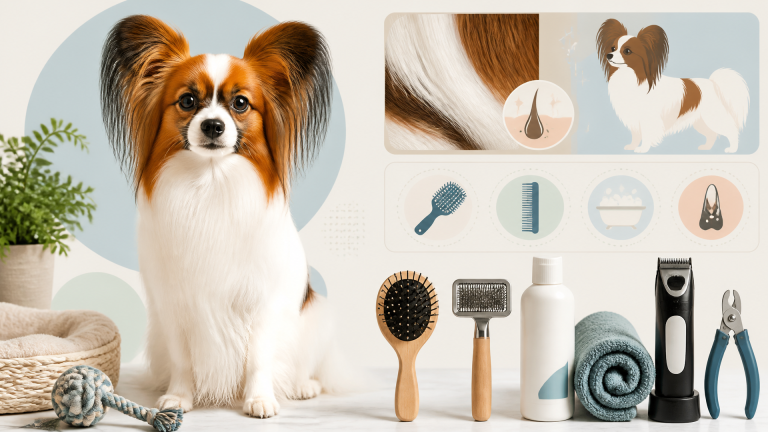
Your Papillon’s silky coat is low-shedding but mats quickly if neglected. A consistent routine saves time and keeps your dog comfortable. Here’s what that means for your grooming kit: invest in a quality pin brush and slicker brush, plus a detangling spray made for dogs. Avoid human brushes — they’re too harsh for the fine coat. A good daily session takes 5–10 minutes, not an hour-long ordeal once a week.
The Grooming Operator Flow
Step 1 – Prepare your tools: Pin brush, slicker brush, detangling spray, fine-toothed comb.
Step 2 – Detangle: Lightly mist the coat with detangling spray, then use the pin brush to remove loose hair.
Step 3 – Work through mats: Use the slicker brush on any tangles, starting at the ends to avoid pulling.
Step 4 – Check ears: Papillons have abundant ear fringe that mats easily. Gently brush ear hair with a comb.
Step 5 – Final pass: Go over the whole coat with the slicker brush, then comb through the tail and leg feathering.
✔ Success check: Run a fine-toothed comb through the coat. If it catches, you missed a mat. Re-brush that area starting at the tips.
Expert Tip #1 – Prevent matting behind ears: Apply a pea-sized amount of silicone-free detangling balm to the ear fringes every other day. Common mistake: Using human conditioner — it can dry out the coat over time.
Expert Tip #2 – Trim paw pads for safety: Long hair between toes collects debris and causes slipping on tile floors. Use blunt-nose scissors every 3–4 weeks. Common mistake: Cutting the quick — if unsure, use a clipper guard or ask a groomer to show you first.
Expert Tip #3 – Bathe only when dirty: Over-bathing strips natural oils. Once a month or less is enough. Use lukewarm water and a moisturizing shampoo. Common mistake: Skipping conditioner — Papillon coats need extra moisture to stay silky.
Bath-day checklist:
- [ ] Brush thoroughly before bath (prevents mats from tightening)
- [ ] Place rubber mat in tub so dog doesn’t slip
- [ ] Use lukewarm water, not hot
- [ ] Apply conditioner, leave on 2 minutes, rinse completely
- [ ] Towel dry, then blow-dry on low heat while brushing
- [ ] Clean ears with vet-approved ear cleaner to prevent moisture buildup
Feeding Your Papillon: Portions and Nutrition
Because of their small size, Papillons are prone to obesity and dental issues. The takeaway: don’t guess portions. Use a kitchen scale for the first week to verify you’re feeding the right amount. Overfeeding by just a tablespoon of kibble per day can lead to noticeable weight gain over a few months.
Daily Portion Guide (Based on Adult Weight)
| Weight | Calories per Day | Typical Kibble Amount |
|---|---|---|
| 5–7 lbs | 200–300 | ¼ – ½ cup |
| 8–10 lbs | 300–400 | ½ – ¾ cup |
Split into two meals to prevent hypoglycemia (low blood sugar) — a real risk for tiny dogs. Avoid free-feeding.
Verification step – body condition check: Monthly, feel your Papillon’s ribs. You should feel a light layer of fat over the ribs, and see a defined waist when looking from above. If ribs are hard to feel, cut back by 10%. If ribs are too prominent, increase by 10%.
Supplement for coat and skin: Adding an omega-3 fish oil like Welactin Canine Softgels, Omega 3 Supplement for Dogs supports the silky coat and joint health. Follow the package dosage based on your dog’s weight. Check with your vet before starting any supplement.
What’s toxic for Papillons: Grapes, raisins, chocolate, xylitol (in sugar-free gum), onions, garlic. Their small body weight means even a tiny amount can be dangerous. Keep these foods out of reach. Also watch for macadamia nuts and raw bread dough — both can cause serious issues.
Health Concerns Every Papillon Owner Should Know
Papillons are generally healthy, but they have breed-specific issues to watch for. Here’s when to act and when you can wait.
Common Conditions & Warning Signs
- Patellar luxation (slipping kneecap): Watch for skipping steps or holding up a hind leg. Mild cases may resolve with rest; surgery is needed for severe cases. About 15% of Papillons are affected, making it the most common orthopedic issue in the breed.
- Dental disease: Small mouths mean crowded teeth. Brush 2–3 times per week with a dog-safe toothpaste. Annual dental cleanings under anesthesia are often needed by age 3. Signs: bad breath, yellow tartar, red gums.
- Progressive Retinal Atrophy (PRA): An inherited eye condition causing gradual vision loss. Signs: bumping into furniture at night, dilated pupils. No cure, but dogs adapt well. Genetic testing is available before breeding.
- Collapsing trachea: More common in tiny dogs. Coughing that sounds like a goose honk, especially when excited or on leash. Use a harness instead of a collar to reduce pressure on the throat.
When to call the vet:
- Repeated vomiting or diarrhea for more than 12 hours
- Limping that doesn’t improve after 24 hours of rest
- Sudden behavior change (lethargy, hiding, aggression)
- Difficulty breathing or persistent coughing
- Eye discharge, squinting, or cloudiness
Preventive care schedule:
- Monthly: Heartworm and flea/tick prevention year-round
- Every 6–12 months: Vet wellness exam with dental check
- Annually: Bloodwork (recommended starting at age 7)
- Every 1–3 years: Vaccination boosters based on risk assessment (work with your vet)
Training and Exercise Needs
Papillons are one of the smartest toy breeds — ranked 8th in canine intelligence. That means they pick up commands fast, but they can also learn bad habits just as quickly. Training is mandatory, not optional.
Exercise Requirements
- Minimum: 30 minutes of active exercise per day (two 15-minute walks plus play)
- Ideal: 45–60 minutes including off-leash running in a secure area
- Mental stimulation: 10–15 minutes of training, puzzle toys, or nose work
Tips for success:
- Use positive reinforcement only — harsh corrections shut them down
- Keep training sessions short (5–10 minutes) to hold attention
- Teach “settle” as a counterbalance to their high energy
- Papillons excel at clicker training; consider a clicker for precise commands
Common mistake: Skipping mental exercise. A bored Papillon will invent its own fun — chewing baseboards, barking at shadows, or escaping the yard. Rotate toys weekly and provide food puzzles like a snuffle mat or treat-dispensing ball.
Save This Guide
Papillon dogs are rewarding companions for owners who match their energy and intelligence. The breed thrives on daily grooming, consistent training, and plenty of exercise — don’t let the toy size fool you. Focus on prevention: brush the coat daily, feed measured portions, and keep current on vet checkups. This guide covers the essentials; bookmark it for quick reference on grooming steps, feeding amounts, and health warning signs.
Disclosure: This article contains affiliate links. As an Amazon Associate, we earn from qualifying purchases at no extra cost to you.