Papillon Dog Grooming: Complete Guide for Papillon Owners
Papillons have a single-coat, silky coat that sheds less than most double-coated breeds — but those beautiful ears and feathering need regular attention. Plan on brushing 3–4 times per week and a full bath every 3–4 weeks, with ear and nail care in between. Here’s exactly what you need and how to do it without missing the trouble spots.

Tools That Actually Work for a Papillon’s Coat
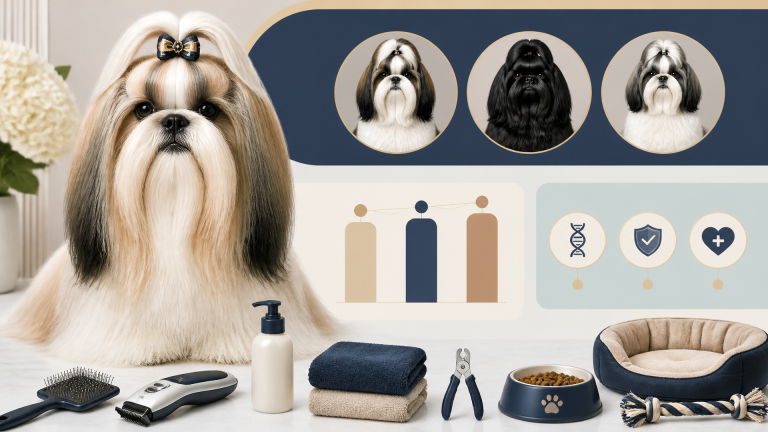
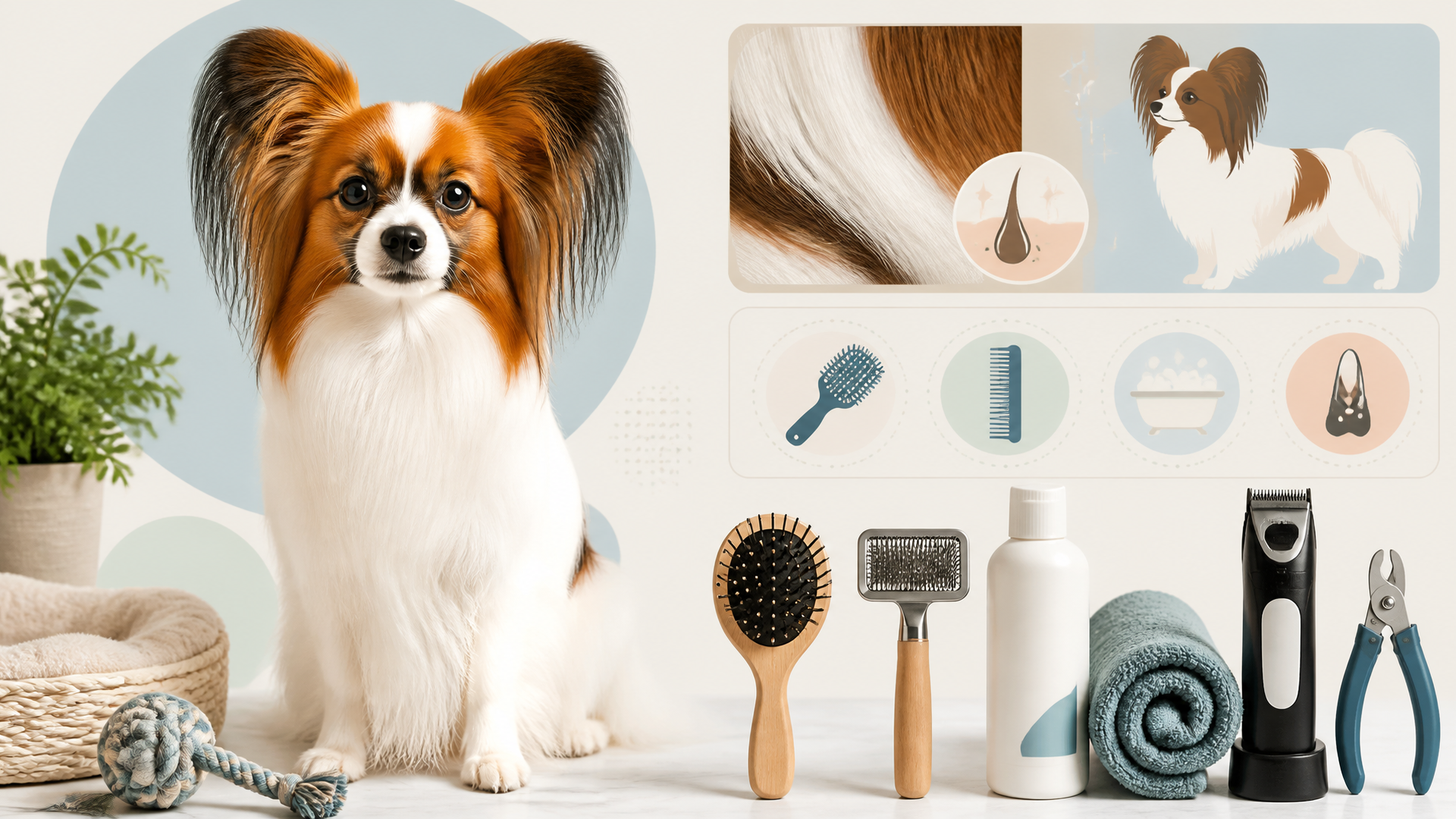
Papillons have fine, silky hair that tangles easily. The wrong brush causes breakage, and your dog will learn to dread grooming. Start with the right kit:
Essential:
- Slicker brush – Loosens small tangles and lifts debris from the light underlayer (yes, single-coated Papillons still have one)
- Pin brush – For the long feathering on ears, chest, and tail
- Wide-tooth comb – The final pass you can’t skip; catches tangles the brush missed, especially behind ears
- Grooming scissors with rounded tips – For paw pads and sanitary areas
- Dog-safe detangling spray – Reduces breakage on delicate hair
- Nail grinder with safety guard – Papillons often have dark nails, and a grinder is safer than clippers
Optional but helpful:
- Non-slip mat – Keeps your Papillon steady during grooming
- Thinning shears – Blend feathering for a natural finish without blunt lines
The Grooming Routine That Prevents Mats
Brushing: Start at the Skin
Brush before every bath — wet hair tightens tangles into impossible mats.
Technique: Work in small sections, starting at the skin and moving outward. Use the slicker brush first, then the pin brush for longer hair. Hit these hot spots:
- Behind the ears (the most common mat zone)
- Under the chest and belly
- The tail plume
- Backs of the legs
Branch check: If you hit a tangle that won’t brush out, apply detangling spray and work through it with your fingers. If it still won’t budge after 30 seconds, stop. Do not yank — Papillon skin is thin and tears easily. Instead, cut the mat out with rounded scissors, keeping the blade parallel to the skin. If the mat is tight against the skin, see a groomer.
Verification step: After brushing, run your fingers against the grain of the coat. If you feel any rough or sticky patches, you missed a layer. Go back with the slicker brush and then the comb. Another check: part the coat in several spots. If you see small V-shaped gaps, those are mats starting close to the skin.
Bathing Every 3–4 Weeks
Over-bathing strips natural oils and makes the coat brittle.
- Use lukewarm water and a shampoo for silky coats
- Dilute shampoo before applying — concentrated shampoo is hard to rinse out of long hair
- Work gently with your fingers, avoiding eyes and inner ears
- Rinse until water runs completely clear
Likely cause of post-bath mats: Rushing the rinse. Squeeze a handful of hair — if you see suds, rinse again. Soap residue makes the coat sticky, and sticky hair tangles fast.
Success check after drying: The coat should feel smooth and separate easily between your fingers, not tacky or clumpy.
Drying Without Making Tangles Worse
- Towel-dry by blotting — rubbing creates friction tangles
- Blow-dry on low heat with a pin brush to keep hair separated
- Keep the nozzle moving; heat in one spot burns Papillon skin
Friction point: Air-drying is fine if you brush again once the coat is fully dry. Wet hair left to dry without brushing often mats behind the ears and under the chest. If you air-dry, set a reminder to brush within an hour of the bath finishing.
Ear Care – The Breed’s Signature Feature
Those large, fringed ears are beautiful but trap dirt and moisture.
- Check ears weekly for redness, odor, or discharge
- Clean with a vet-recommended ear cleaner and cotton ball — never use cotton swabs inside the ear canal
- Dry the ear flap thoroughly after baths and swimming
- Brush ear fringes gently with a pin brush; mats here pull on delicate ear skin
Escalation signal: If your Papillon shakes its head persistently, scratches at its ears, or you smell something yeasty or fishy, stop grooming and see your vet. Ear infections in fringed ears worsen quickly. A concrete threshold: if you see dark brown waxy buildup with an odor, that’s a likely infection — don’t just clean harder.
Nail Trims Every 2–3 Weeks
Long nails throw off your Papillon’s gait and strain the joints.
- Trim when you hear clicking on hard floors
- Use a grinder with a safety guard to avoid the quick
- Keep styptic powder on hand
Verification step: After trimming, walk your dog on a hard floor. If you no longer hear clicking, the trim is sufficient. If you still hear it, take off another small amount.
Where Papillon Grooming Goes Wrong (and How to Catch It)
The most common failure: using the wrong brush or skipping the wide-tooth comb. Papillons have a fine underlayer that a pin brush can miss. When you brush only the topcoat, small mats form close to the skin and tighten into felted clumps you can’t brush out.
How to detect it early: After brushing, run your fingers against the coat grain. Any rough or sticky patches mean missed tangles. Another sign: your dog flinches or pulls away when you touch specific spots — usually behind the ears or under the chest. That’s a tangle starting.
Branch decision: If you find a mat close to the skin that won’t comb out, do not try to brush it out. You’ll pull the skin and cause pain. Use rounded scissors to cut the mat out, keeping blades parallel to the skin. If the mat is larger than a pea or you can’t see the skin clearly, call a groomer.
When to Stop DIY and Call a Pro
- Mats close to the skin – Cutting them yourself risks nicking the thin skin
- Nail quick is impossible to see – A groomer can safely trim dark nails
- Ear infection symptoms – Redness, odor, or discharge needs a vet, not more cleaning
- Your Papillon resists grooming consistently – A professional can handle an anxious dog safely while you work on desensitization at home
Stop threshold: If your Papillon yelps, snaps, or tries to escape during any grooming step, stop immediately. Forcing the issue creates fear that makes future grooming harder. Take a break, try again later, or book a groomer for the tricky parts.
Weekly Grooming Checklist
- [ ] Brush coat thoroughly with slicker brush and pin brush
- [ ] Comb behind ears and under chest for tangles
- [ ] Check ears for redness, odor, or discharge
- [ ] Wipe eye corners with a damp cloth (Papillons can have tear staining)
- [ ] Check nail length — trim if you hear clicking
- [ ] Brush teeth or apply dental wipe
- [ ] Inspect paw pads for mats or debris
FAQ
How often should I bathe a Papillon?
Every 3–4 weeks is ideal. Bathing more often strips natural oils and can lead to dry skin and brittle hair.
Can I use a human hair dryer on my Papillon?
Yes, on the lowest heat and cool setting. Keep the nozzle moving and use a pin brush to separate the hair as you dry.
Why does my Papillon’s coat look dull after grooming?
Dullness usually means leftover shampoo residue or a lack of conditioner. Rinse thoroughly and use a conditioner formulated for silky coats to restore shine.
Do Papillons shed a lot?
They shed less than many breeds because they are single-coated. Regular brushing removes loose hair before it ends up on your furniture.
Save This Guide: Brush 3–4 times per week, bathe every 3–4 weeks, and check ears and nails during every grooming session. The key takeaway? Always brush before the bath and always use a wide-tooth comb as your final pass — those two habits prevent nearly all matting issues.
This article contains affiliate links. If you purchase through these links, we may earn a small commission at no extra cost to you.