Seal Point Himalayan: Guide: What Every Owner Should Know
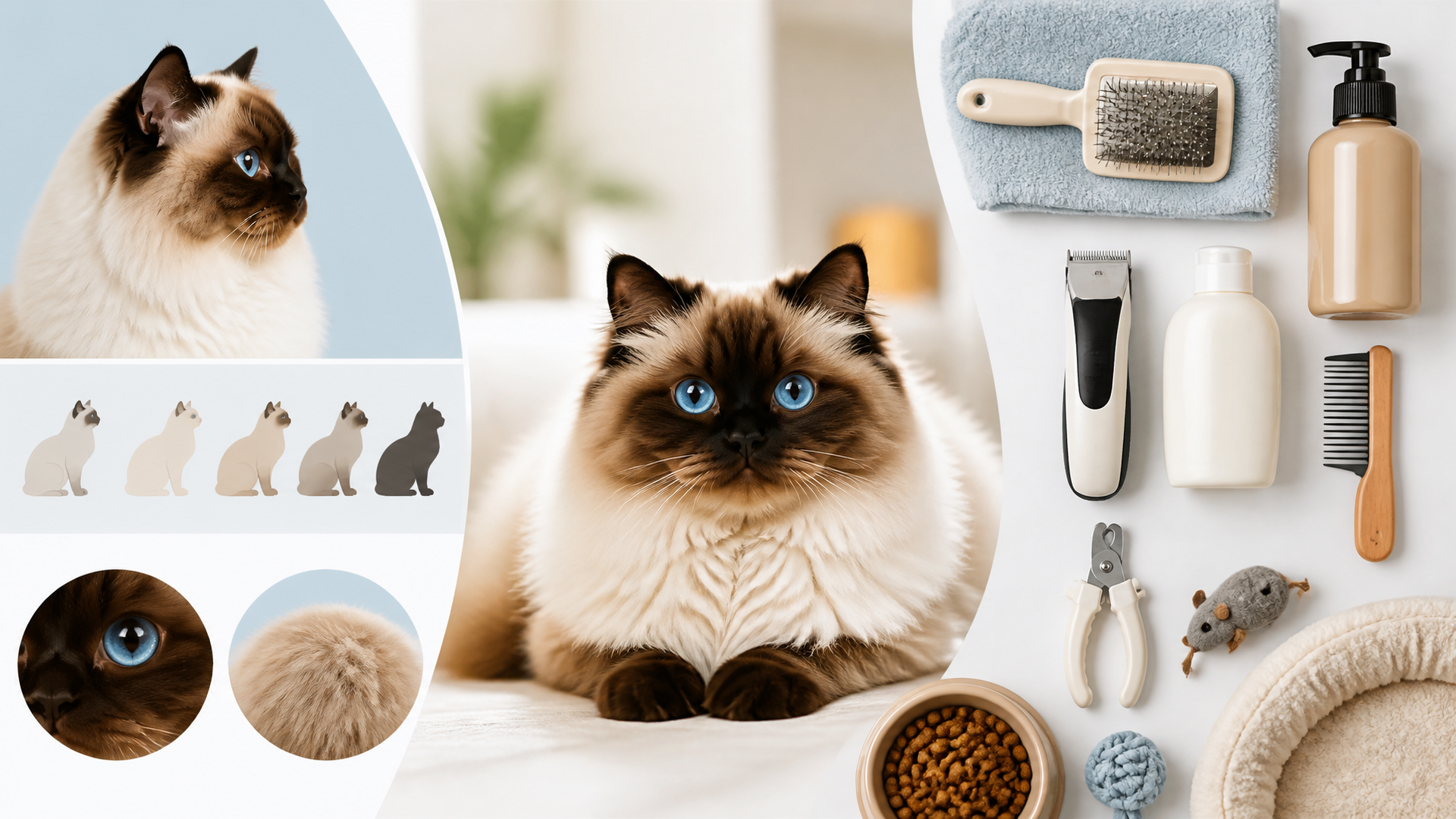
The Seal Point Himalayan is a stunning cat with warm cream fur, deep brown points on the ears and face, and vivid blue eyes. But here’s the reality most owners underestimate: daily brushing is non-negotiable, and those beautiful eyes need wiping every single day. The most common failure mode with this breed is severe matting that leads to painful skin infections and a cat that hates grooming. You can catch this early by doing a quick 2-minute comb check every morning — if your comb snags on any spot, you’re already behind.

What Makes a Seal Point Himalayan Different from Other Himalayans
The Himalayan combines the Persian’s lush coat and flat face with the Siamese’s colorpoint pattern. Most cat registries recognize the Himalayan as a color variety of the Persian, not a separate breed. The “seal point” refers to the specific color of the points (ears, face, paws, and tail) — a rich, dark brown that contrasts with the warm cream body.
Key identifying traits:
- Body color: Warm cream to light fawn, darkening slightly with age
- Point color: Deep dark brown (seal) on ears, muzzle, paws, and tail
- Eye color: Vivid, deep blue — all Himalayans have blue eyes
- Coat: Long, thick, and full — requires daily maintenance
This guide applies fully to standard purebred Himalayans with extreme (peke-face) structure. If you have a doll-face Himalayan or a Himalayan-Persian mix, breathing risks are lower, but the grooming requirements stay exactly the same — daily brushing is still mandatory.
Daily and Weekly Care Routine
Consistency is the secret to keeping your Himalayan healthy and your home fur-free. Use this routine as a template and adjust based on your cat’s specific needs.
Daily Checklist
| Task | Why It Matters |
|---|---|
| Brush full coat (5–10 minutes) | Prevents mats and reduces shedding |
| Wipe eyes with a soft, damp cloth | Removes tear staining and prevents infection |
| Check for matting behind ears and under armpits | Common trouble spots for long coats |
| Provide fresh water in a wide, shallow bowl | Flat-faced cats struggle with deep bowls |
Weekly Checklist
- Nail trim — every 7–10 days. Use cat-specific clippers; avoid the quick.
- Ear check — look for redness, wax buildup, or odor. Clean with a vet-approved ear cleaner if needed.
- Dental care — brush teeth or use dental treats. Himalayans are prone to periodontal disease.
- Litter box scoop — daily scoop, full change once a week. Flat-faced cats need unscented, low-dust litter to avoid sneezing fits.
Monthly Checklist
- Bath — yes, Himalayans need baths. Use a cat-safe shampoo (like one for Persians) to keep the coat and skin healthy. Dry thoroughly with a low-heat blow dryer to prevent matting.
- Grooming tool check — replace slicker brush if pins are bent; replace comb if teeth are crooked.
- Weight check — use a kitchen scale. Weigh your cat and compare to the ideal weight range (varies by bone structure, usually 7–12 lbs).
Grooming Essentials: Tools, Techniques, and Common Mistakes
A Seal Point Himalayan’s coat is its crowning glory — but it’s also the biggest source of frustration for owners who don’t have the right setup.
The Three-Tool System
| Tool | Purpose | Recommended Type |
|---|---|---|
| Slicker brush | Removes loose undercoat and prevents tangles | Medium-firm pins, ergonomic handle |
| Stainless steel comb | Detangles and checks for remaining knots | Wide-tooth for general use, fine-tooth for face |
| Dematting tool | For stubborn mats already formed | Bladed dematter (use carefully) |
Step-by-Step Grooming Session
1. Start with the comb — gently work through the coat to find any existing mats. Never pull; tease mats apart with your fingers first.
2. Use the slicker brush — brush in sections, starting from the back and moving to the belly. Lift the coat to reach the undercoat.
3. Finish with the comb — go over the whole body again to confirm no tangles remain. Pay extra attention behind the ears, under the collar, and on the pantaloons (back of hind legs).
4. Wipe eyes — use a soft cloth dampened with warm water or a cat-safe eye wipe. Gently clean from the inner corner outward.
3 Expert Grooming Tips
Tip 1: Brush in short sessions. Break grooming into two or three 5-minute sessions per day instead of one marathon session. Your cat will tolerate it better, and you’ll catch tangles before they become mats.
Common mistake people make: Trying to brush a full coat once a week for 30 minutes — this leads to mats, pain, and a cat that hates grooming.
Tip 2: Use a detangling spray before brushing. A light mist of a cat-safe detangling spray (like one for long-haired cats) reduces static and makes the slicker glide through the coat. Avoid human detanglers — they contain ingredients toxic to cats.
Common mistake people make: Brushing a dry, static-filled coat, which creates more tangles and causes breakage.
Tip 3: Trim the sanitary area every 4–6 weeks. Use a small clipper or safety scissors to trim the fur around the rear and under the tail. This prevents feces from sticking to the fur and causing irritation.
Common mistake people make: Using scissors too close to the skin — always use blunt-tipped scissors and keep your fingers between the blade and the skin.
Health Issues Every Seal Point Himalayan Owner Should Know
The Seal Point Himalayan’s flat face (brachycephalic structure) comes with a set of health challenges that require proactive management.
Breathing Problems
- Signals to watch for: Noisy breathing, snoring, open-mouth breathing, overheating easily, blue-tinged gums
- What to do: Keep your home cool (68–72°F). Avoid stressful situations. Use a harness instead of a collar for walks. If breathing becomes labored, see your vet immediately.
Likely causes: The compressed facial structure narrows the nostrils, elongates the soft palate, and can cause everted laryngeal saccules.
Escalation signal: If your cat can’t close its mouth while panting, gums turn blue, or they collapse — this is a veterinary emergency.
Eye Problems
- Tear staining: Normal for flat-faced cats, but clean daily to prevent irritation
- Entropion: Eyelid rolls inward, causing eyelashes to rub the eye. Requires surgical correction.
- Cherry eye: Prolapsed tear gland — needs prompt vet treatment
Checkpoint: Look at your cat’s eyes every morning. If they are red, squinting, or have discharge that’s yellow or green, call your vet.
Kidney Disease
- Breed risk: Himalayans have a high incidence of polycystic kidney disease (PKD). Responsible breeders screen their cats.
- Signals: Increased thirst, increased urination, weight loss, poor coat condition
- What to do: Request PKD testing when you adopt. Feed a high-moisture diet (canned or raw). Annual vet check-ups with urinalysis.
Other Common Issues
- Dental disease: Schedule annual dental cleanings. Brush teeth 2–3 times per week.
- Feline lower urinary tract disease (FLUTD): Symptoms include straining to urinate, blood in urine, or urinating outside the box. Any of these requires urgent veterinary attention.
- Heat sensitivity: Flat-faced cats overheat quickly. Never leave your Himalayan in a car or unventilated room in summer.
Feeding Your Seal Point Himalayan
High-quality cat food is essential for coat health and overall well-being. Here’s a practical feeding guide.
Food Type Recommendation
- Canned or raw food is strongly preferred over dry kibble — higher moisture content supports kidney health and prevents urinary problems.
- Look for: Named protein source first (chicken, turkey, fish), moderate fat, and added taurine.
- Avoid: Dry food as the sole diet, foods with artificial colors or by-products, and grain-free diets without a specific veterinary reason (grain-free is linked to heart issues in some cats).
Daily Feeding Amount
| Food Type | Amount per Day | Number of Meals |
|---|---|---|
| Canned (3 oz cans) | 2–3 cans | 2–3 meals |
| Raw | 3–4 oz | 2 meals |
| Dry (if used as supplement) | ¼ cup max | 1 meal |
Note: Adjust based on your cat’s activity level and metabolism. A growing kitten needs more; a sedentary senior needs less. Check with your vet for exact amounts.
3 Feeding Tips
1. Use a flat, shallow dish — deep bowls are uncomfortable for flat-faced cats. Ceramic or stainless steel is best (plastic can cause chin acne).
2. Feed on a schedule — Himalayans do well with set meal times (twice daily). Free-feeding often leads to obesity.
3. Provide filtered water — many cats drink more when the water tastes fresh. A pet water fountain can encourage hydration.
Temperament and Living with a Seal Point Himalayan
Seal Point Himalayans are known for being calm, affectionate, and moderately active. They bond deeply with their humans but are not typically lap-cats 24/7 — they prefer to be near you rather than on you.
Personality highlights:
- Quiet but vocal when they want something — expect a soft, chirping meow when it’s dinner time
- Good with gentle children and other pets — but need a calm home without loud noises or chaotic energy
- Moderate play drive — 10–15 minutes of interactive play (wand toy, laser) twice a day is sufficient
- Not a jumper — flat-faced cats don’t leap to high perches. Provide low cat trees or window perches
Common behavior challenges:
- Over-grooming: Can signal stress or skin issues. Rule out allergies first, then create a consistent daily routine.
- Litter box avoidance: Often due to a dirty box, a deep box (hard for flat faces to enter), or a scented litter. Use a low-entry box and unscented clumping litter.
Is a Seal Point Himalayan Right for You?
A Seal Point Himalayan is a great match if you:
- Have time for daily grooming (10–15 minutes total per day)
- Are home most of the day (they don’t like being left alone for long hours)
- Can handle regular vet bills (brachycephalic cats need more care)
- Want a calm, indoor-only companion
A Seal Point Himalayan is NOT a good match if you:
- Want a low-maintenance cat (zero shortcuts on grooming)
- Have young children who are rough or loud
- Live in a very hot climate without air conditioning
- Travel frequently and need a cat that can stay home alone
Quick Comparison: Seal Point vs. Other Color Points
| Point Color | Body Color | Eye Color | Commonality |
|---|---|---|---|
| Seal (dark brown) | Warm cream | Deep blue | Most common |
| Blue (slate gray) | Bluish white | Light blue | Common |
| Chocolate (warm brown) | Ivory | Blue | Less common |
| Lilac (pinkish gray) | White | Lavender blue | Rare |
Despite differences in point color, care requirements are identical across all Himalayans.
Save This Guide
Key takeaway: A Seal Point Himalayan is a stunning, affectionate cat that demands daily grooming, regular eye cleaning, and proactive health monitoring. If you can commit to the routine, you’ll have a calm, devoted companion for 12–15 years. Keep this guide bookmarked for grooming checklists, feeding amounts, and health warning signs — your Himalayan’s life depends on consistency.
Affiliate disclosure: Some product links in this guide are affiliate links. We may earn a small commission at no extra cost to you.